
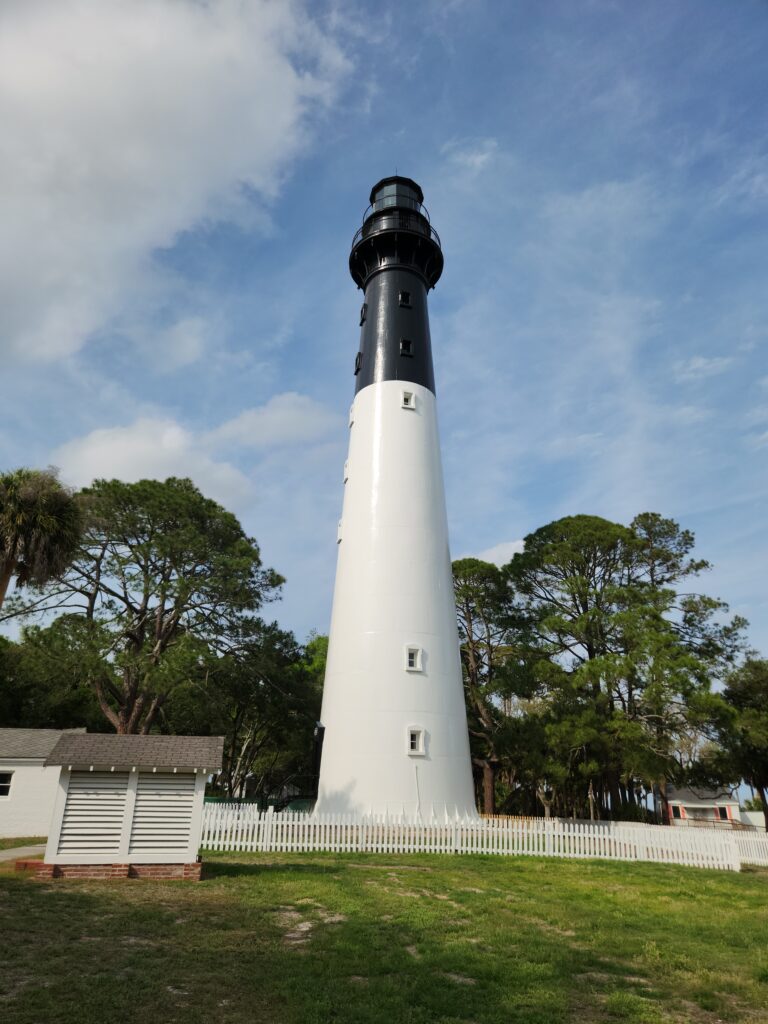
Beaufort and Bluffton offer two distinct sides of the Lowcountry experience, and barrier islands dance in between like the jewels in a crown. Beaufort captures your heart with historic homes, moss-draped streets, a beloved author (who wasn’t born in Beaufort, but loved it as fiercely as those who were), and magical waterfront views. On the other hand, Bluffton has emerged as a culinary hotspot with chef-driven restaurants, galleries, and the charm of a walkable small town.
Table of Contents
Lowdown on the Lowcountry
By definition, the Lowcountry is the geographic and cultural region of South Carolina, where the sand meets the Atlantic Ocean. It begins in Horry County, extends down to the tip where South Carolina turns into Georgia, and includes the Sea Islands. The Lowcountry has traditionally been the home of rice plantations and the Gullah Geechee people, those enslaved Africans initially brought to the region specifically for their knowledge and ability to grow rice.
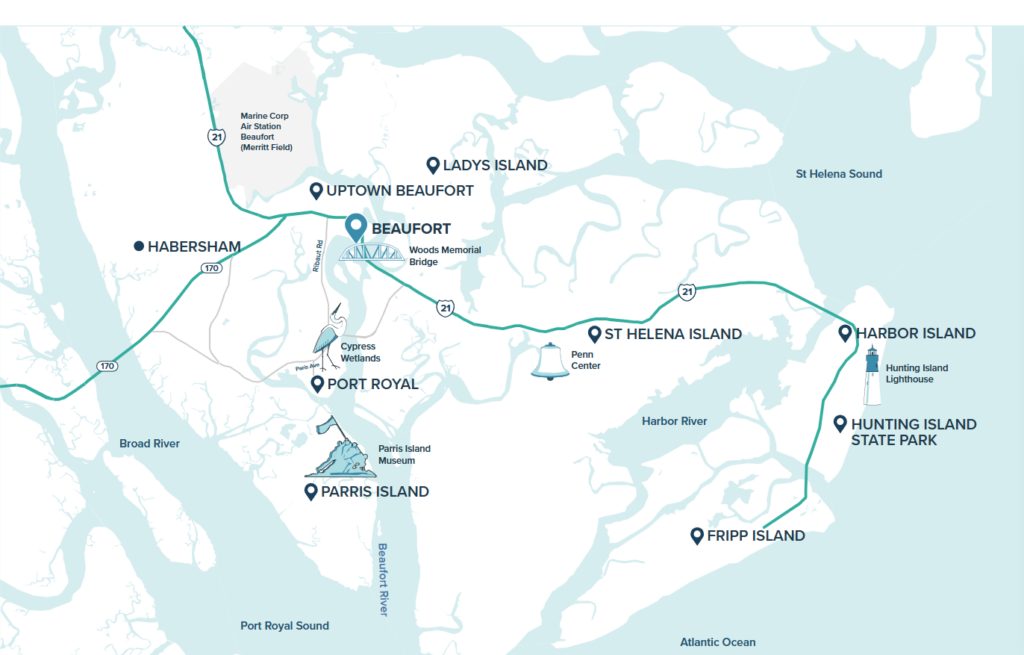
South Carolina’s rich history with rice began in the 1700s when Carolina Gold Rice was cultivated along the coast. By 1850, the state produced the vast majority of America’s rice. Although production declined dramatically in the twentieth century, Carolina Gold is still grown today—and it is worth seeking out.
The Secret Magic of Beaufort
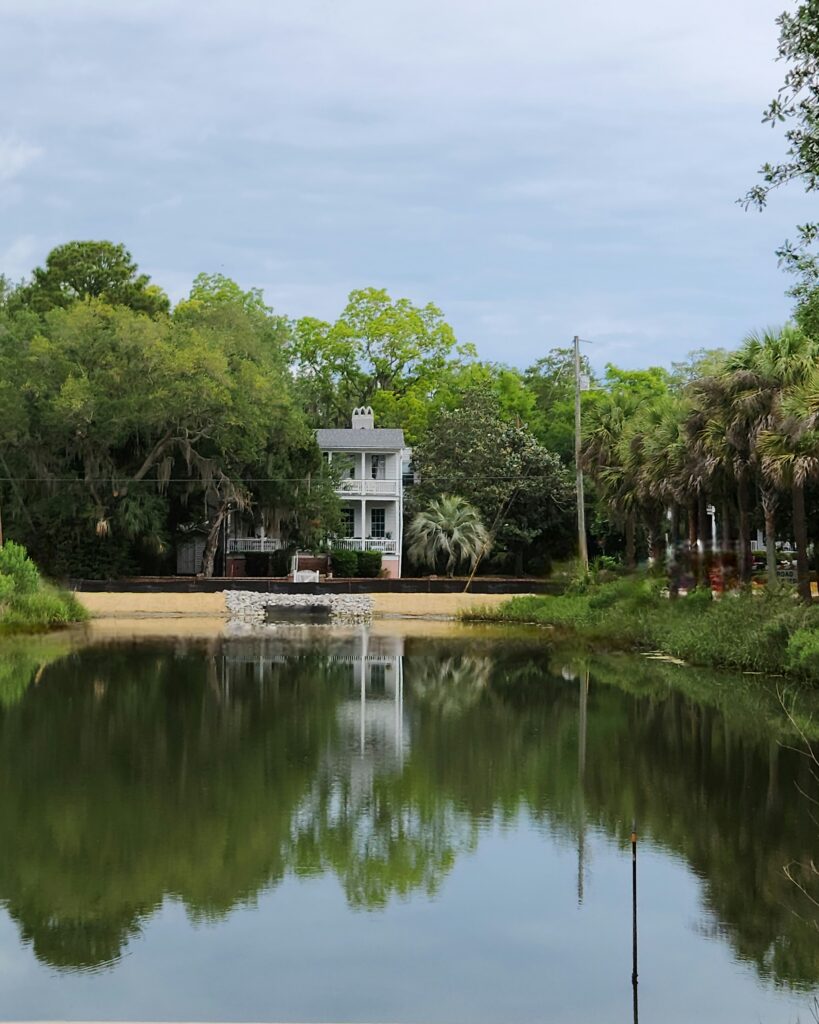
Like I’ve said, Beaufort really will capture your heart. The friendly town is filled with historic homes on streets shaded by moss-draped live oaks. You’ll frequently spot cookie jars on corner posts in local neighborhoods. Those are filled with dog treats—and believe me, the dogs know right where to find the next one. Beaufort is full of magical surprises like that—details that make visitors slow down, smile, and wonder what secrets might be waiting around the next corner.
Pat Conroy Literary Center
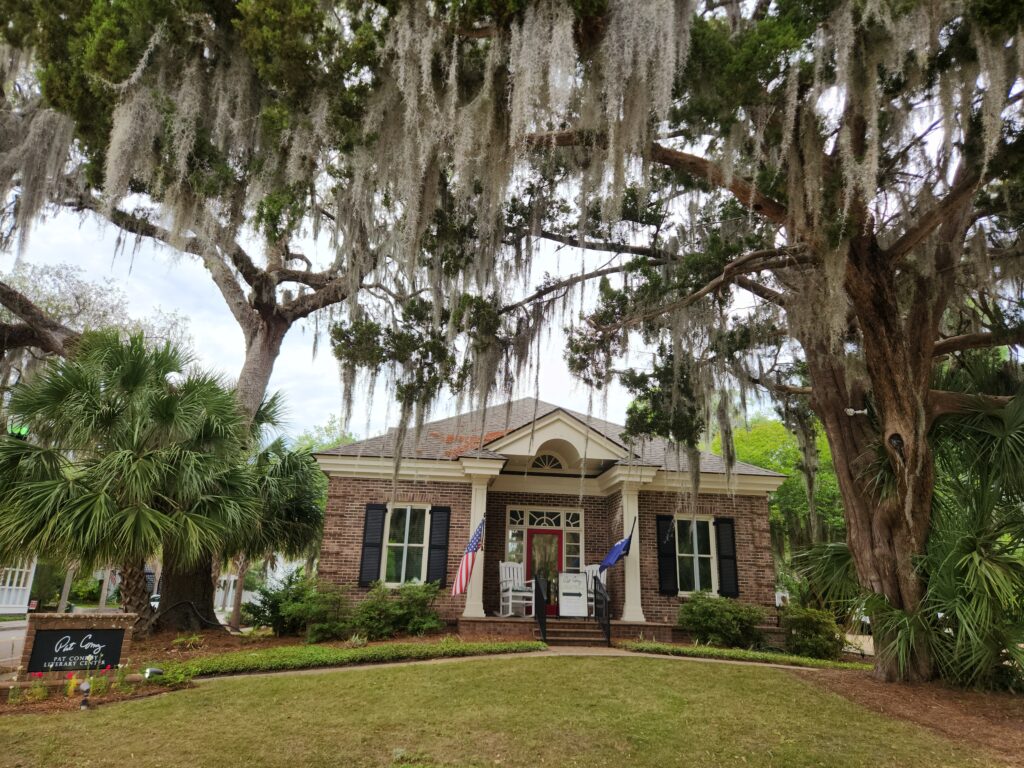
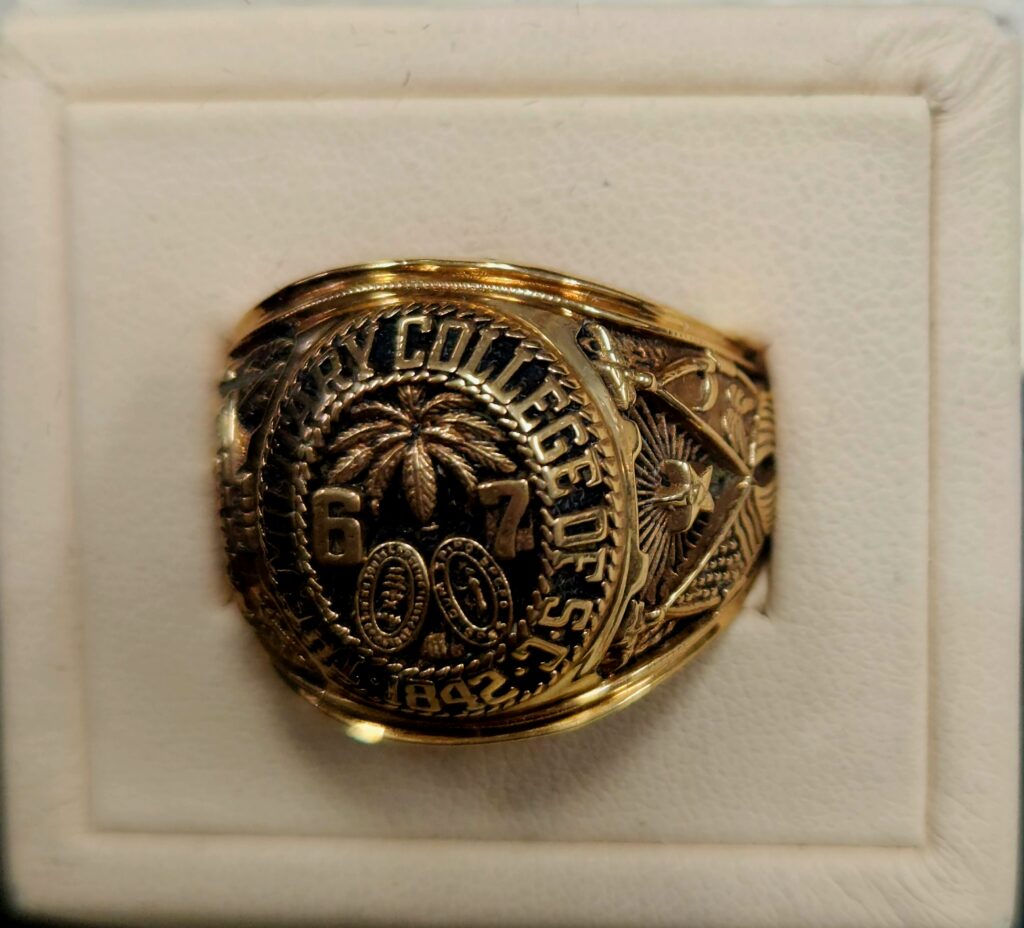
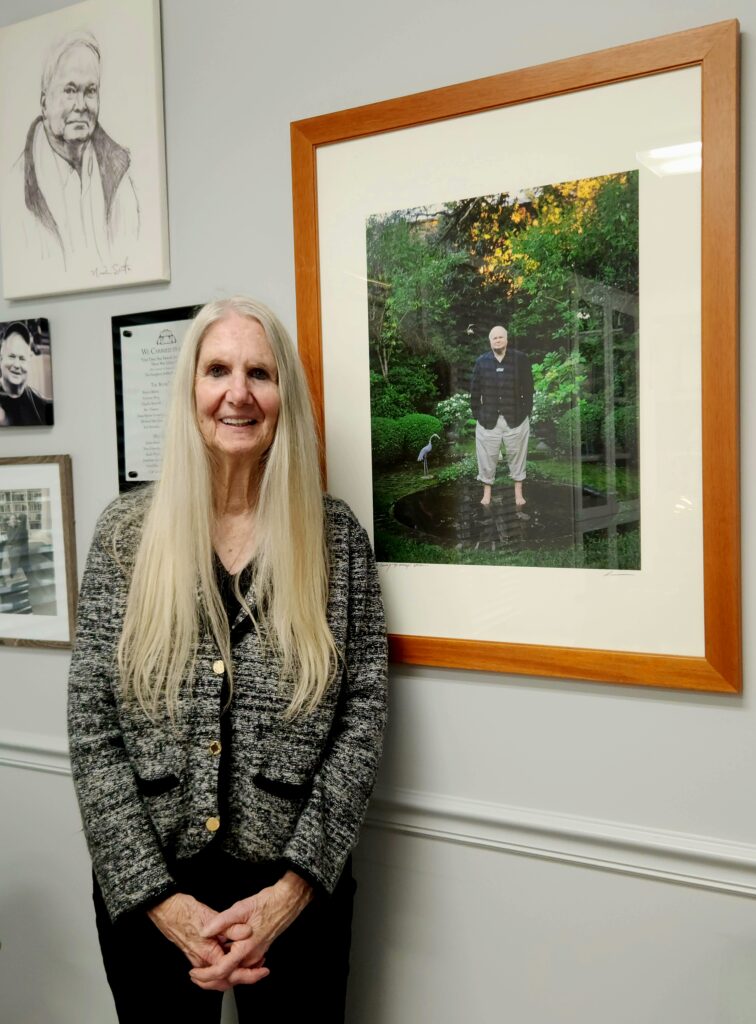
Pat Conroy claimed Beaufort as “home” just as devotedly as the town claimed him as a “hometown boy.” He was born in Atlanta, Georgia, but he wore the ring (of the Citadel), and one of his first jobs was teaching in a one-room school on Daufuskie Island. He loved the Lowcountry fiercely, and an afternoon with his sister Kathy in the Pat Conroy Literary Center will be a day to remember that love, that respect he had for what he considered his hometown. Inside the center are displays of the author’s handwritten manuscripts, his Citadel ring and basketball uniform, his fighter pilot father’s flight jacket, and his writing desk.
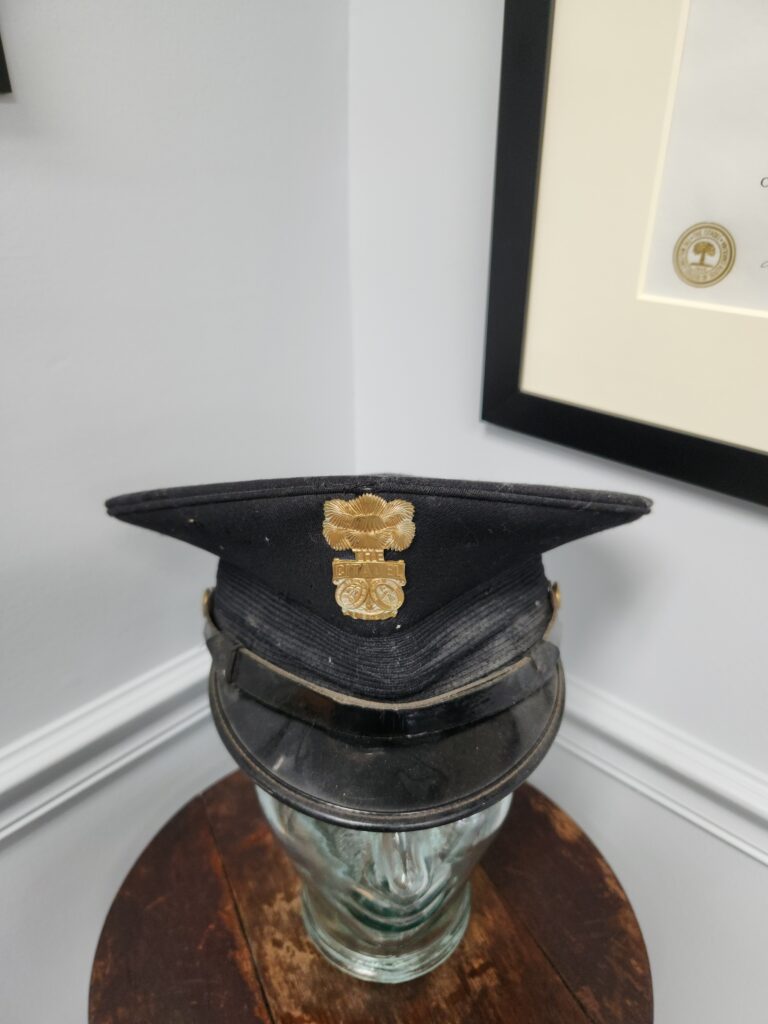
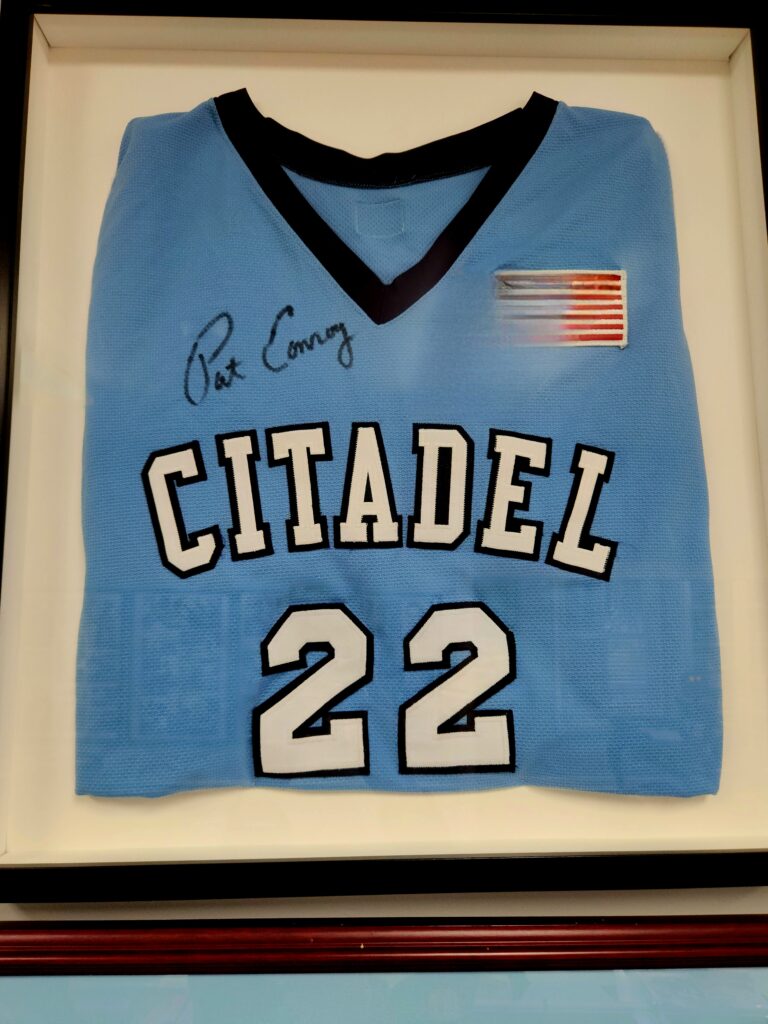
Conroy’s father moved the family frequently, and by the time Conroy was in high school, they had settled in Beaufort. One teacher helped Pat discover his writing voice, while another introduced him to the history, people, and places of the Lowcountry that would later be woven throughout his novels. As Conroy’s literary career soared, he never forgot those influences, paying tribute to one teacher with a single rose on her headstone in St. Helena Cemetery each time a new book was published.

More Beaufort Gems
Beaufort is surrounded by exciting activities. Time is precious, so here are some of my top recommendations.
Beaufort Tours
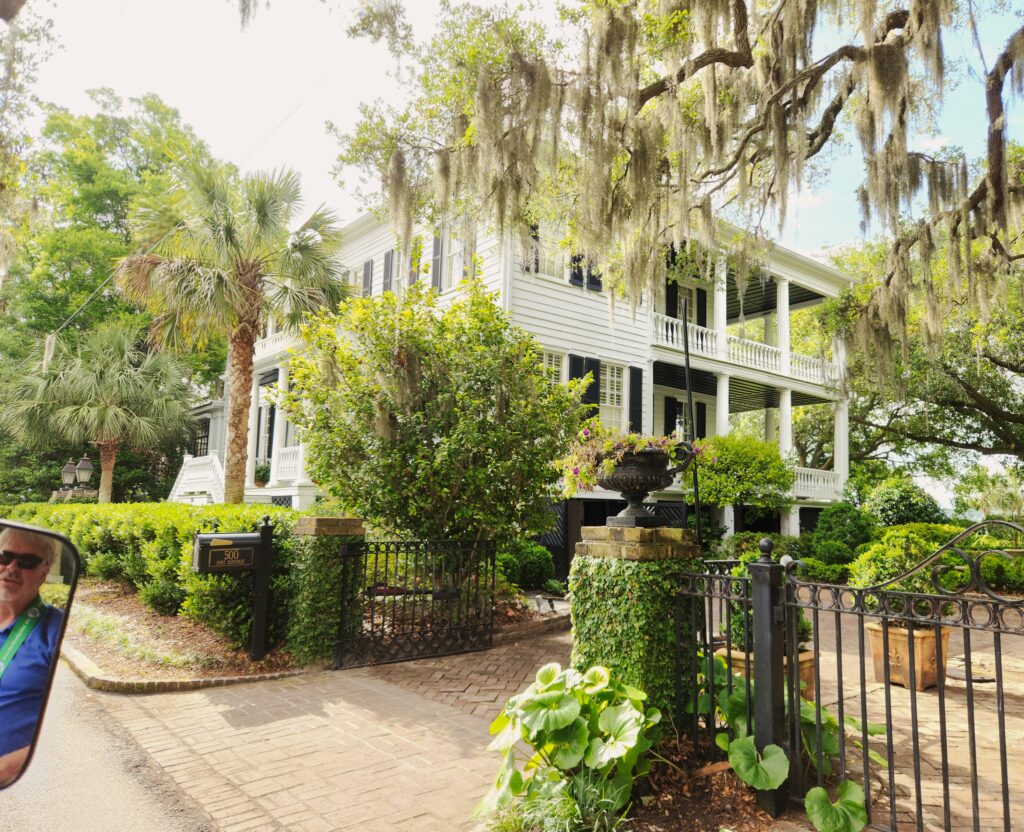
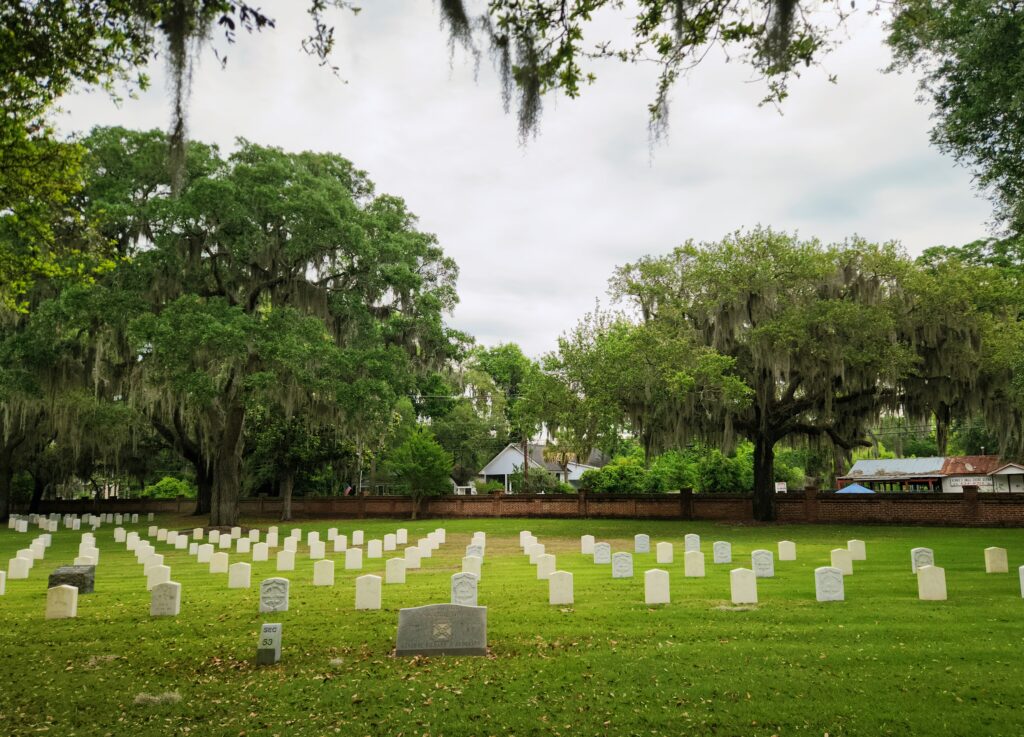
Beaufort Tours offers a variety of ways to see the town: walk, whiz around on a golf cart, or ride in the comfort of a van. You’ll see locations from iconic movies, learn the history and architecture of antebellum homes, and hear the stories of Gullah culture. On their Pat Conroy’s Beaufort tour, visitors will see the Pat Conroy Center, Beaufort High, the home where he lived, his parents’ gravesites, Pat’s grave, and several locations made famous in films of his books The Prince of Tides and The Great Santini.
Penn Center
Penn Center is spread across fifty acres and twenty-five historic structures on the former campus of Penn School, one of the nation’s first schools for formerly enslaved children. Gullah children were attending classes at the school founded by Northern missionaries Laura M. Towne and Ellen Murray four years before the Civil War ended.
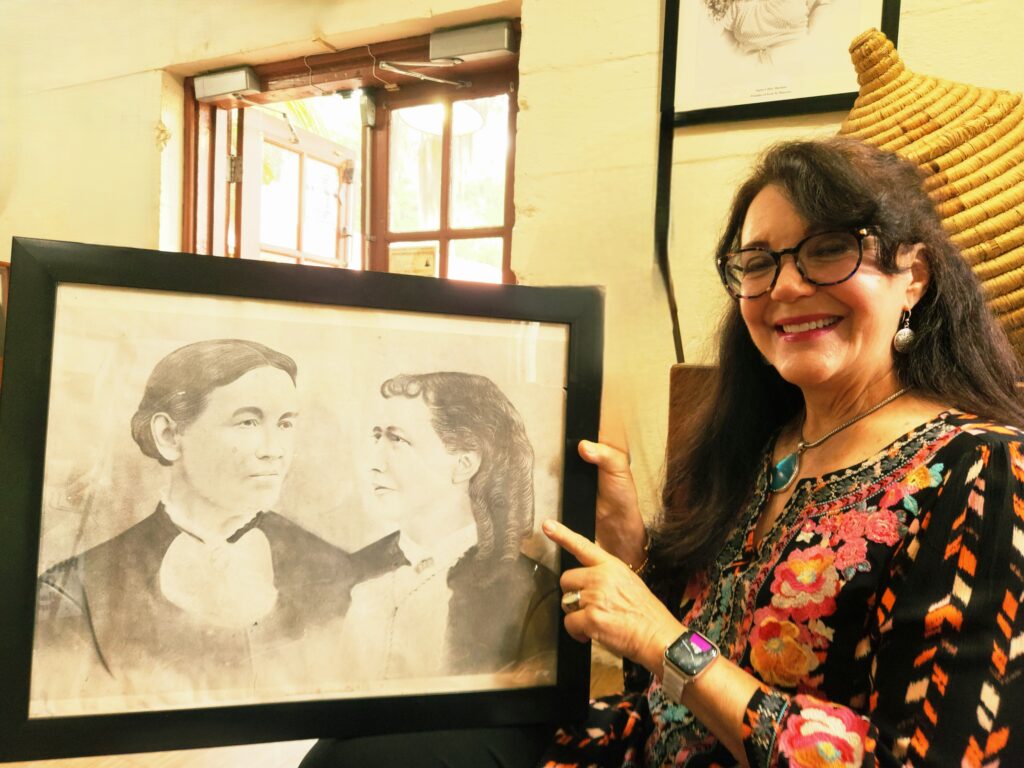
Over time, the school expanded into the Penn Normal, Agricultural, and Industrial School. Today, Penn Center stands within South Carolina’s only African American National Historic Landmark District. It remains one of the most important African American cultural institutions in the country.
The story goes far beyond education. During the 1960s, Dr. Martin L. King, Jr. and others from the Southern Christian Leadership met on this campus, a safe gathering place during segregation.
Today, visitors can explore the York W. Bailey Museum, attend cultural programs, and learn about the history and traditions of the Gullah people. And the story doesn’t end there. Penn Center’s remarkable legacy of education, civil rights, and cultural preservation is worthy of a deeper look—one I explore in my Juneteenth feature, Penn Center and the Legacy of Penn School, on Mainly Museums.
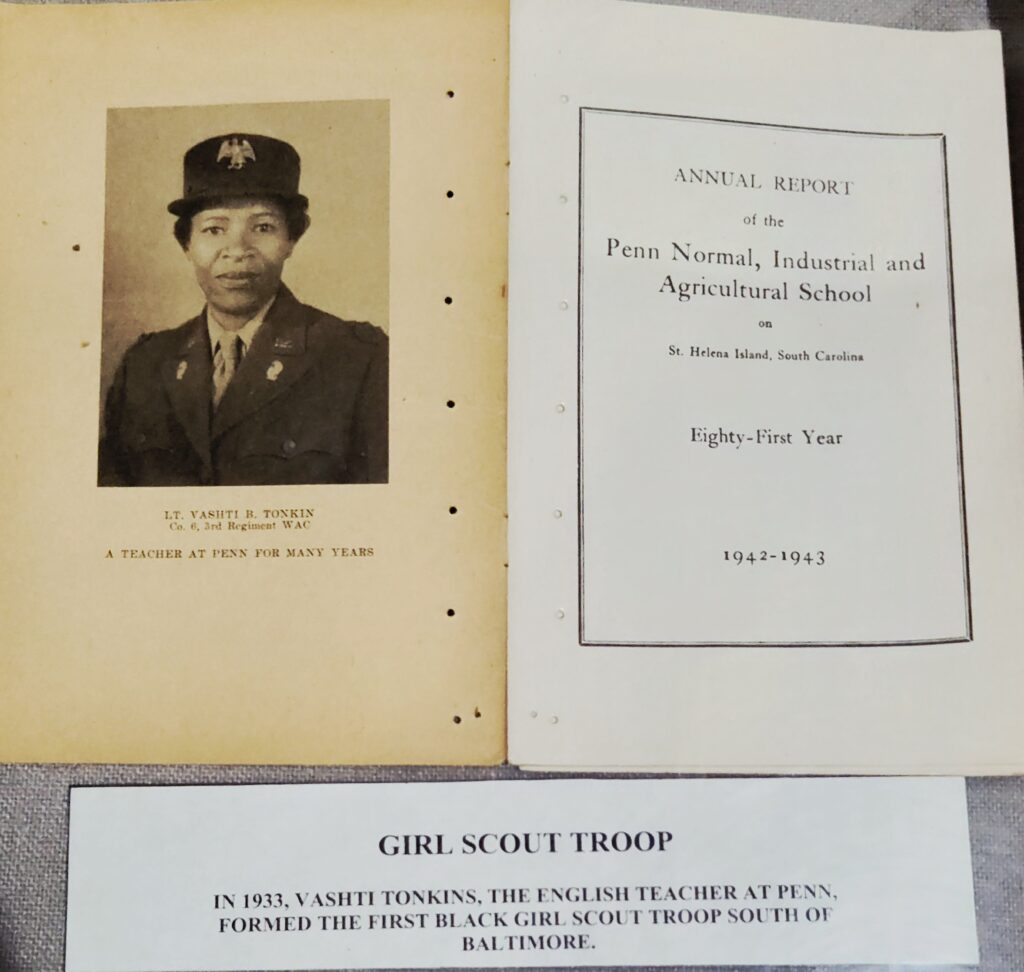
Another interesting fact learned at Penn Center: the first Black Girl Scout Troop south of Baltimore was founded by a Penn School teacher, right here in the Lowcountry, in 1933.
Gullah Grub
The Gullah Grub Restaurant, in an old store, opens for lunch at 11:30 Wednesday through Friday. After spending the morning at Penn Center, you’ll be grateful that lunch is just minutes away. Bill Green and his family at Gullah Grub have been feeding neighbors and visitors for over 15 years. Bill prepares food in the Gullah tradition, following two important rules: eat what is in season, and eat local—grow it, catch it, or buy it from your neighbors.
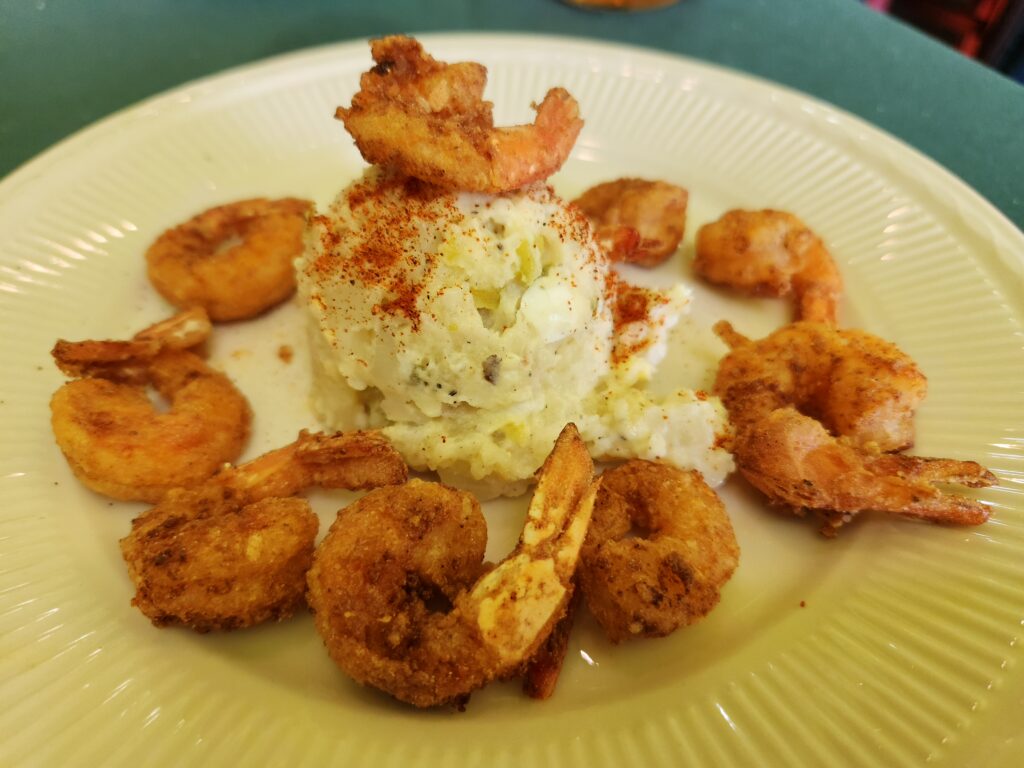
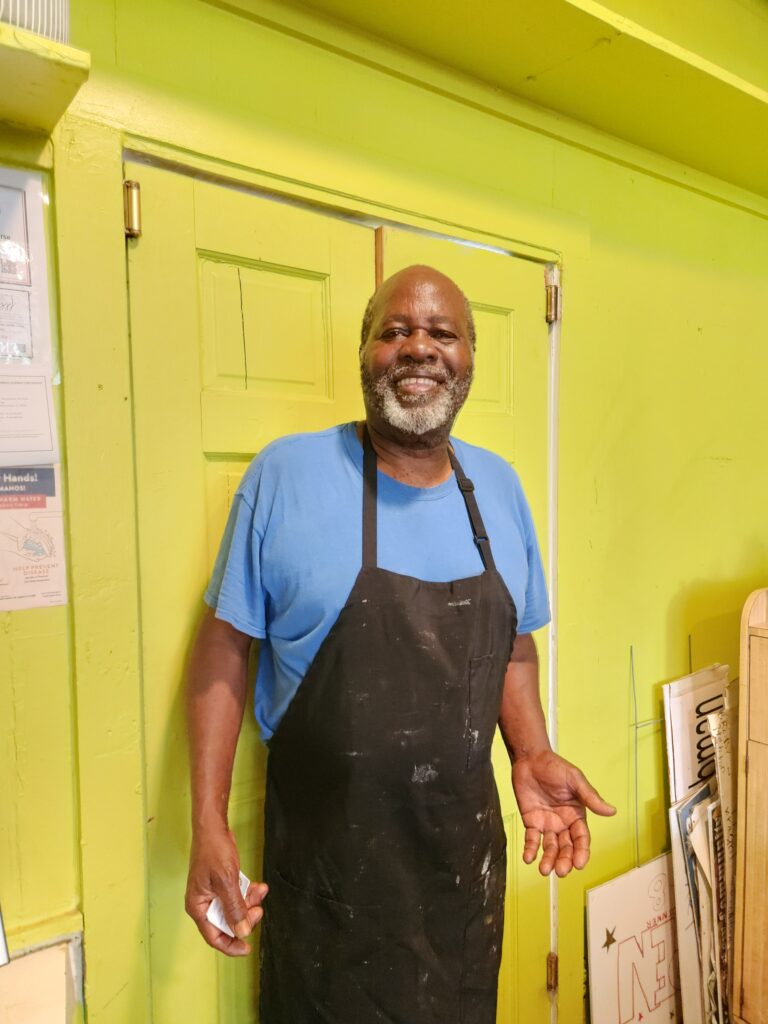
Bill’s fried shrimp is delicious, and the shrimp gumbo and cornbread really hit the spot. Wash it all down with sweet tea, and you’ll be ready for your next adventure. Only seven miles up the road, you can see a Lowcountry fort where construction practices came face-to-face with technology.
Fort Fremont Preserve
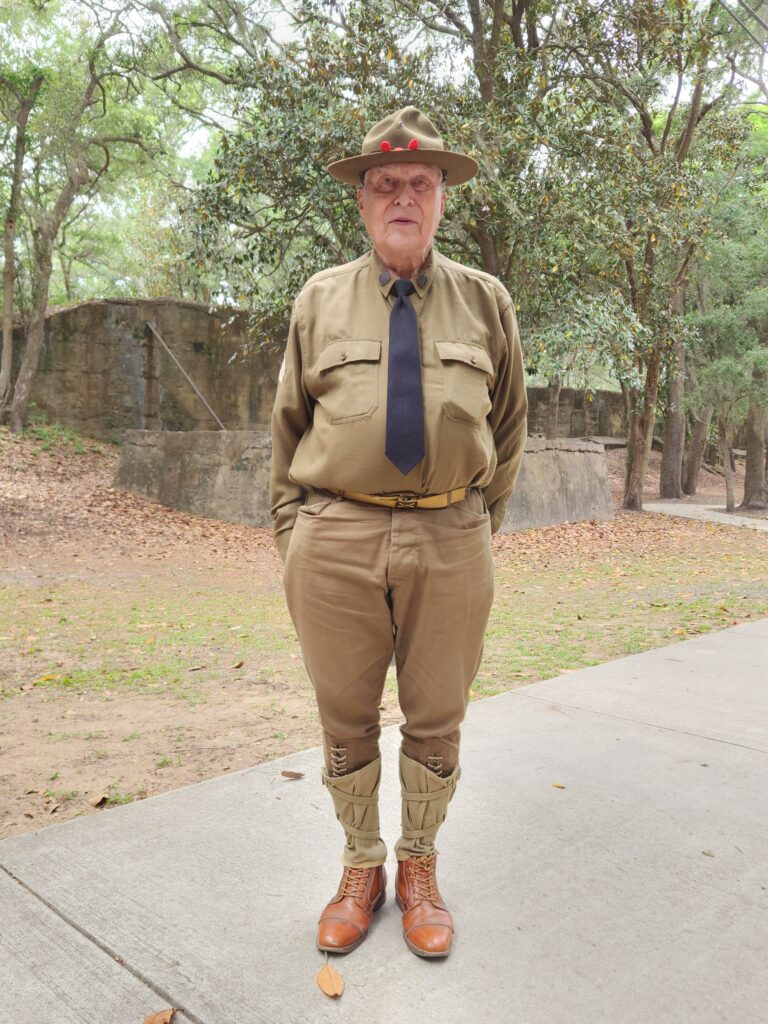
Fort Fremont Preserve offers a fascinating glimpse into the Spanish-American War. Constructed in 1898 to help defend Port Royal Sound, the fort is one of those places that brings a forgotten chapter of history into focus. Spend time with one of the knowledgeable volunteers, like Fred Panayatoff, exploring the education center’s exhibits and maps and studying the detailed diorama showing the fort during its active years. Fred’s military and work background lent so many interesting details to the tour, I didn’t want it to end.
Port Royal Sound was an important focus, especially during wartime, because the natural Sound forms one of the Atlantic Coast’s largest deepwater harbors. In fact, it was the only dry dock south of Norfolk, Virginia. When war with Spain appeared imminent, Congress authorized the $50 million Harbor Fortification Defense Act.
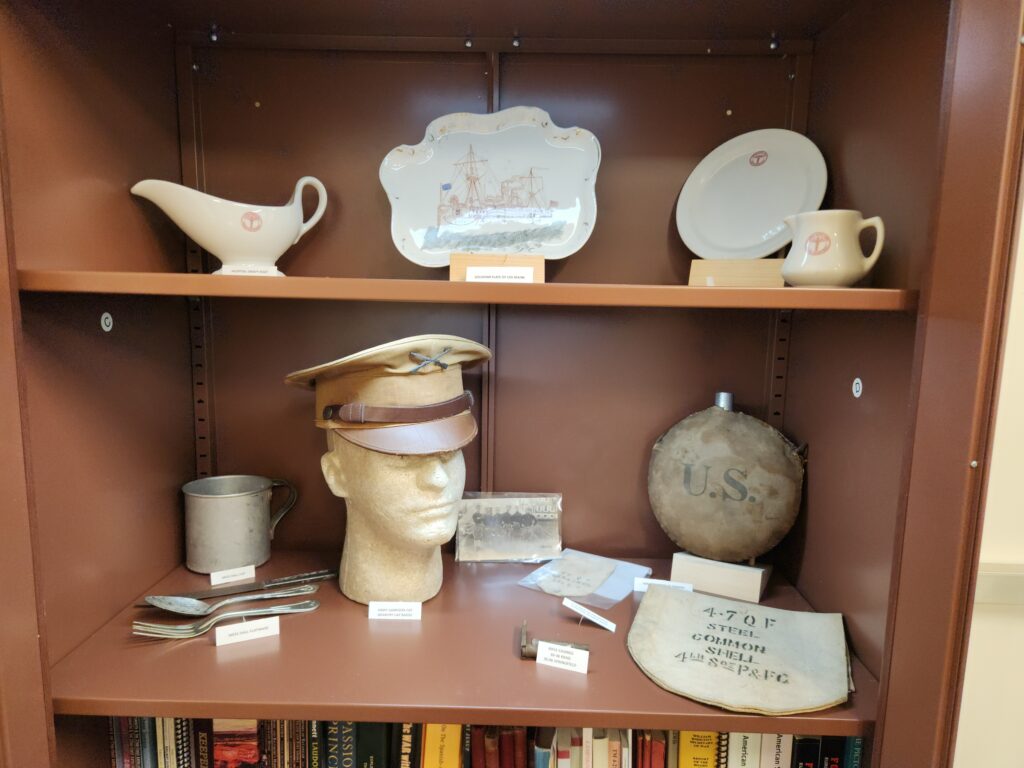
Springing into action, Fort Fremont was designed with the most modern upgrades and new weapons systems, generated electrical power, had modern lights and running water throughout the buildings, a telephone, and a means of communication for the fire controls that predated the fax machine. Yes, in 1898.
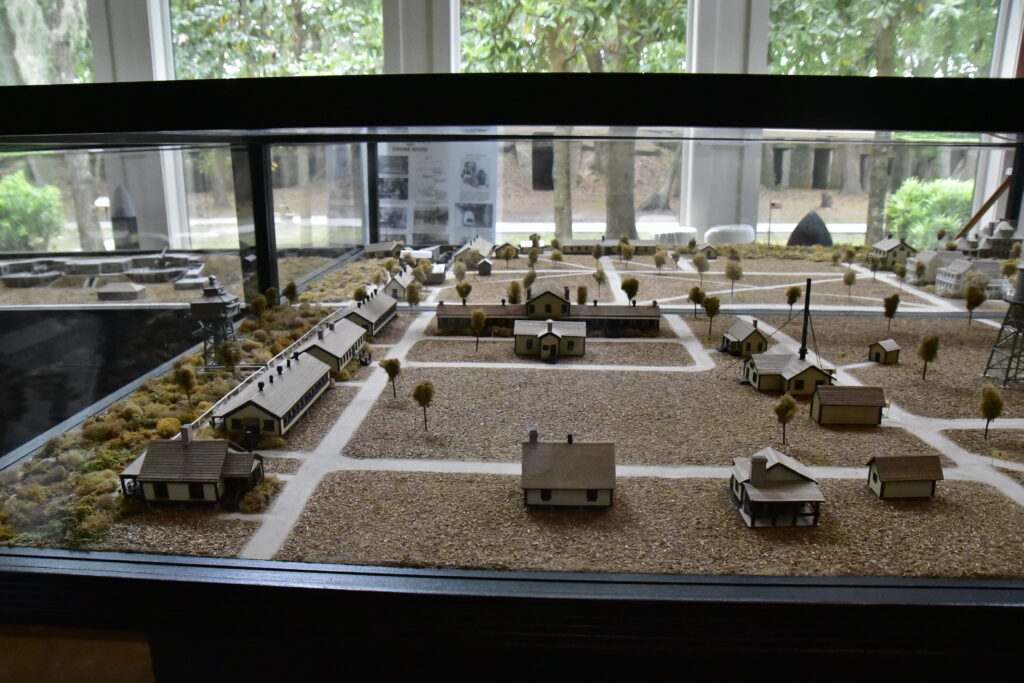
The artillery consisted of steel breech-loading 8”-12” guns that fired unprecedentedly large-caliber shells with extreme accuracy. These were the same guns being used on the battleships anticipated to attack. And the guns were designed with disappearing carriages, exposing them to counterfire for mere seconds. Sadly, when the fort was closed, the guns were removed. Several were used in WWI; some were sent to various proving grounds and eventually scrapped. Maybe someday one will return to the Sound it stood ready to defend.
Pro Tip: Watch the film, then view the exhibits before heading outside to walk along the remaining fort walls. And whatever you do, don’t miss the view from the top overlooking Port Royal Sound.
Ghostly Magic
Like any good Fort, Fort Fremont has a ghost. As the story goes, in 1910, violence between fort artillerymen and local African-Americans erupted over moonshine. It resulted in fights, shootings, a killing, and an arrest. Local legend says Pvt. Quigley is the ghost responsible for the Land’s End Light.
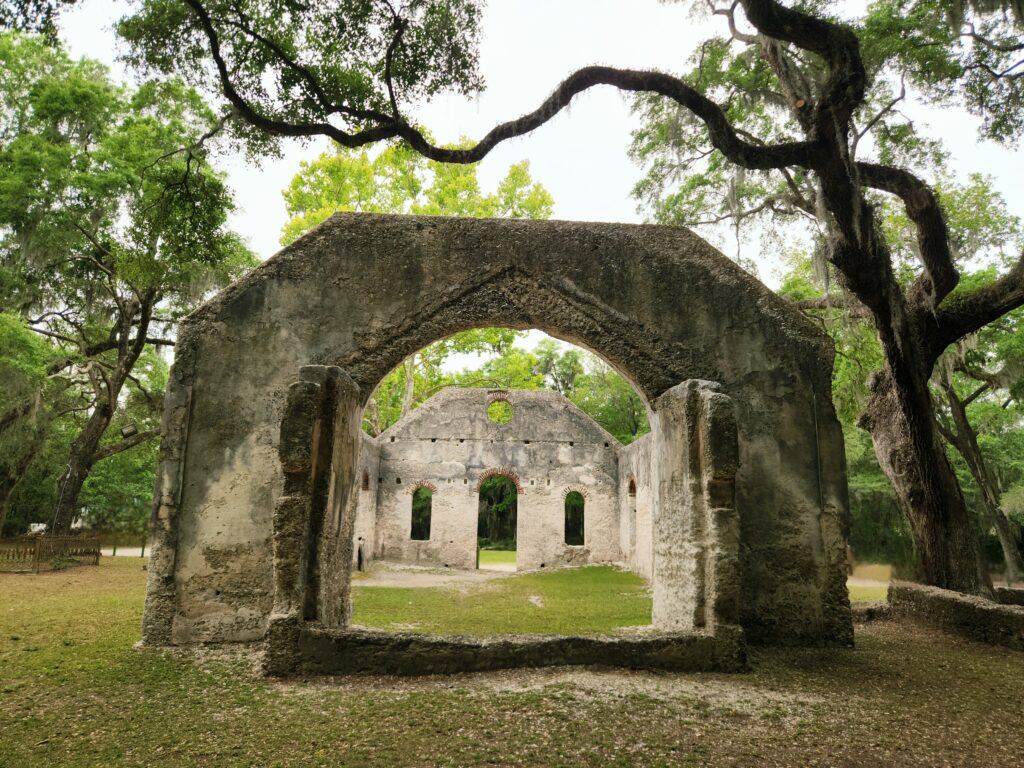
As you leave Fort Fremont and head back into town, you will have a chance for two quick but meaningful stops. Be sure to stop at the St. Helena Parish Chapel of Ease, built in 1740 by enslaved people. The Anglican chapel at Frogmore provided an easy location for parishioners to attend services rather than traveling into Beaufort. Burned by a forest fire in 1886, the ruins were added to the National Register of Historic Places in 1988. Now, I’m not saying it is haunted, but there is an eerie silence that surrounds the old tabby walls.
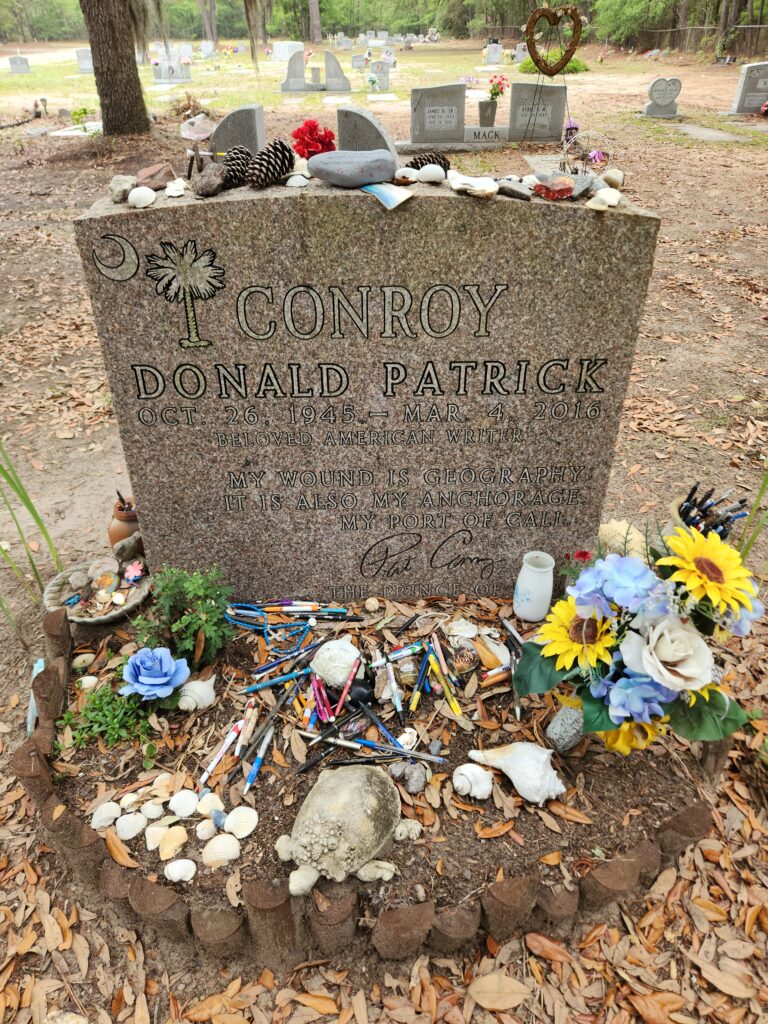
The other stop you should make is at Pat Conroy’s grave. No, he doesn’t have a grand mausoleum in the biggest graveyard in Beaufort. Pat Conroy chose to be laid to rest in the place and among the people that he loved. He is buried in a quiet Gullah cemetery, on St. Helena Island, the only white man in St. Helena Memorial Gardens. His grave is covered in ink pens, left by fans who long for just one more Conroy missive.
You do know the difference between a graveyard and a cemetery, right? I mean, I’ve explained it—if you were listening to those podcasts. A graveyard is attached to a church—like a churchyard. A cemetery is separate, maybe miles away from any specific church.
The Port Royal Cypress Wetlands and Rookery
The Port Royal Cypress Wetlands and Rookery is an easy walk through downtown Port Royal—in a cypress swamp, bug spray advised. (Now, when was the last time you wore bug spray downtown?) During the spring months, it is also a rookery, so plan your trip to include spring to enjoy the real action.
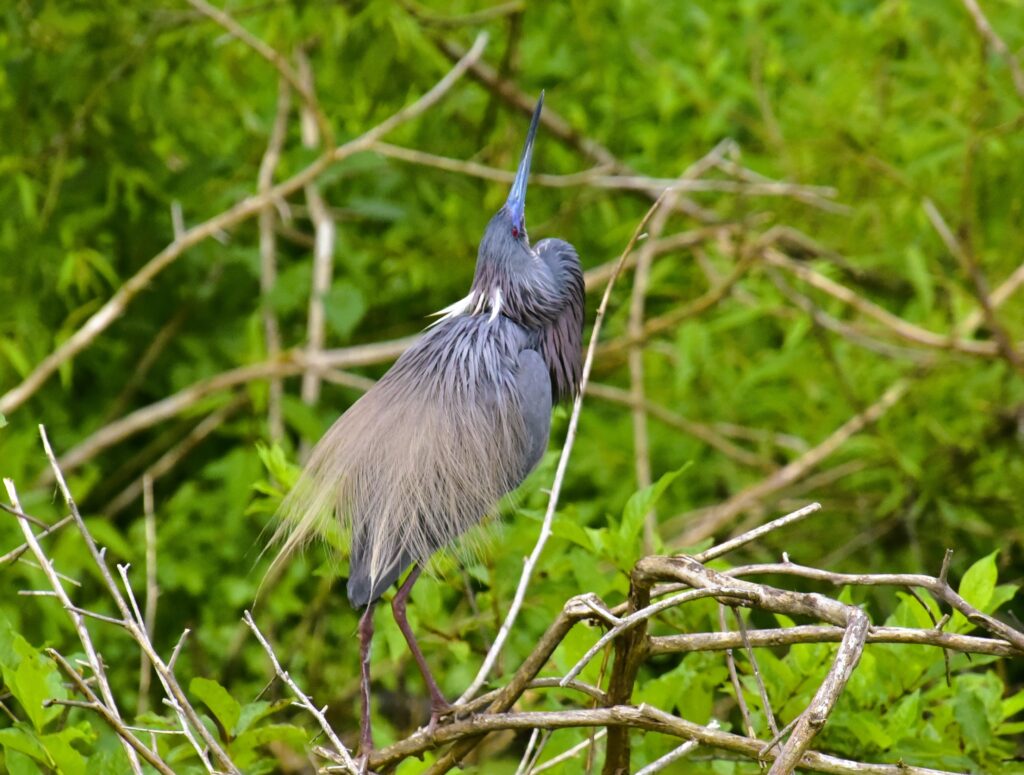
The wetlands are filled with native birds and animals and serve as a bed-and-breakfast for migratory birds. On any given visit, you may see hawks, osprey, bald eagles, a variety of heron species, and falcons—in other words, a birdwatcher’s heaven. There are also turtles, alligators, and squirrels.
When you are ready to plan your trip to Beaufort and Port Royal, remember that Visit Beaufort is ready to help.
Two Islands and a Lowcountry Lighthouse
Hunting Island & Hunting Island State Park
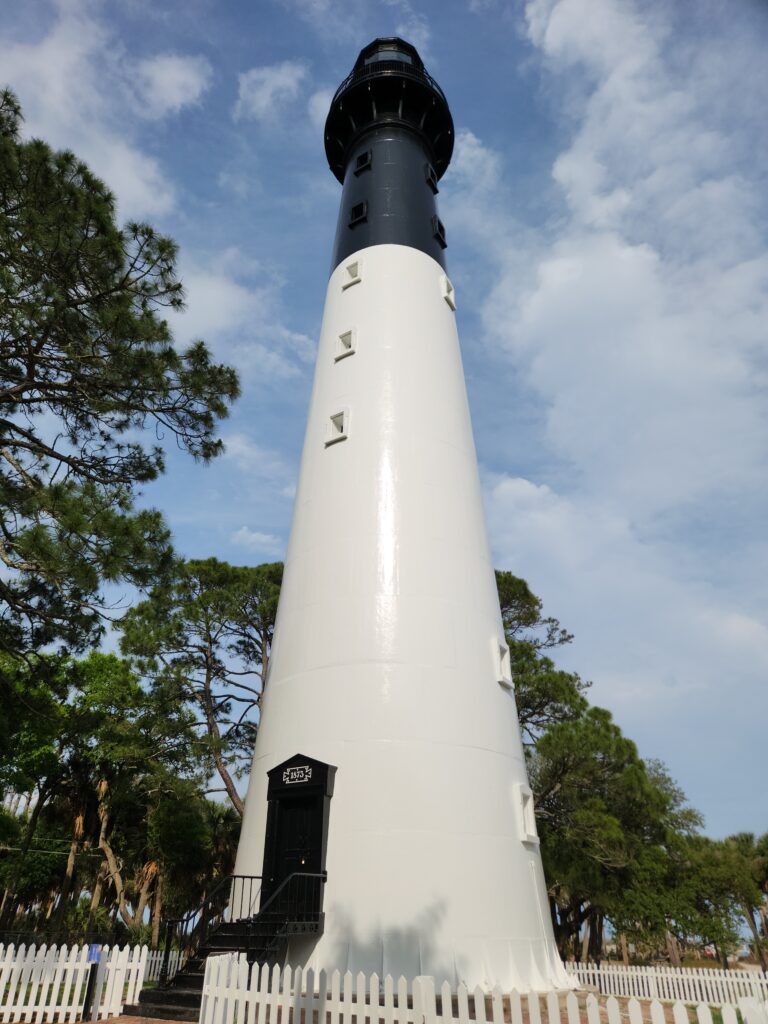
Hunting Island is home to Hunting Island State Park. Only nine more years until they celebrate their big 100th Birthday. This 5,000-acre park is one of 16 state parks constructed in South Carolina by the Civilian Conservation Corps (CCC) created by Franklin D. Roosevelt’s 1930s New Deal to combat unemployment. The park has 100 camping sites, 25 tent sites, a cabin, a fishing pier, 10+ miles of hiking, biking, and riding trails, an educational nature center, and a private island. Oh, and a lighthouse. On summer weekends, food trucks pull in for the day.
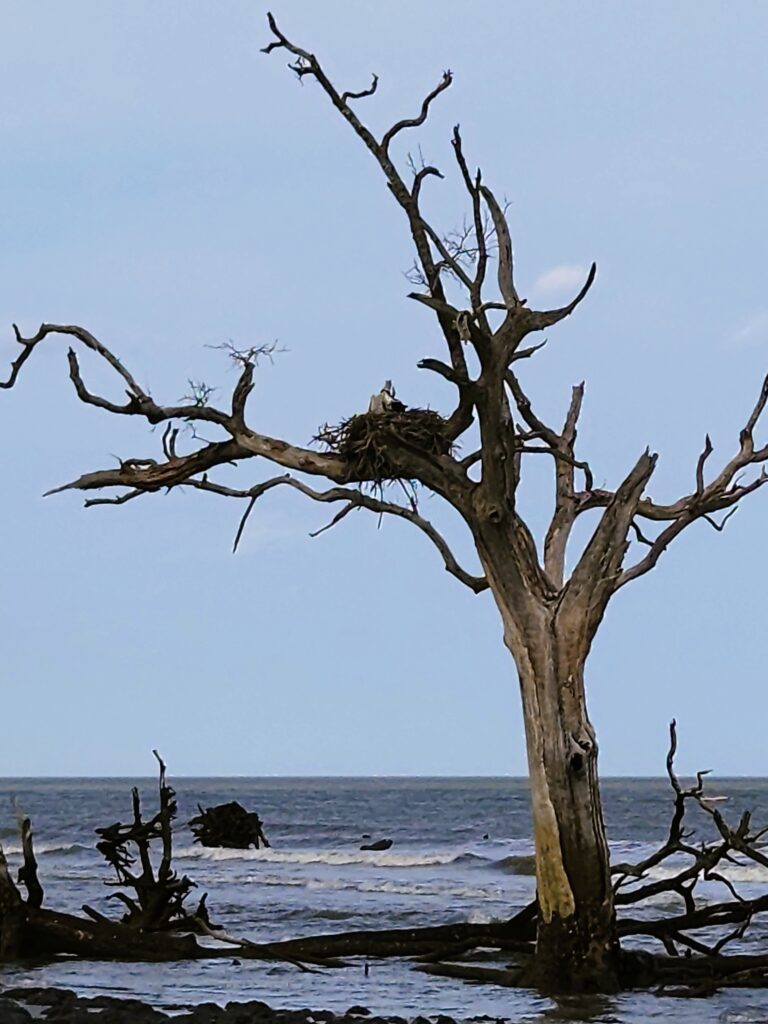
Newly renovated, the lighthouse is once again open for those who need a 130’ bird’s-eye view of the island. The lighthouse is unusual because its cast-iron sections were planned to allow it to be dismantled and moved when erosion threatened the site. It was constructed in 1874 and, due to erosion, had to be moved in 1889. I’m filing that in my “how cool is that” drawer. Naturally, the Hunting Island Lighthouse is on the National Register of Historic Places. Of the eight South Carolina lighthouses, only Hunting Island is open.
St. Phillips Island
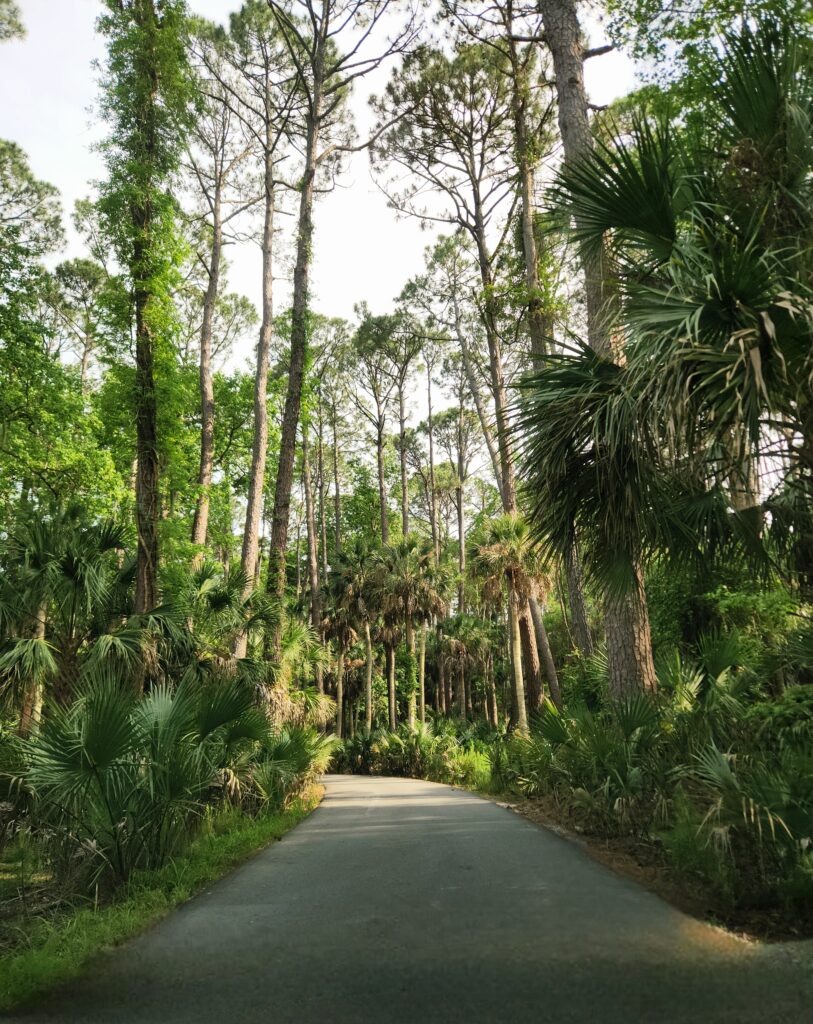
The State Park also owns St. Phillips Island, a retreat for billionaire and conservationist Ted Turner for 40 years. The island, purchased by the park service in 2017, is accessible only by boat, and a park pass is also required. You can take care of all that with your day-tour booking through Coastal Expeditions. The house can be rented by the week (5 days at $10,000). For information and reservations, call (803) 904-6220 or email StPhillips@scprt.com.
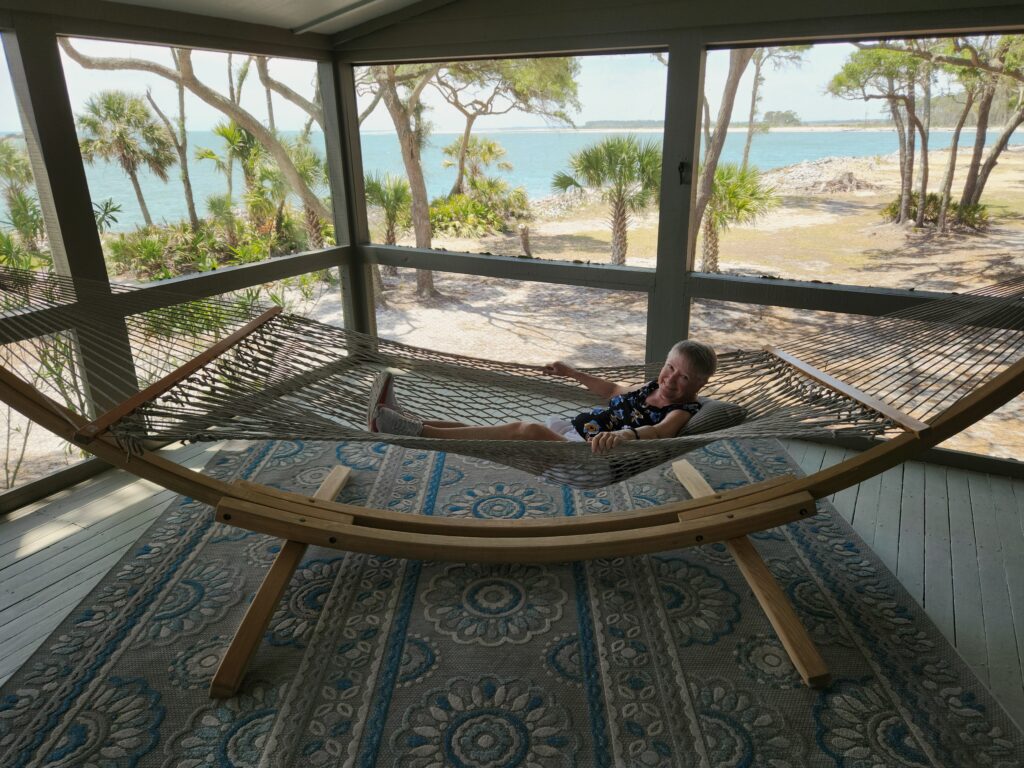
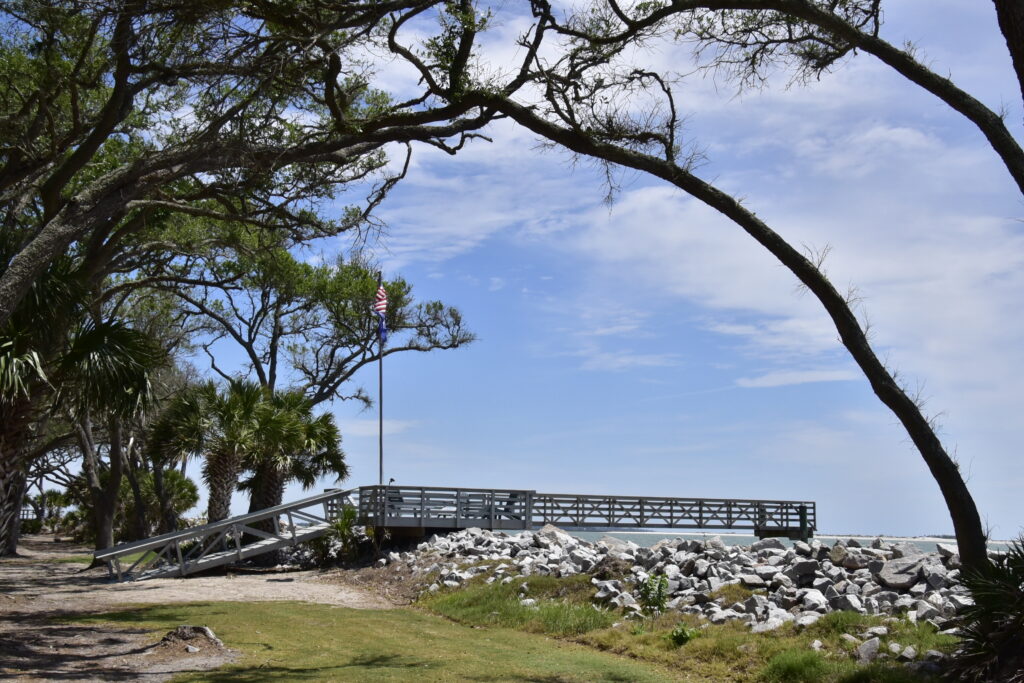
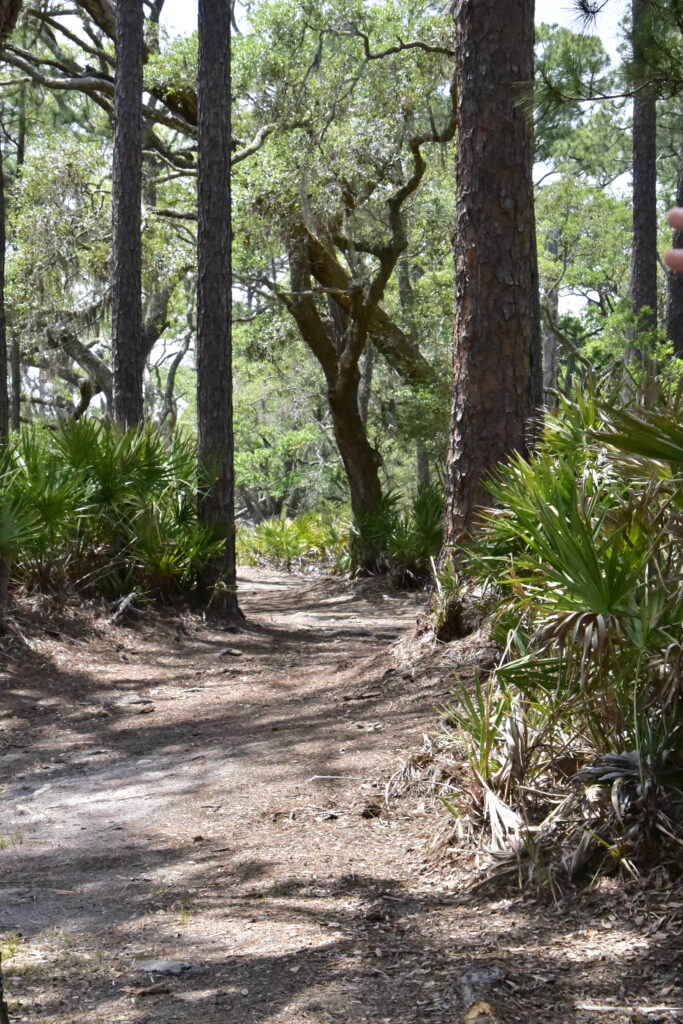
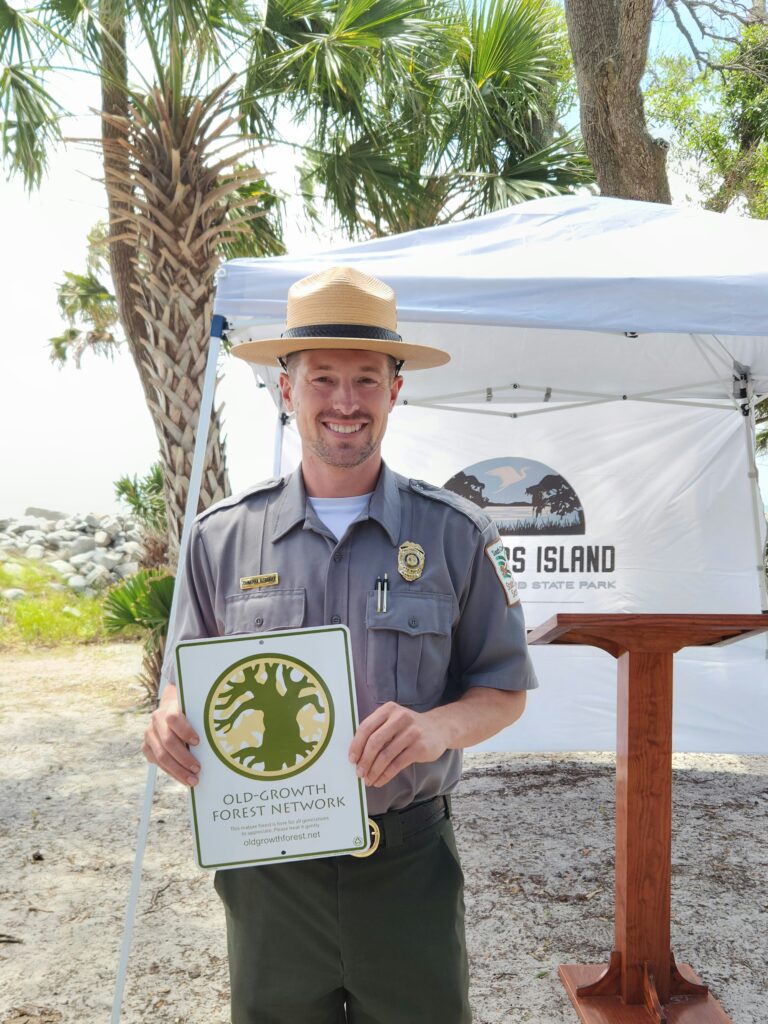
St. Phillips Island was recently inducted into the Old-Growth Forest Network. I was invited to attend the ceremony and tour the house and island. They’re just lucky the return trip wasn’t short one person. I was quite happy in Ted’s hammock. I’ll tell you all about my day on my Jo Goes Everywhere! podcast and the accompanying article. Becoming designated as an Old-Growth Forest is quite an accomplishment. There are only three Old-Growth Forest Network sites in South Carolina and about 300 nationwide. To visit one near you, look at the Old-Growth Forest Network’s online map and plan a road trip today.
Coastal Expeditions
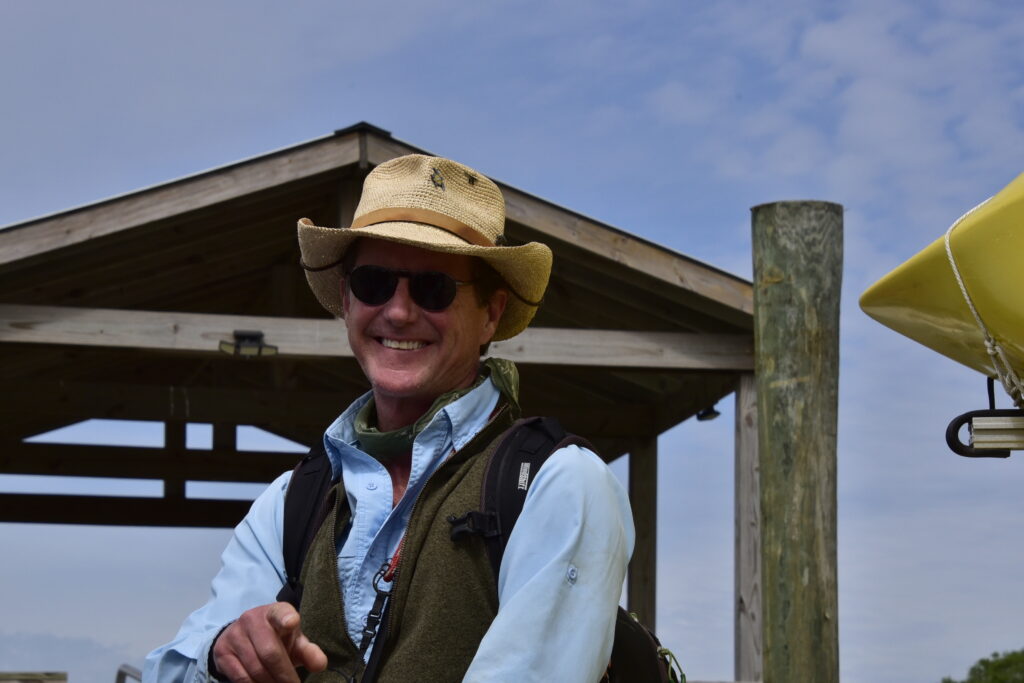
Something magical happens when you take the Lowcountry and add water. Besides, why walk when you can glide? Boat tours of the area are a must. Coastal Expeditions has different tours around Beaufort—sunrise, sunset, or history in between. They also have tours around St. Helena Island and Hunting Island, plus a day trip to St. Phillips Island. The naturalists keep you entertained while still educating you.
Or you can walk on the wild side, well, paddle on the wild side, and rent a standup paddleboard, or relax a little in a kayak.
Places to Eat
Beaufort has many intriguing spots with enticing fragrances wafting out on the breeze. To get you started on your eating adventures, follow in my footsteps and visit:
Old Bull Tavern
Old Bull Tavern in Beaufort. This busy Gastropub serves European and American selections, along with wine and craft cocktails. Without reservations, you may have a wait, even for sidewalk tables, unless you turn up at just the right moment and snag a seat at the bar.
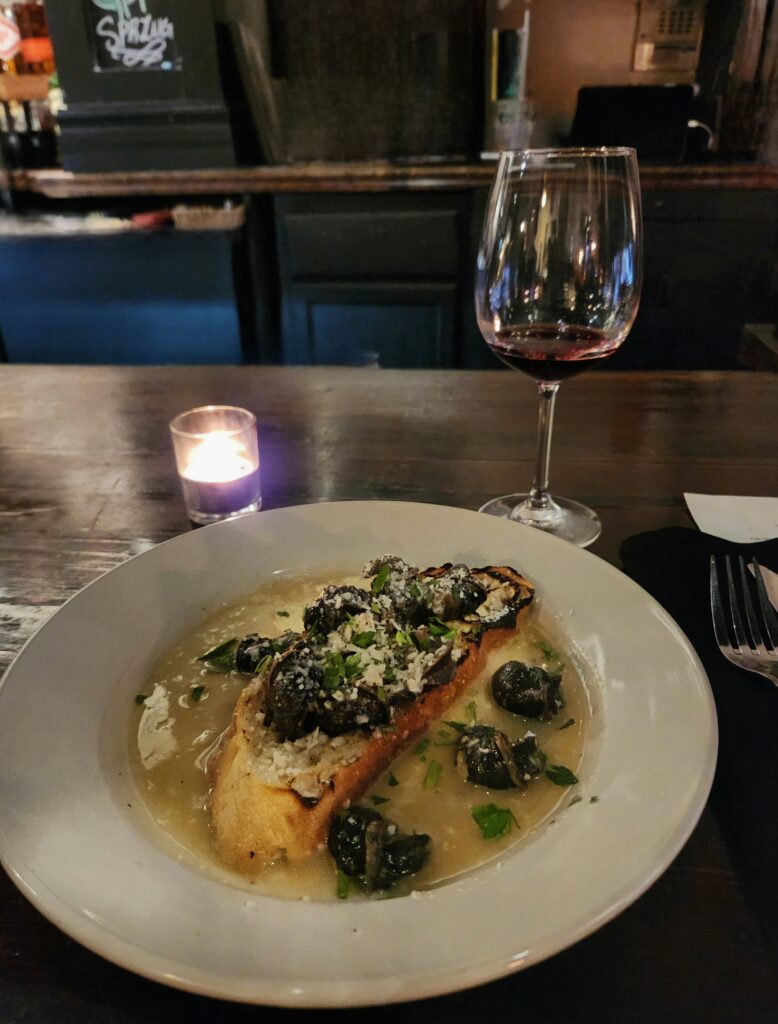
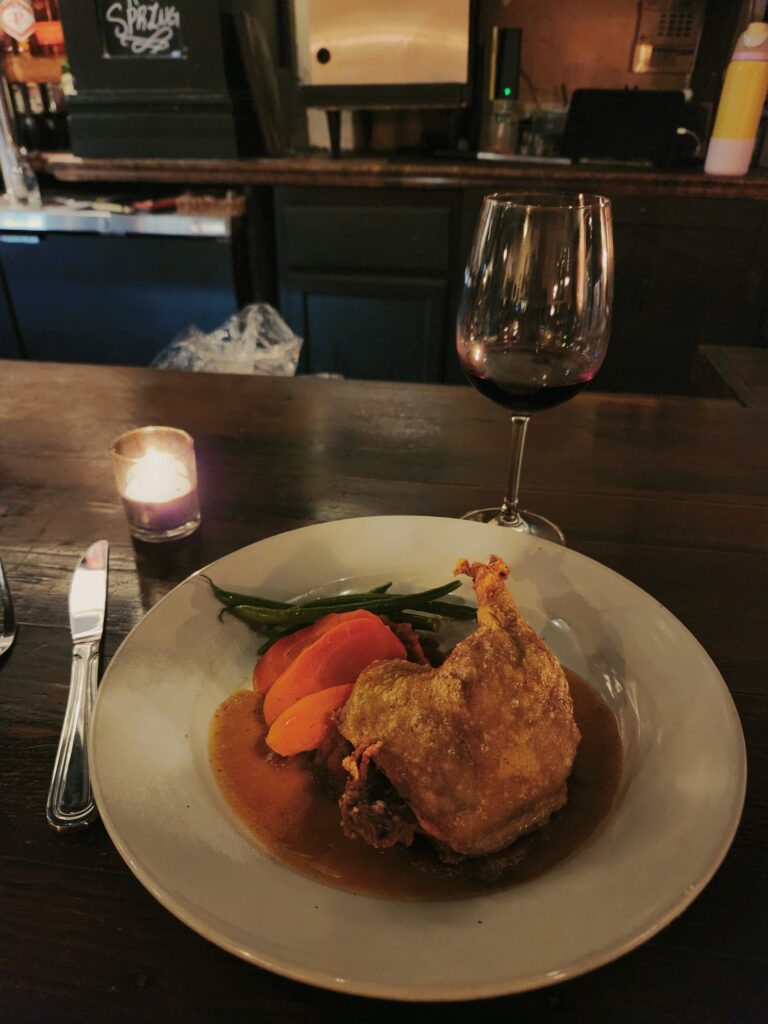
The bartender, Phillip, had some great recommendations for wine to accompany the foods already calling to me—escargot (they called it a starter, but I would have been happy with it for my entire meal), and a duck breast with butternut squash puree (again, not just an entrée, but a generous portion). From what I observed, you can’t go wrong no matter what you order. And leave room for dessert—they sounded and looked marvelous—but I put away the equivalent of two entrées, and reluctantly left without silencing my sweet tooth.
Fish Camp on 11th Street
Fish Camp on 11th Street in Port Royal. Enjoy a view of the water while eating on the screened porch (indoor tables are also available). And while you wait, you can be a kid again and swing on the porch. The Fish Camp makes a luscious Lobster bisque that will remind you of Maine, and crab cakes that must be held together with Lowcountry magic, because there is nothing else there.
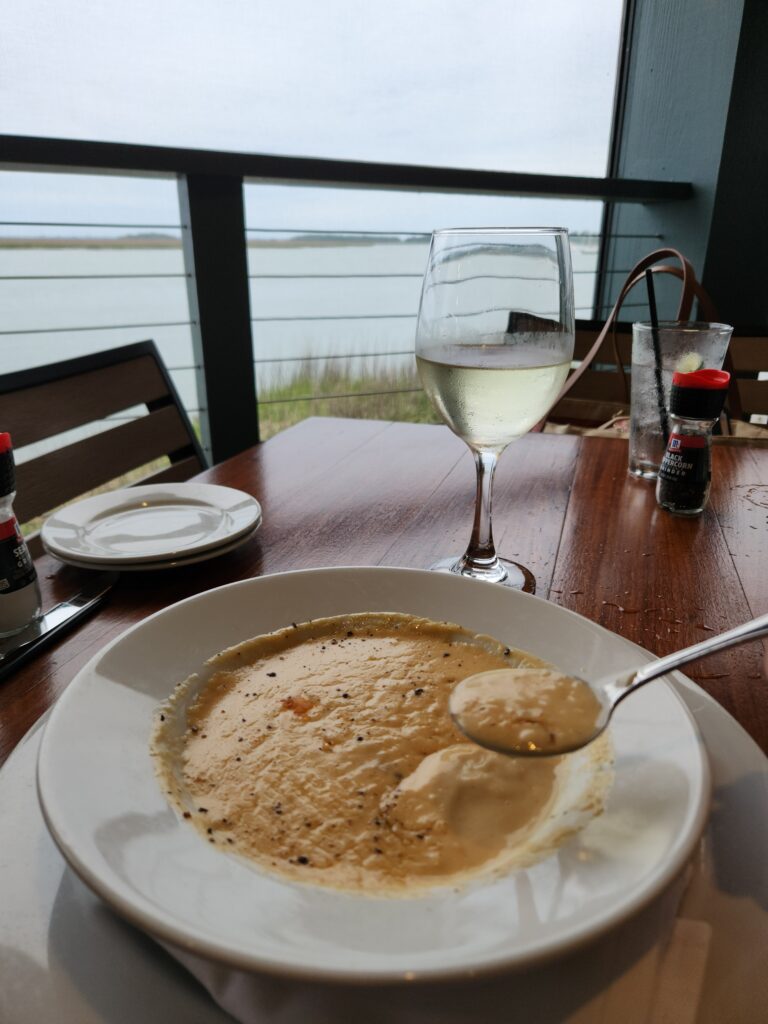
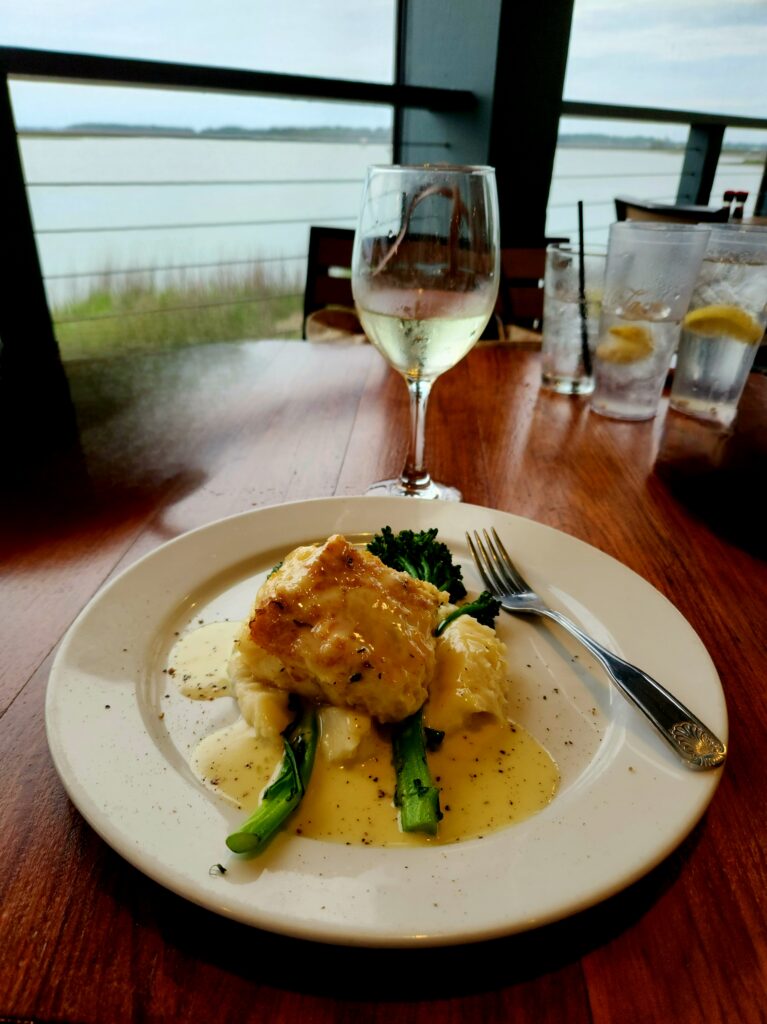
Entrées included TripleTail (as deformed as it sounds), a saltwater game fish with white, flaky meat, and Parmesan-crusted Grouper, both delicious choices. Once again, too full for dessert. But that can be a good thing, right? Arrive early, claim a parking spot, and walk across the parking lot to the brewery.
ShellRing Ale Works
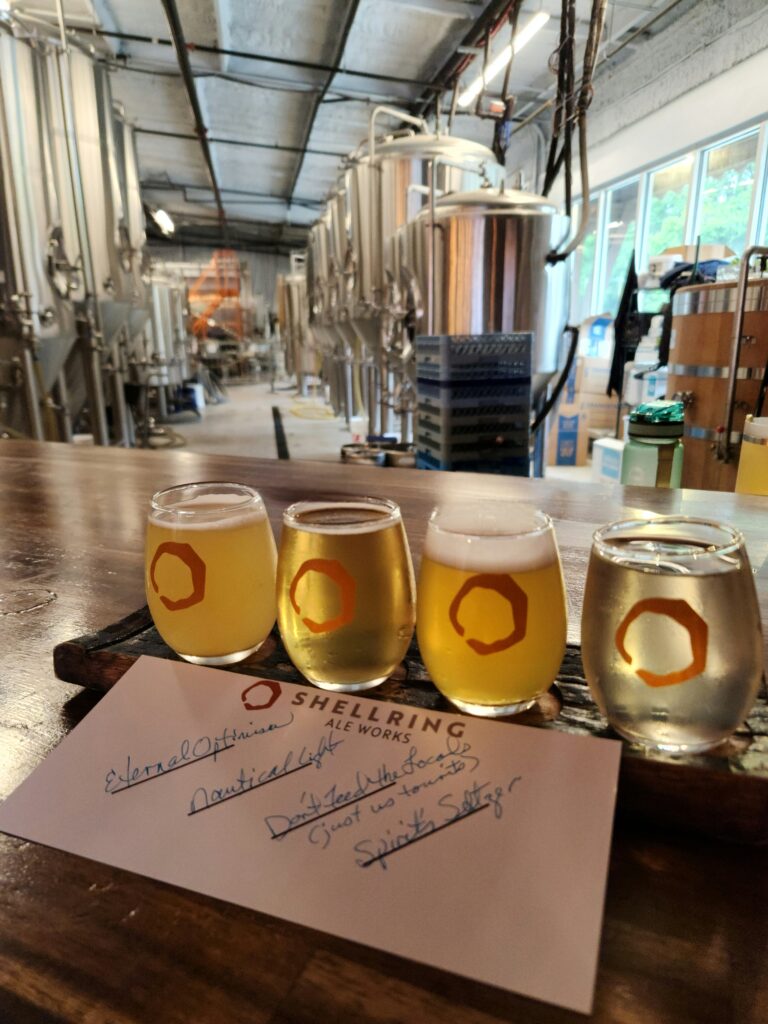
ShellRing Ale Works in Port Royal overlooks the water and docks. The taproom has both indoor and outdoor tables and a bar, where patrons can enjoy live music. They have plans for a beer garden, and a restaurant is in the not-so-distant future. The beers are handcrafted in a variety of flavors, and after a tasting or flight, you will find several you like. The beers have inventive names, and the cans have adorable labels. My favorites were Don’t Feed the Locals and Eternal Optimism. But couldn’t turn down Southern Peach Cobbler either. And then there were the seltzers…sigh.
There is a resident food truck serving street-food-styled nibbles, so you can always stop in and call it supper. With a name inspired by the place where native people gathered to meet, eat, and celebrate, ShellRing lives up to its namesake.
Where to Stay
The Beaufort Inn
The Beaufort Inn is hidden in plain sight. As if by magic, you cross the bridge, start down a busy street, take a right, and…aahhh…serenity.
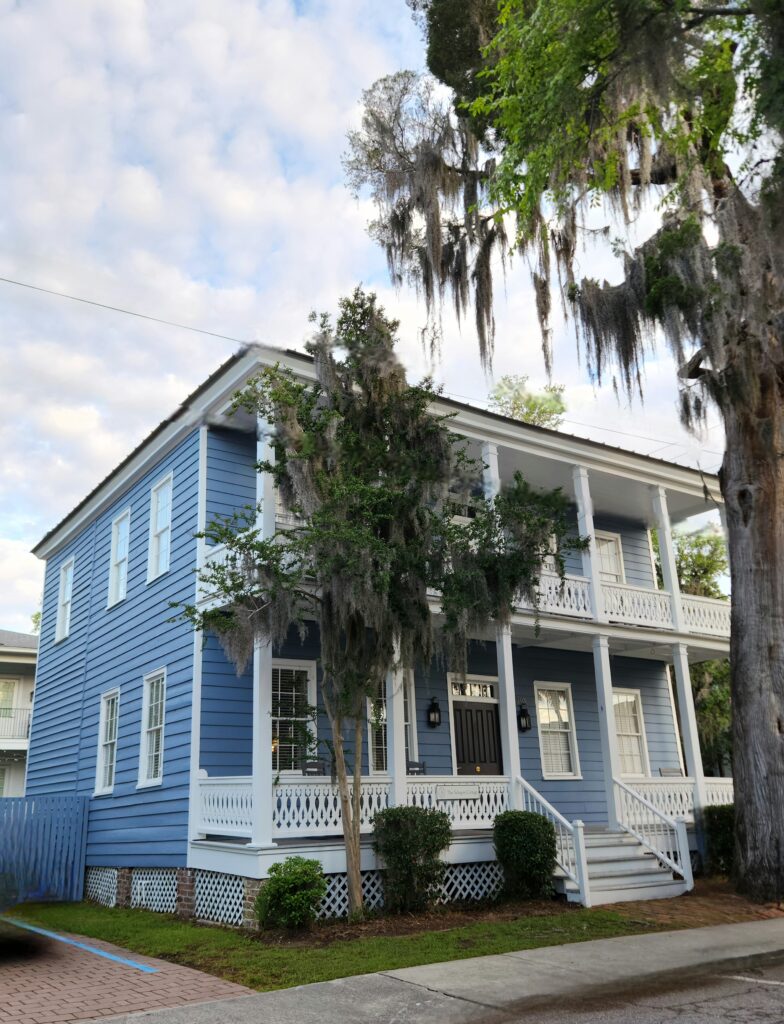
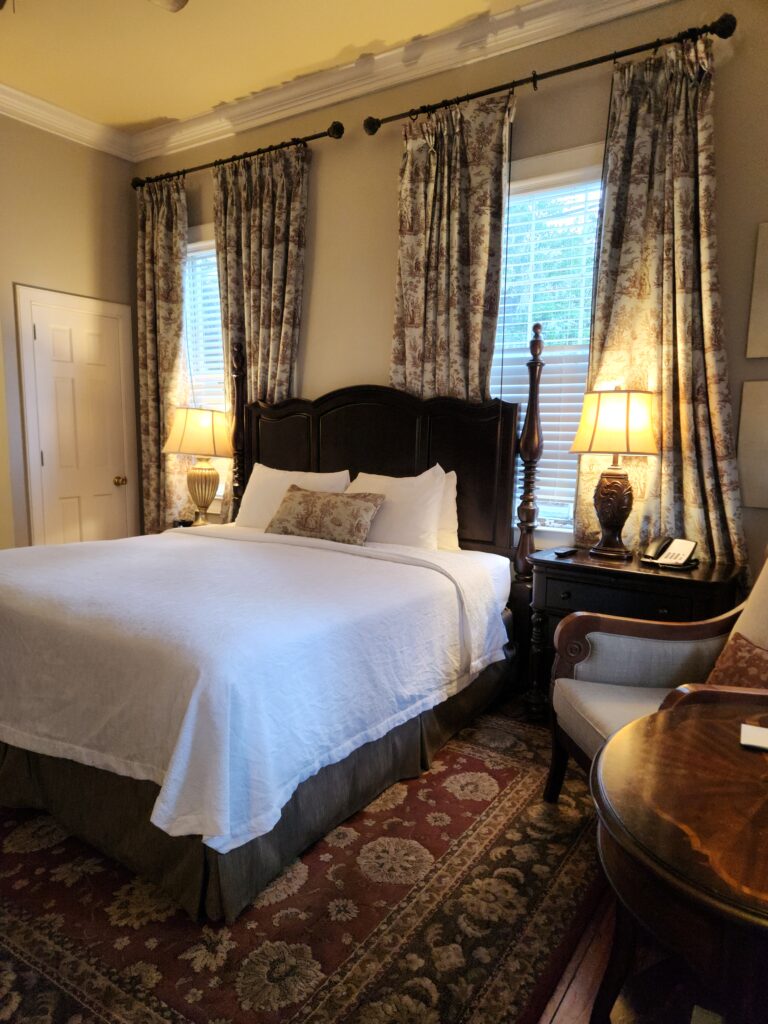
The reception building was built in 1897 as a summer home for the Smith family. In 1920, the Inn welcomed guests for the first time, and in 1930, Mrs. Gordon Black renamed the place The Beaufort Inn. In 1999, the Inn purchased two houses on the block, and the rest is history.
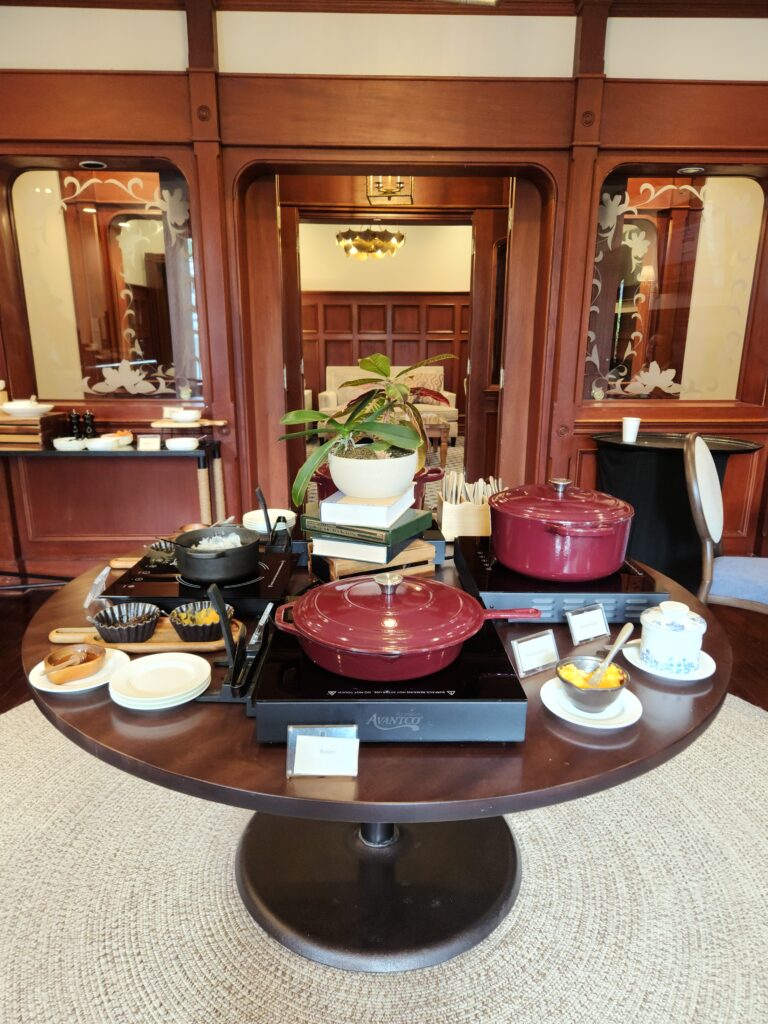
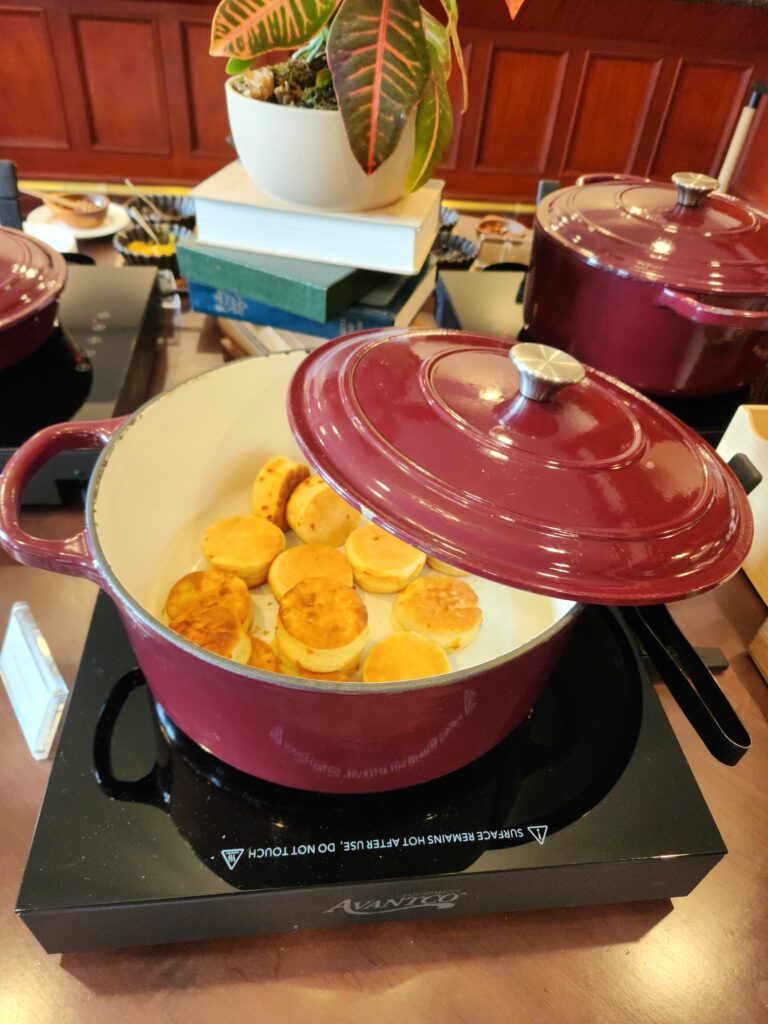
The properties have porches with rockers and comfy seating beside firepits on secluded patios that beckon you to bring a glass and your favorite bottle of wine and gaze at the fire—or the stars. In the morning, the Inn’s famous cheese biscuits and sausage patties will be waiting.
The Secret Magic of Bluffton
Bluffton is gaining momentum as a foodie hotspot, and my bathroom scales agreed. Old Town Bluffton’s walkable Historic District is alive with small-town charm. The town was established as an escape for early planters from the heat and malaria found in the swamps of the Lowcountry. It earned its name from the high bluffs carved out by the May River and its tides.
Modern-day Bluffton is filled with chef-driven restaurants, art galleries, a wine shop in a garage, river views, and a distillery with a tree and stained glass inside.
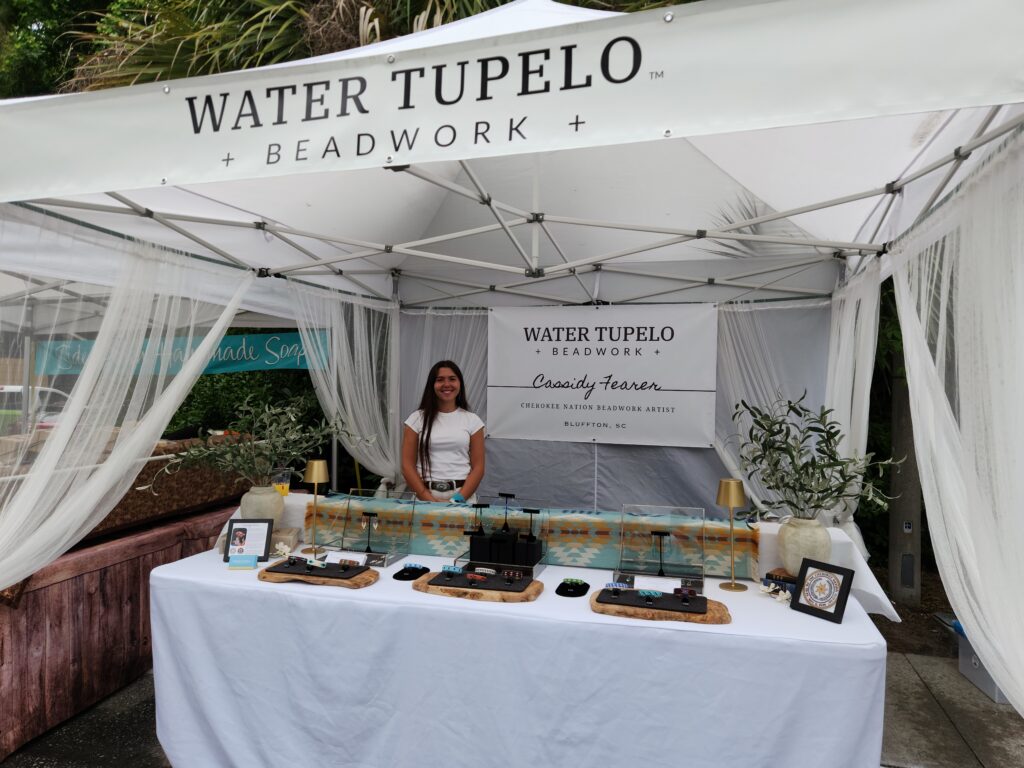
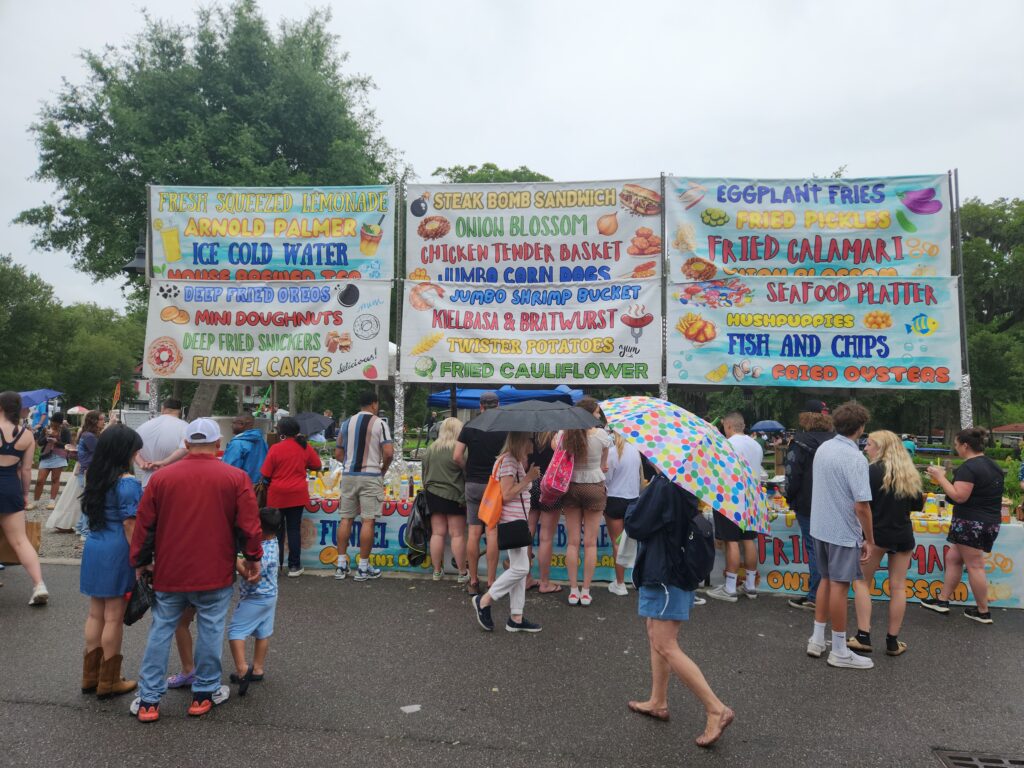
I arrived just in time for Bluffton Mayfest 2026, and judging by the crowds, so did everyone else in South Carolina. By lunchtime, every parking space had vanished. Thank goodness I was booked at the Old Town Bluffton Inn, so I had a place to park my car. Otherwise, a parking spot would have been next to impossible to come by.
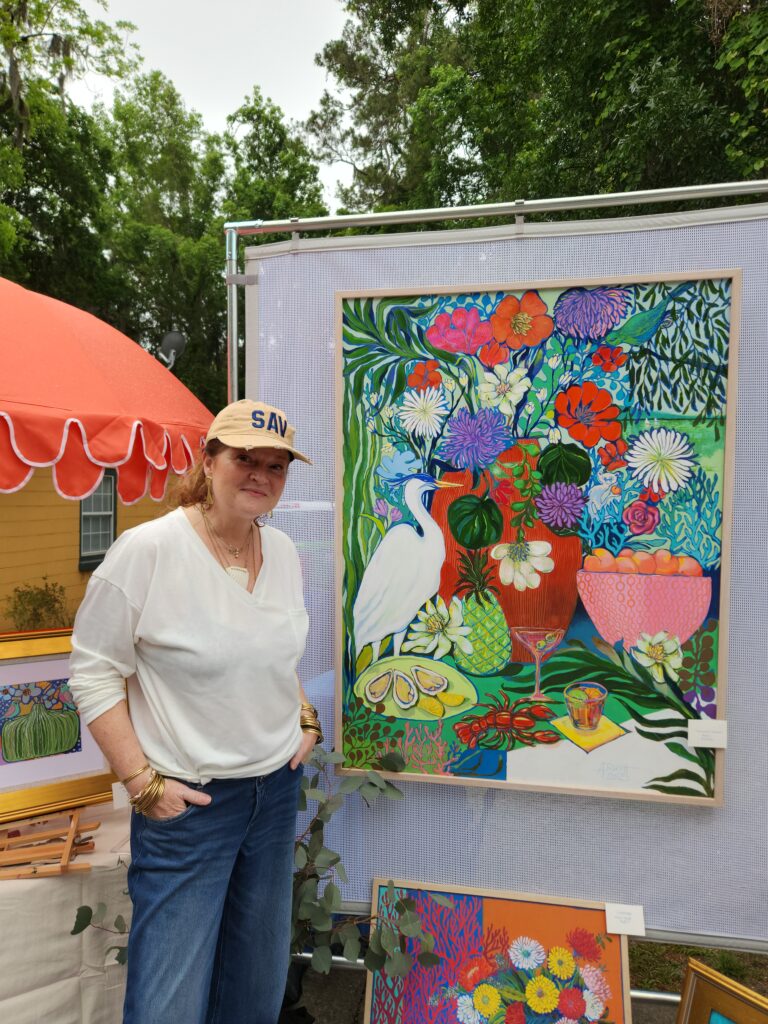
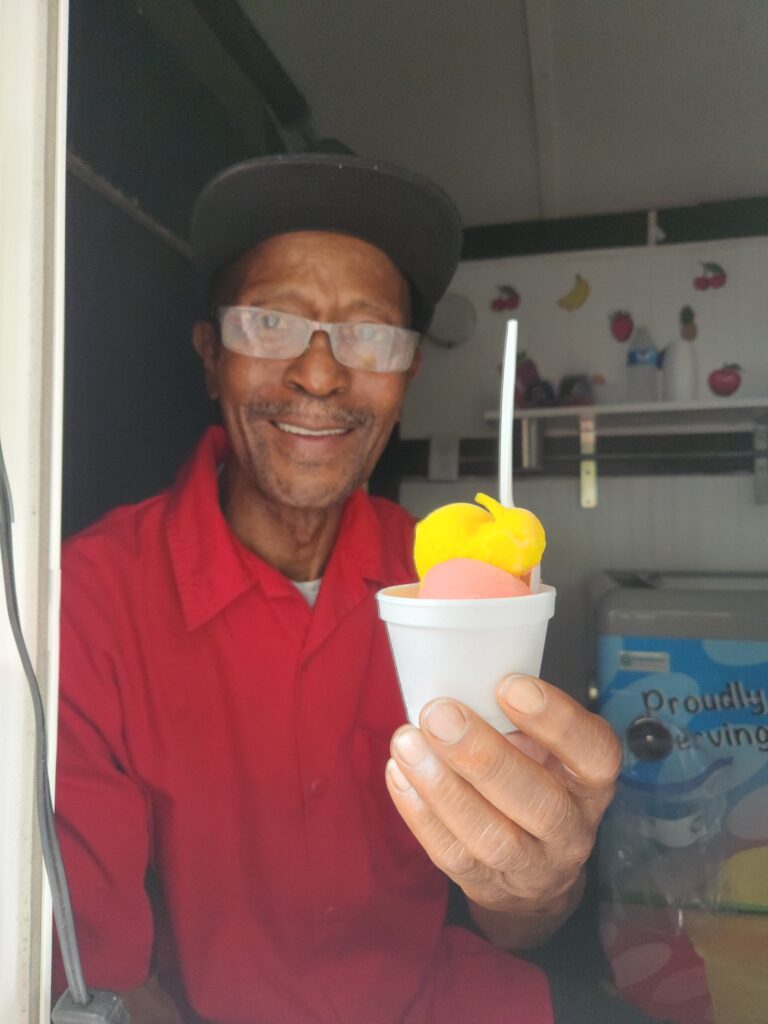
What began in 1978 with a handful of arts-and-crafts tables to celebrate spring has grown into the Rotary Club’s annual Mayfest, an all-day street scene in Historic Downtown Bluffton. 160 artists and craftspeople, food trucks, and live music filled block after block of Bluffton. Even light off-and-on showers did nothing to dampen the spirits of participants or festival attendees.
Old Town Bluffton Inn
Since I’ve already mentioned the Inn, let’s just start there. The Old Town Bluffton Inn is one of those places that fits, even before you arrive. When you call and talk to them, you know. Tucked into the heart of Old Town Bluffton, the Inn welcomes you with porches made for lingering and great room couches that invite sitting with a glass of wine and having conversations with other inn guests.
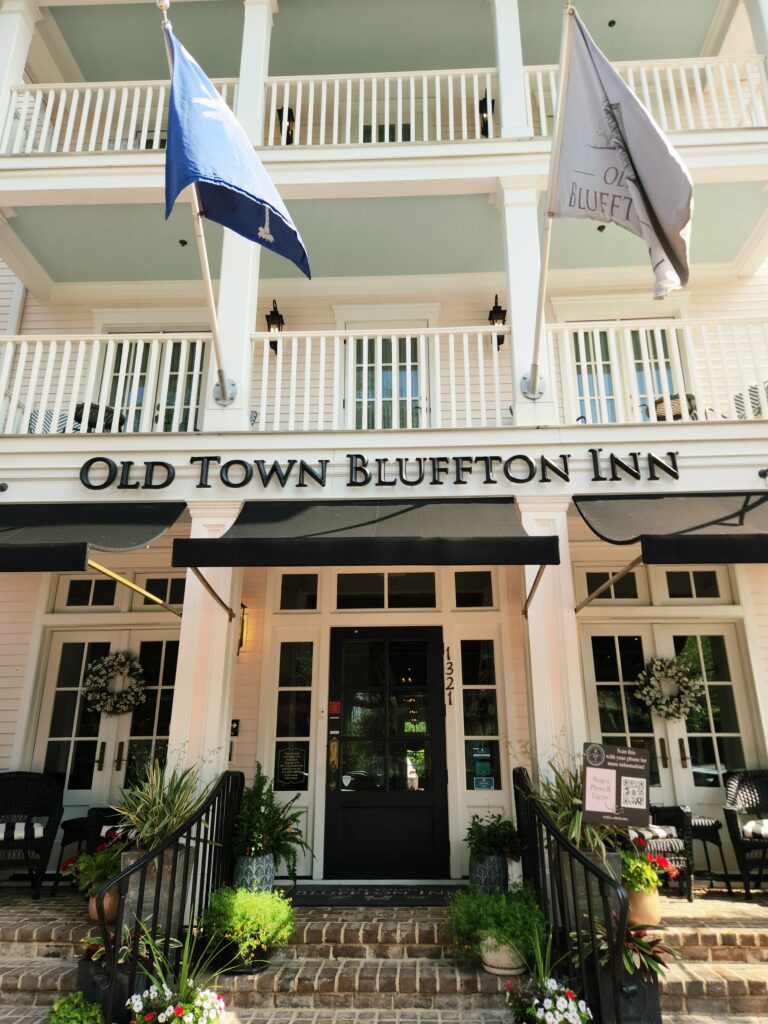
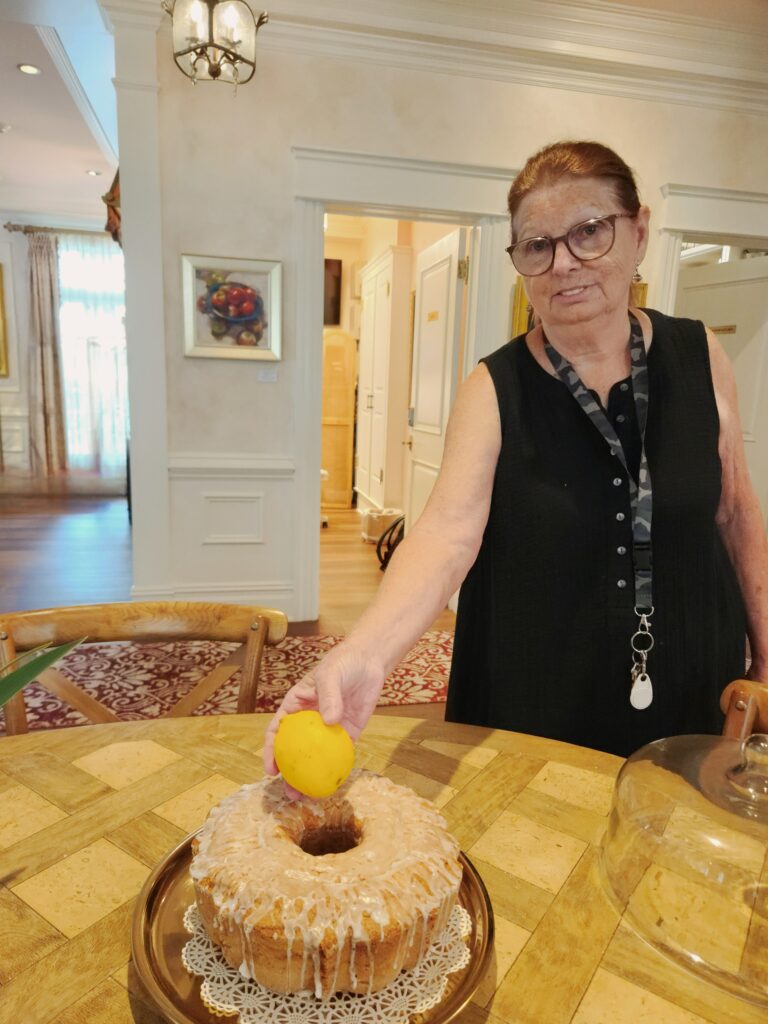
Some places rent you a room. Others make you feel like you’ve come home. And at home, you can wander into the kitchen any time of the day or night when you “need” a snack. The choices are always there. But the best? Miss Bonnie’s Lemon Pound Cake. Already sliced and ready to walk out the door with you.
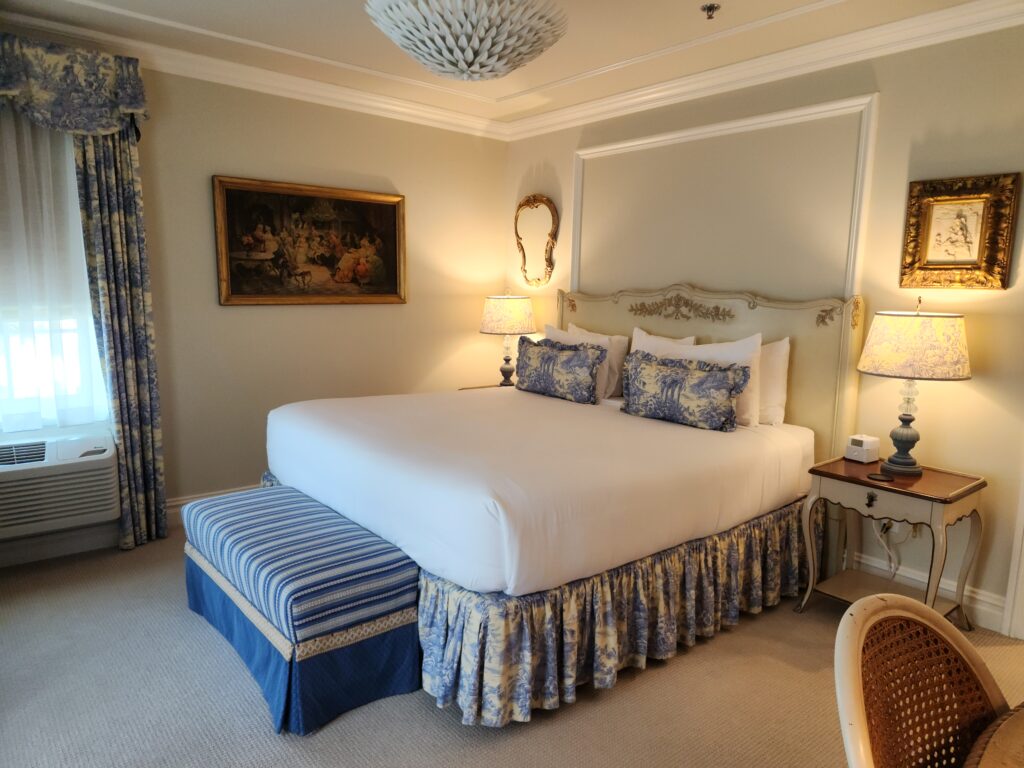
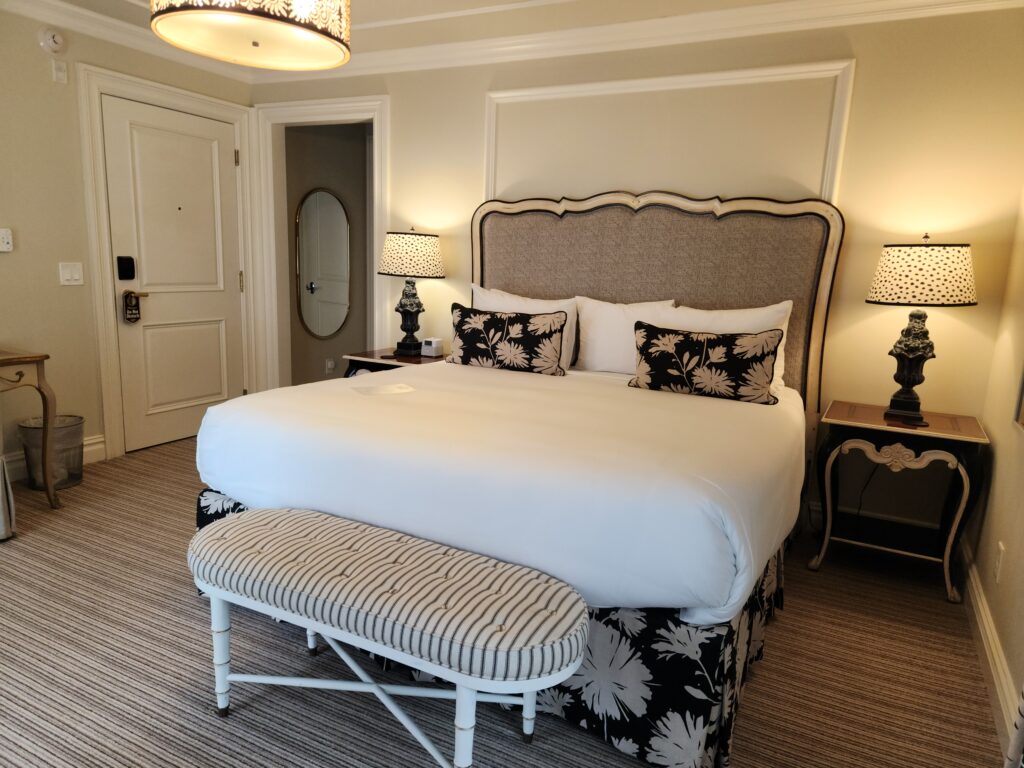
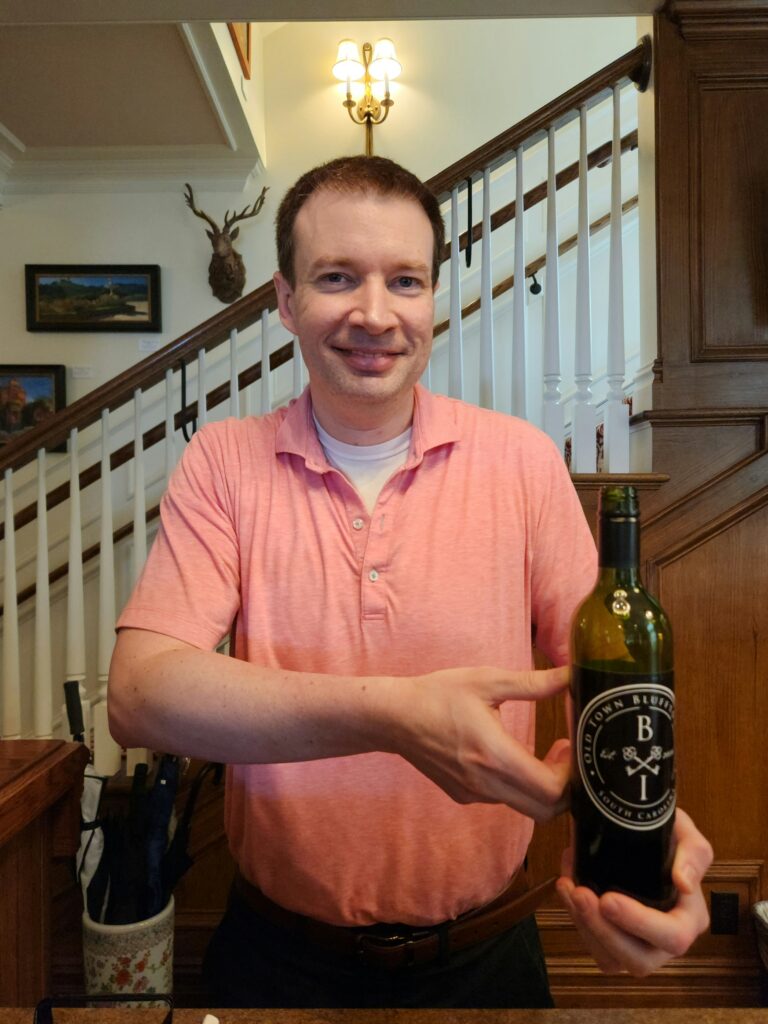
When you come back to the Inn late in the afternoon, dog-tired from walking and playing tourist, Garrett will meet you with a smile and a glass of wine. Pull up a chair and chat. Find out what you should do for dinner. Chances are good that his recommendation will be excellent, and walking directions will be given. If Canine Concierge Camo is on duty, invite him up to your room—he might just join you for an afternoon nap.
You’ll sleep well here. It isn’t just a good-night wish; it is a promise. It was the best night’s sleep of the trip. I asked and learned that the mattresses are custom-made in Charleston for the Inn. And to wake up to Miss Bonnie’s breakfast, it’s almost worth setting your alarm. Pro tip: Mimosas pair perfectly with Sausage Balls (and maybe another slice of banana bread) for breakfast.
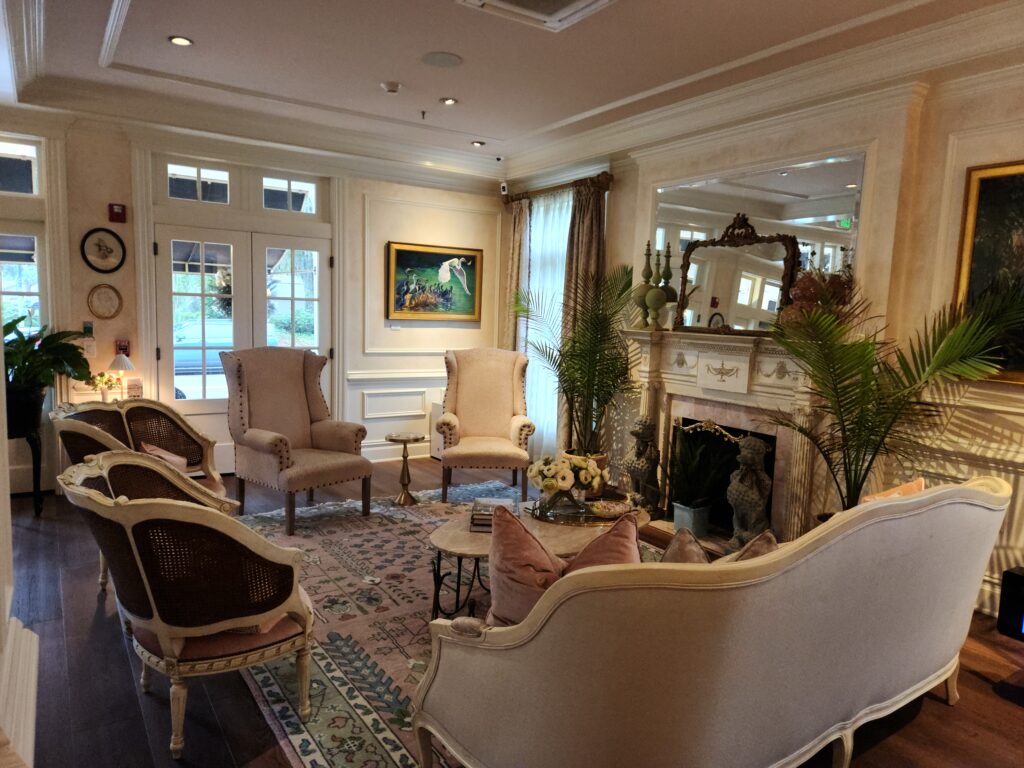
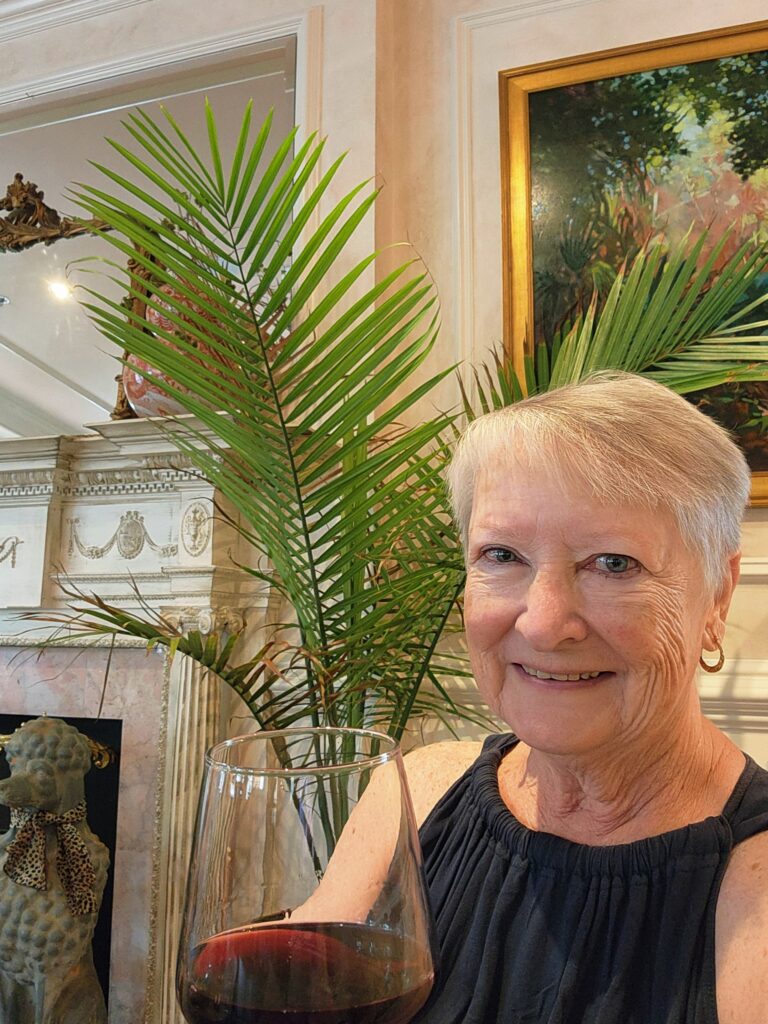
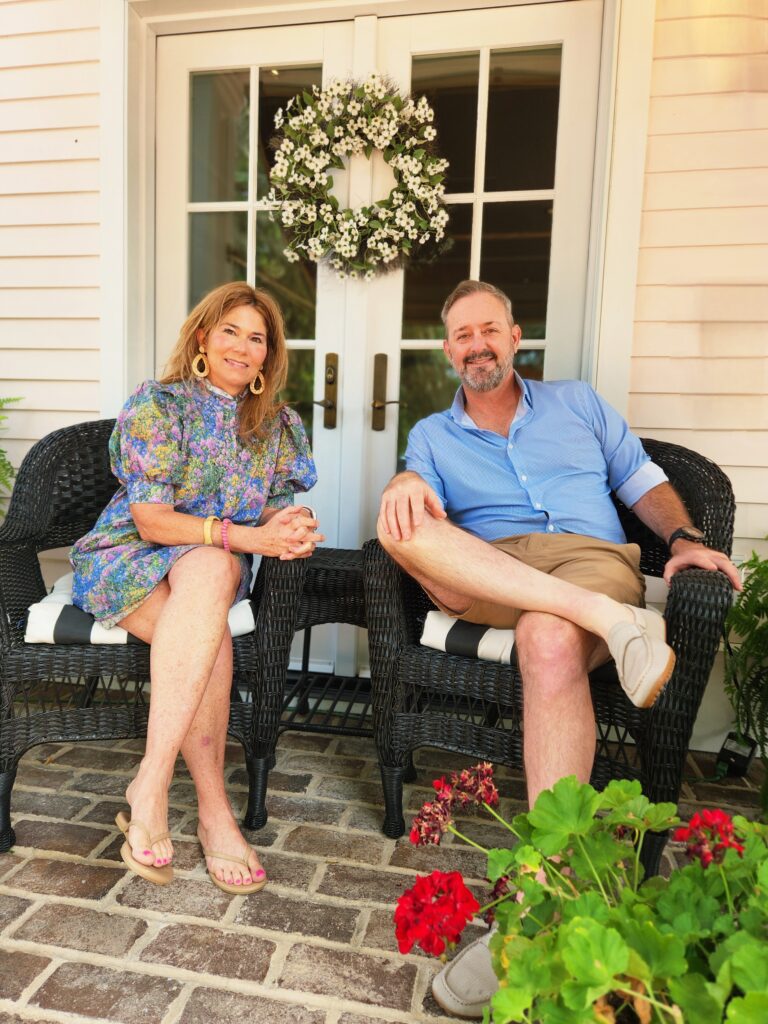
The hardest part of staying at Old Town Bluffton Inn was eventually checking out and saying good-bye to Vince and Danielle.
The Squire Pope Carriage House
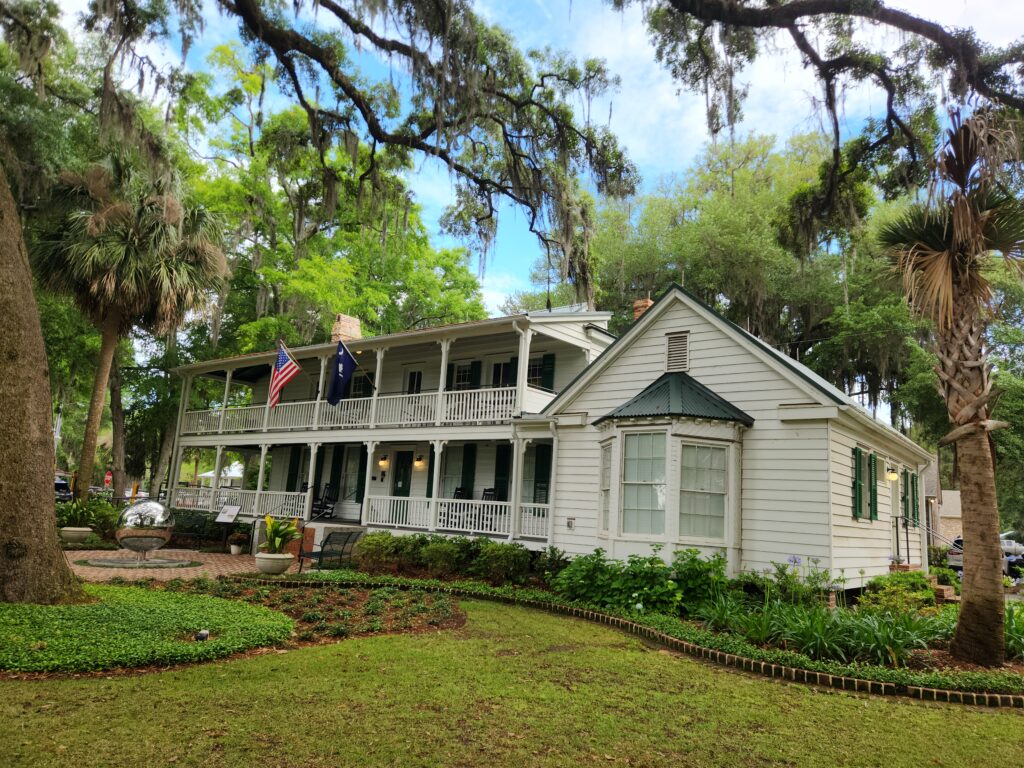
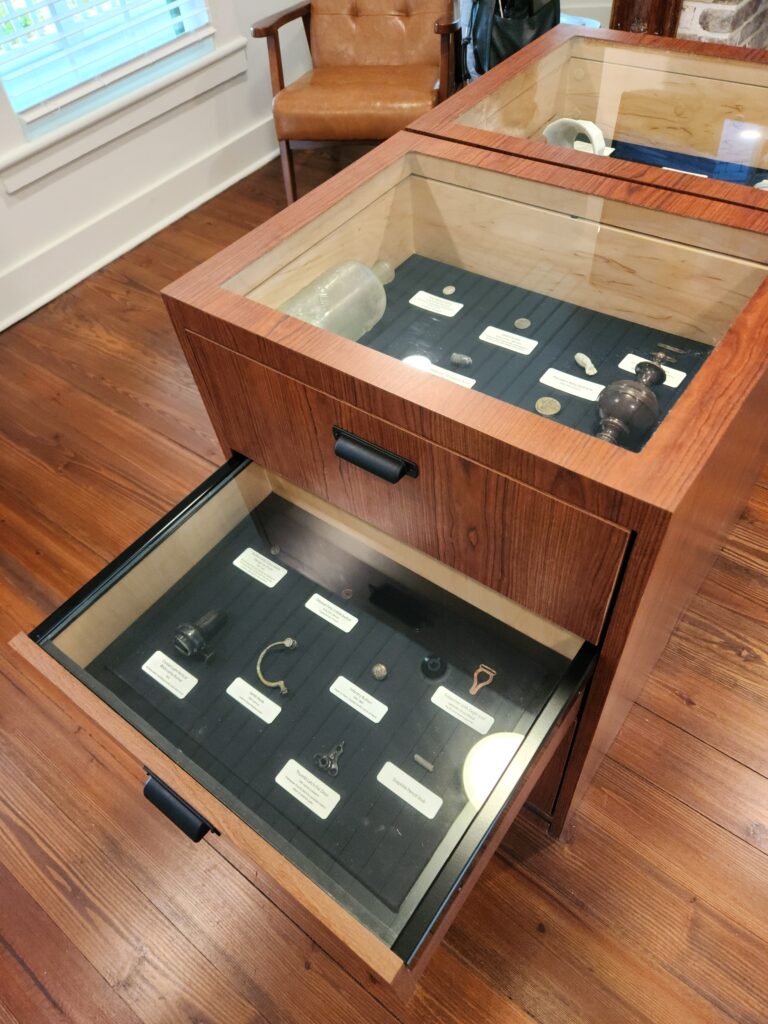
The Squire Pope Carriage House serves as Bluffton’s official welcome center. It offers visitors a glimpse into life in the Lowcountry before the Civil War. Built in 1841, the house survived both the Civil War and the devastating Bluffton Burn. Today, exhibits and knowledgeable staff help visitors understand the town’s history before setting out to explore Old Town. There is an interesting video playing in one room, and display cases with pull-out drawers reveal even more artifacts. And the center has refreshing lemon water and cookies in the kitchen.
Restrooms are in an adjacent building, and there is a fountain where you can refill your water bottles. If you arrive on the second Friday of the month, the Town of Bluffton invites you to the park for movie night under the stars.
While you are at the Visitor’s Center, take time to smell the flowers. Walk around the Wright Family Park, gaze at the water, and swing a bit. Then visit The Church of the Cross, just across the street.
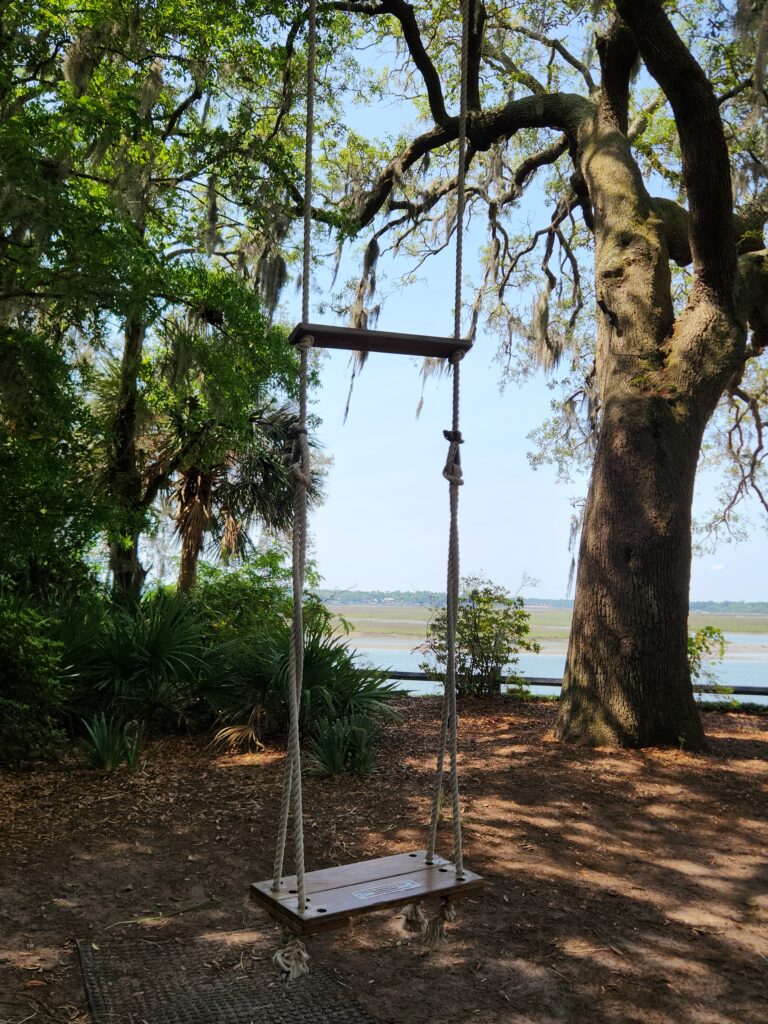
Out back is a swing to remember your childhood and admire the beauty of the Lowcountry’s May River. © Jo Clark
The Church of the Cross
Colonial Bluffton was a summer retreat for planters, especially those from the inland counties, and a ferry stop between Beaufort and Savannah. In 1842, a chapel was built nearby, and in 1854, The Church of the Cross was built, making it one of the oldest churches in South Carolina. Charleston Architect E. B. White designed what he called a “handsome cruciform Gothic building.” This lovely church was placed on the National Register in 1975.
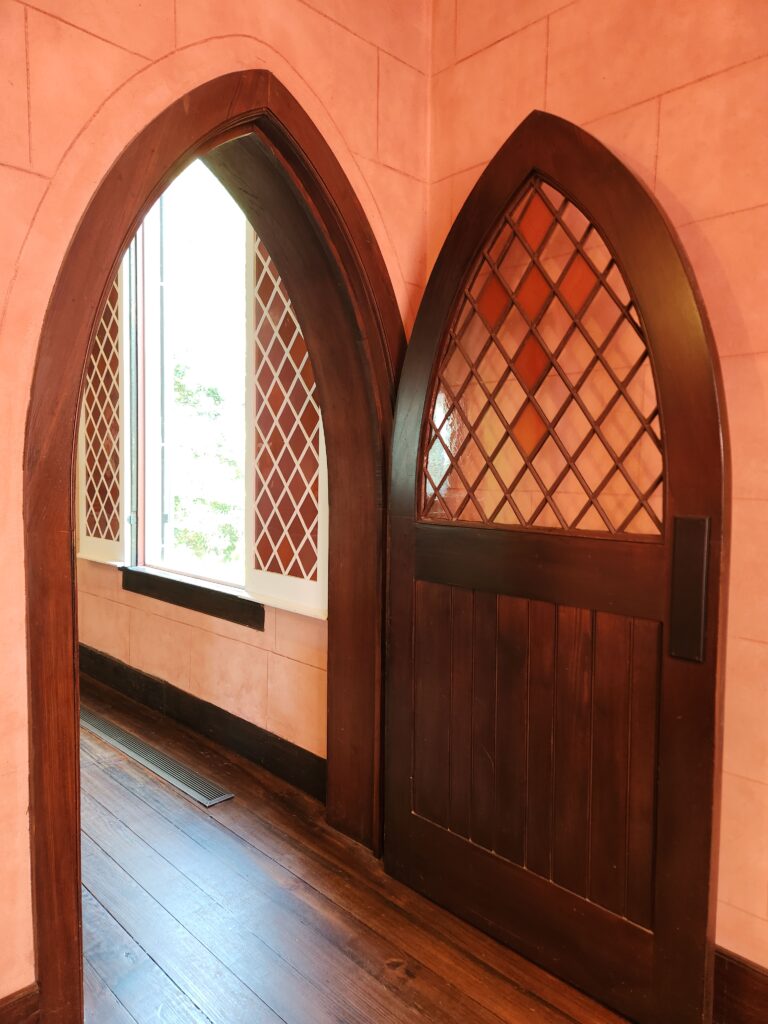
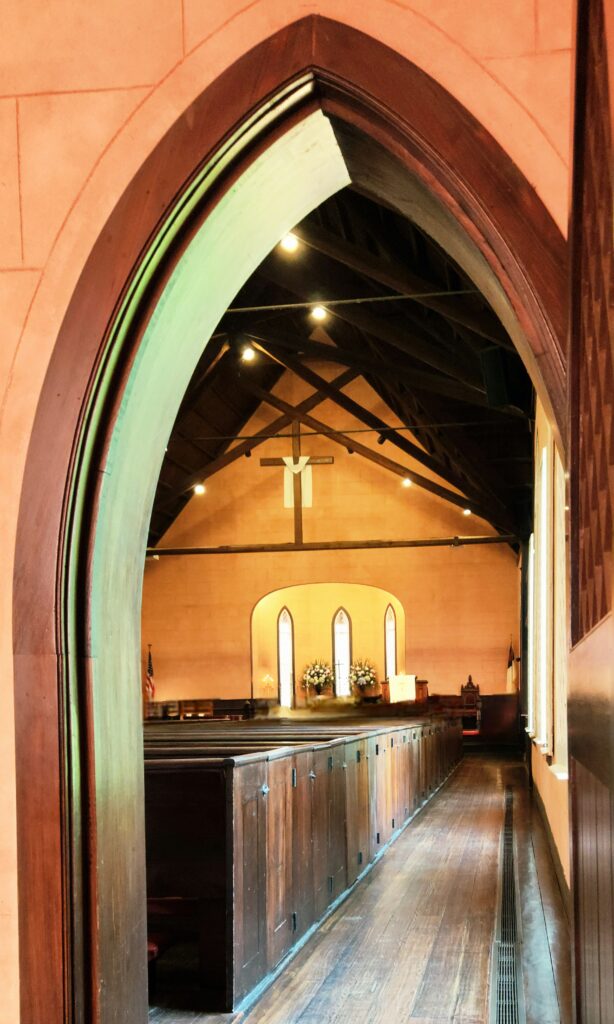
Before the 1990 renovations, attending services at the church was risky. Over the past century and a half, ill-tempered squatters had declared residency. Eventually, 48 colonies of honey bees had to be evicted, and their possessions sold to the community. Sales of the Holy Honey raised much-needed funds, and the tradition continues today, but the honey is procured from a local, friendlier beekeeper.
Tours of the historic church are conducted when the building is not otherwise in use.
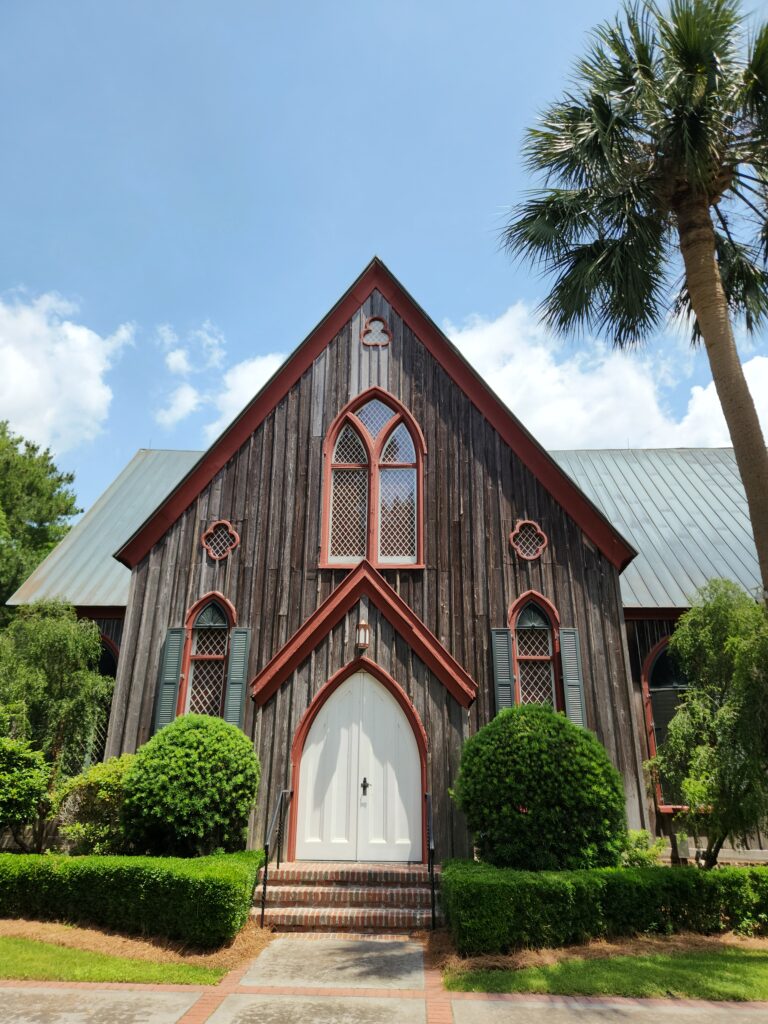
Art, Heritage, and Heart of Bluffton’s Gullah Community
In this village on May River Road, you will find history, art, shops, and food. Ma Daisy’s Porch really does provide everything you need for a day of exploring, starting with a plate of Gullah specialties. After eating, or before if you need to work up an appetite, walk through this thoughtfully designed complex and enjoy the history center and the colorful Gullah art.
Gullah Heritage Center
The Gullah Heritage Center offers educational programs and has interesting exhibits that explain the significance of Gullah culture. If you can plan it right, sign up for the paint & sip class, and go home with your own Gullah-inspired masterpiece.
Gullah culture is more than 400 years old, and the South’s Gullah Trail starts in Wilmington, North Carolina, and extends down the Atlantic coast to Florida. Traditional Gullah arts and cultural traditions include colorful paintings, sweetgrass baskets, dolls, food, and even language.

For true artistic inspiration or to purchase a souvenir of the Lowcountry, you’ll find vibrant Gullah art (and artists) on the porch. Stop and visit with local artists like Michael McClendon and Patricia Sabree. They are interesting to talk with and are delighted to tell you more about the area and their ties to the community.

Bakus Bakery has a tempting case in front of the door. As soon as you walk in, you will be in awe of the selection of baked goods. I’m not much help—I’m weak, and I would say get one of everything. But get two of the beignets—one to eat on the porch, and one for later.
Heyward House
The Heyward House was built in 1841, originally as a summer home for the wealthy planter John Cole IV and his family. The home is typical of Lowcountry architecture and is the fourth-oldest home in Bluffton. Today, the original antebellum building houses a museum and welcome center.
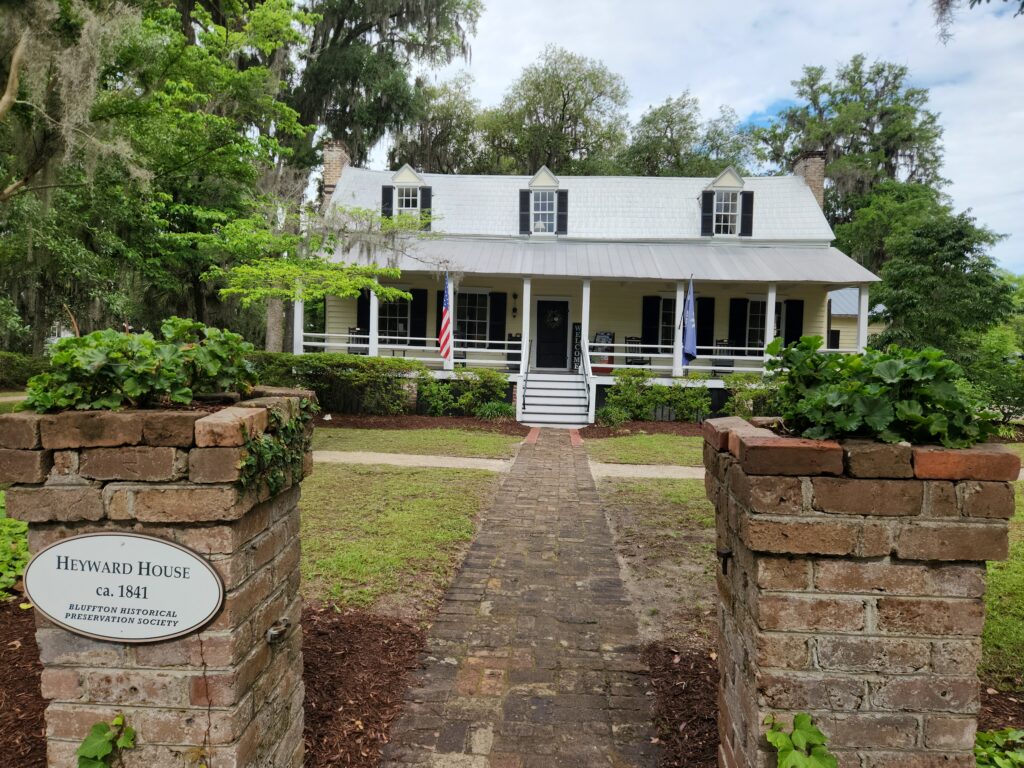
During the Civil War, most of Bluffton was burned by Union troops stationed at Fort Pulaski. The Heyward House was one of the few buildings that were spared. After the war, five generations of Heywards called the house home. The museum offers programs to area schools and groups (by arrangement) on topics such as Native American pottery, stories and songs, and historic games.
With notice, house tours, walking tours, bike tours, and tours of the Garvin Garvey House are offered.
Oyster Factory Park
Bluffton’s Oyster Factory Park has a boat ramp, picnic area, pavilion, restrooms, and, perhaps most importantly, a drop-dead view of the May River from the boardwalk. The park is located on the site of a former oyster cannery, which was significant in Bluffton’s history in the late 19th and early 20th centuries.
The Garvin-Garvey Freedman’s Cottage
The 1870 Lowcountry-style Garvin-Garvey Freedman’s Cottage on the Oyster Factory grounds is open several days each week, with guided tours. It is worth a look, even if it is not open for tours—look through the windows. The house was built using indigenous building materials of hand-hewn timbers and notching, and some milling techniques that were introduced to the Lowcountry by the Union occupation of Hilton Head Island.
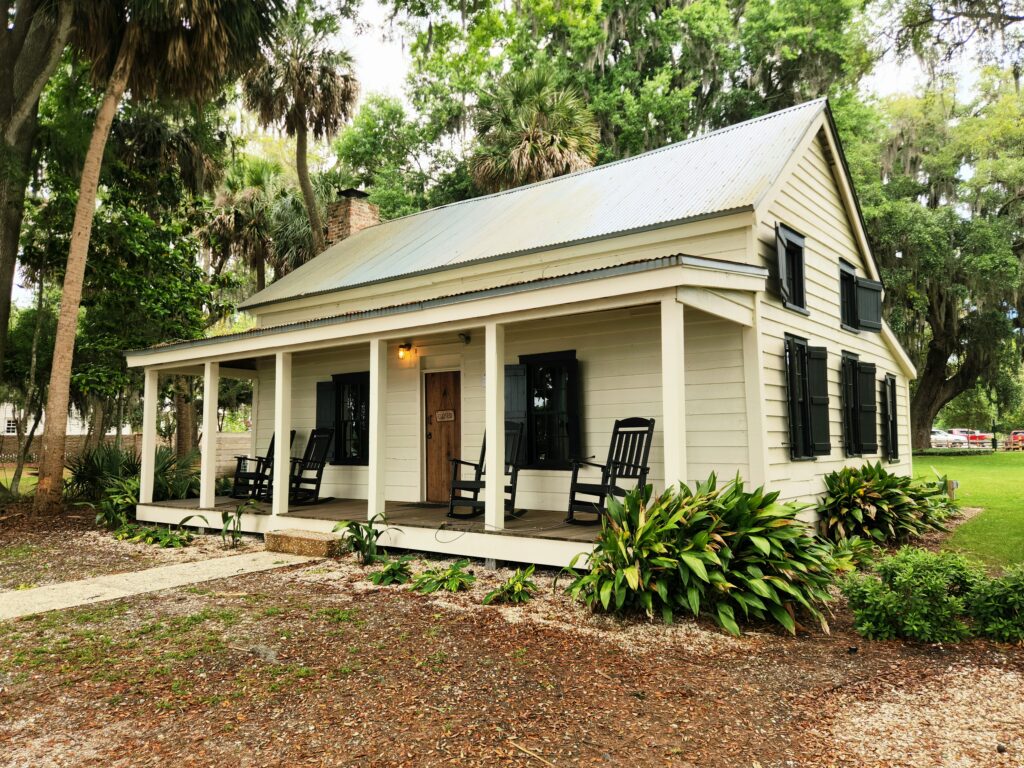
Cyrus Garvey, a formerly enslaved person, lived here and prospered during reconstruction, when times were tense for everyone in the area. The house is one of the earliest on the May River known to be owned by a freedman, and was occupied by the family for nearly a century—three generations of Garveys called the home their own. The name confusion stems from Cyrus’ use of Garvin on a deed in 1878, but Garvey in every other instance.
Palmetto Oaks Sculpture Garden
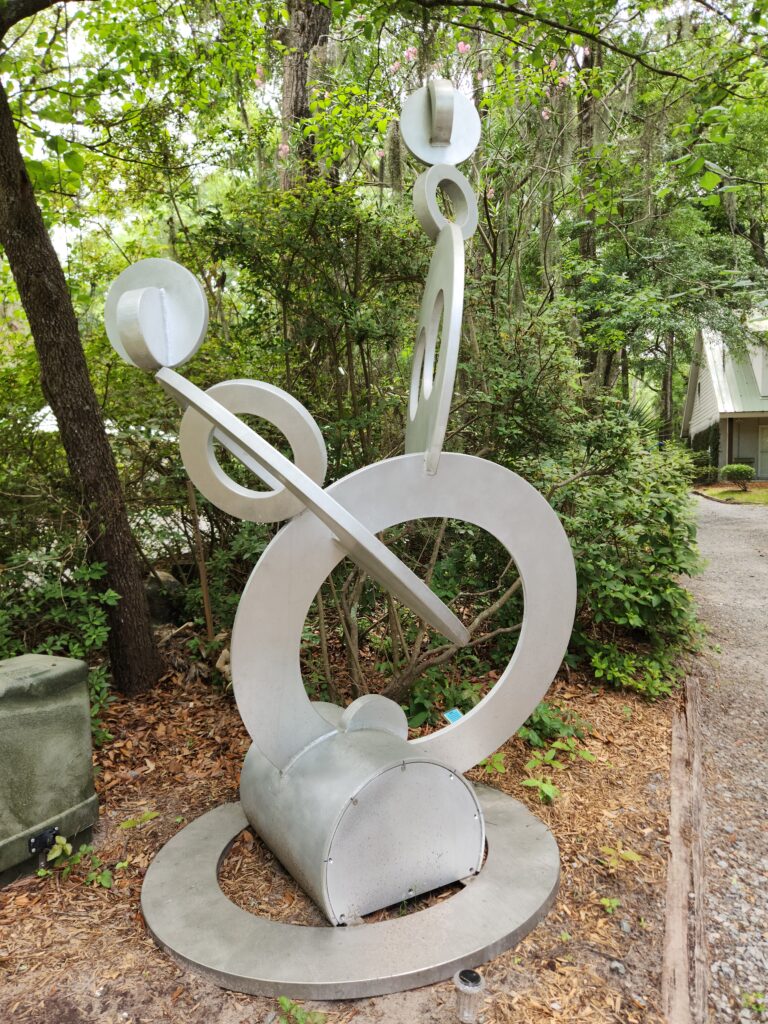
A short drive from Bluffton, along the May River’s edge, will take you to sculptor Stephen Kishel’s Palmetto Oaks Sculpture Garden and studio. Stephen welded his first sculpture at the ripe old age of seven. Few people find their life-long calling almost before starting elementary school.
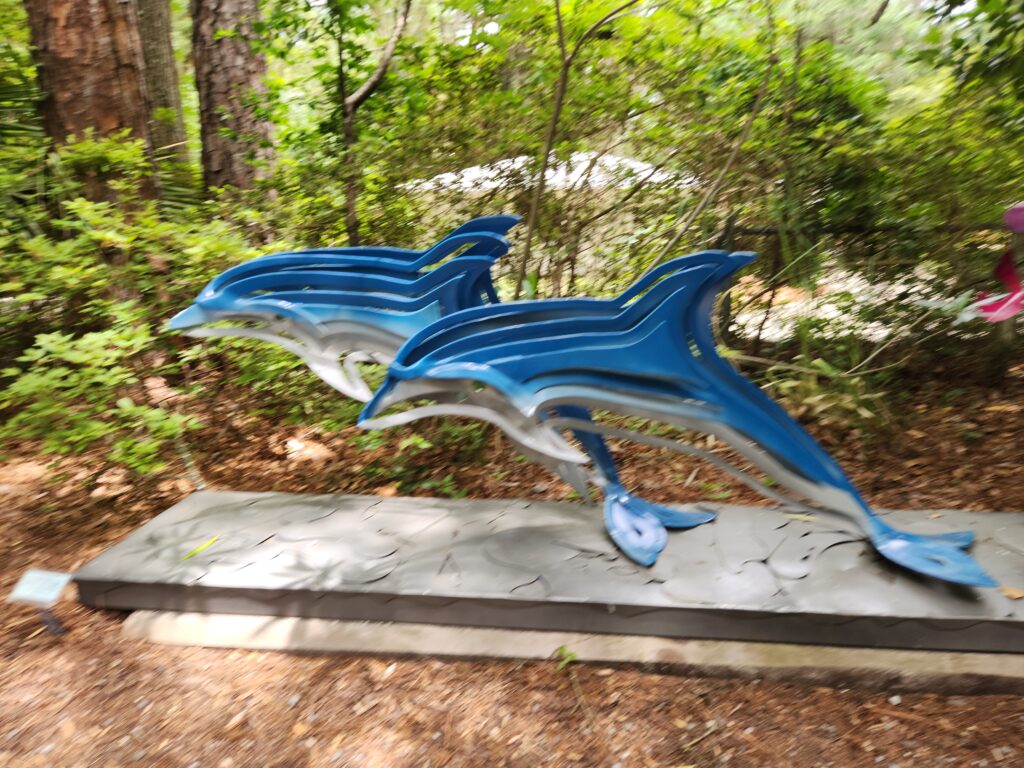
The garden is filled with colorful botanical sculptures and abstract pieces. Located behind the artist’s home, you are transported to the artist’s world as soon as you pull into the driveway. The artist welcomes visitors most afternoons, but check his website and contact him before visiting.
Eat, Drink, and Be Merry in Bluffton
FARM Bluffton
How do you keep people down on the FARM? You change the menu when they’re not looking. Open for ten years, the restaurant is on menu #1,014—oops, I mean #1027 (currently—and I was just there a month ago). That’s a sure sign of a lot of variety or creativity, or of a bored chef. I’m betting on door number two.
Oysters on the Half Shell, topped with Strawberry Nước chấm and pickled green strawberry, were slowly savored. You’re googling that term, right? It is Vietnamese for a dipping sauce or marinade, made from fish sauce, sugar, and lime juice. But this is the Lowcountry, not Viet Nam, so…toss in some local strawberries. That’s the way they roll.
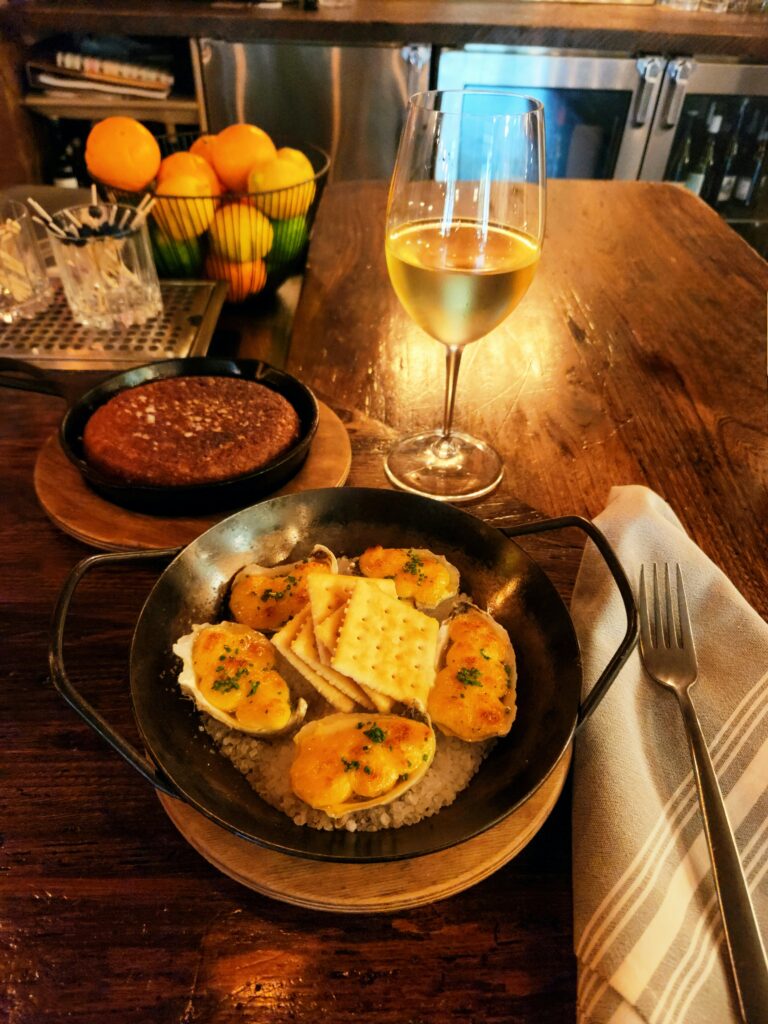
My oysters were only half the entrée I planned. The FARM cornbread is the stuff of legends, so there I was, eating alone with an entire skillet of Brown Butter Cornbread, topped (or bottomed?) with cane syrup and sea salt. I saw other diners’ meals go by, and the girls next to me spotted something on the menu I had missed—the Anthology Tasting Menu. One price. Four courses. Wine pairing option. My only excuse? I was too focused on cornbread.
The drinks at FARM were equal parts delicious and festive. Who brûlées a tiny round of banana to top a drink, even if it is called This Sip is Bananas? There is a well-researched wine list too, and a Picpoul from France was perfect with those oysters. But no driving for me. The Old Town Bluffton Inn (home) was right next door.
Captain Woody’s Seafood Bar
A short two-block walk from Old Town Bluffton Inn, Captain Woody’s Seafood Bar was filled with locals on a Sunday night. Arrive before 7 pm to get Happy Hour prices at the bar or on the rooftop. It’s a great way to try several smaller plates while saving money.
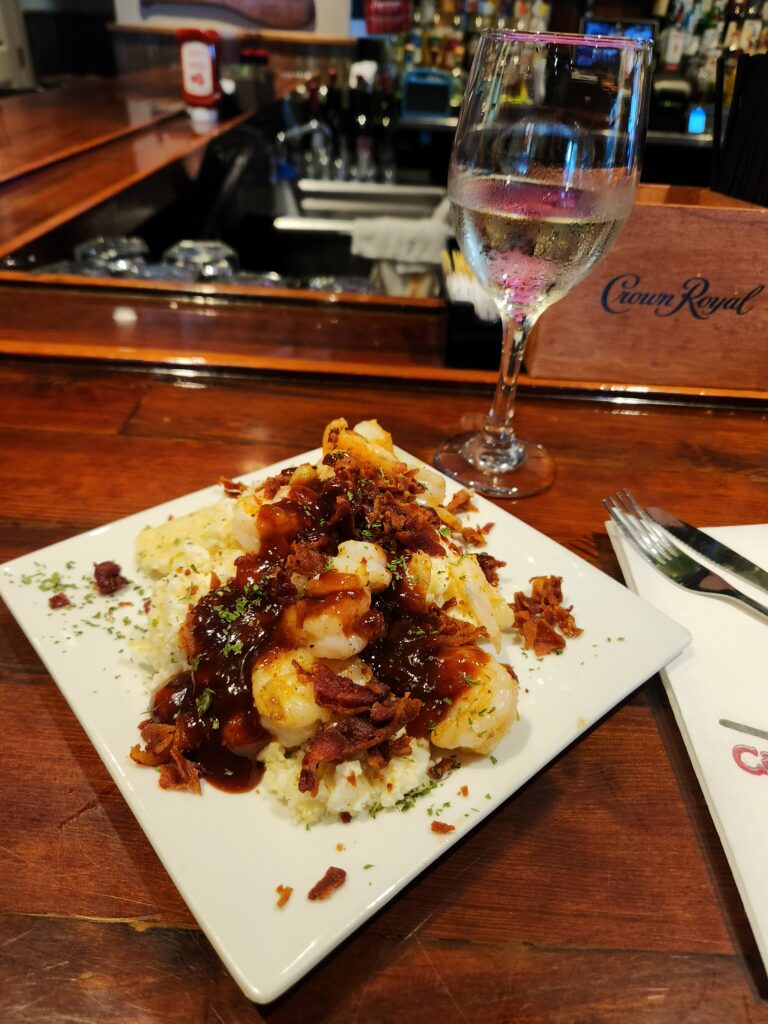
The BBQ Shrimp & Grits were ideal—blackened Lowcountry shrimp over creamed-to-perfection grits, topped with bacon and drizzled generously with house-made bourbon BBQ sauce. The Fish Tacos were filled with crunchy chunks of fried flounder, topped with fresh, crunchy slaw, tomatoes, cheese, and chipotle cream sauce. The house Pinot Grigio was crisp and clean, the perfect accompaniment.
Nectar Farm Kitchen
The desire to create dining centered on healthy, farm-fresh, high-quality Lowcountry and Southern ingredients was the seed that grew into Nectar Farm Kitchen. Fortunately, they found farmers with the same high standards. The team of chefs at both locations—Hilton Head Island and Bluffton—is passionate about food—growing it, cooking it, and eating it. I can vouch for that last part. When I wandered in to eat my last lunch before heading out to start the road trip home, I studied the bar, picked what looked like the choice seat (it was), and struck up a conversation with the couple next to me.
My bar companion turned out to be Executive Chef Adam. He had the day off and was enjoying Nectar’s lunch fare on a day-date with his wife. So, with the entire town to choose from, they chose to eat at Nectar. It earned my vote, too.
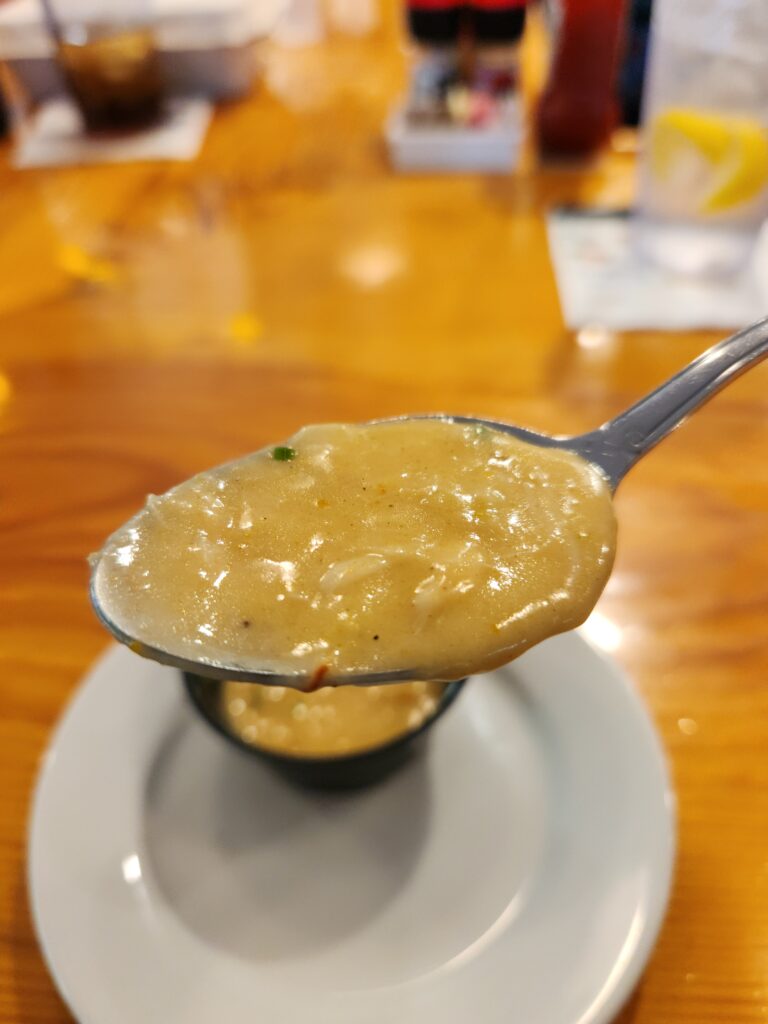
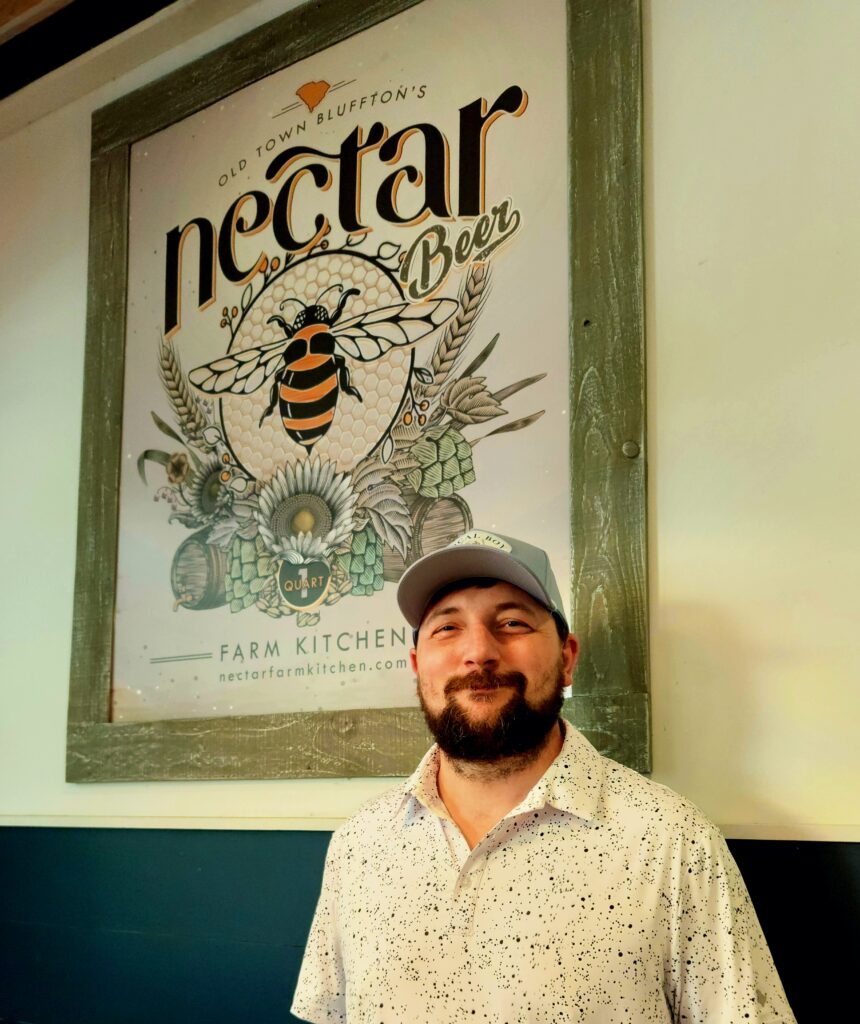
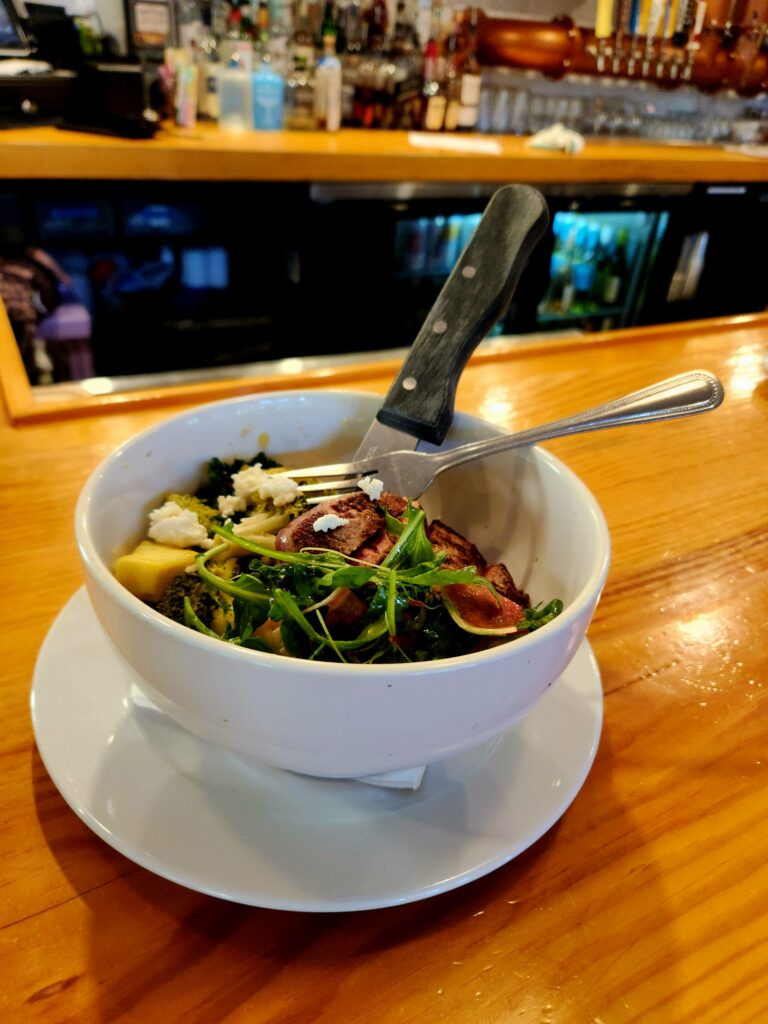
I pretended to order a healthy lunch when I selected my Butcher’s Bowl, and it did have a healthy serving of veggies in that massive bowl. Of course, there was a lot of Carolina Gold Rice on the bottom, and a fourth-pound of filet of beef on top, and blistered tomatoes, and feta…but that’s all healthy, right? The Lemon Olive Oil Dressing is healthy too. I’ve convinced myself—how about you? There was also a tempting wine list, and some cocktails that were calling my name, but with close to 200 miles ahead of me, water with lemon slices had to do.
Juicebox Wine Shop
When you’re told to look for a place that looks like a garage behind a house—this is the place. It was not easy to see, until I did. But when it comes to wine, persistence is key. The Juicebox Natural Wine Shop was worth the hunt.
Joe Proctor has a cute shop filled with natural, organic, biodynamic wines from all over the world. Wines that have seen very little intervention. Think grapes, sunshine, rain, picking, crushing, resting, bottling. Notice what is missing? Extra ingredients, additives, and unnecessary steps. Just the grapes, speaking for themselves. As Joe says, these are wines “that speak of the time, place, and people that made them.”
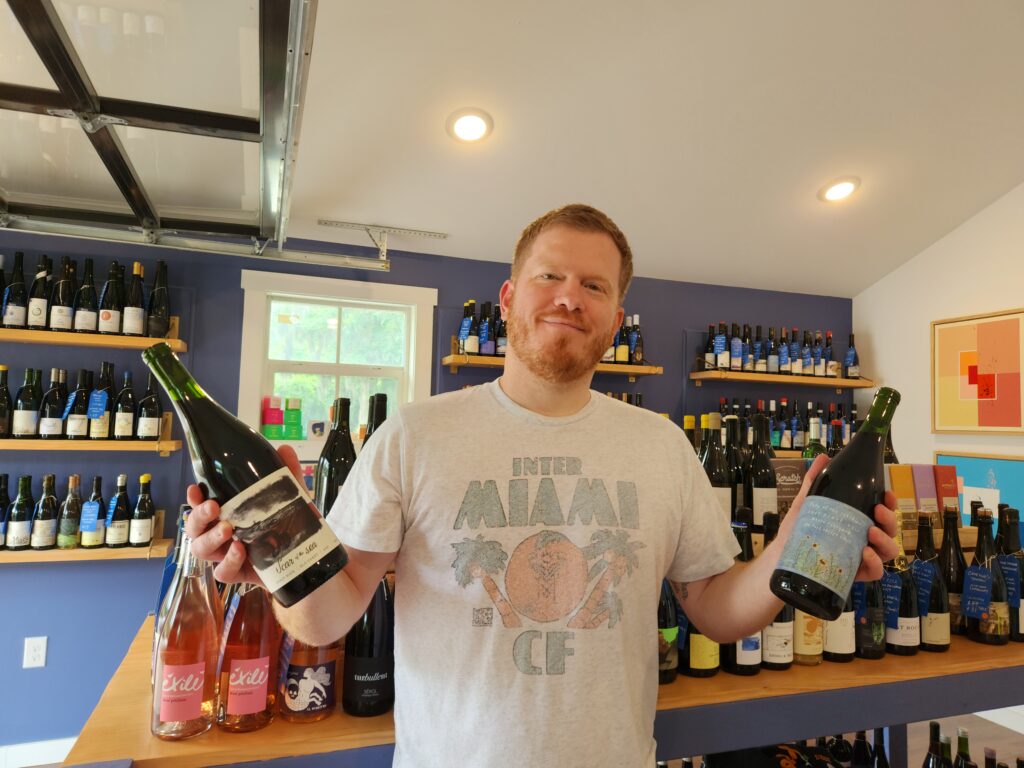
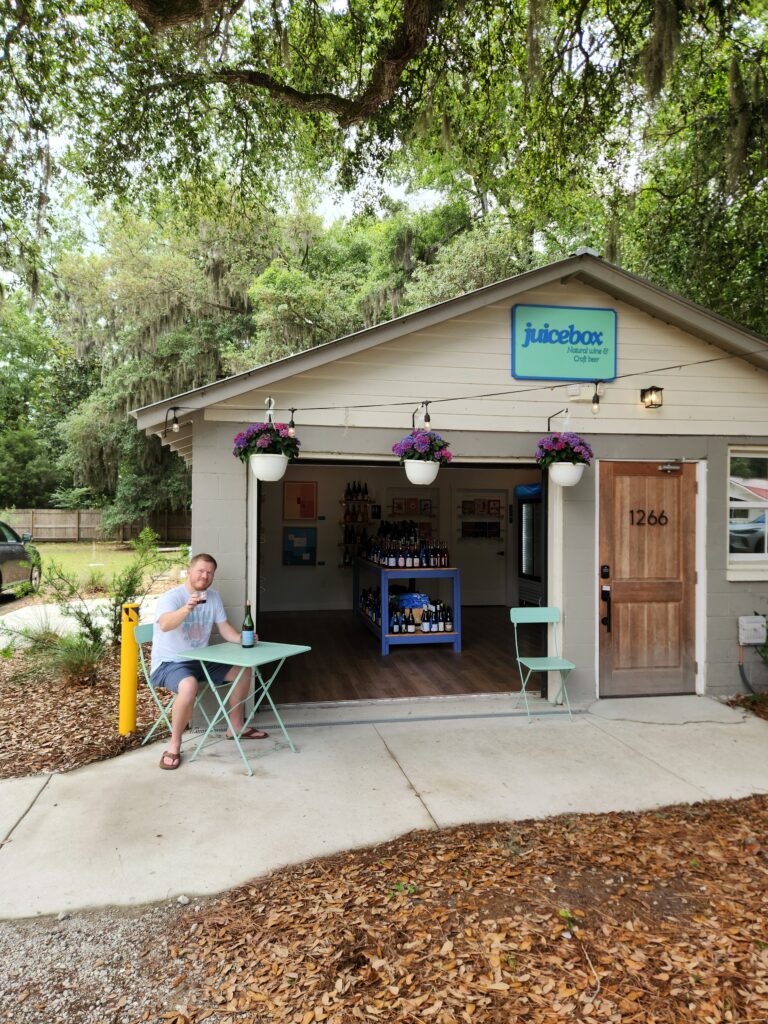
Sip something alive—stop by on Fridays for his wine tasting. Juicebox is also a good stop for craft beer, local nibbles, and charcuterie.
Burnt Church Distillery: A Lowcountry Secret
Burnt Church Distillery found its name in a Lowcountry church that mysteriously burned to the ground in the late 1700s. No records. No cause. No explanation. Just a mystery.
In the lobby of Burnt Church, there is a tree. Not upright, not living, not growing through the roof…but a perfectly preserved piece of what was once a proud tree, like the ones you see on Boneyard Beach. The Secession Oak stood in Bluffton for 450 years, its roots deep in Lowcountry history. Now topped with glass, its surface etched with stories of hardship, perseverance, and the strength of Lowcountry people.
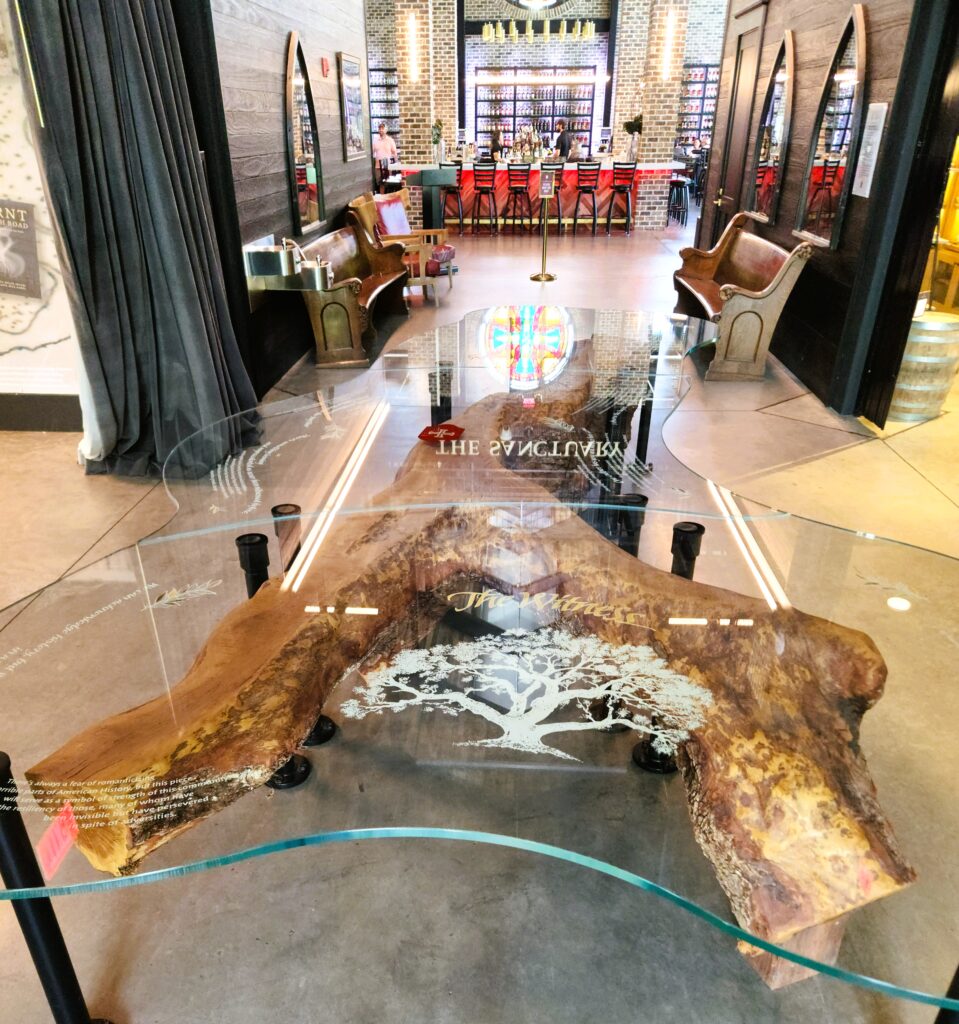
Burnt Church brothers Billy and Sean Watterson claim that the secret to their taste is using South Carolina ingredients and grains. It creates magical signature whiskeys with Lowcountry names like Palmetto Malt and Marsh Hen Mill.
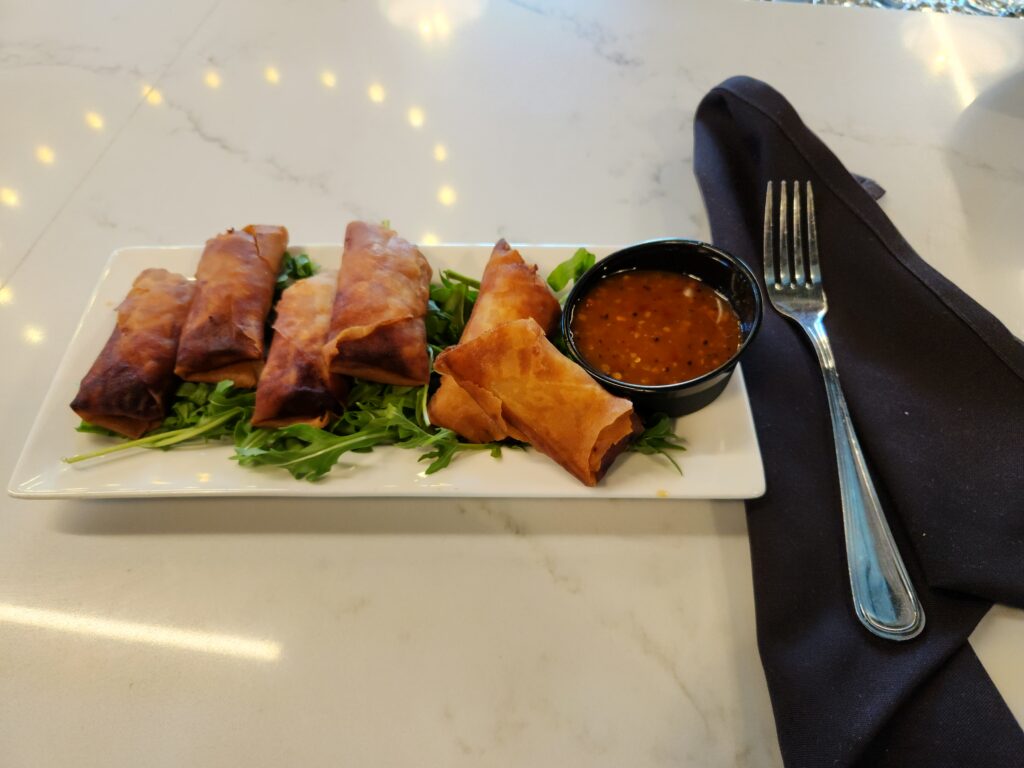
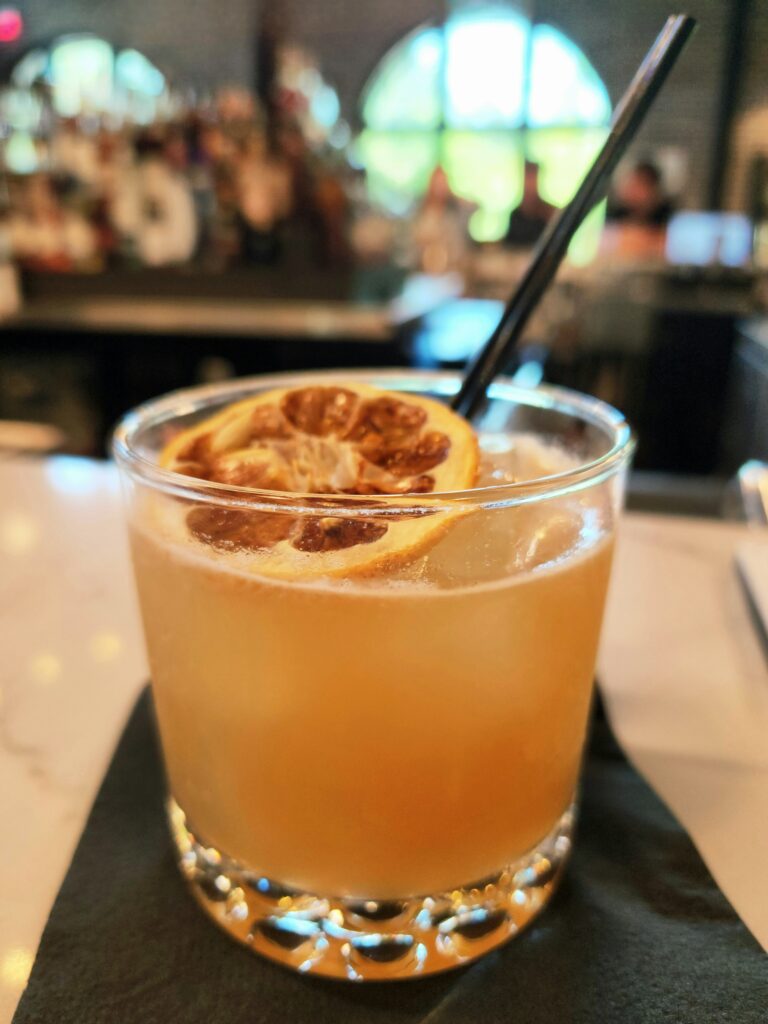
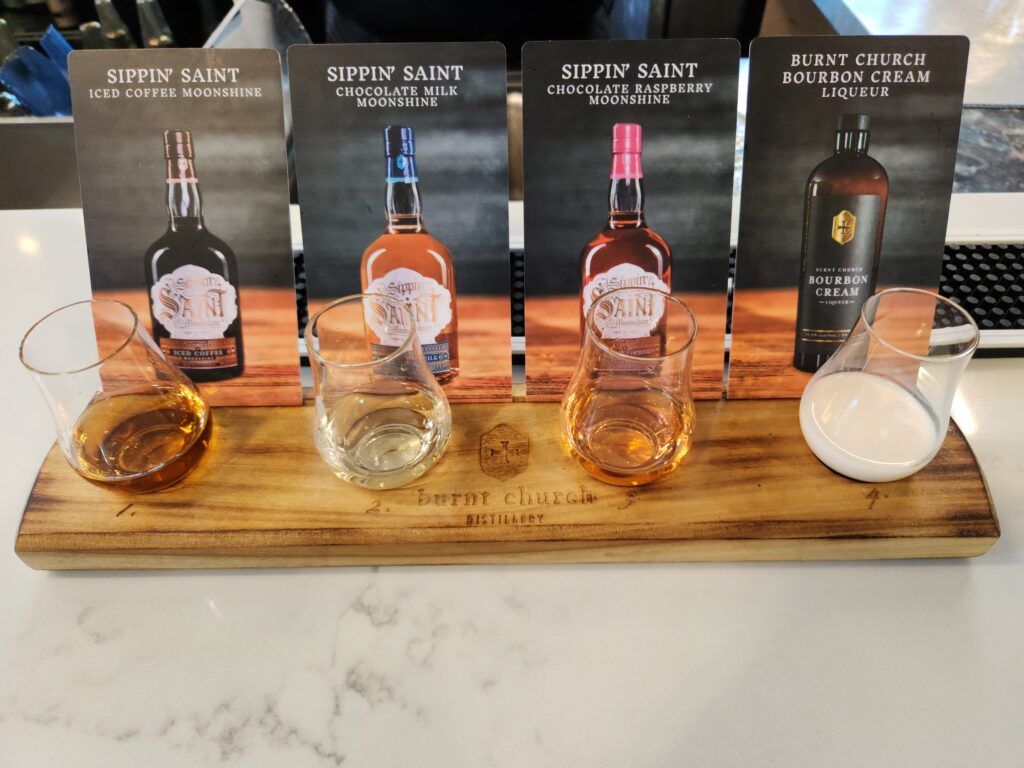
Trying the spirits in this distillery could become a hobby. But, Virginia moonshiner’s great-granddaughter that I am, I signed up for the Moonshine Flight. All the samples were smooth and tasty, but then they brought out their Chocolate Milk Moonshine. What can I say? I give up. The stained-glass-filled tasting room lives up to its nickname: the Sanctuary of Flavor. I just think of it as a near-religious experience.
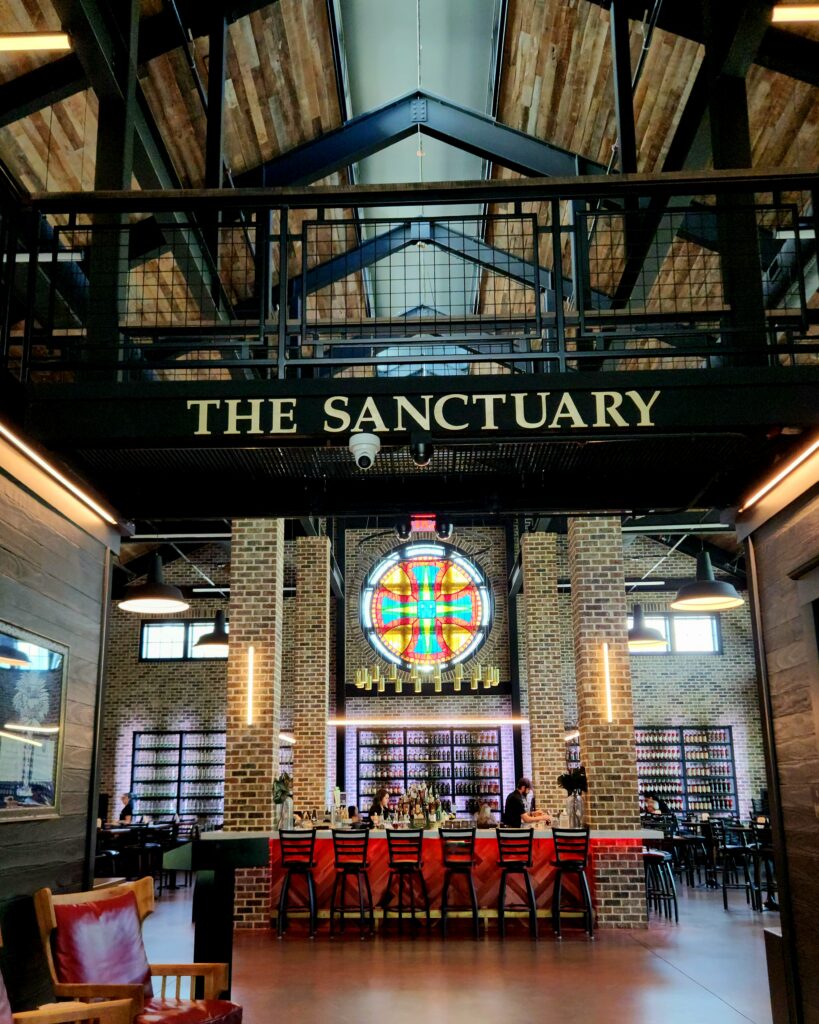
Burnt Church is not just a provider of distilled spirits but also a great place to grab a plate to go with that cocktail. Hail Mary’s has a tempting menu, what they call comfort food with a Burnt Church twist. I heard there was a cook from the Philippines in the kitchen with some fresh ideas about what to do with chicken. So my plate was full of Chicken Lumpia. The Harvest Moon cocktail was so refreshing that I left town with a bottle of Amethyst-Watermelon Lime—and the recipe (you know me).
/
Planning a Lowcountry Road Trip
For more exciting trips, take a drive along the South Carolina coast and breathe in the Lowcountry. Head to Myrtle Beach and Georgetown County.

What an interesting area to explore . I loved reading about it!
You would love visiting the South Carolina Lowcountry!