
Greensboro is one of those places that keeps adding another layer every time you think you’ve figured it out—and every day can take you in a completely different direction. There’s a Revolutionary War battlefield, beautiful gardens, important civil rights stories, denim, museums, pinball, seriously good food, wine, spirits—and yes, even Krispy Kreme.
I spent a couple of days exploring the city and discovered there’s much more to Greensboro than I expected. Come along, and I’ll show you some of the places that caught my attention—and a few that I think deserve a spot on your Greensboro itinerary.
Table of Contents
Greensboro: Unexpected History and Big Adventures
Greensboro has plenty of modern-day adventures, but some of its most interesting stories go back more than two centuries. The city’s name is courtesy of Gen. Nathanael Greene, the Continental Army commander who faced Lord Cornwallis here during the Revolutionary War.
That history is still very much part of Greensboro—and one of the best places to experience it is Guilford Courthouse, named in 1774 when the first courthouse was built in the middle of the county.
Get Outdoors – Green Things To See and Do
Greensboro could say it was named for the amazing green spaces that flourish in and around the city. More than 100 neighborhood parks and four public gardens, along with 70 miles of greenways and trails, will keep you outside during your visit. My trip wasn’t long enough to see it all, but I did manage to visit these standout gardens.
Gateway Gardens
Open since 2011, Gateway Gardens encompasses 11 acres and is a beautiful, interactive garden. At Gateway, you can learn a bit of everything: history, local community, nature, and plant life. I visited in summer, so I arrived when they opened at 8 am to beat the heat and humidity (with museum visits scheduled after lunch during the hottest part of the day). Plus, the pathways were quiet, and only a few walkers making their loops intruded on my solitude.
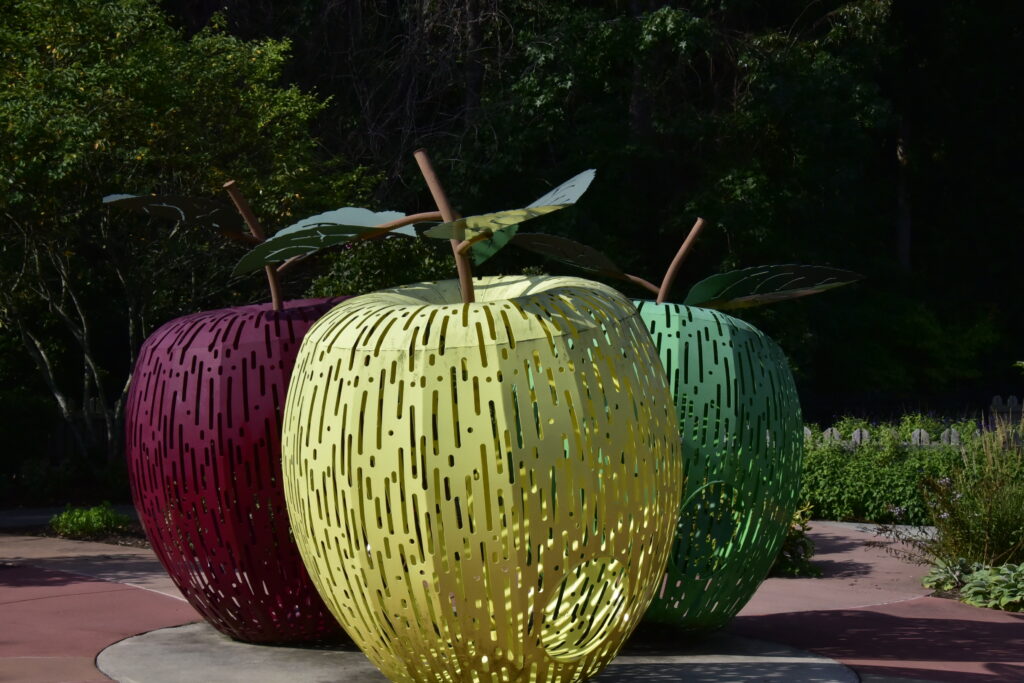
Gateway Gardens is only a half-mile from I-40 and I-85. Still, its location eliminates the freeway noise—you’ll never know how close they are. The property includes a Children’s Garden (filled with larger-than-life metal fruits and vegetables) with a stage for programs; a Heritage Garden; a Great Lawn (where concerts are often held) anchored by a large fountain; and a Rain Garden (more on this garden style at Tanger Garden). In 2014, the U.S. Green Building Council certified the garden as a LEED Silver project. The garden is a popular place for gatherings like corporate meetings and wedding receptions.
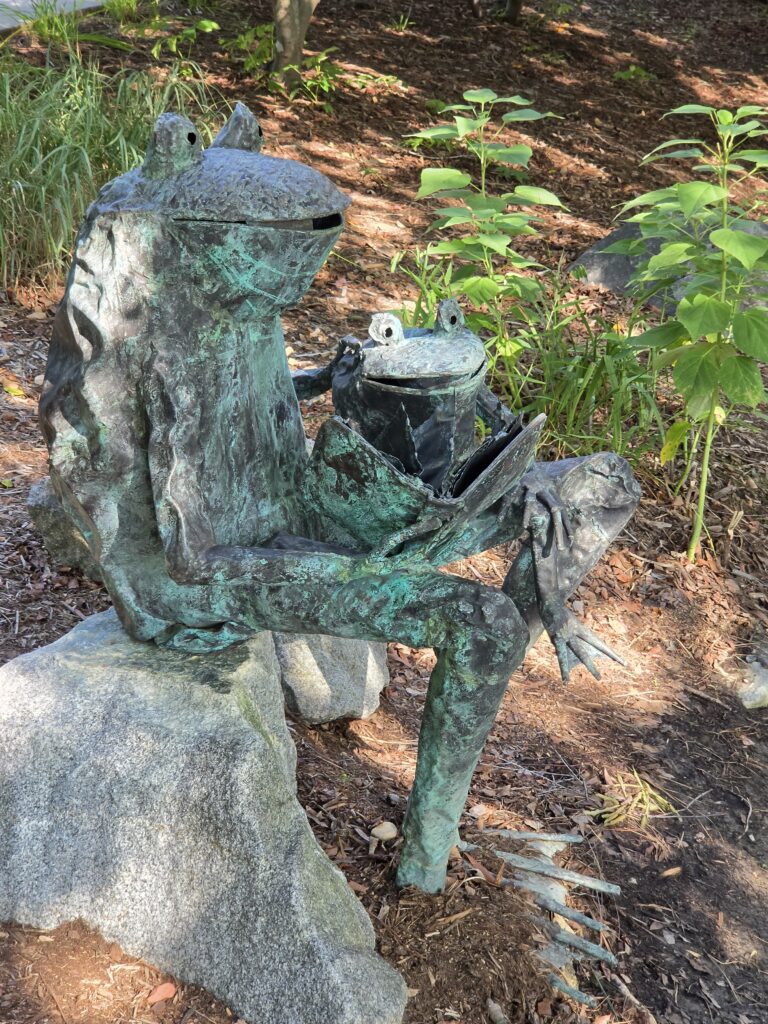
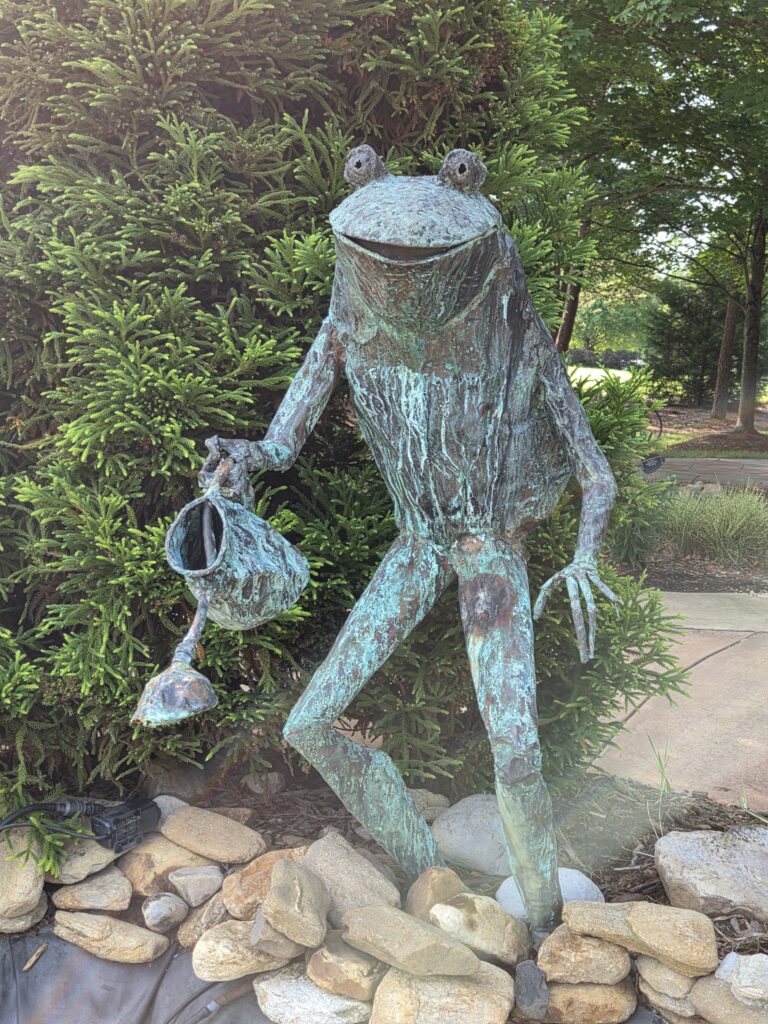
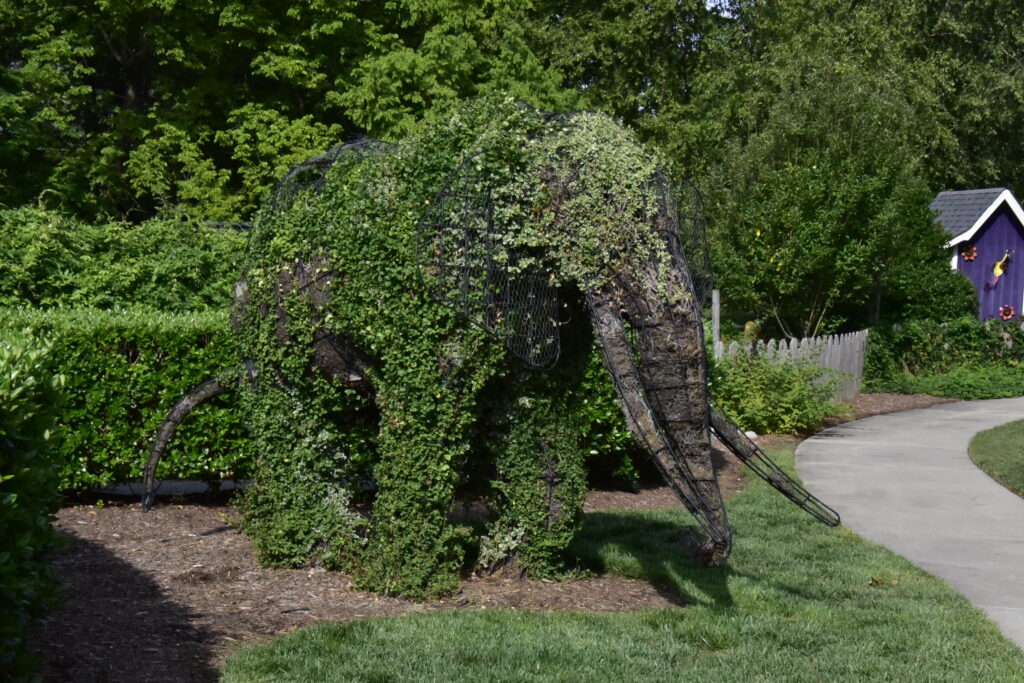
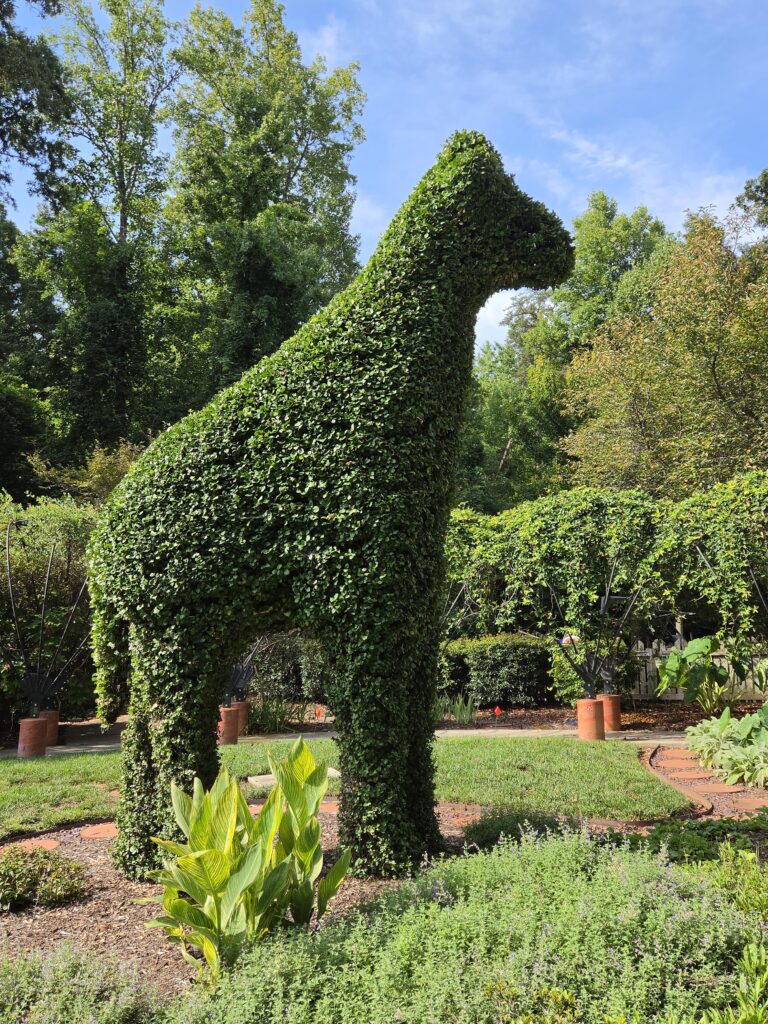
The park has some of the cutest frogs you’ve ever seen, too. They’re creations of sculptor Beau Smith. And keep your eyes open for large “furry” animals, like wire giraffes, caterpillars, and elephants, covered in vines.
Many (but not all) paths are paved and handicap-accessible. Plans include a Japanese Garden and White Oak Forest.
Tanger Family Bicentennial Garden
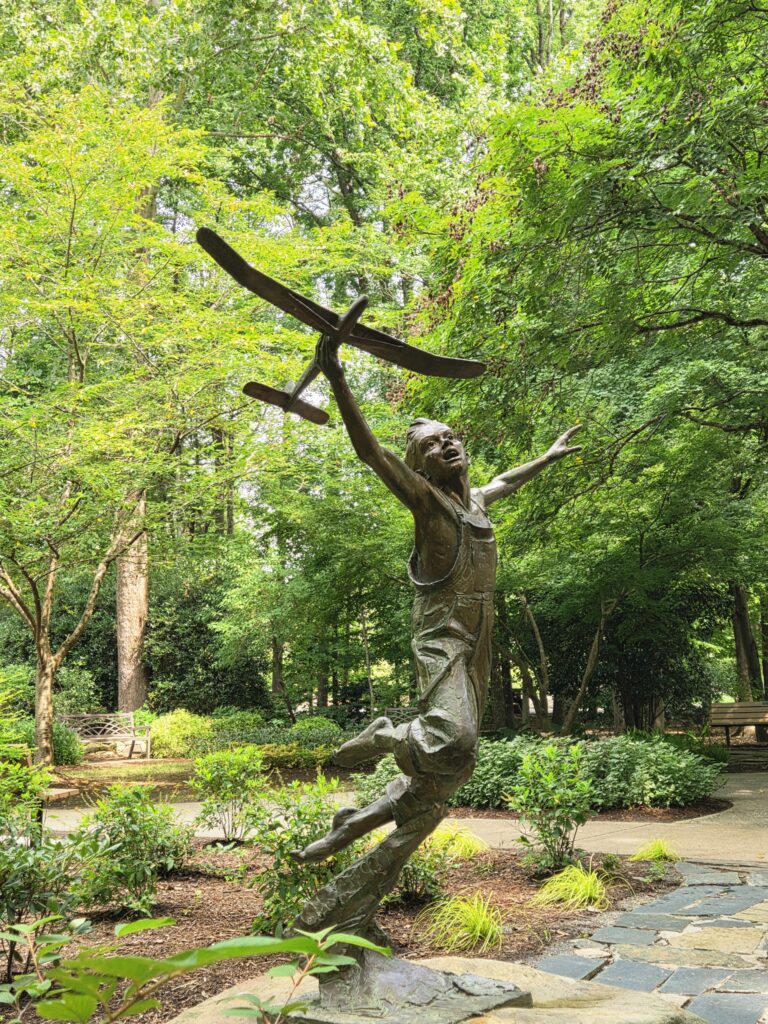
The tranquil 7.5-acre Tanger Family Bicentennial Garden features seasonal plants, statues, a rain garden, a landscaped stream, and a wedding gazebo. Across the street is the Bog Garden (currently closed for construction). You know what that means—a return trip is a requirement.
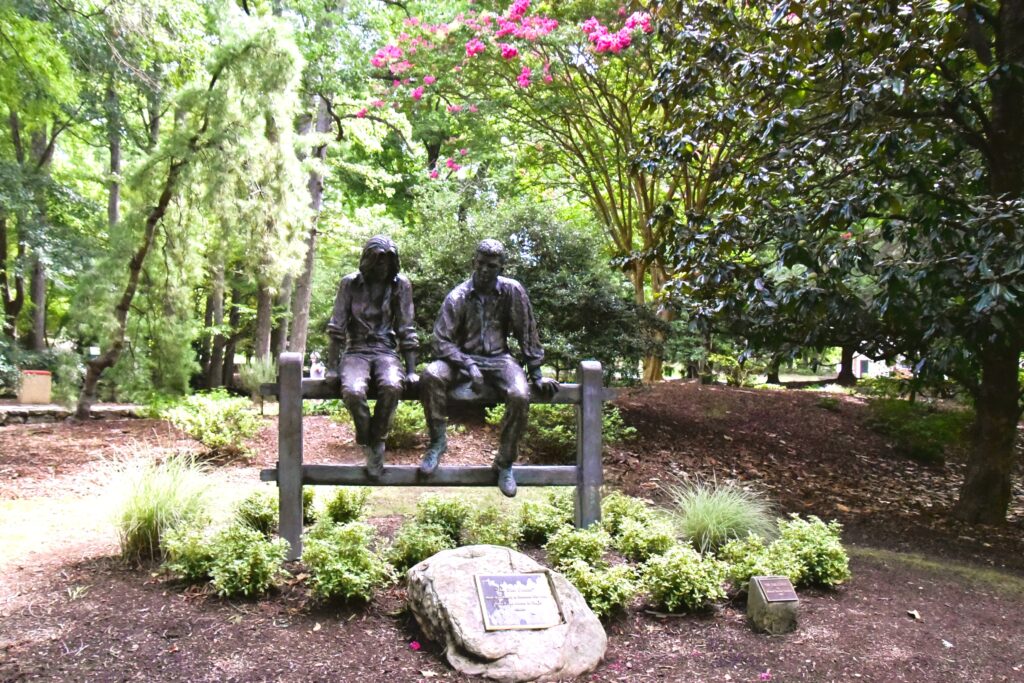
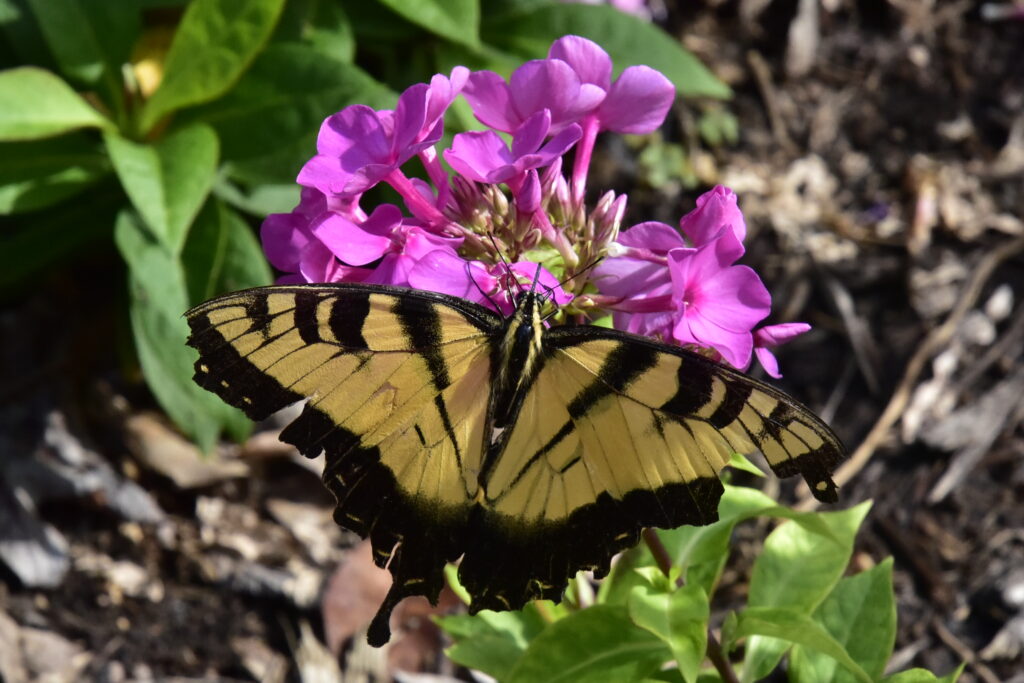
Rain gardens are small, shallow areas filled with native plants and perhaps a rocky “creek,” designed to reduce runoff pollution that enters waterways. Homeowners and businesses can create rain gardens to protect local streams and lakes. Rain gardens capture 30% more water than regular lawns. Plus, they look lovely and attract butterflies and birds. You can create a rain garden using the tips on Tanger’s website.
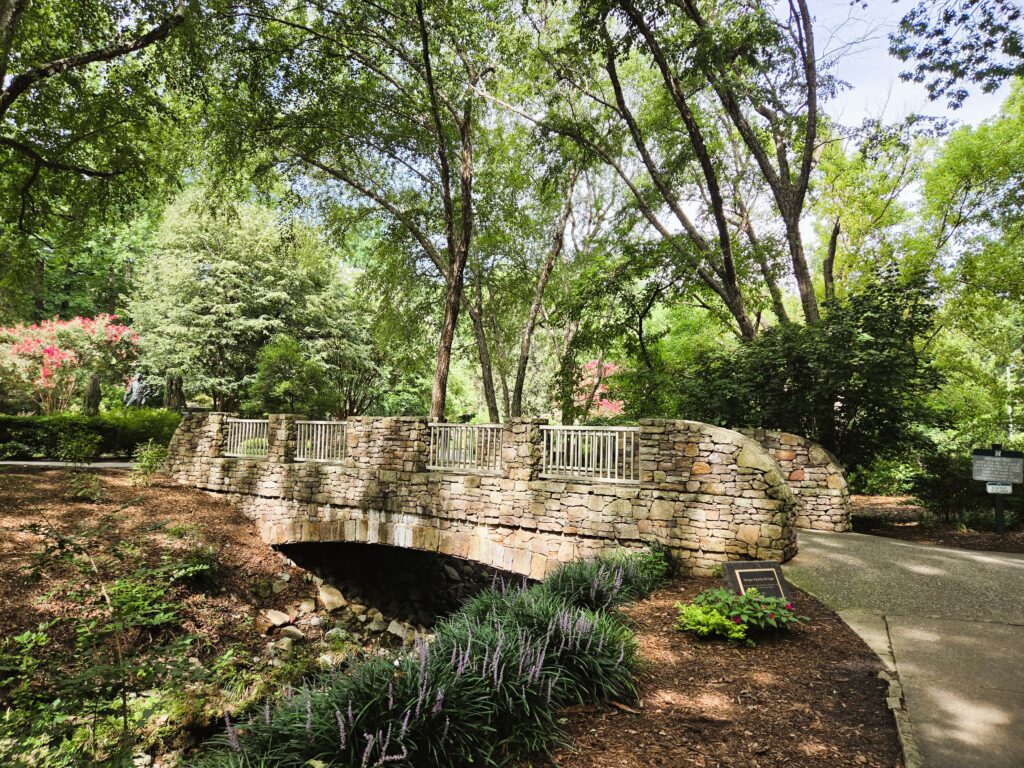
The Tanger Family Bicentennial Garden began in 1976 as a Greensboro Beautiful project, when a 7.5-acre stretch of city-owned floodplain was transformed into a public garden for the nation’s Bicentennial celebration. Much of the property was fill dirt and underbrush, but crews soon cleared it, planted it, irrigated it, and crisscrossed it with paved paths. The garden continued to grow, adding specialty areas, benches, and sculpture. In 1995, it saw more enhancements, including a wedding garden, sensory garden, stream restoration, new paths, and landscaping. The garden celebrated the completion of those improvements in 1999.
David Caldwell Historic Park
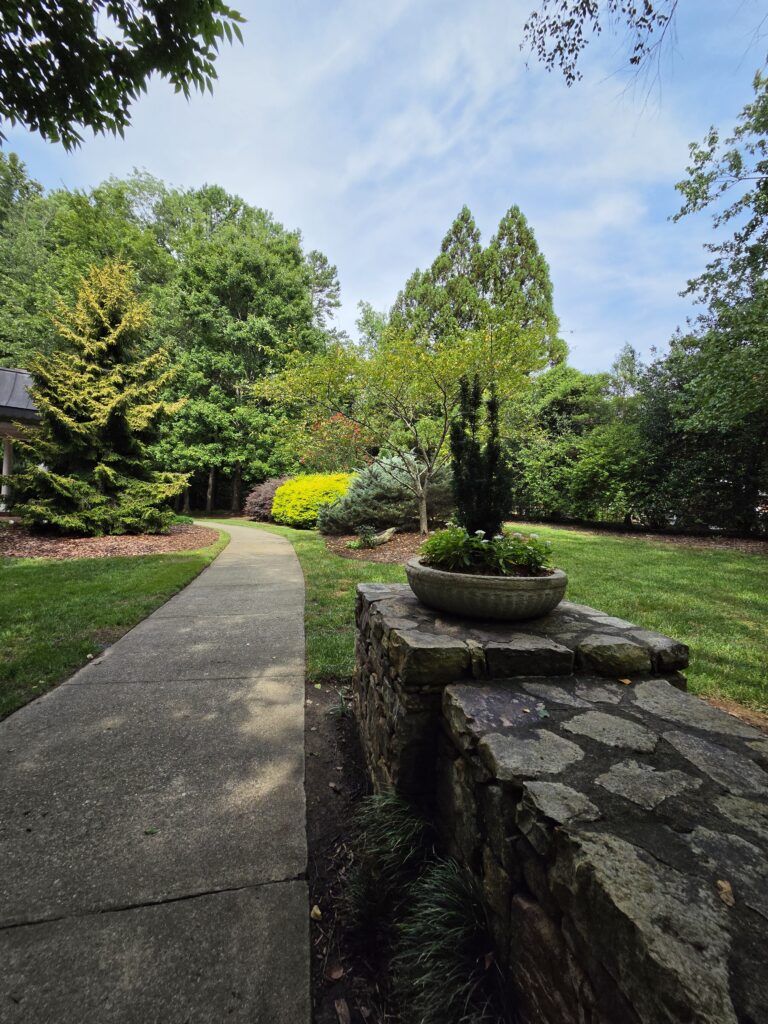
The David Caldwell Historic Park is next to the Tanger Family Bicentennial Garden. You probably won’t realize you’ve moved from one to the other since paved walks meander between the two. And, once again, a history lesson weaves itself into our day. This park is named for Reverend David Caldwell, a Presbyterian minister who was one of Greensboro’s historic residents. Born in 1725 and living to be 99, Caldwell was also a colonial-era educator and a self-trained physician. He founded the Log College in 1767 on this site, educating many of the prominent men of the time.
Bicentennial Garden is part of the land where the academy, its campus, and Caldwell’s home once stood.
Green Hill Cemetery
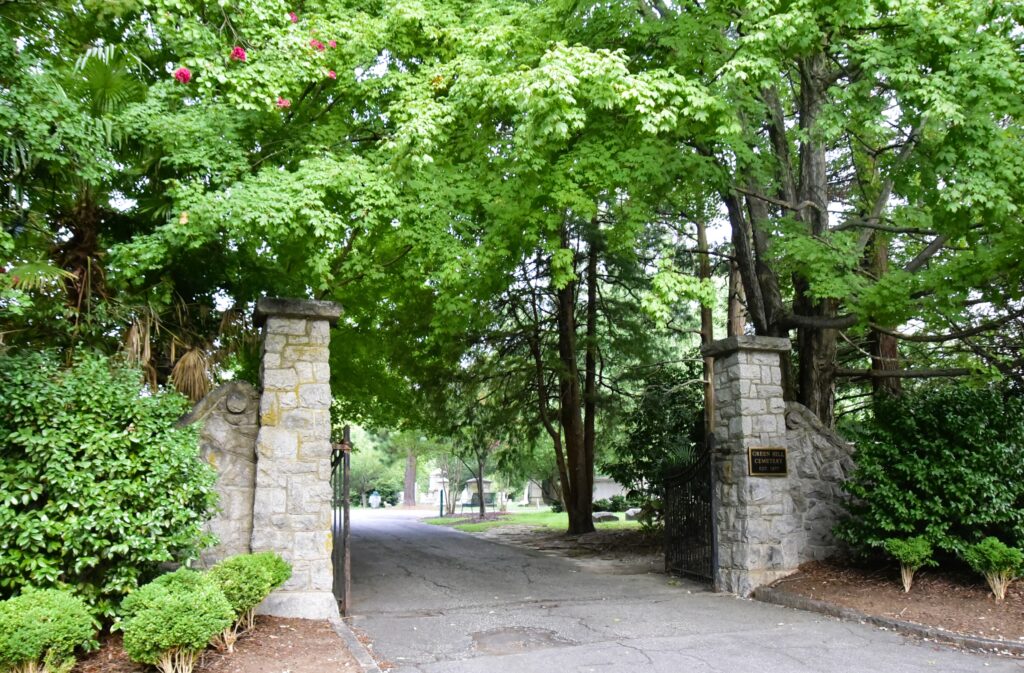
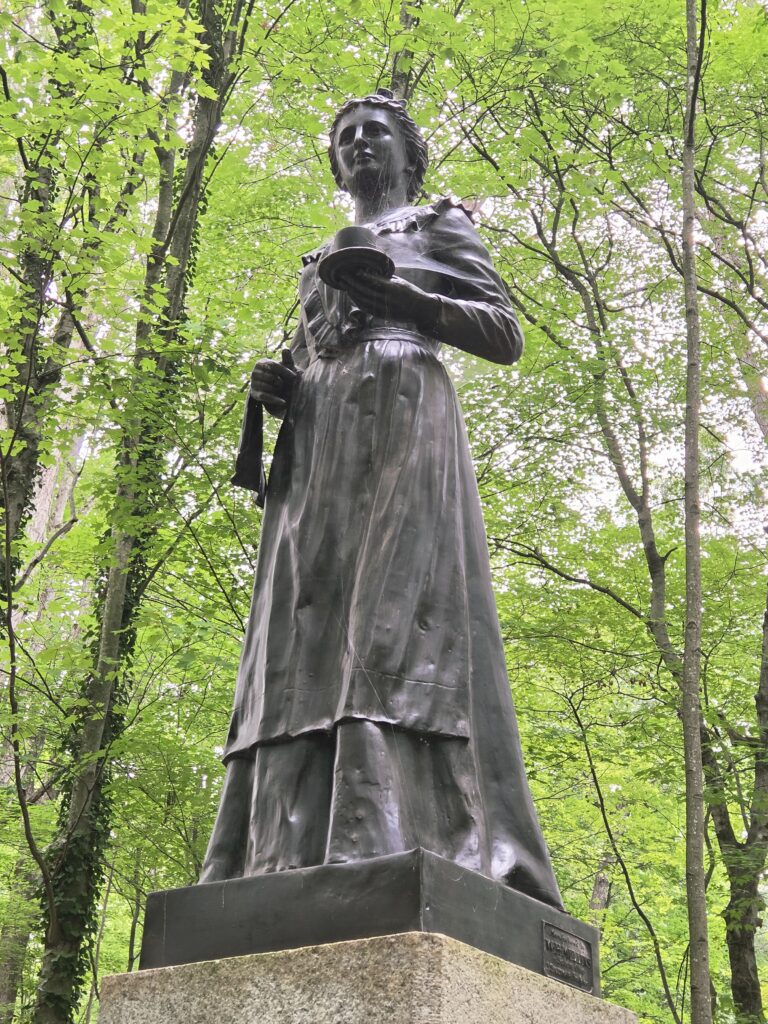
The lovely final resting place for many Greensboro locals is the Green Hill Cemetery, established in 1877. The 51 acres are as beautifully landscaped as any garden, and many of the trees are labeled with botanical names. The 19,000 plots hold headstones that are monuments to Greensboro’s history.
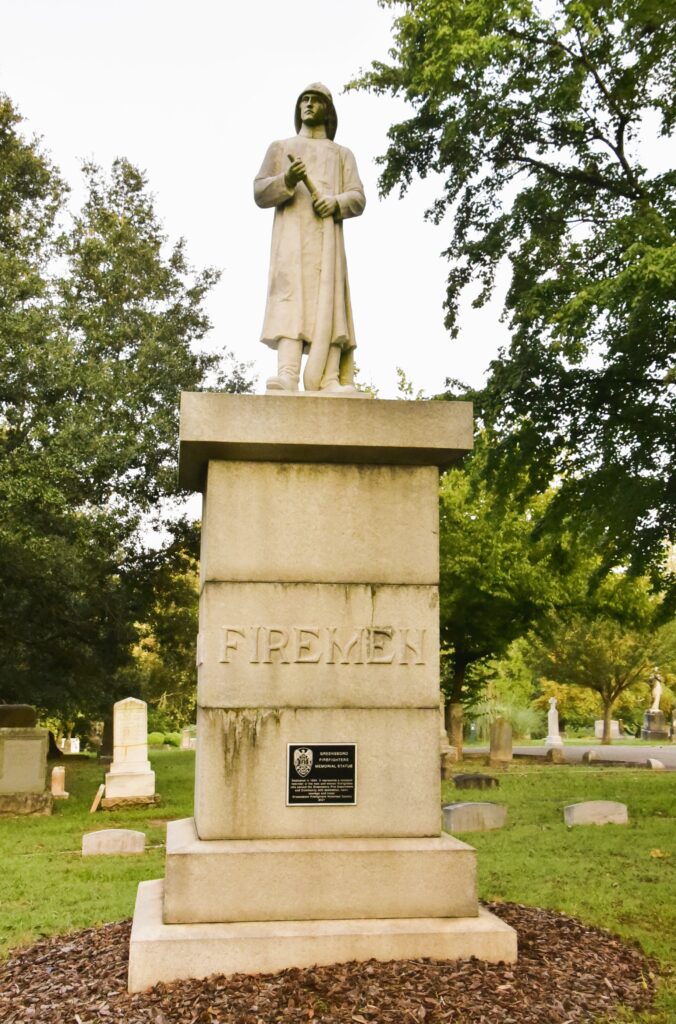
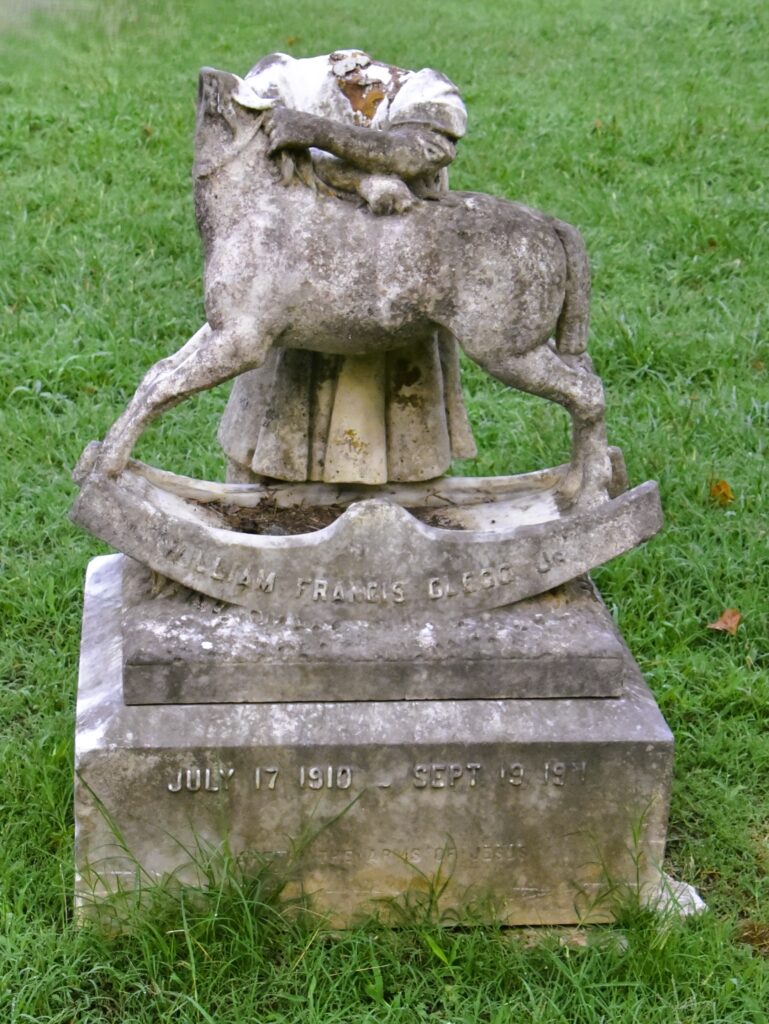
A volunteer group, Friends of Green Hill Cemetery, offers historical and botanical tours that provide insight into the people and plants of Green Hill. A branch of the group, called the Green Hill “Billies,” was inspired by an angel to undertake the preservation of gravestones. The damaged angel headstone was leaning precariously, and the “Billies” took on the challenge of repair. The group now continues to learn and preserve monuments in Green Hill.
A Battlefield Inside the City
About six miles north of downtown, but still within the city limits, is the Guilford Courthouse National Military Park battlefield. The National Park Service maintains 250 acres of preserved battlefield, with walking trails, a paved driving loop, monuments, and a Visitor Center.
If you don’t have time—or the inclination—to hike the entire battlefield, the 2.25-mile driving loop is an easy way to see the grounds. Self-guided cell phone tours also cover the walking trails and driving route.
The Visitor Center has exhibits about the Southern Campaign and the Battle of Guilford Courthouse, along with a half-hour live-action interpretive program. Maps are available, and rangers can help you get oriented before heading onto the battlefield.
For those who prefer to explore on foot, trails connect with the Atlantic & Yadkin Greenway and routes into Country Park.
When Cornwallis Came to Town
On March 15, 1781, Gen. Greene’s American forces faced Cornwallis and about 1,900 British troops at Guilford Courthouse.
Greene had roughly 4,400 Americans positioned in three defensive lines. His plan was not necessarily to defeat Cornwallis in one dramatic clash. Instead, he hoped the less-experienced North Carolina militia could slow the British advance and wear them down before more seasoned American troops took over.
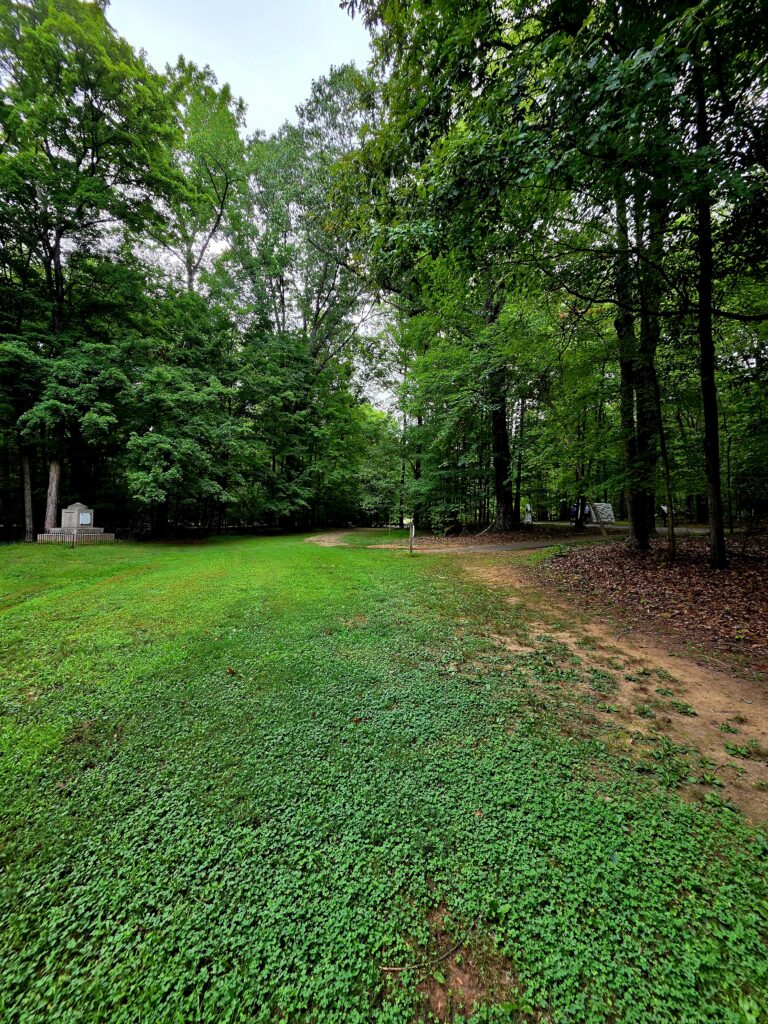
And wear them down they did.
Cornwallis eventually held the battlefield, making it a British victory on paper. But the cost was enormous. The British suffered heavy casualties—roughly a quarter of their force—and Cornwallis’ army was left badly weakened.
In other words, winning the battle didn’t mean winning the war.
Greene’s army survived to fight another day, while Cornwallis eventually moved his campaign into Virginia. The Southern Campaign would ultimately end at Yorktown.
So yes, those “Southern Rebels” were pretty tough.
A Farm in the Middle of History – The Historic Hoskins Farmstead
The battlefield story becomes even more interesting when you visit the Historic Hoskins Farmstead area at the NPS battlefield.
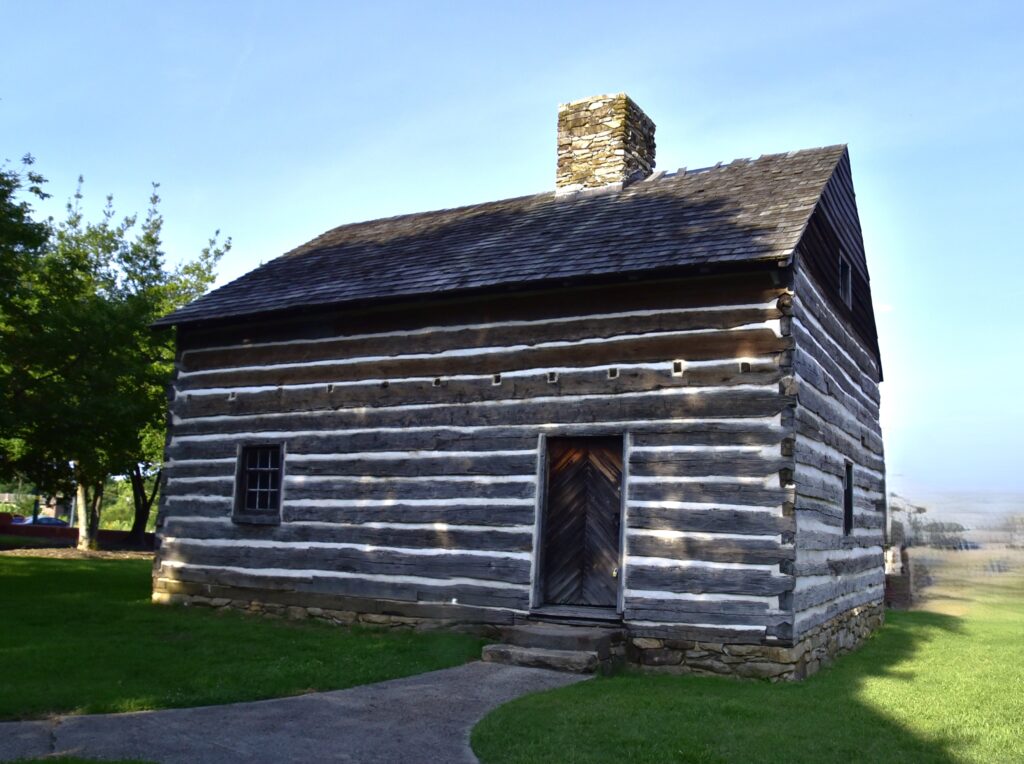
Joseph and Hannah Hoskins came south from Pennsylvania in 1778, apparently looking for a quieter place to build a life. They established a 150-acre farm and built a chestnut-log home.
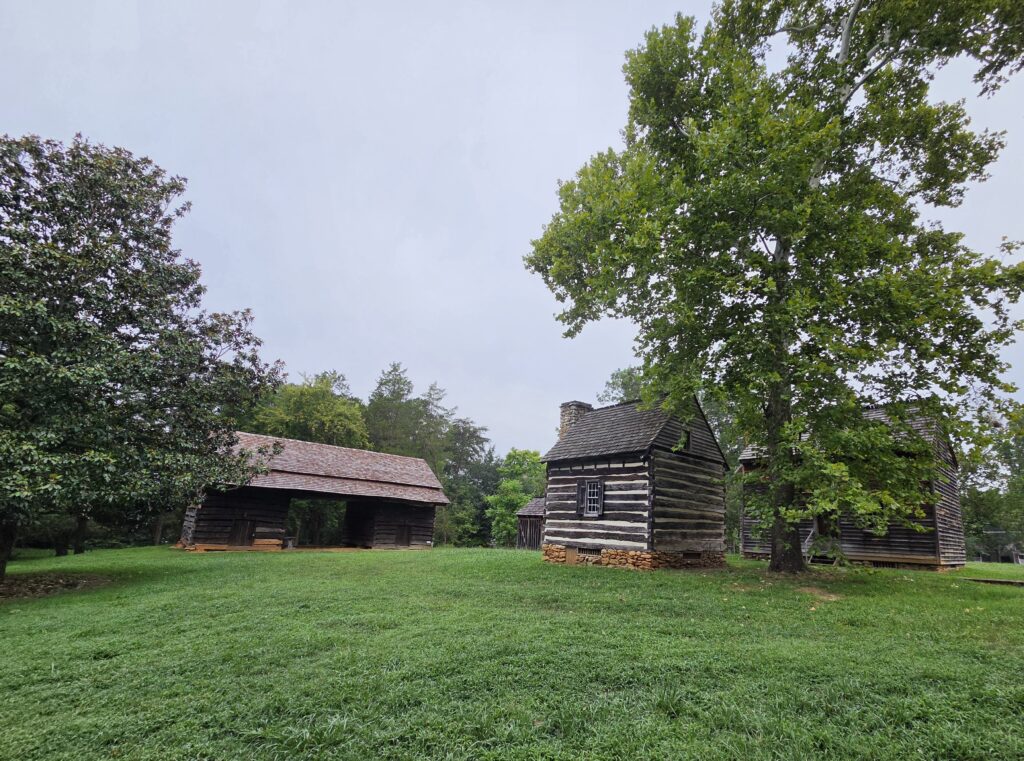
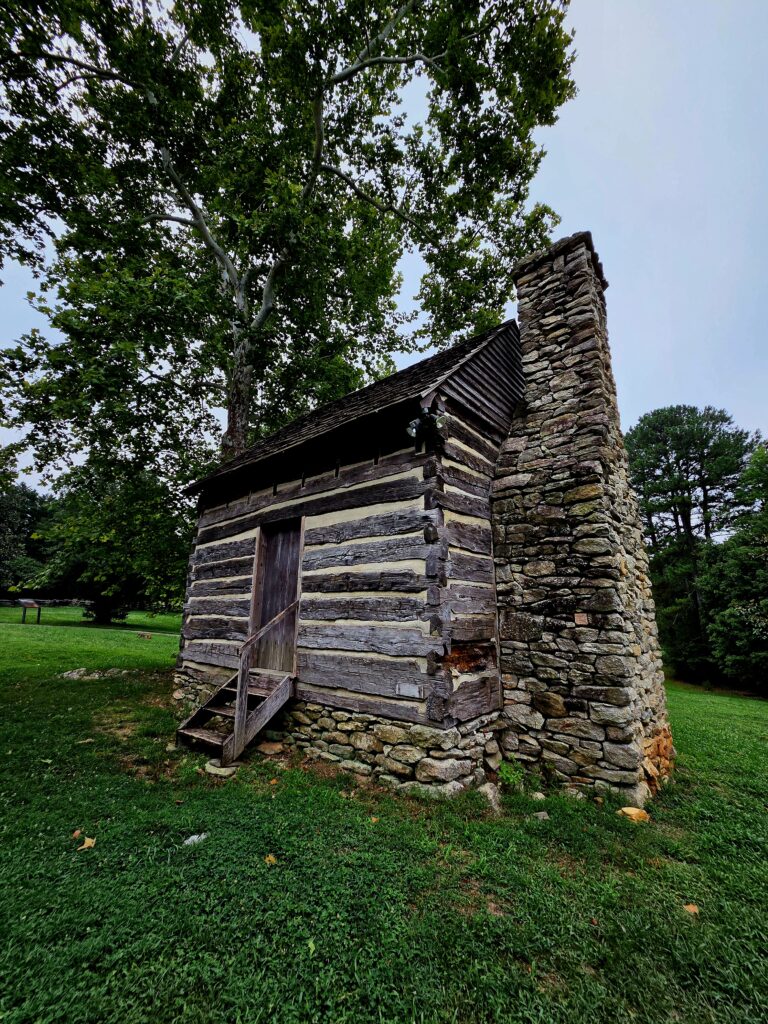
Unfortunately, their timing couldn’t have been worse.
Just three years later, the farm found itself only about a quarter mile from the American army’s first line during the Battle of Guilford Courthouse. British troops used the farm’s fields to prepare their attacks, and after the fighting ended, the Hoskins house served as a field hospital.
Today, the site offers a glimpse into 18th-century farm life while adding another layer to the battlefield story. Instead of history happening somewhere far away, you can stand on the land where an ordinary family suddenly found itself in the middle of a major Revolutionary War battle.
That’s one of the things I like about exploring Greensboro. You don’t have to look very hard to find history—but sometimes you have to slow down long enough to notice it.
Jeansboro Earns the Name
And then Greensboro found another way to make history: denim.
In the 1890s, Moses and Ceasar Cone established Cone Mills, helping turn Greensboro into a textile manufacturing powerhouse with a worldwide reputation. Denim became a particularly important part of the city’s identity, and today’s Greensboro textile industry still produces material for major brands including Wrangler and Lee.
Which is how a North Carolina city with Revolutionary War roots, a remarkable collection of museums and history, and a serious textile legacy earned itself a wonderfully appropriate nickname: Jeansboro.
Downtown Greensboro
Greensboro has been booming for nearly a century and a half. During that time, near-constant construction continued in the downtown area (even during the 1930s depression era). The boom tapered off, but never stopped, and today the urban center is filled with bustling streets, shops, museums, and restaurants. Many choose to live downtown and enjoy the city’s walkability.
Near the city center, you will find museums, gardens, distilleries, and a James Beard-nominated restaurant, along with bed-and-breakfast inns, making it ideal for tourists to stay and play downtown. Naturally, I have a few recommendations, so read on!
Museums of Note
The area’s museums tell Jeansboro’s story. It is a history you can’t escape. The Greensboro History Museum weaves in some denim fabric history, but you will also find it in some unexpected spots.
Greensboro History Museum
A Smithsonian Affiliate, the Greensboro History Museum holds a permanent exhibit “Voices of a City: Denim Capital,” with photos and vintage denim manufacturing machinery. The museum has been open for a century, making it North Carolina’s oldest city history museum. It is also the state’s largest museum. Arrive early and plan for at least half a day.
Established in 1924, the museum combines two historic structures: the 1892 First Presbyterian Church, a Romanesque Revival building, and the 1903 Smith Memorial building, which were connected and transformed into a civic center and museum in 1937–1938.
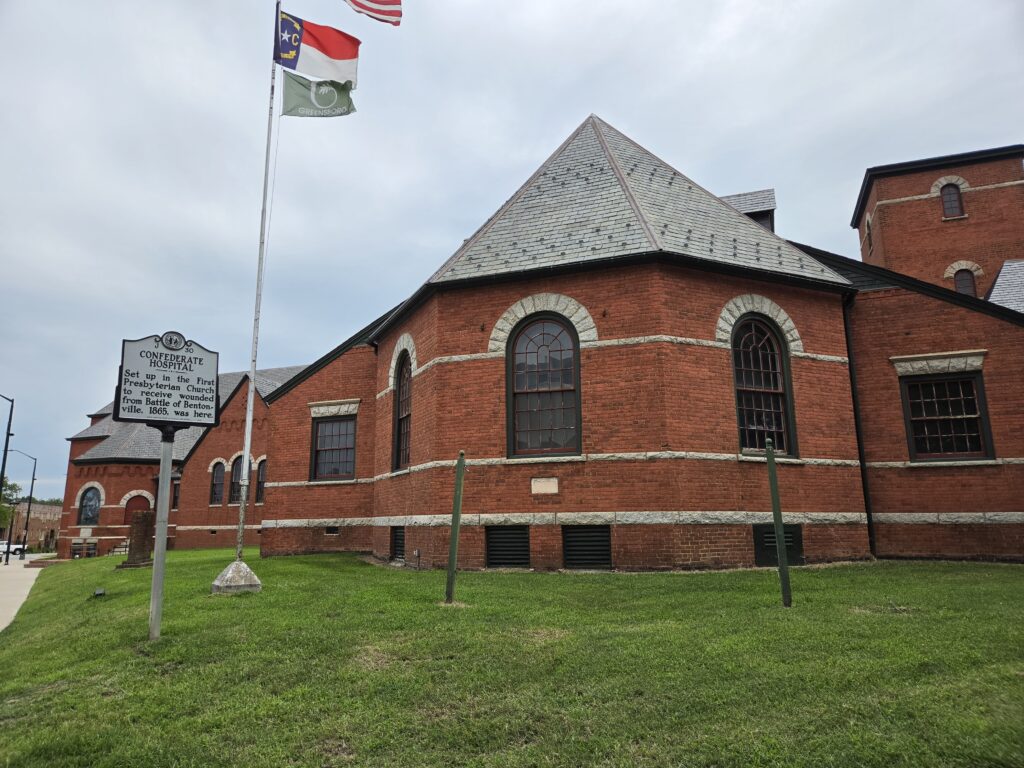
The grounds themselves are a history lesson, including an 1831 cemetery and land that served as a Civil War hospital. In 1985, the property was placed on the National Register of Historic Places. (Warning: your neck will be sore from looking up at this amazing structure.)
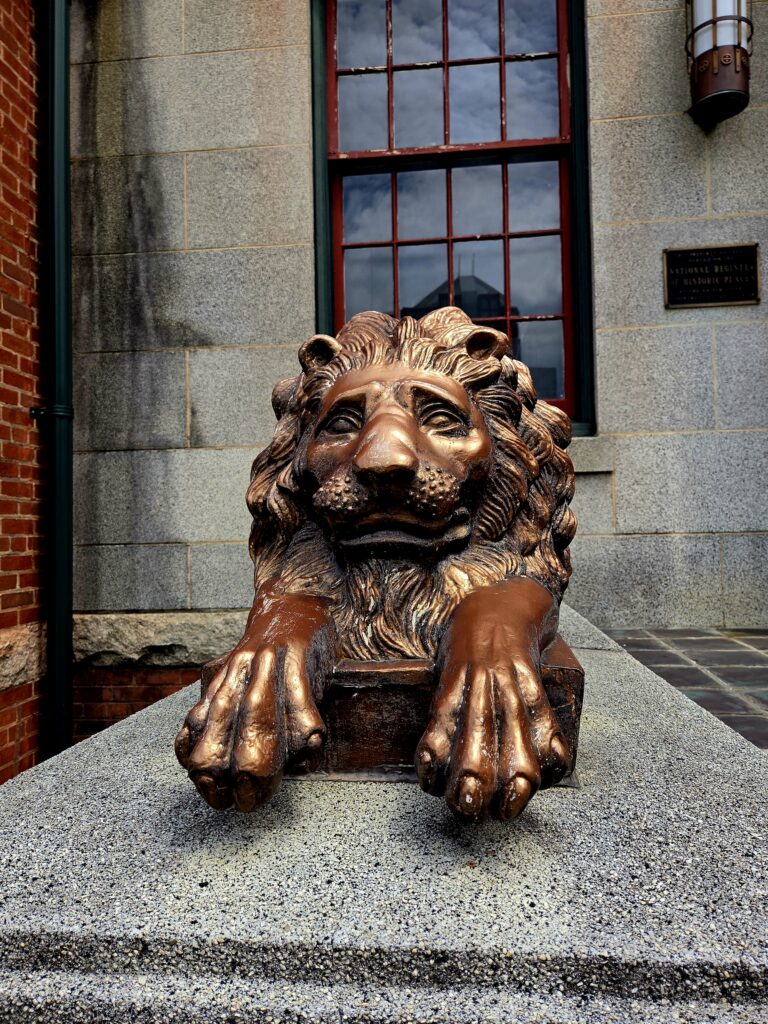
The more permanent displays include Voices of a City and Welcome to Gate City. Both exhibits portray daily life in Greensboro from the turn of the 20th century and the industrial boom to more recent times.
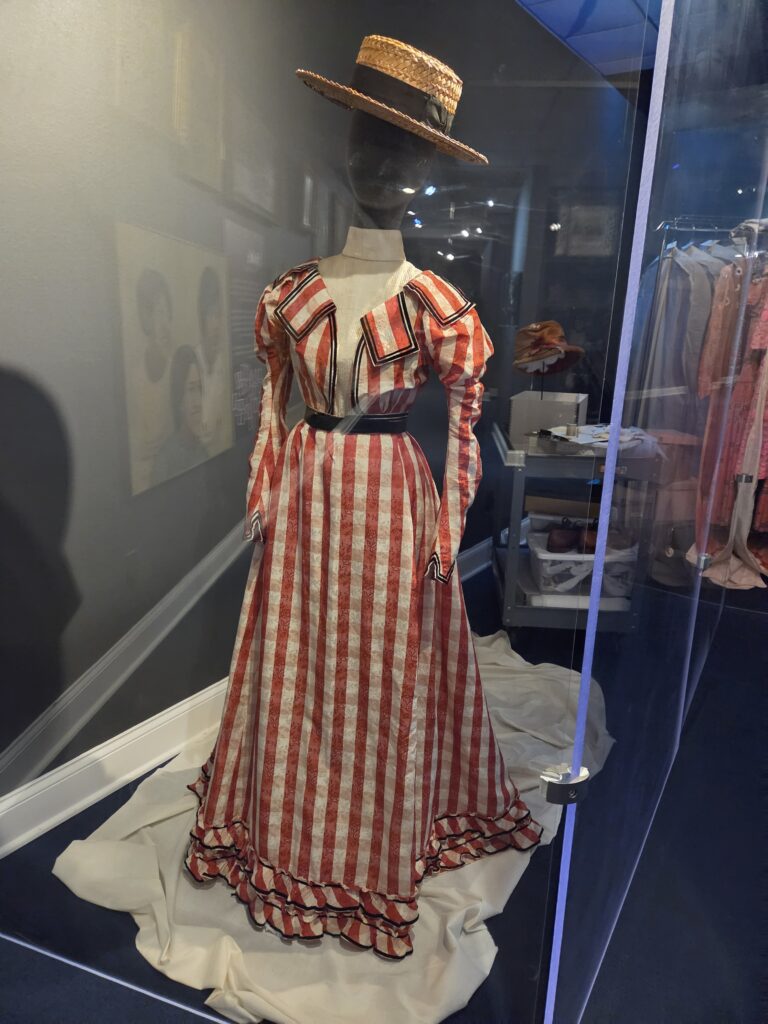
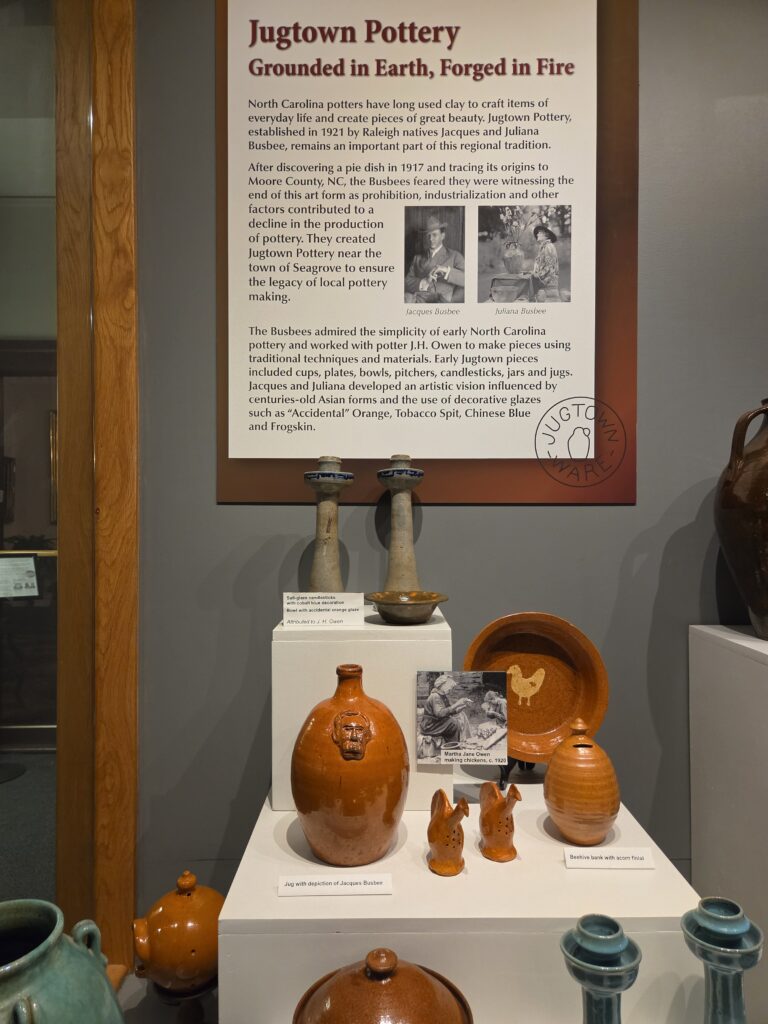
The Belle Meade Historic Rooms feature 1867 domestic life and Italianate-period design.
Pro Tip: Park here, then walk to other museums.
Another interesting spot is The Revolution Mill, a rental agency for office space, but the complex is located in a historic mill and contains permanent displays on both its first and second floors. The exhibits contain many interesting textile museum artifacts. You’ll find the 1898 mill at 1250 Revolution Mill Dr., and there is a café—in case your stomach is rumbling (like mine).
International Civil Rights Center & Museum
A short walk up Elm Street from the History Museum will have you at the doors to F. W. Woolworth’s five-and-dime store, now the city’s International Civil Rights Center & Museum. This museum includes the original Woolworth’s lunch counter where four A&T students held their sit-in protest over the lunch counter not serving Negros.
A&T is the North Carolina Agricultural and Technical State University, a historically black public university in Greensboro. In February 1960, those four freshmen began a peaceful civil rights protest by sitting at the segregated lunch counter and asking for coffee. They remained quietly seated until the store closed.
They returned the next day, accompanied by other students. Little did they realize this would become a catalyst for change across the nation. Within two months, similar peaceful sit-ins were occurring in 55 other cities in 13 states. The quiet sit-ins continued until A&T classes ended for the summer and most of the students left for home. A few remained, and local high school students, out for the summer, took their places at the counter.
The Greensboro Woolworth’s lunch counter quietly integrated on July 25, 1960.
The maturity and bravery these boys (and girls) showed amaze me. I call them boys and girls because they were just that…still in their teens, many away from home for the first time, and in the summer being joined by local high school students. They had to be aware of the consequences others had faced for similar actions in other towns. I can only imagine how their hearts must have pounded.
A knowledgeable guide will lead you through the original Woolworth’s Department Store, now filled with thought-provoking displays and larger-than-life pictures of the A&T Four.
The museum is open Monday through Saturday, 10 am – 6 pm.
Greensboro Pinball Museum
The Greensboro Pinball Museum is open Wednesday through Sunday, opening at 5 pm on weekdays, at noon on Saturday, and 2 pm on Sunday. You pay once and play until you leave. It is hard to beat a deal like that. Go prepared to have lots of fun while you learn the amazing history of the pinball machine!
Did you know that pinball machines were first invented in 1871? The French first played a tabletop game called Bagatelle, in which players shot balls up an inclined field with sticks, aiming for holes surrounded by pins, eventually leading to the name “pinball”. The first mass-marketed coin-operated pinball machines were released during the depression, like Bally’s Ballyhoo, in 1931. The addition of flippers that players could control on the 1947 Humpty Dumpty game turned pinball into a real test of skill instead of a simple game of chance.
While the Greensboro Pinball Museum does have a few showpieces you aren’t allowed to play, most of their classic and modern games are playable. Stop by—and have a ball.
Owner Scott Berry is clearly a pinball wizard—hooked on the game—but as with many hobbies, it got out of hand. When his wife put her foot down, a museum was born.
The museum has special nights, like the first Wednesday each month, which is Deaf Night–hearing–impaired players get a reduced price, and hearing customers are encouraged to come and practice their signing while they play along! The museum also has leagues.
Interesting Fact: Did you know pinball was once considered an illegal game of chance? Authorities throughout America banned the games in the 1930s-40s and claimed it was connected to organized crime and gambling. The flippers added in 1947 added the element of skill to the games.
Where to Eat & Drink
Sàigòn Cuisine Restaurant
For Vietnamese cuisine at its best, visit Sàigòn Cuisine Restaurant. Try the Tomato Egg Drop Soup for a lunchtime treat. The staff makes fresh spring rolls in three different styles. The restaurant is closed on Wednesday, and closes daily between 2 and 5 pm (except on Sunday).
When passing through the area, I try to time my travels to coincide with lunch or dinner at Sàigòn Restaurant. The extensive menu allows me to try something new on every visit, along with my must-order favorites. Some might say I’m a creature of habit—I prefer to say I know a good thing when I find it.
Machete
Machete has small plates filled with big flavors. Machete was nominated for a James Beard Award and is a Top 50 Wine Restaurant (as named by Wine Enthusiast). It serves tasty, unique dishes that showcase the best local ingredients of the season, which certainly explains the nomination.
The drink menu is filled with creative cocktails like the Freaki Tzatziki or Boys Wanna Be Her, and the wine list has 40 wines available by the glass. A glass can be either 3- or 6-ounces, giving diners a perfect opportunity to try one with their appetizer, and another with the entrée.
The restaurant is in Fisher Park, near Angel’s Bed &Breakfast, making it an easy stroll after your meal. Or walk there, stuff yourself, and call a ride-share to return.
Lewis and Elm
Lewis and Elm is in Greensboro’s Southend. Located in an old commercial property, it was converted in 2021 to an upscale wine bar and restaurant. You’ll find it on the corner of Lewis and S. Elm Streets.
The menu ranges from generously sized handhelds to small bites to charcuterie boards. Each week, the staff creates a three-wine flight (rosé, white, and red) so customers can try new wines and pair them with food. They’ll keep me coming back just for the Blind Date—a brie-stuffed date, wrapped in prosciutto, and drizzled with molasses butter, honey, and balsamic. Their warm olives and spiced nuts are addictive, so order with caution.
If you’re in the mood for a cocktail, there is a bar full of options waiting for you. Just ask your friendly server for a menu.
O. Henry Hotel
Named for Greensboro’s native son and writer O. Henry (William Sydney Porter), the O. Henry Hotel is a tranquil escape from the bustle of a city. The light, airy rooms and suites have amenities like soaking tubs, dressing rooms, club chairs, and bars.
On Thursdays (and some Saturdays), the Green Valley Grill not only serves tasty vintage craft cocktails alongside shareable small plates, but also features live jazz from 6–9 pm. The GVG has a 500-bottle wine list that has drawn the attention of Wine Spectator, receiving its “Best of Award of Excellence” yearly. The GVG features about 75 wines by the glass. A crisp Riesling pairs as well with the Warm Blue Crab and Spinach Tart as it does with Truffle Fries.
For a view of the band and vocalist, you need to be early—but that’s okay, you’ll have more time to eat and drink.
Krispy Kreme
What can I say? I’m weak. Those hot glazed doughnuts call my name. And I had to pull in—after all, they were created in the next town over (Winston-Salem). Greensboro may have the corner on the history of jeans, but Krispy Kreme is the reason my jeans will always be tight. *yum*
Fainting Goat Spirits
Just a block from Lewis and Elm (on Lewis) is a public parking lot beside the Fainting Goat Spirits. There are on-street parking spots too, if you’re lucky (and you can parallel park).
Plan to spend some time inside the tasting room. If you’re there on the weekend, you can not only sample the goods, but also try them out in cocktails. The Fainting Goat honors a family joke with the “Tiny Cat” vodka. There is also gin, whiskey, rye, and Bottled-in-Bond Bourbon to try.
The 3-gallon still that started it all for this family-owned distillery is on display. It took only three weeks for Master Distiller Andrew and Executive Chef Bill to get hooked. This local distillery uses North Carolina grains, too, all from a Union County farm (except for the barley).
While you’re visiting, look for the USA’s 250th Birthday bottle. Do you think the father of our country looks just a little familiar? *grin*
Where to Stay
Angels Bed and Breakfast
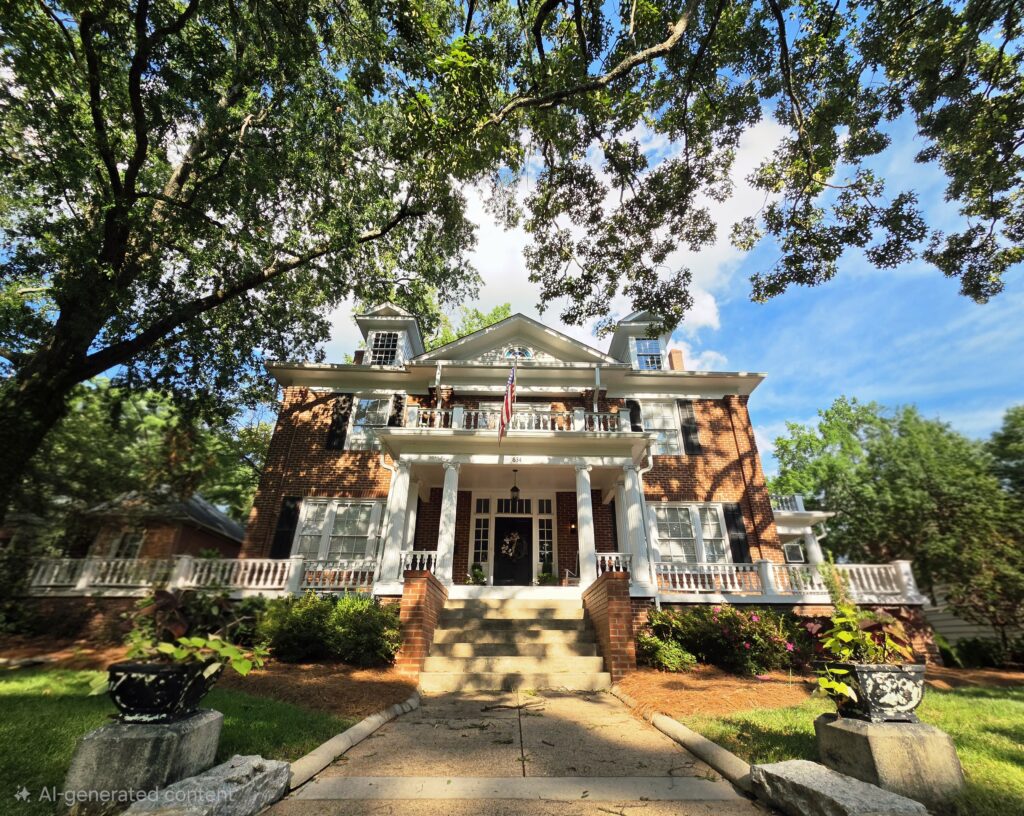
I always look for small, intimate spots to stay when traveling. You get to know a local and learn about the neighborhood’s hidden gems. Angels Bed & Breakfast was up to the task.
On the edge of downtown Greensboro’s historic Fisher Park, you will find Angel’s 1905 Neoclassical Revival home in Greensboro’s first planned suburb. Across Elm Street is Fisher Park, with shaded benches, more than a mile of walking trails, and original stone bridges over a central creek.
North Elm Street divides the park in half, with the east side providing playground equipment, swings, a slide, and a sandbox. The opposite side of the park has pathways, bridges, a large meadow, wooden benches, and a handcrafted chair popular for wedding photos.
The house is warm and full of angels. One bedroom has a private bath, and the other two share a bathroom. Angel thinks of everything and has a cabinet filled with the things you didn’t think of before packing for your trip.
The kitchen is stocked with goodies to enjoy during your day, or when that midafternoon crash hits you. The refrigerator holds a variety of breakfast items to devour at the kitchen table before heading out for a day of sightseeing. Afternoons are an ideal time to try out one of the lounge chairs in the backyard for a nap, or a comfy chair on the porch while you enjoy a pre-dinner glass of wine.
Angel’s will feel like home as soon as you walk in. Maybe we’ll share a glass of wine on the veranda one afternoon—I plan to return often!
0 Comments