
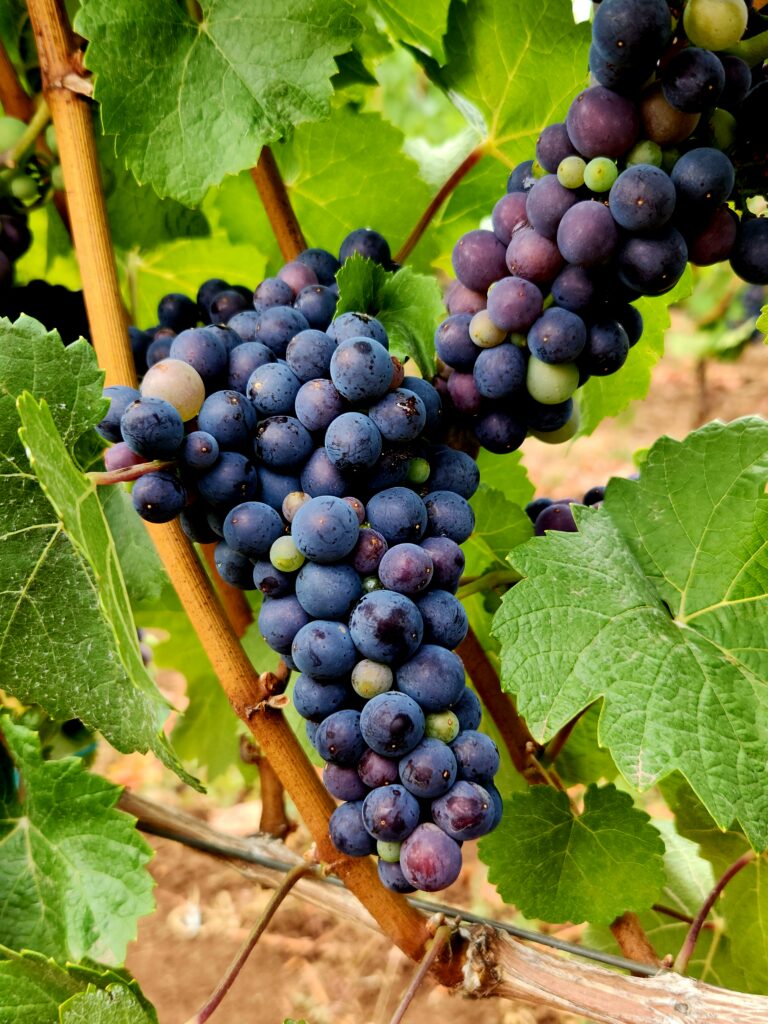
The Willamette Valley is home to more than 700 wineries (and 800 vineyards). Oregon’s wine country holds two-thirds of all the state’s wineries and is internationally known for its cool-climate Pinot Noir. Admittedly, it was a luscious, sigh-inducing Pinot Noir that first put “Willamette Valley” on my lips—and firmly on my radar—somewhere between the first swirl and the sad moment when I realized my glass was empty. Also, just so you know, it is WillAM-it (like, dammit), so don’t go out there mispronouncing it and embarrass me.
You may be wondering about the difference between a winery and a vineyard. The short answer: grapes. Vineyards grow them, wineries crush them—much to our delight. Of course, many do both, and a number also feature tasting rooms with views of the vines, barrels, and bottles.
After eleven blissful, wine-filled days in the Willamette Valley, I feel qualified to guide your search for the perfect sip. May is Oregon Wine Month, making it an especially good time to visit, even if only in our memory. My recommendations for places to lay your head each night, and where to find absolutely delectable treats for your tummy are in my article: Spend 11 Awesome Days in the Willamette Valley: Where You Should Eat, Sleep and Play.
Table of Contents
Willamette Valley Wine Country
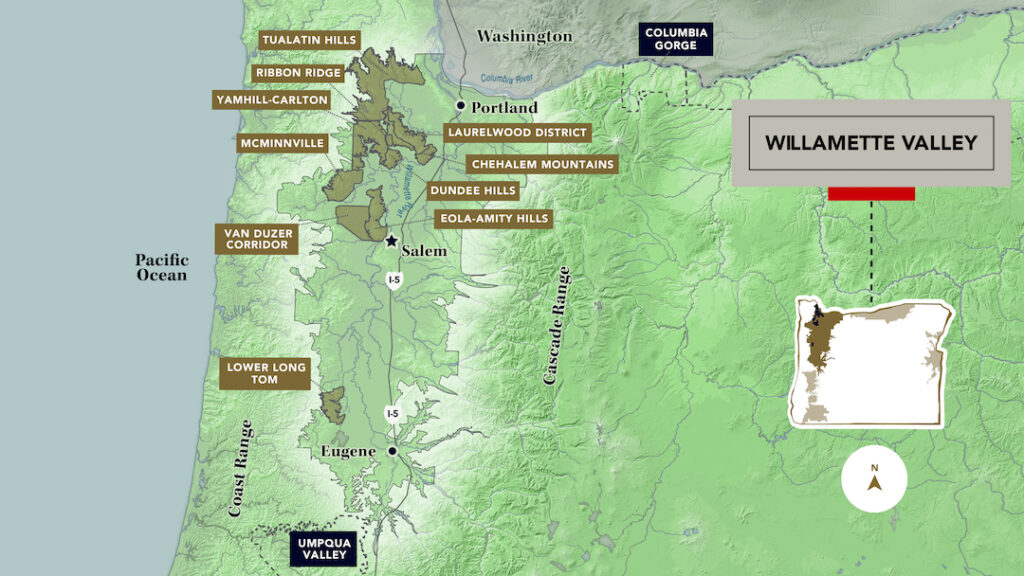
Willamette Valley touring requires a car. Some towns are walkable, with tasting rooms, but the valley stretches 150 miles and covers more than 3.4 million acres, bordered by Coastal Range and Cascade Mountains. Depending on your GPS’s sense of humor—or outright wickedness—you may find yourself climbing steep hills, dodging boulders, or fording streams to reach your next tasting. Stay the course; it’s worth it.
My bio says “Jo infiltrates a place as if on a reconnaissance mission,” and I’ll admit there’s always a plan. After research—and advice from winemakers and innkeepers—I built a spreadsheet of wineries and B&Bs, sorted by town. From there, a route emerged.
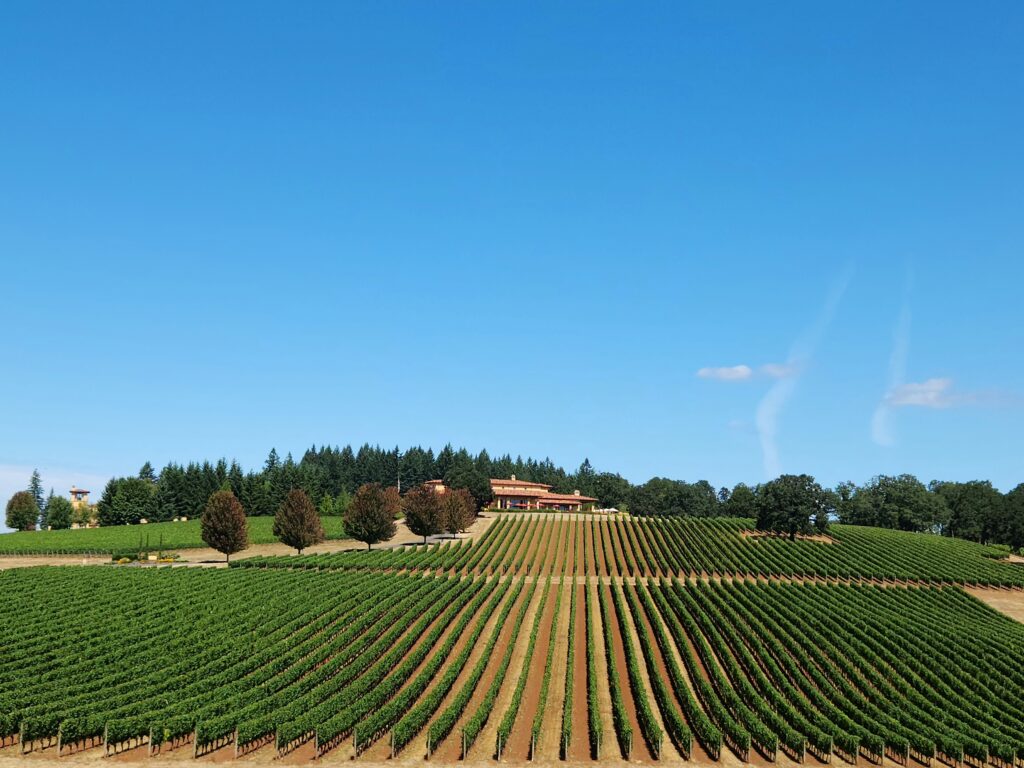
To conserve both gas and precious tasting time, I planned each day around winery visits, lodging, and meals. Not one to waste an opportunity, I landed in Portland at 2 pm, grabbed the rental car, and headed straight to a winery—address already in the GPS (okay, honestly—programmed during my flight.) By 5 pm I was sipping a silky Pinot Noir at Chehalem in Sherwood, admiring the view from their posh new tasting room. The night’s lodging still twenty minutes away.
The drive from Portland took longer than expected. Somehow, 28 miles turned into two hours—Friday traffic. A call to Hannah ensured the winery lights stayed on. After that, traffic in the heart of wine country thinned.
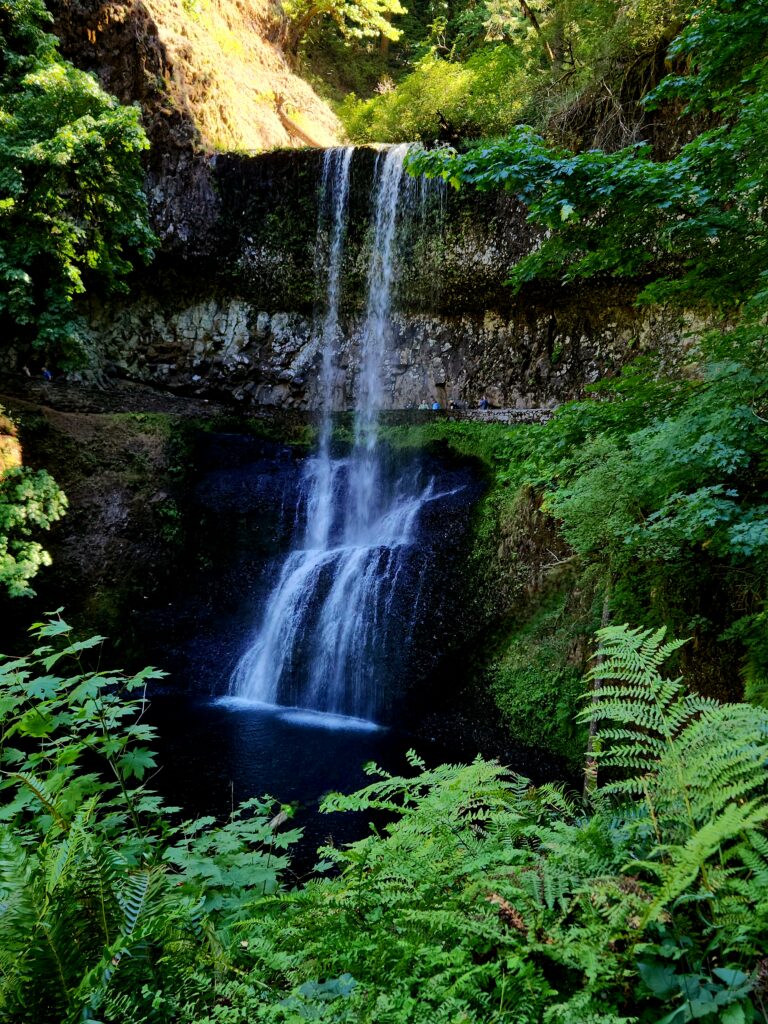
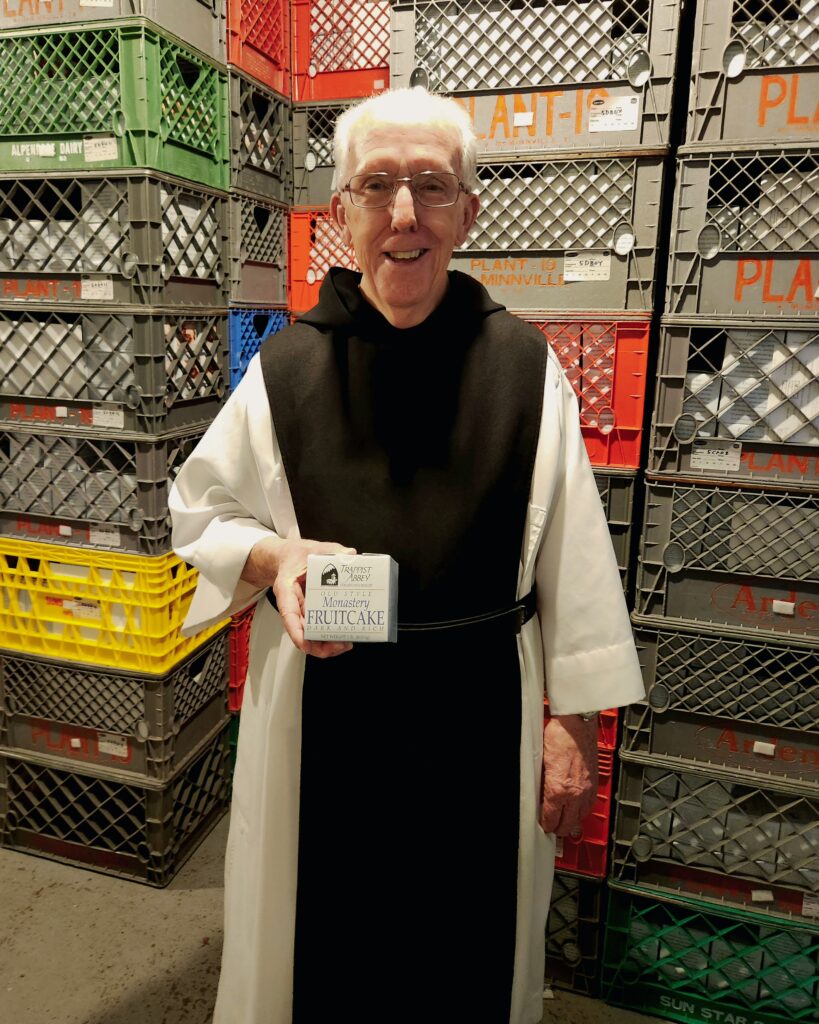

Wineries are listed in the order visited—26 in all, averaging three a day. (We did take breaks: a day hiking to Silver Falls State Park–it really is the ultimate Oregon adventure, time at the impressive Evergreen Aviation Museum, and a visit to a Trappist Abbey.) A standout wine was discovered in an Italian restaurant and is included—you may want to track down that winery.
So—are you ready for a wine-venture? Let’s go!
Chehalem Winery Sherwood
It is hard to say enough good things about a winery that literally leaves the lights on, the table set, and greets you at the door with a glass. Chehalem Winery did that and more. It was my first stop, and you should make it yours, too.
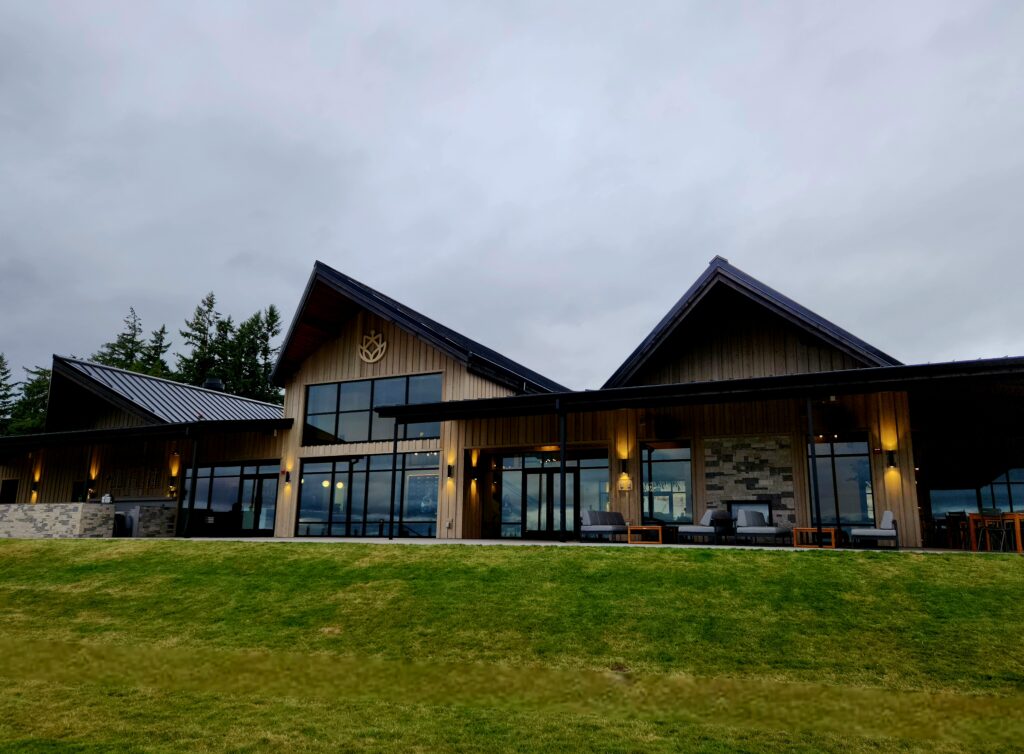
Bill Stoller, Chehalem owner, also owns Stoller Family Estate. Although the two wineries share ownership, Chehalem and Stoller operate with separate management and winemaking styles.
This winery is widely known for its single-vineyard Pinot Noir. They believe “outstanding wine should accompany every course.” I have a similar outlook, borrowing the text from Ecclesiastes, “Go, eat your food with gladness, and drink your wine with a joyful heart.” Sound advice.
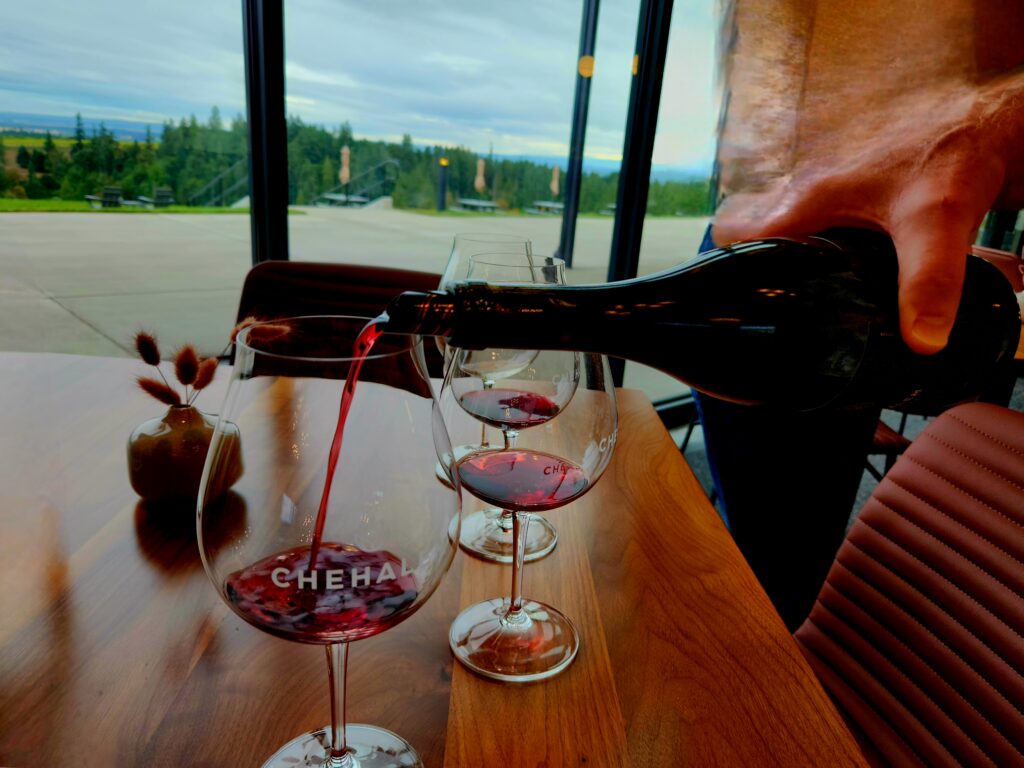
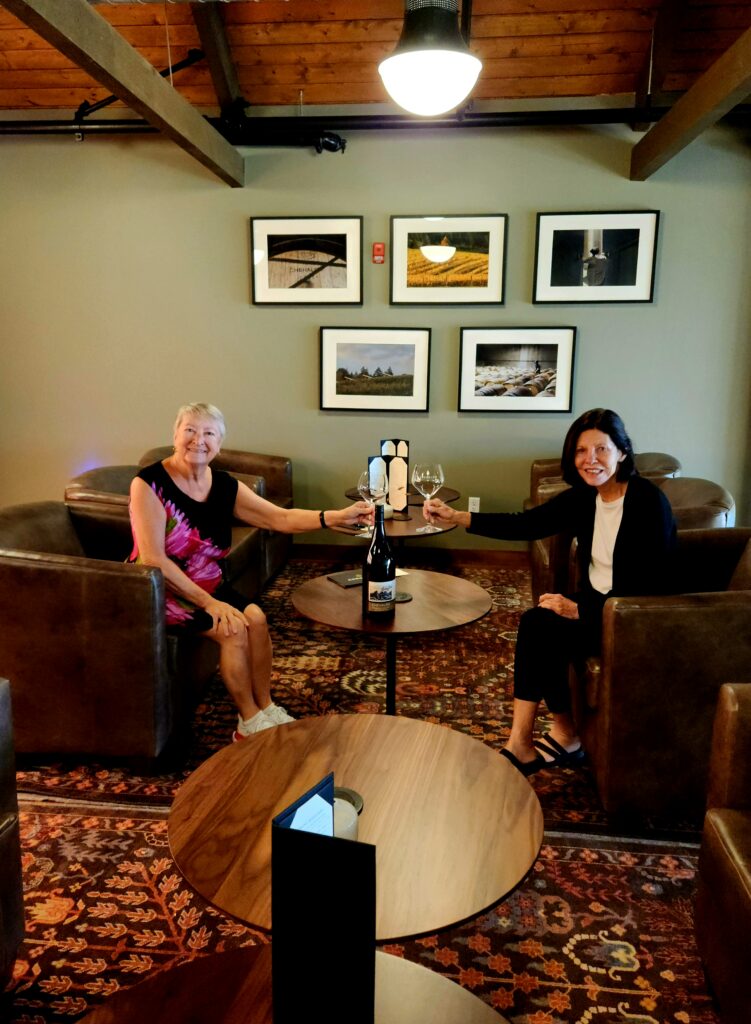
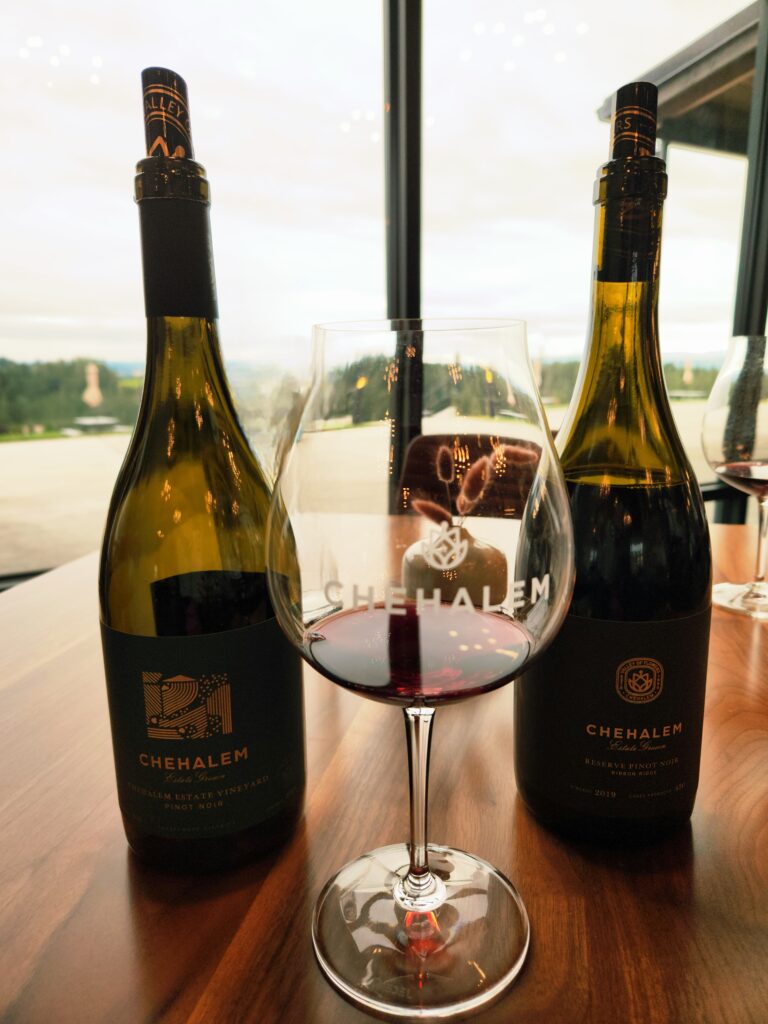
At Chehalem, you learn about the things in the area that determine quality in Valley wines: cool macro-climate, soil profiles (like sedimentary and volcanic), vineyard micro-climates, and winemaking styles. In fact, the winery traces its roots to 1980, when Ridgecrest Vineyard planted the first vines in what would become the Ribbon Ridge AVA. Our tasting guide, Dave, knew more about wine than most people ever will.
Chehalem was planted in 2009 and has had only three winemakers since crushing their first grapes. Because each winemaker overlapped with the next, there’s a remarkable continuity in the wines.
The Ridgecrest and Corral Creek Pinots were the pours I kept circling back to.
Lolati Wines Newberg Woman owned
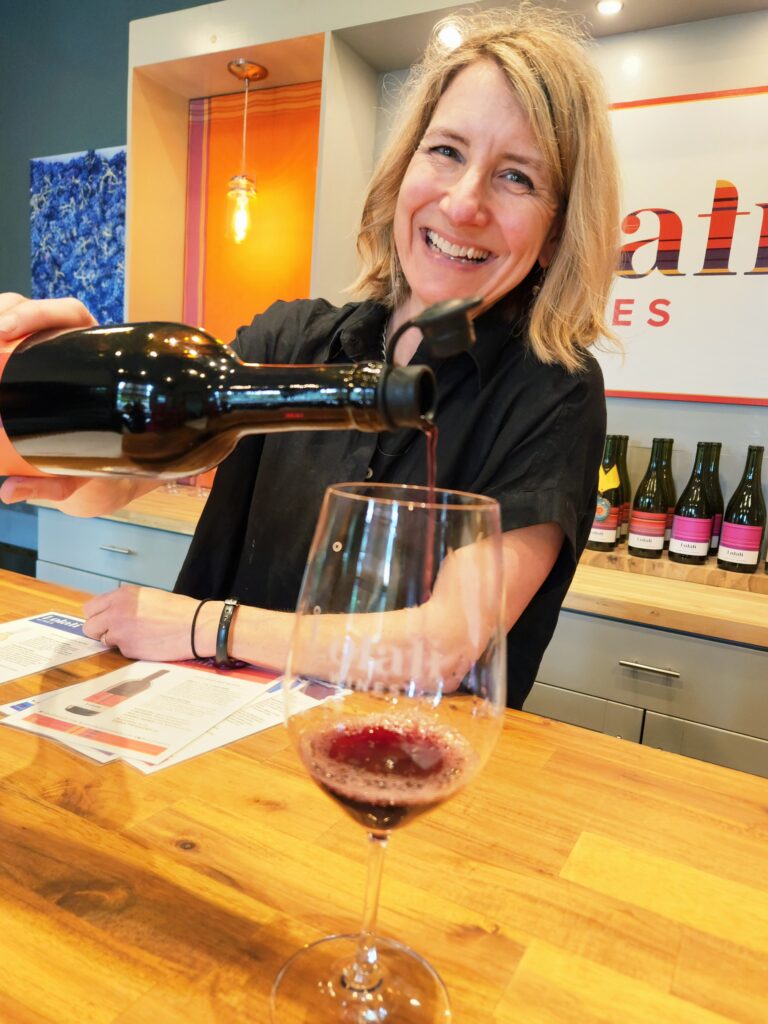
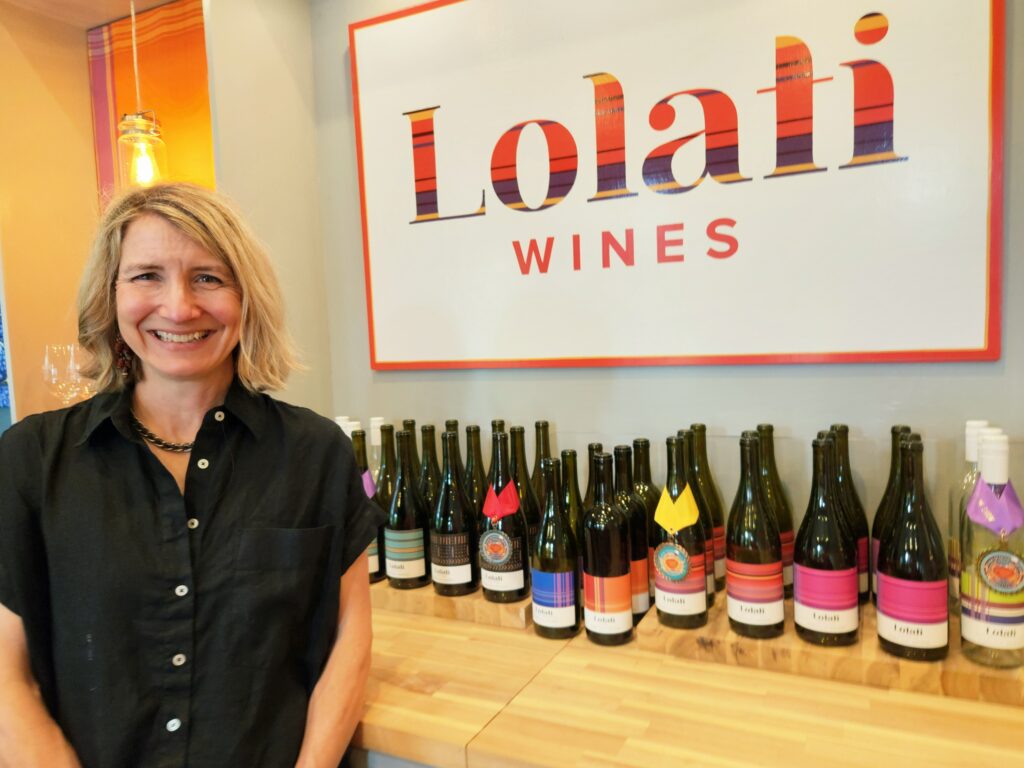
Lolati is a delightfully warm and welcoming micro-winery crafting some of the boldest reds to grace a glass in the Willamette Valley. A morning spent with Leigh Brown, owner and winemaker, is a morning well spent. The décor is decidedly South African, and Lolati Wines is named for Leigh’s great-grandfather’s plaas (that’s Afrikaans for farm) near Cape Town.
Lolati Wines are stored and shipped from the local Trappist Abbey (more about that later). Leigh’s Kikoi, bright colored Kenyan fabrics, inspire her wine labels.
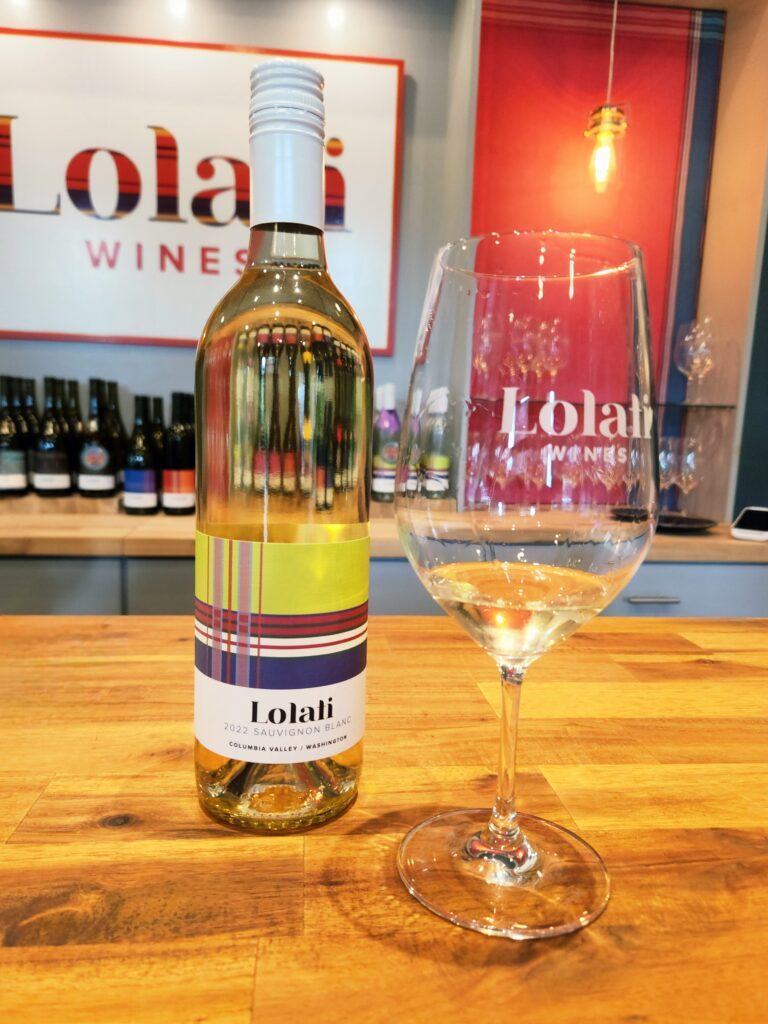
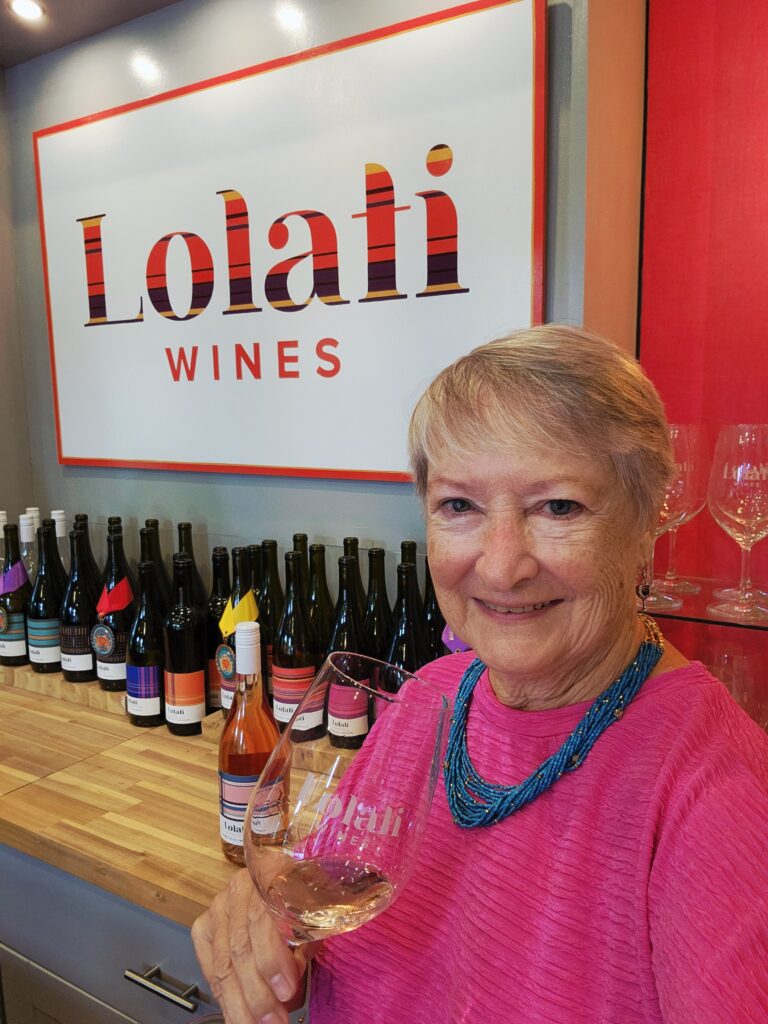
The Rosé of Grenache smelled of watermelon—that’s a good thing—and it tasted even better. The GSM (Grenache, Syrah, and Mourvèdre, from Horse Haven Hills in Washington) and Primitivo (aka Zinfandel from Rockland Flats grapes in the Columbia Valley) easily became the standouts for me.
Bells Up Winery Newberg
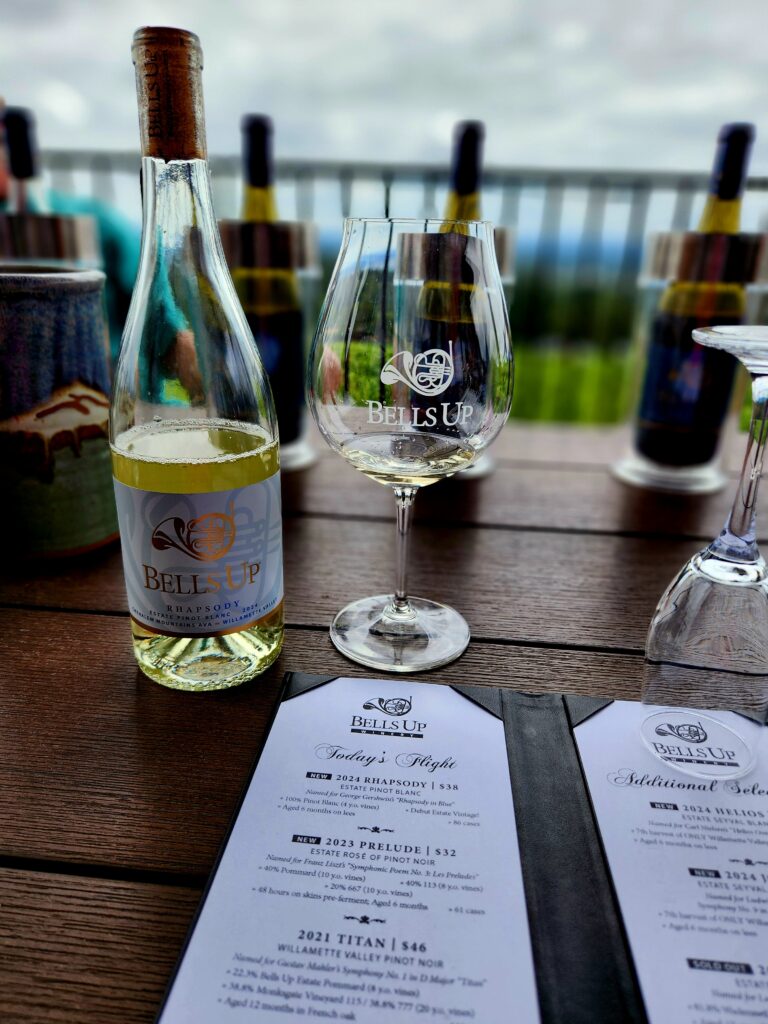
The unique name, Bells Up Winery, may ring a bell *giggle* with those who spent time in high school band class. That’s all I’ll say—you’ll have to meet Dave Specter in person to hear the rest of the story. Call and schedule an exclusive winemaker-led tasting with Dave, a recovering attorney (ssshhhh). Okay, I’ll give you a clue. Many of the Bells Up wines are named to honor famous musical scores, and there is a playlist on the website.
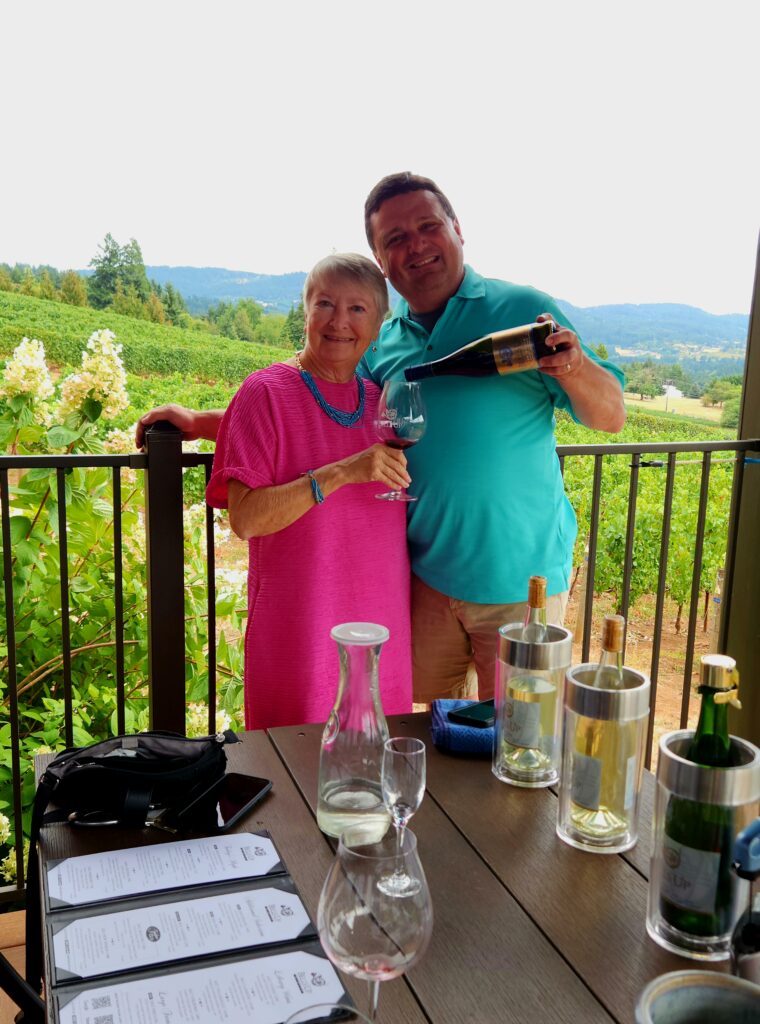
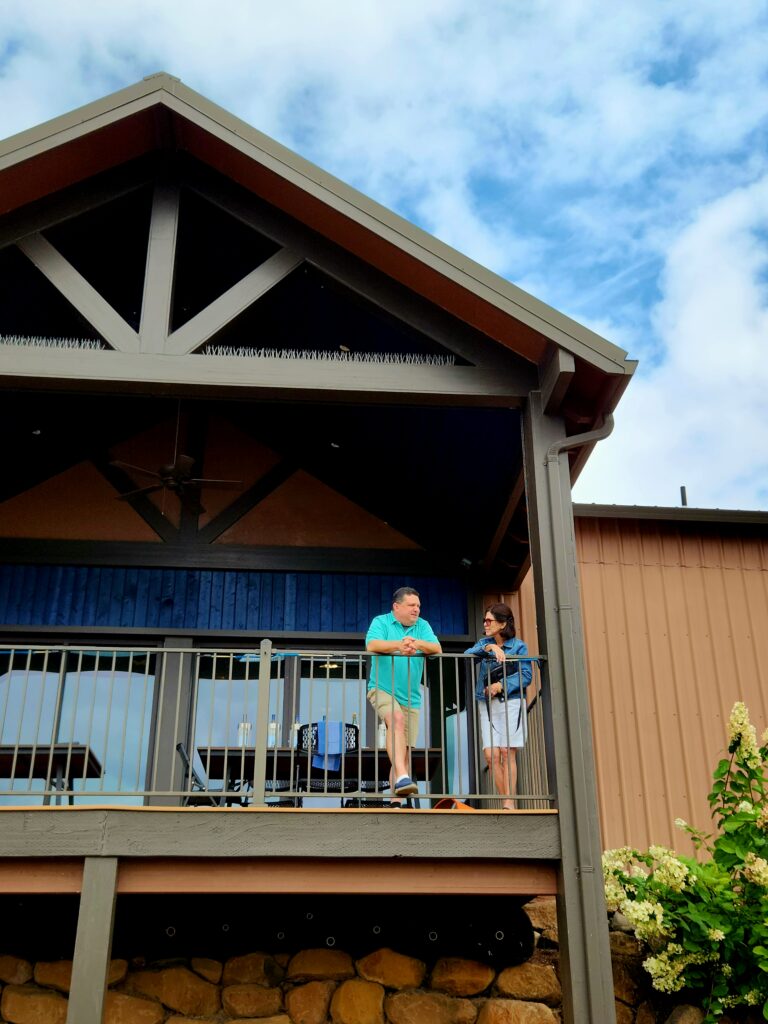
The Bells Up tasting room is on a covered deck overlooking the Christmas tree farm turned vineyard. The setting was so picture-perfect that one of my photos later became the cover image for volume one of Jo Goes Everywhere! (And Dave’s wife, Sara, officially congratulated me on the Bells Up page in a lovely article!)
Dave’s mind stays busy coming up with new wine features, such as rare varietals. Our tasting went far beyond Pinot Noir and included Seyval Blanc (still and Brut with bubbles) and Cabernet Sauvignon—alongside Pinot Blanc and Syrah. I especially liked trying the same white varietals as a still and a bubbly, champagnesque treat. Sampling the same grape in both still and sparkling form gives you a real understanding of its versatility, and you know Dave loves teaching when his eyes start to twinkle.
Prelude, an estate Rosé of Pinot Noir, and Firebird, an old-vine Syrah from Walla Walla Valley, were the clear highlights of the tasting flight.
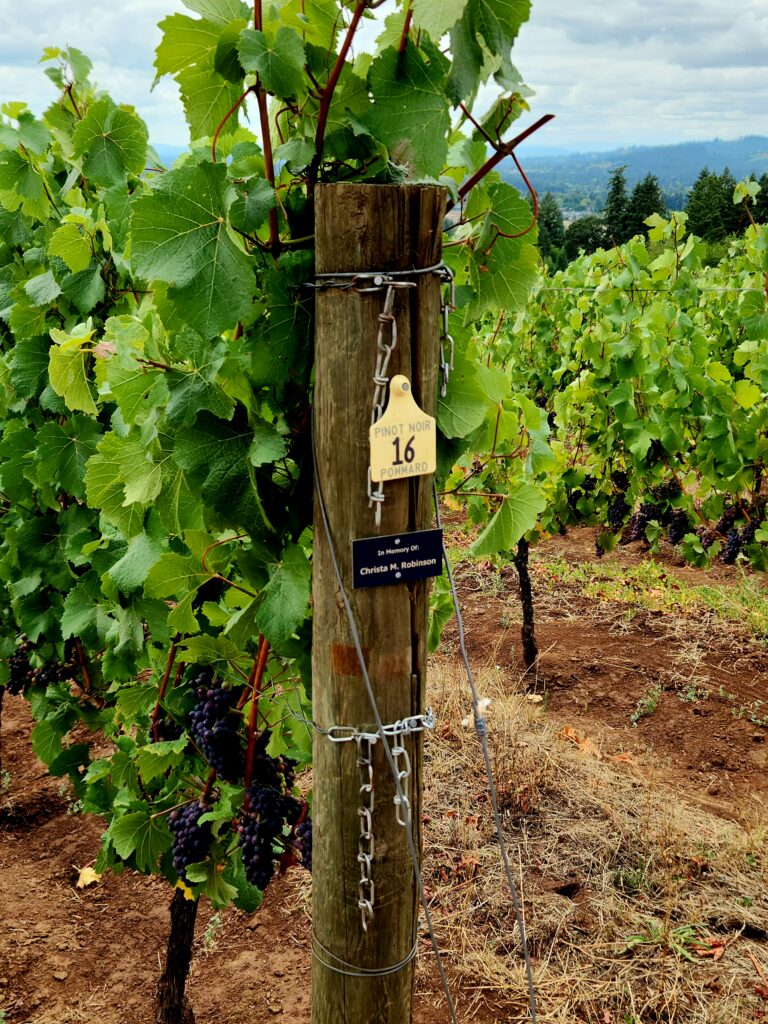
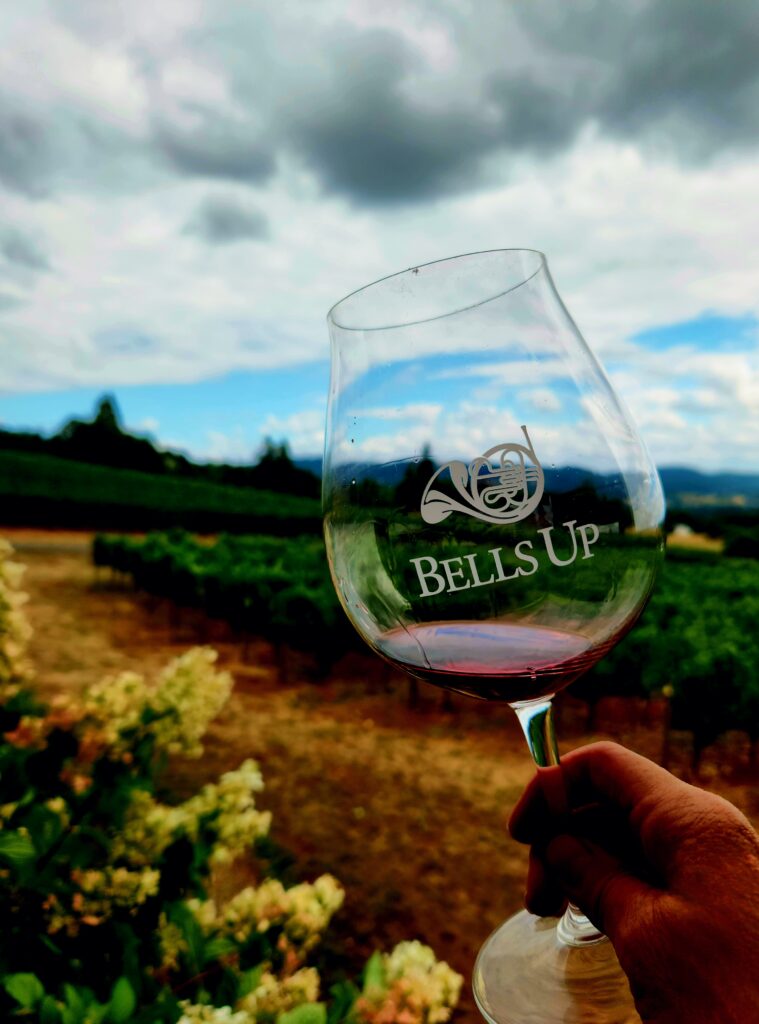
Full disclosure: it’s all Dave’s “fault” I ended up flying from South Carolina to spend eleven days drinking wine in Oregon. We were on a podcast with several US winemakers and a few travel-writing wine lovers, discussing wine. Dave said his area had untold fantastic wines, and the writer in me (or maybe it was the wino) knew it was a story worth telling. What a stroke of luck. I attribute my good luck to living right and drinking wine. LOL!
Et Fille Newberg Woman-owned
In the heart of downtown Newberg, Et Fille offers a sleek, urban tasting room where Jessica shares her small-production wines. The name et fille translates from French to “and daughter”, reflecting co-founders Howard and his daughter Jessica Mozeico, as does their logo of a parent holding a child’s small hand. Since Howard’s passing in 2017, Jessica has continued the legacy, producing wines from eight sustainably-farmed vineyards across the Willamette Valley.
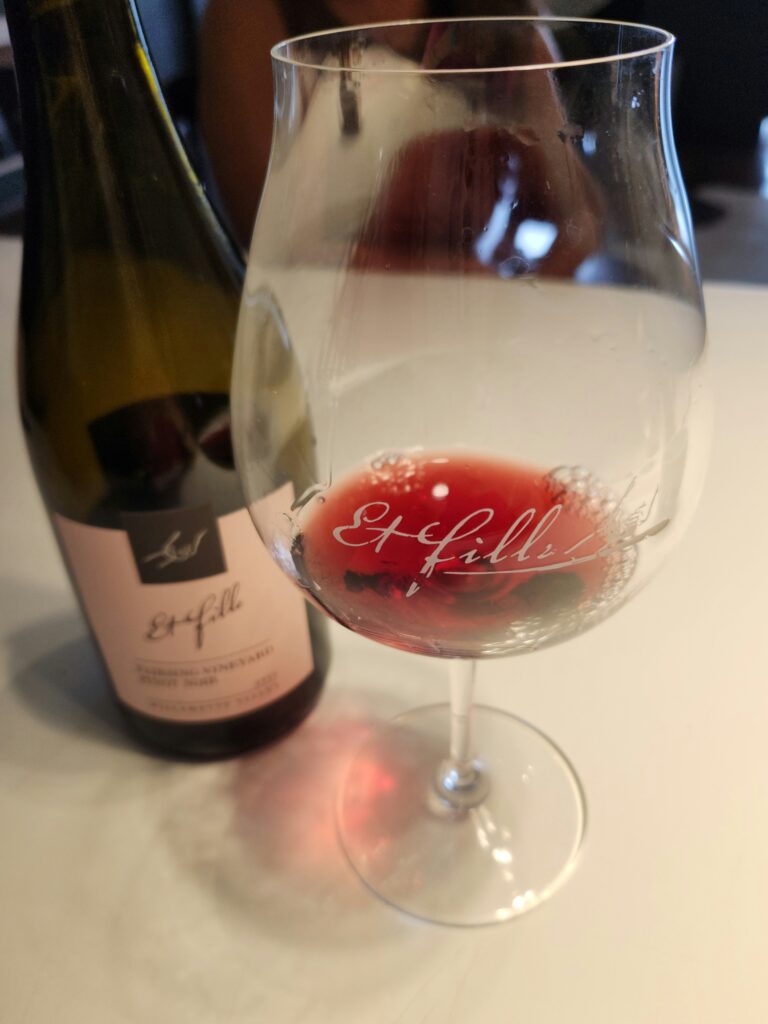
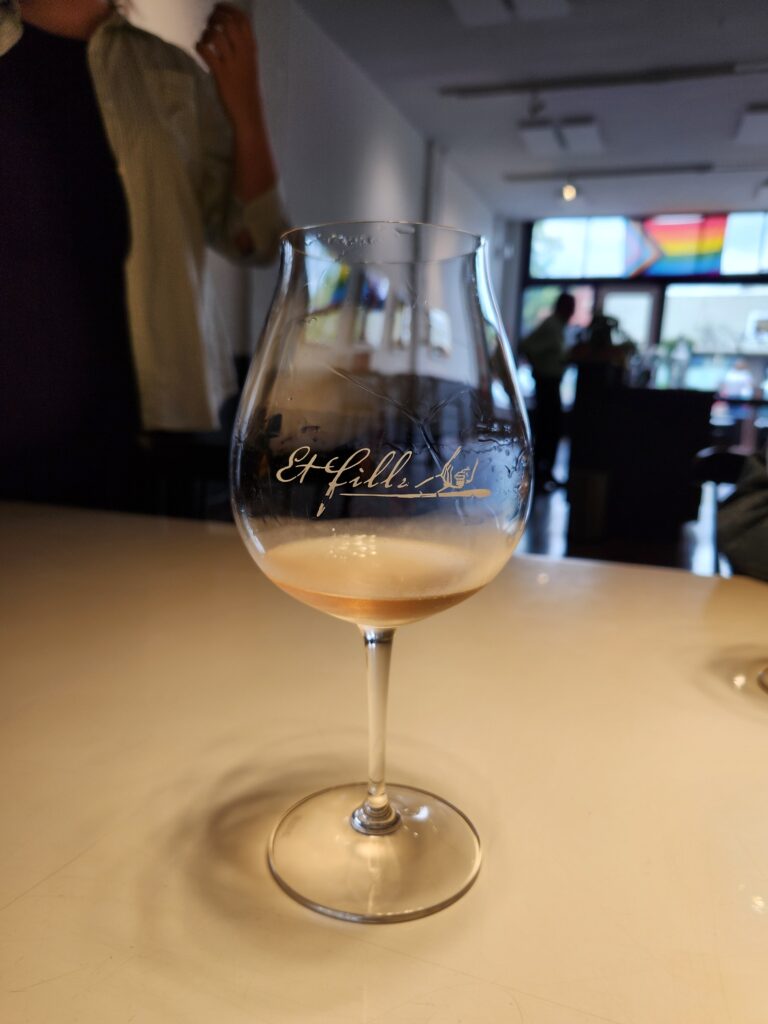
During a visit, expect to sample Pinot Noir, Chardonnay (on oak, then in steel), Rosé, Viognier, Gamay Noir, and Sparkling wine. Two stood out immediately: the Kalita Vineyard Pinot Noir, and the Gabriella Pinot Noir.
If this is your last tasting of the day, you can walk right next door for Italian food or up the street for Mexican. If small bites and Sangria would hit the spot, they have that across the street.
LucidWild Estate Dundee
My luck is always good—I met another writer in California, who told me about a new winery near her that was her favorite place and people. Was she ever right! LucidWild Estate is all that and more. On my visit, LucidWild hadn’t been open a month, but it was running smoothly, and the chef was on the job. Not to mention, Lucid Wild has already received numerous accolades.
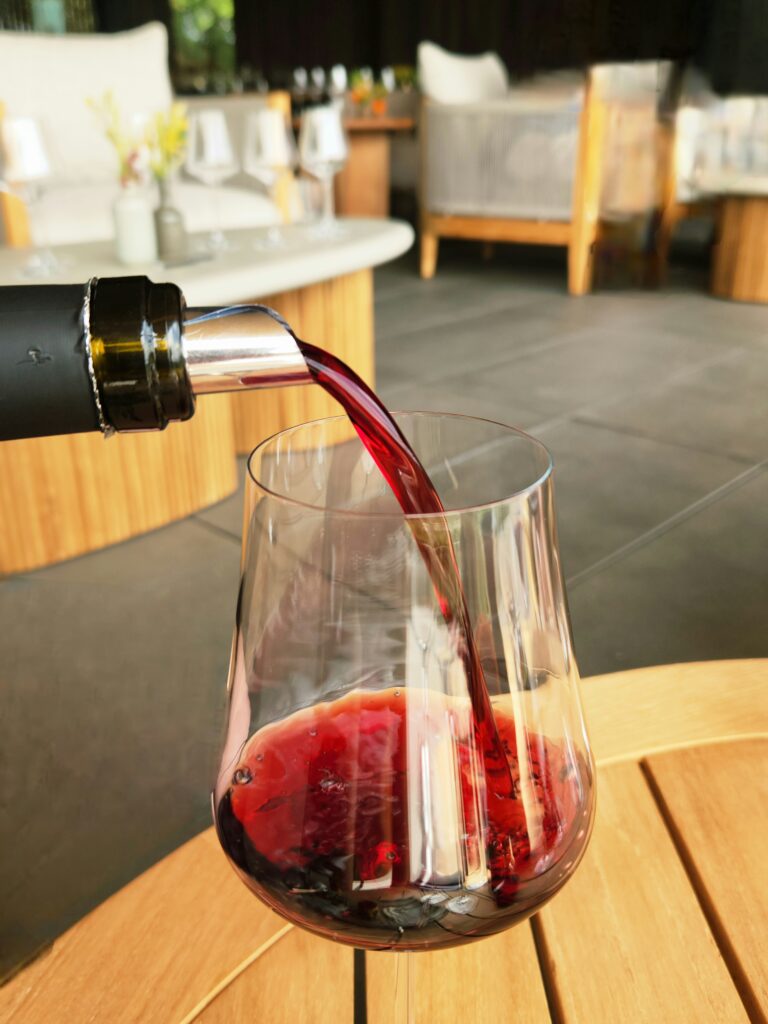
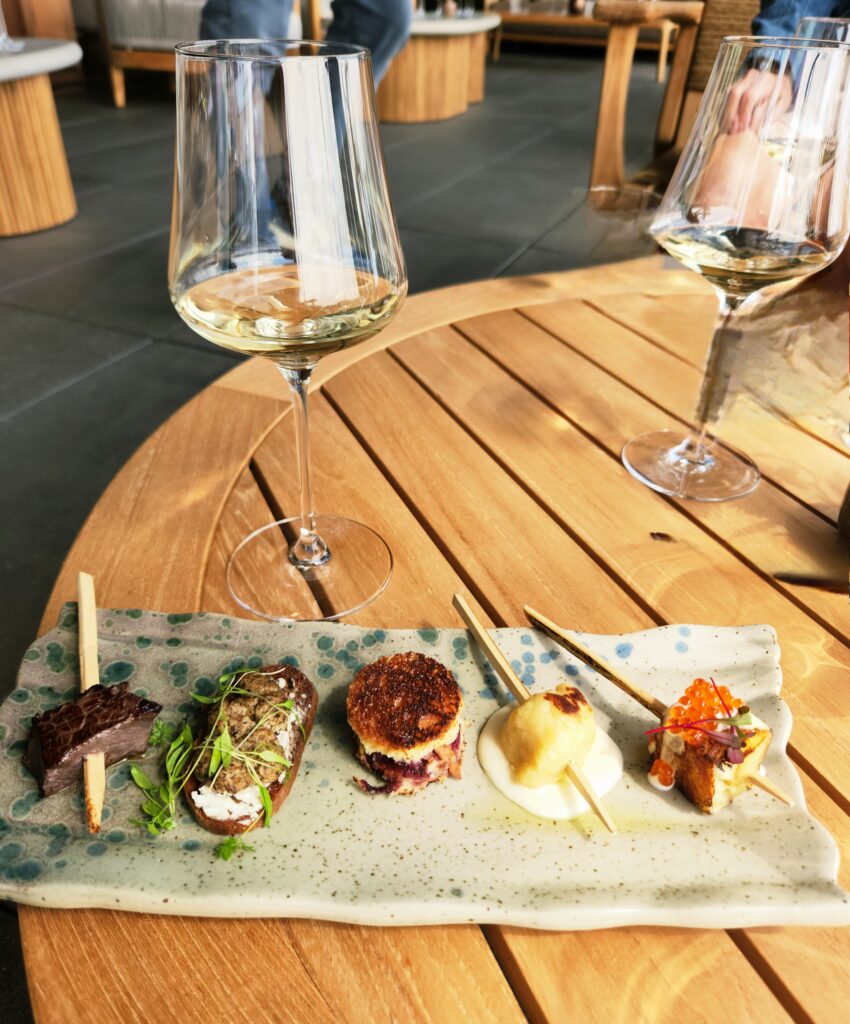
Forty-six acres of Dundee Hills land, planted with 27-year-old vines and called Bella Vida Vineyard, was purchased in 2020 to create LucidWild Estate. Twenty-three of those acres grow Pinot Noir, and two produce Chardonnay. Blair and L.J. Nicholas started LucidWild with the intention of producing hand-picked single-vineyard estate Pinot Noirs and Chardonnays in the Burgundian style. The winery and its wrap-around balcony offer visitors a stunning view of the Cascade Mountains and Mount Hood.
Company President John gave a great tour of the property. He introduced me to the vineyard’s Valais Blacknose sheep and the llamas. I just waved at the honey bees as we passed by. John took to the Carolina Shag like a true Southern beach boy. *smile* I hope they’re still playing Beach Music and dancing in the tasting room.
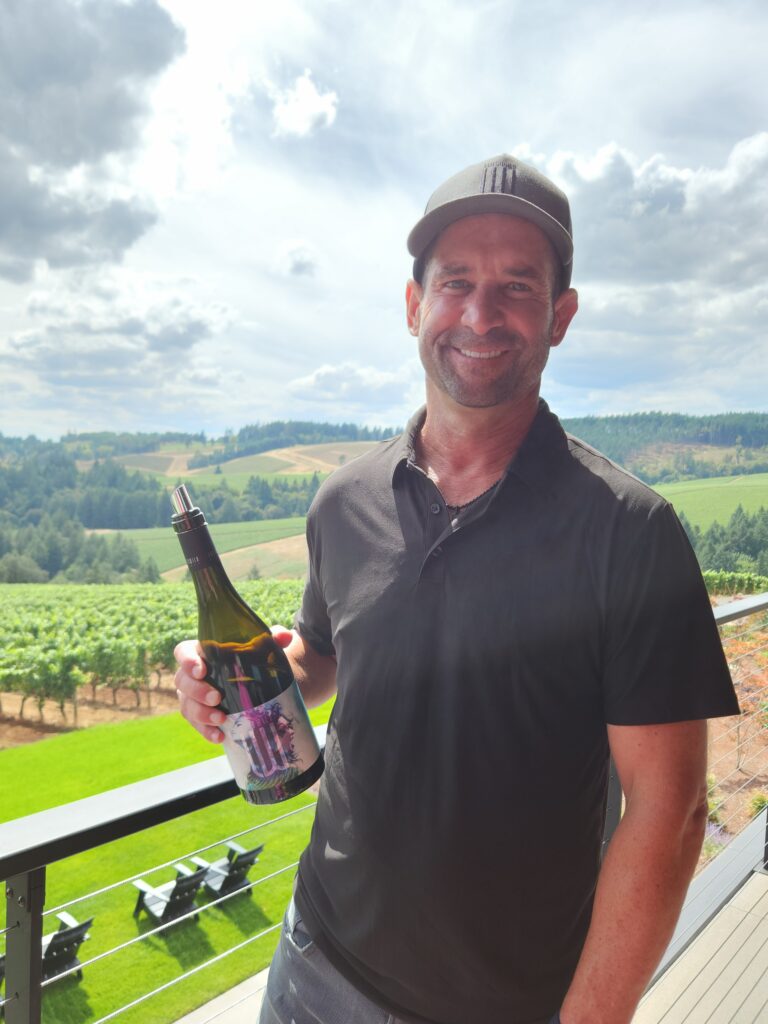
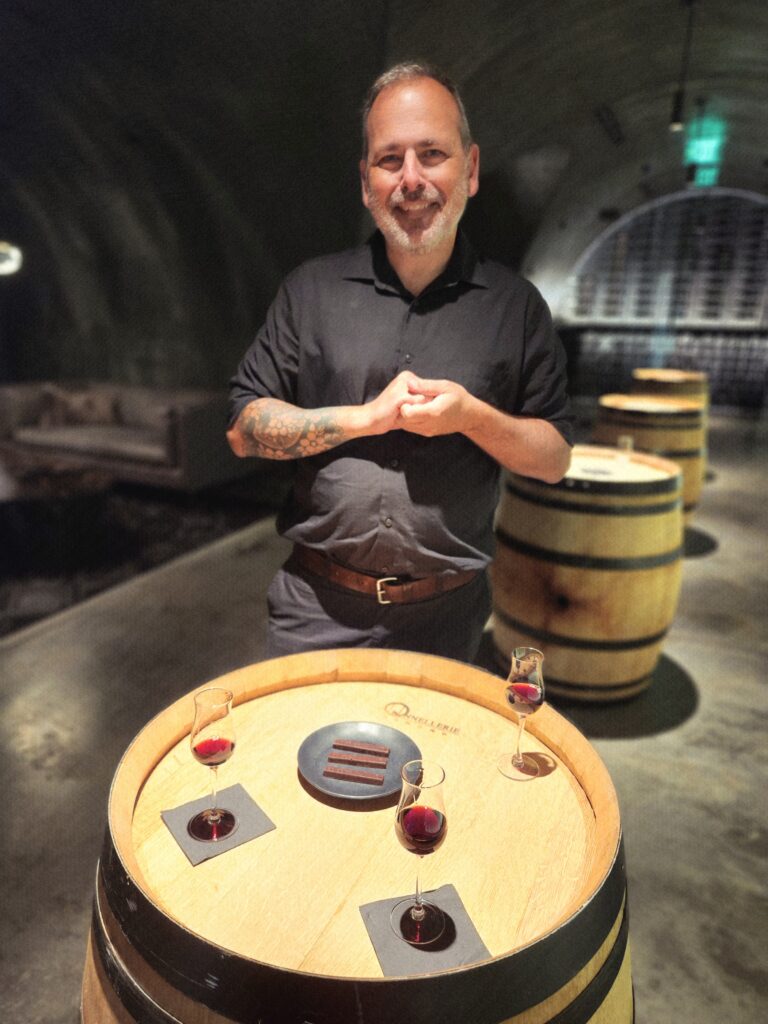
LucidWild’s Lust – a Blanc de Blanc Sparkling of 100% Chardonnay absolutely lived up to its name, and the estate Pinot Noirs just upped the game. My two top picks of the day make a sentence—Months later, I still think about Lust and Chosen. Chosen has been awarded 95 points from Wine Enthusiast’s “Editor’s Choice” and 94 points from Decanter and Northwest Wine Report (I told you I have good taste!).
All this wine needs a place to live, so there are wine caves on the grounds.
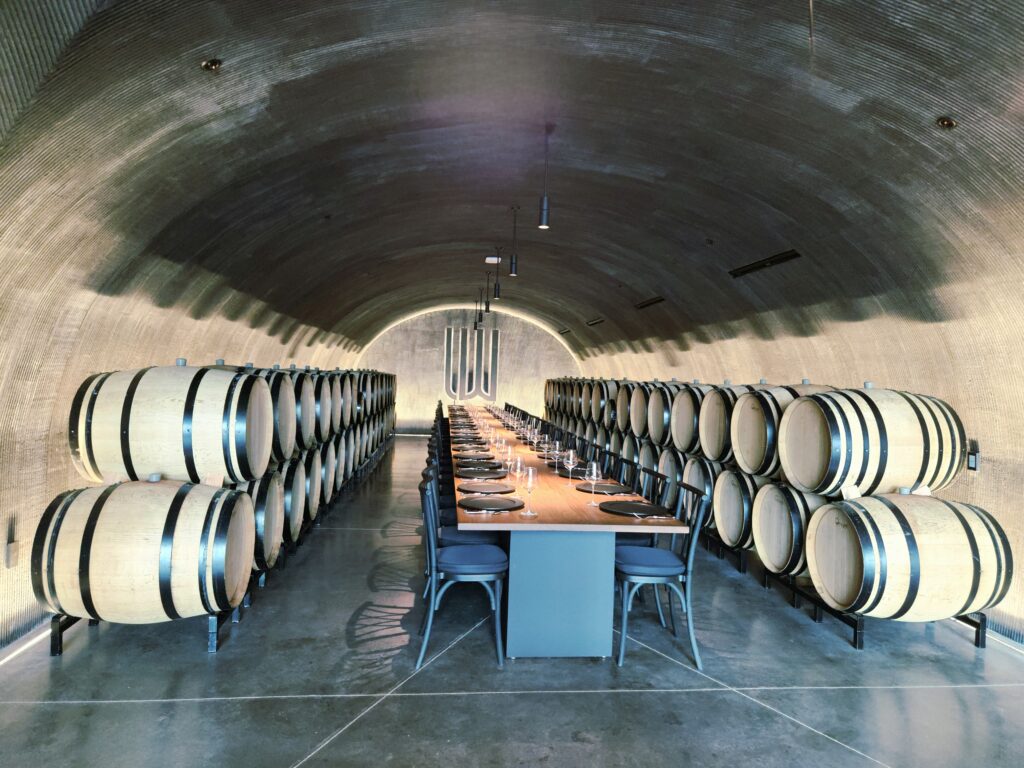
Pro tip: Ask about the password—you’ll need it at the cellar’s hidden door!
Woodshed Dundee
My luck continued as we left LucidWild and headed toward the night’s B&B. Along a road cut through vineyards, there it was—a tasting room. I immediately thought of the saying, “I’ll take you out to the woodshed”, hit the brakes, and made a quick U-turn for this roadside find.
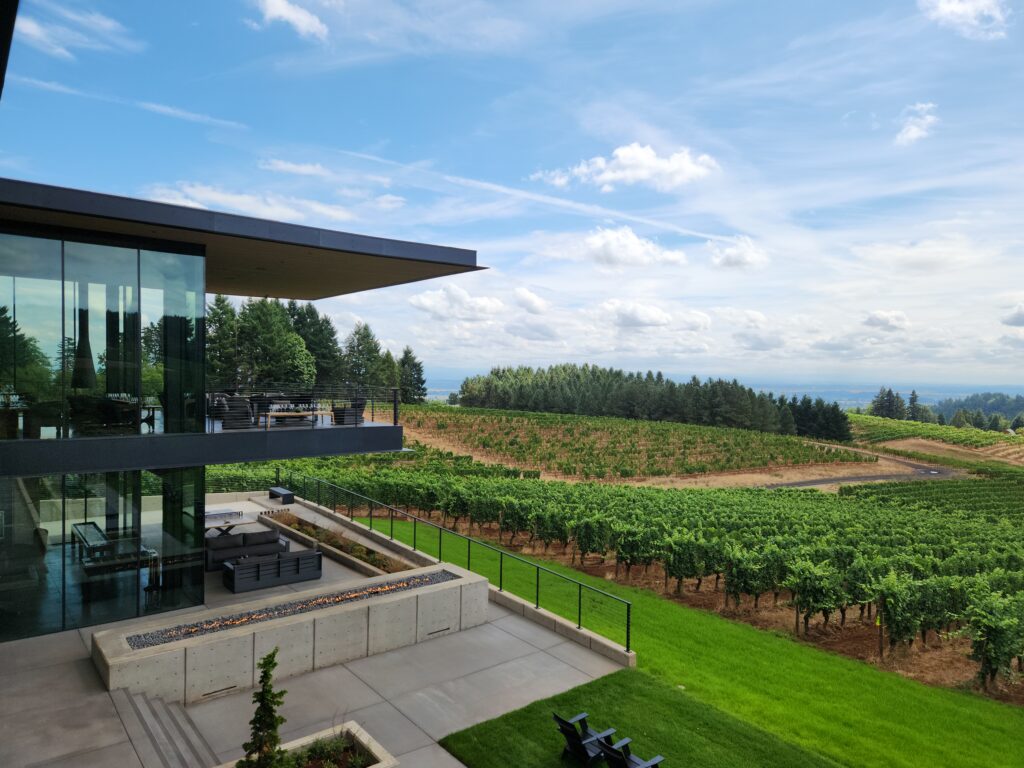
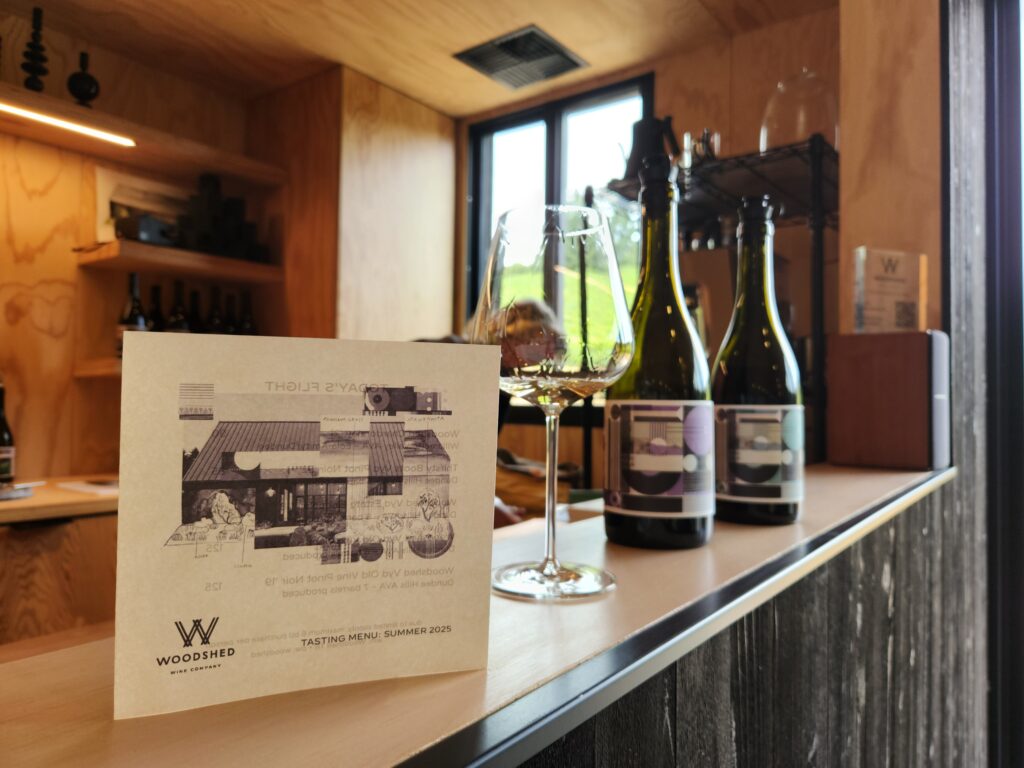
Woodshed Wine Company is tucked in among the vines, easy to miss if you’re not looking. At first glance, it resembles a Southern roadside stand. Inside, the compact tasting counter opens into several cozy seating areas and a wide patio overlooking a historic vineyard. Woodshed produces Pinot Noir, Chardonnay, and sparkling wines from estate fruit, along with grapes from neighboring vineyards.
Potter’s Vineyard Newberg
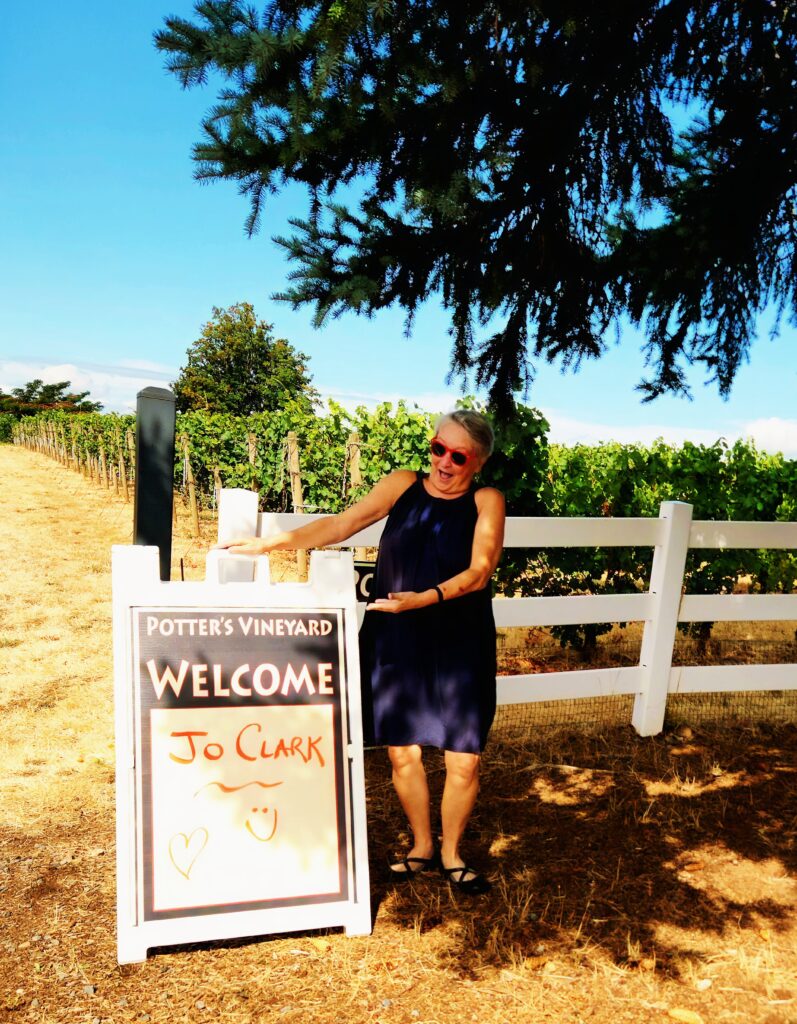
Let me tell you, Bill Sanchez, owner and winemaker, knows how to make you feel special. As we approached the entrance to Potter’s Vineyard, I spotted a welcome sign stating that the Winery was closed for the day for a special guest—me! Not something you see every day. Besides crafting excellent wines, Bill also makes the wine glasses and charcuterie plates, giving real meaning to the vineyard’s name.
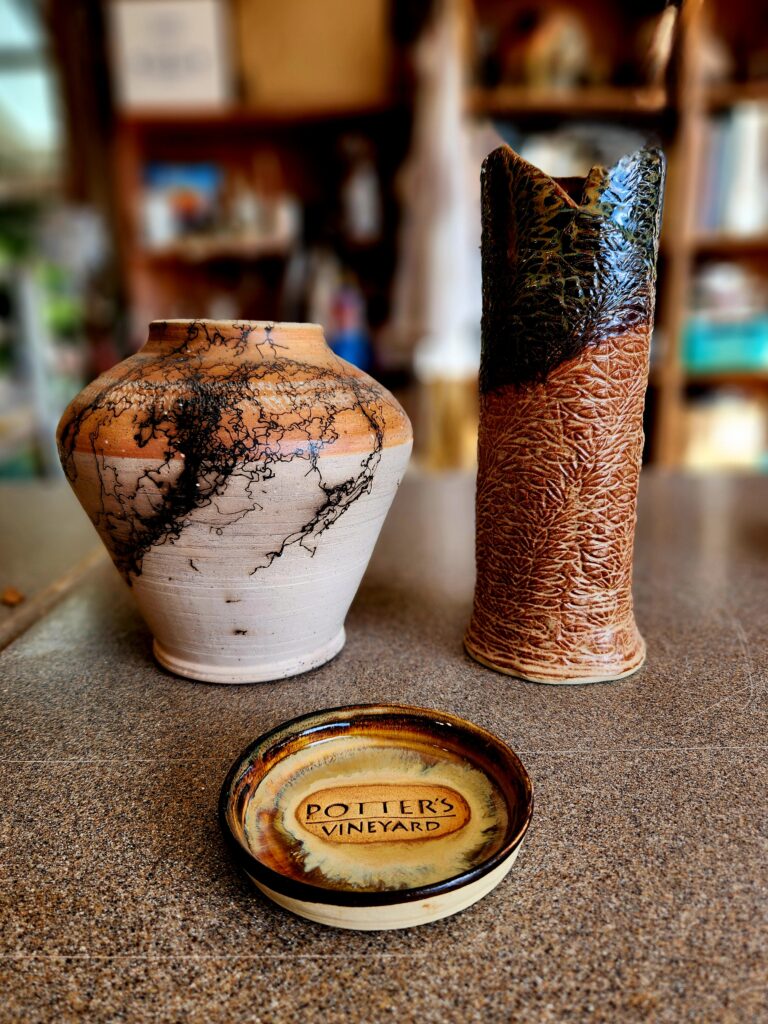
It was a beautiful morning, so instead of sitting inside, we chose a spot in the shade of the trees bordering the patio. The setting enhanced the wines, and the wines enhanced the setting—altogether, a perfect start to the day.
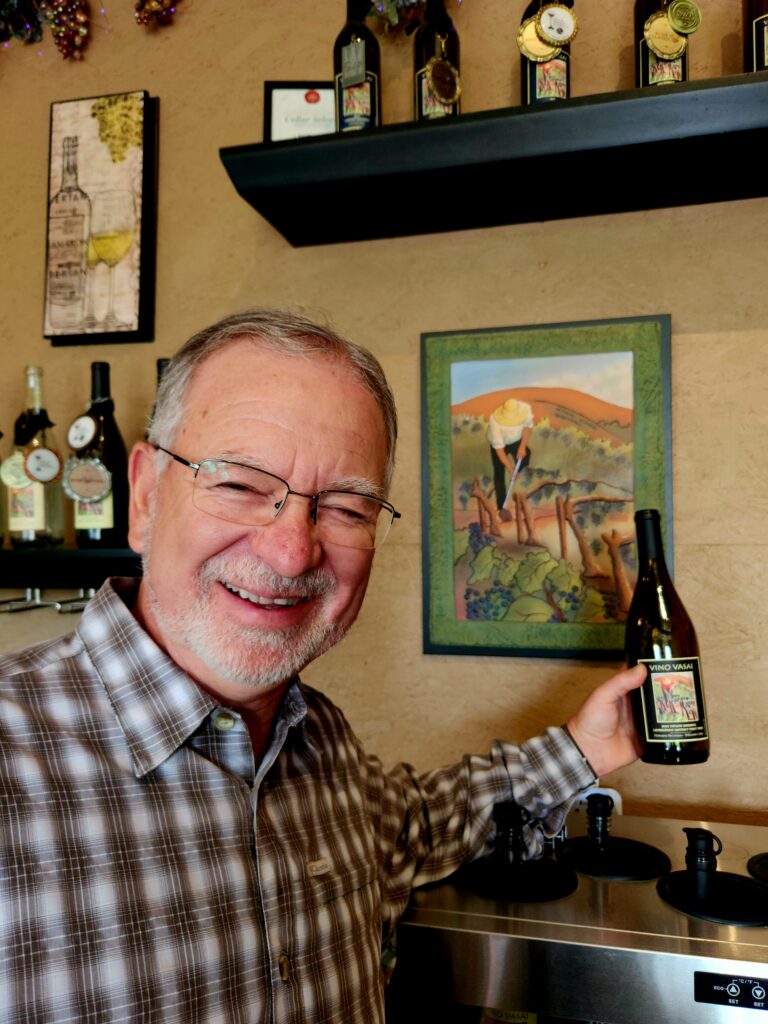
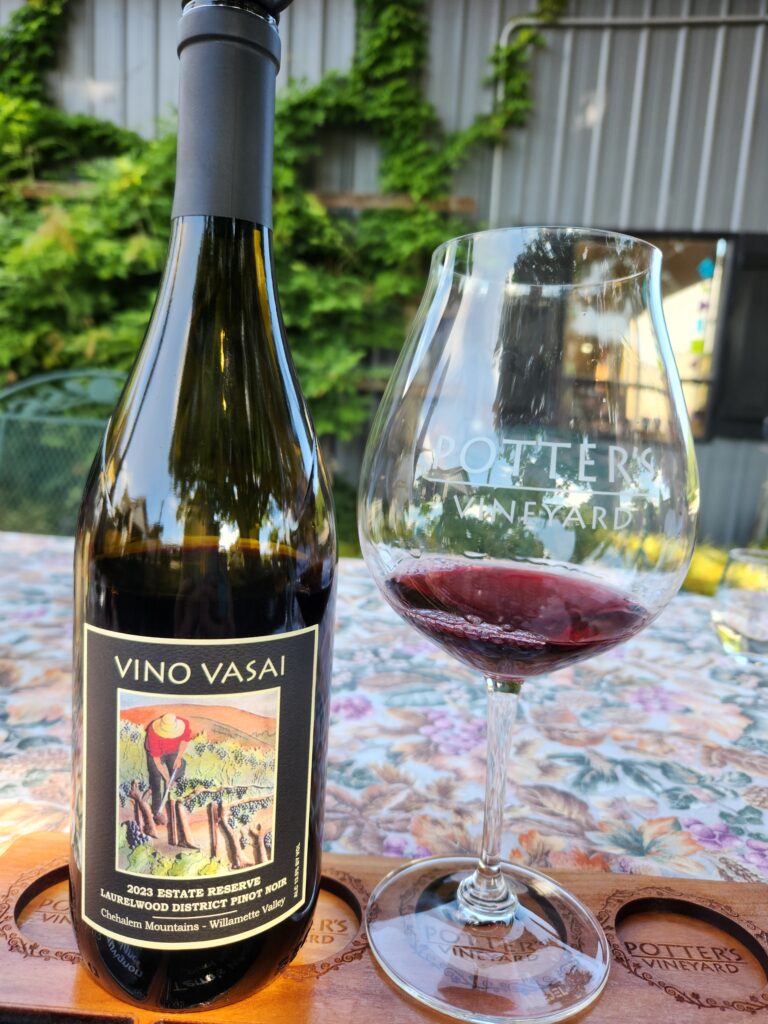
Potters Vineyard produces Pinot Noir, Chardonnay, and Cabernet Sauvignon, along with seasonal specialties like White Pinot Noir, Sparkling, and even a Super Tuscan.
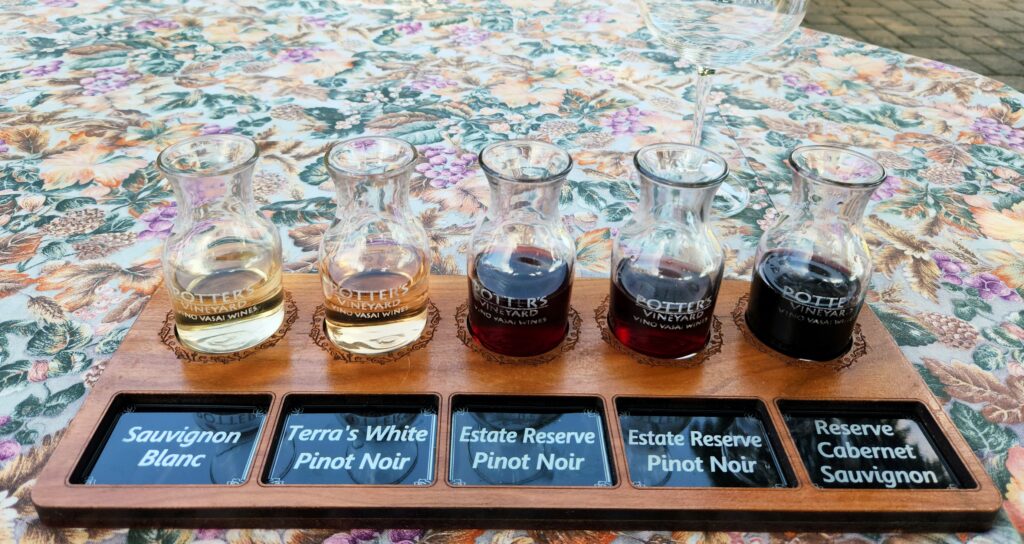
I can already imagine Terra’s White Pinot Noir with a cedar plank grilled salmon, but the memory of the silky Cabernet Sauvignon Reserve remained with me longer than most. But, then, there was that Sauvignon Blanc—so many decisions.
Ocelli Cellars Newberg
John Peacock makes Grenache at Ocelli Cellars. That’s it. Just Grenache. Just 400 cases a year. When you focus on one thing, you do it very well. And he is the only one in the northwest making Grenache exclusively. I love Grenache, so I arrived expecting a couple of red pours. Turns out, I couldn’t have been more wrong.
John started with a rosé—then moved to his white Grenache Blanc—and finally into reds from Columbia Valley, French Creek, and Upland Vineyard. Turns out, Grenache—and John—can do it all. The rosé barely touches the skins before pressing. The white wine is made from red grapes, but pressed off the skins. When John started talking about pairing White Grenache Noir with scallops, I started dreaming.
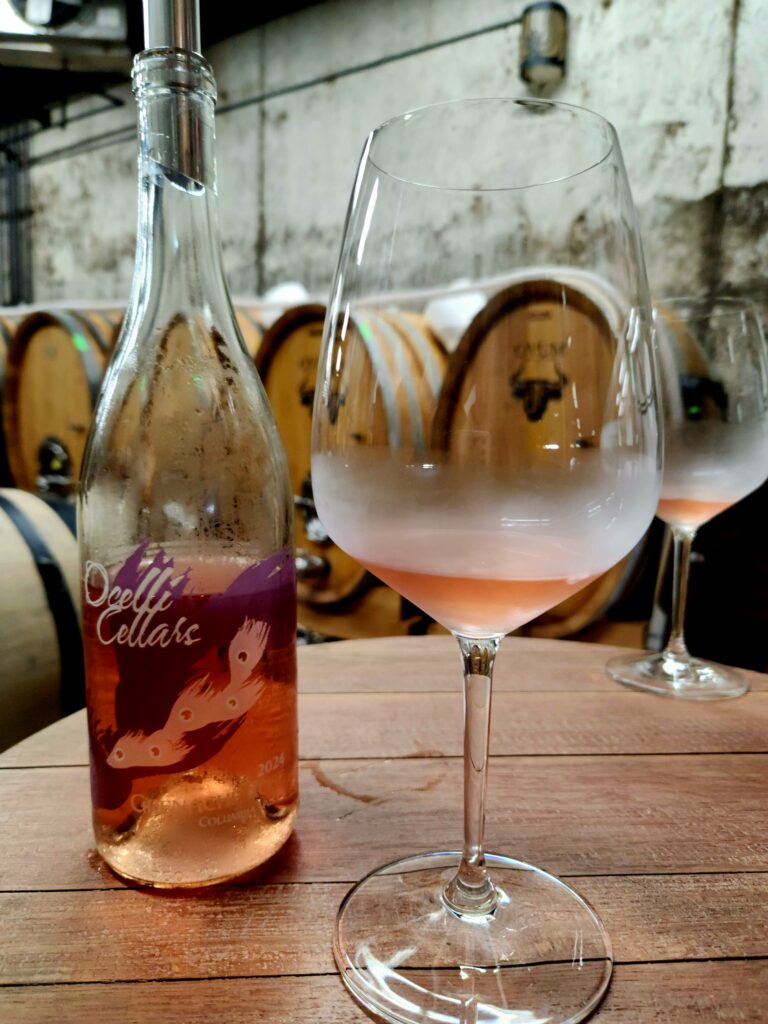
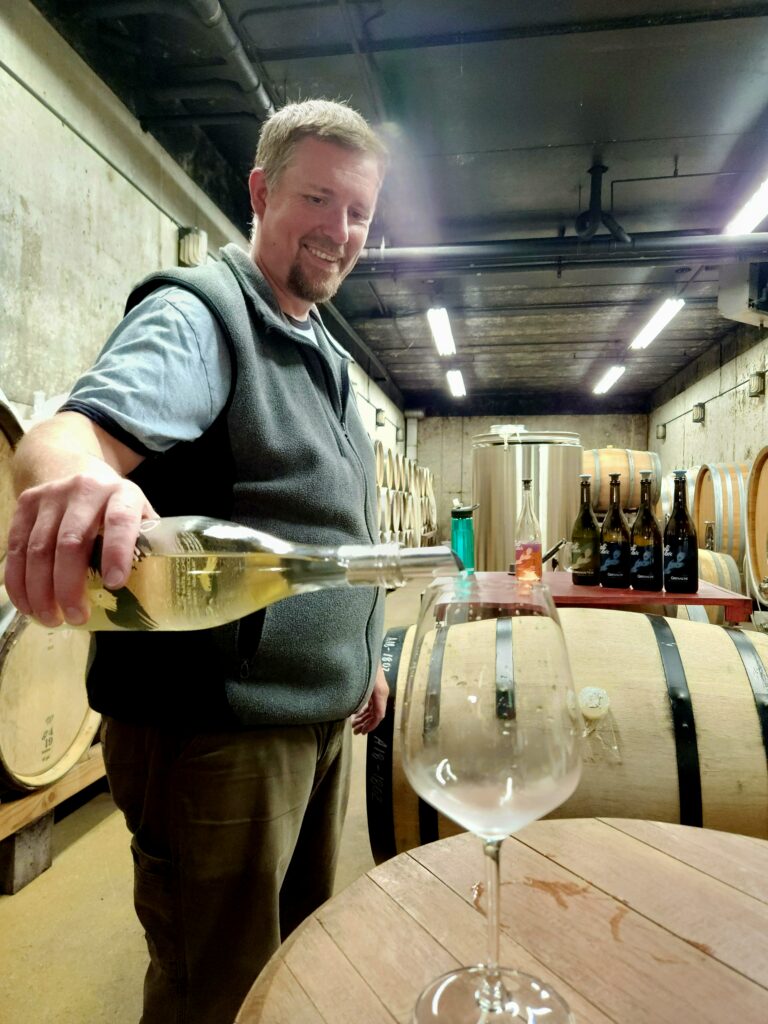
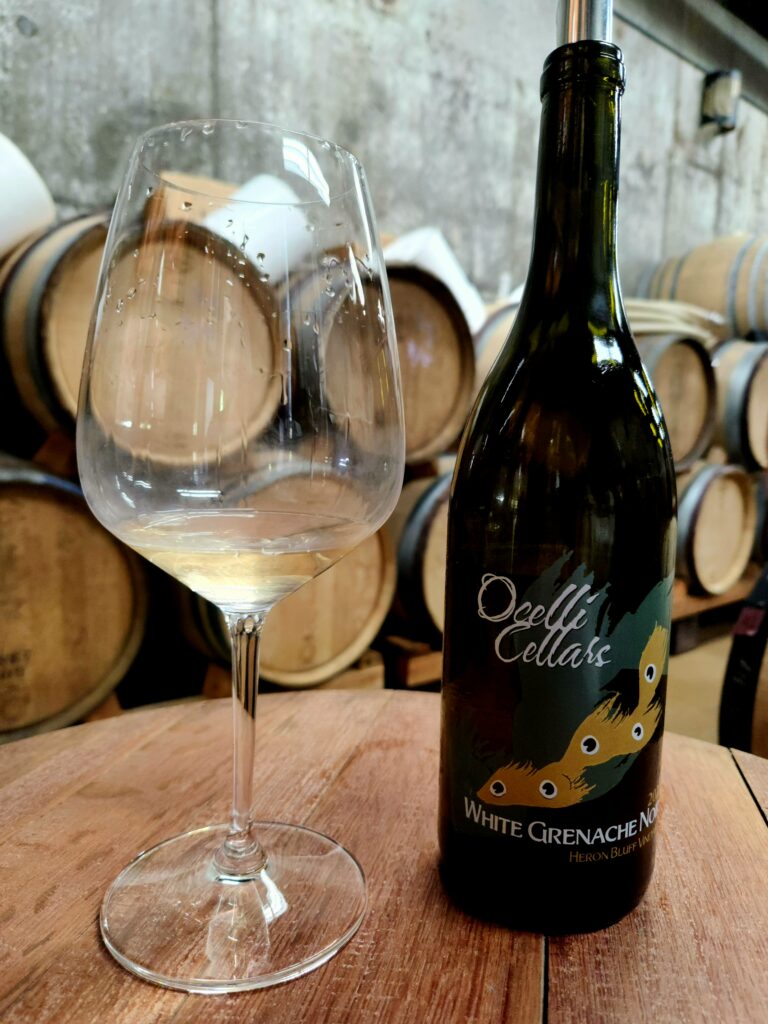
The downside of working with a single varietal is the lack of scale. Until production grows, it’s not practical to grow, crush, cellar, bottle, and ship everything independently. Enter August Cellars, a local co-op where wineries share space, equipment, and staff for tastings and shipping. Ocelli sources grapes from Oregon and Washington to maintain both quality and volume. John Peacock worked with another winemaker from 2012 to 2016. Working on his own, he produced his first vintage in 2019. By 2020, he started receiving impressive ratings for his tasty Grenache wines.
One more detail: Ocelli is Latin for “little eyes”—like the markings on a peacock’s tail. Handy to remember…especially if it ever pops up as a Jeopardy clue.
Appassionata Estate & J. Christopher Newberg
Don’t you love a two-for-one stop? Appassionata Estate and J. Christopher Wines share a tasting room. They share something else, too—a familiar name—Sirpa Peacock. Winemakers are a tight-knit bunch, and these two are husband and wife. The wine industry in Willamette Valley is unlike other businesses or locations—they all encourage you to visit the competition. Winemakers in the Willamette Valley genuinely support one another. They encourage visitors to explore neighboring wineries because they understand that the more people experience Oregon wine country, the longer they stay, the more they discover, and the more the entire region thrives.
On Friday nights, there is live music on the patio from 4 pm-7 pm, along with small bites and wine by the glass—now that’s how you start a weekend. Check the website for the music schedule.
Appassionata Estate
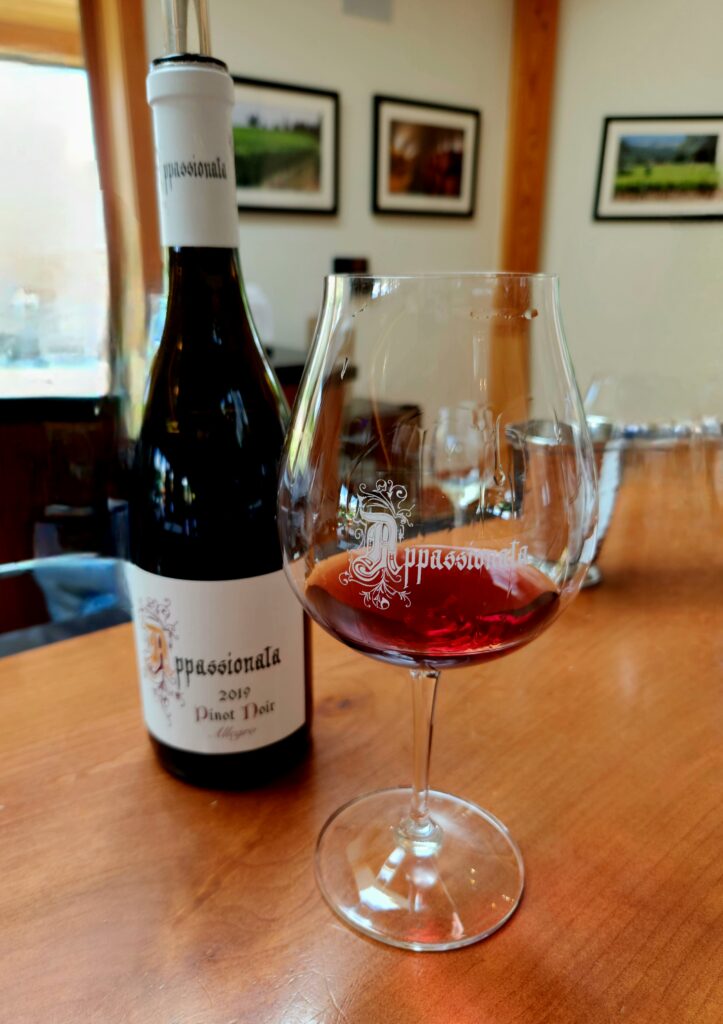
Appassionata Estate has deep roots in the Chehalem Mountains, with one foot in Germany through winemaker Ernst Loosen. Hearing the name Loosen, you think exquisite Riesling. Still, Erni’s love for Pinot Noir brought him to Oregon more than 30 years ago. In 2005, he collaborated with J. Christopher Wines to produce a limited-production Pinot Noir named Appassionata. The seeds of the one-off partnership grew, and soon Erni purchased acreage and planted Appassionata Vineyard. As a lover of both his Finger Lakes Rieslings (and yes, he produces a lovely Oregon Riesling) and Willamette Valley Pinot Noirs, maybe I need to follow Dr. Loosen around—you know, just for research.
Today, Appassionata Estate produces three Pinot Noirs, a Chardonnay, Sauvignon Blanc aged in acacia barrels, and a dry German-style Riesling (GG style—after all, we are talking about Erni Loosen!) Erni holds several of his wines for more than 10 years, primarily because he believes a wine’s character and complexity don’t show themselves until it matures. When he sells these wines, they are ready to enjoy, making him the original “sell no wine before its time” guy. You can experience the difference in these bottles, especially in the 2017 Andante Pinot Noir, grown in volcanic soil.
My readers know I’m not a fan of oaky Chardonnay. Still, his Estate 2020 Chardonnay is a fine wine, and James Suckling supports my assessment with a 94-point rating.
J. Christopher Wines
J. Christopher Wines, now owned by Ernst Loosen, has been named a Top 100 Winery by Wine & Spirits Magazine four times. J. Christopher wines include at least seven Pinot Noirs, made from fruits grown in various areas of the Valley (yes, dirt really makes a difference), Chardonnay, Rosé, Sauvignon Blanc (rare in the Valley), and the off-dry Sonnenschein Riesling.
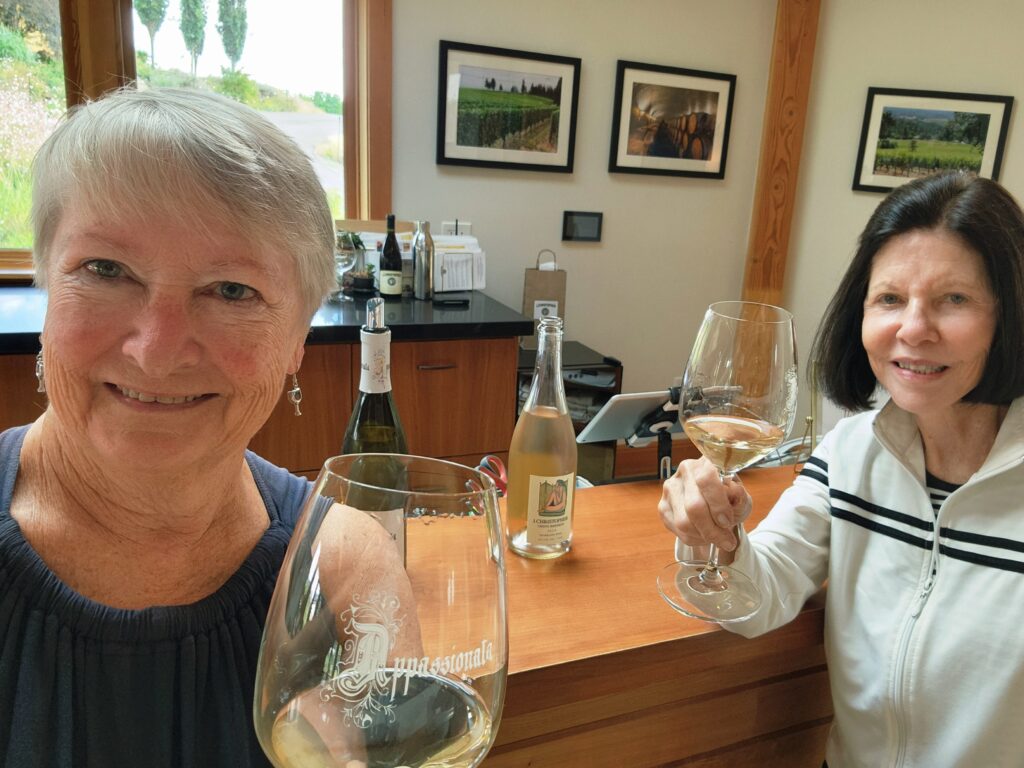
We very much enjoyed the dry Christo Irresisto Sparkling. It was a complex blend of Syrah and Grenache. But the Estate Rock Blocks Pinot Noir kept calling my name.
Utopia Vineyard Newberg
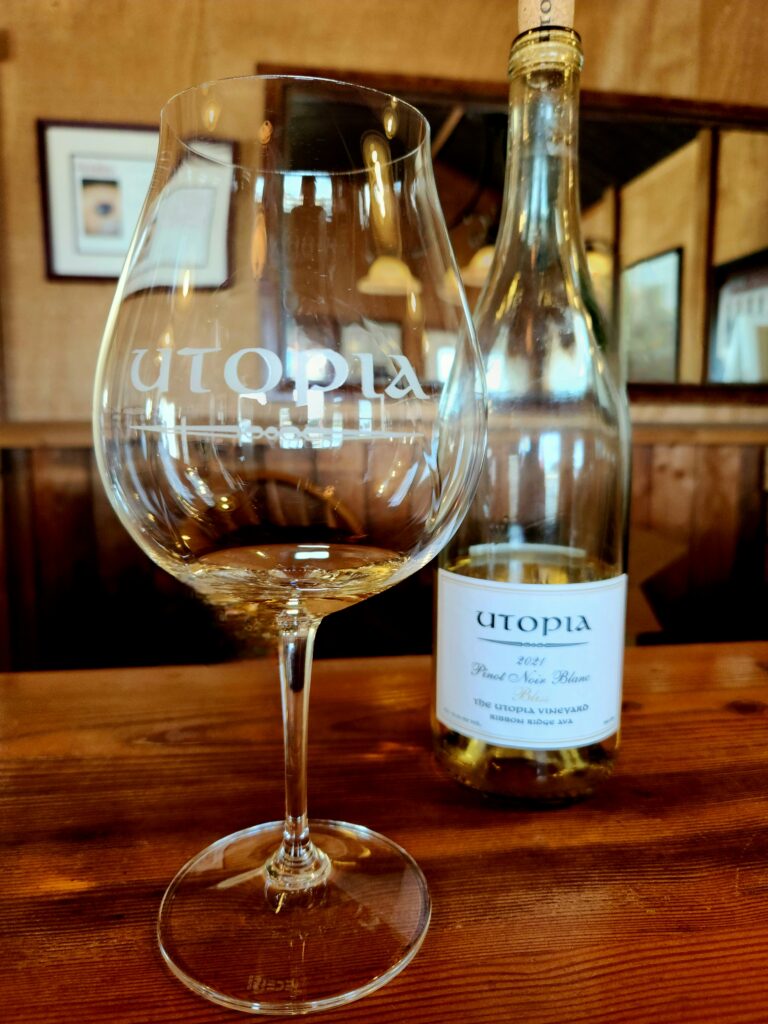
In the midst of farmland in the Ribbon Ridge area is Utopia Vineyard. Owner and winemaker Daniel Warnshuis built Utopia Vineyard on a south-facing hill in the northern Willamette Valley. Come fall, the fruit is quickly hand-picked, moving from the field to the winery in under an hour. Those clusters produce a world-class Pinot Noir, Pinot Blanc, and Pinot Noir Rosé.
We had a selection of three Estate Pinot Noirs and a Chardonnay. We also enjoyed their Gamay. My favorite sample of the visit was the Estate Pinot Noir Blanc “Bliss”; the tannins were smooth, and it was easy to imagine drinking this with a juicy prime rib.
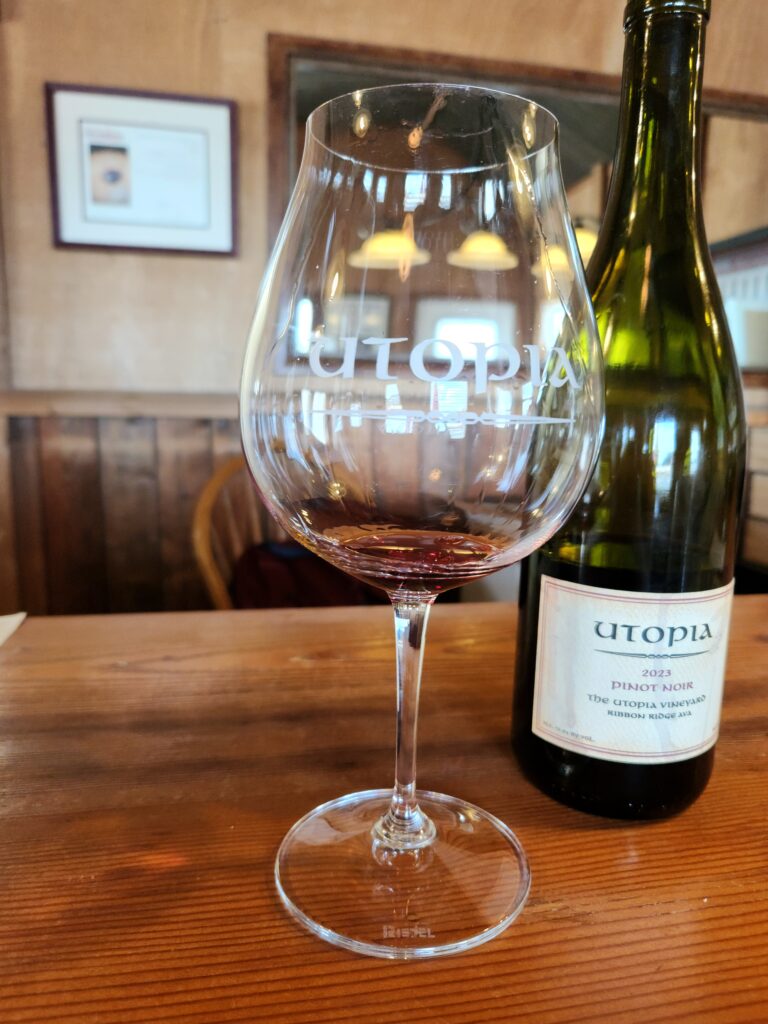
Utopia Vineyard has another unique feature: a hidden log cabin where you can book a private stay, surrounded by 37 acres of forest next to the vineyard.
Sokol Blosser Vineyards Dayton
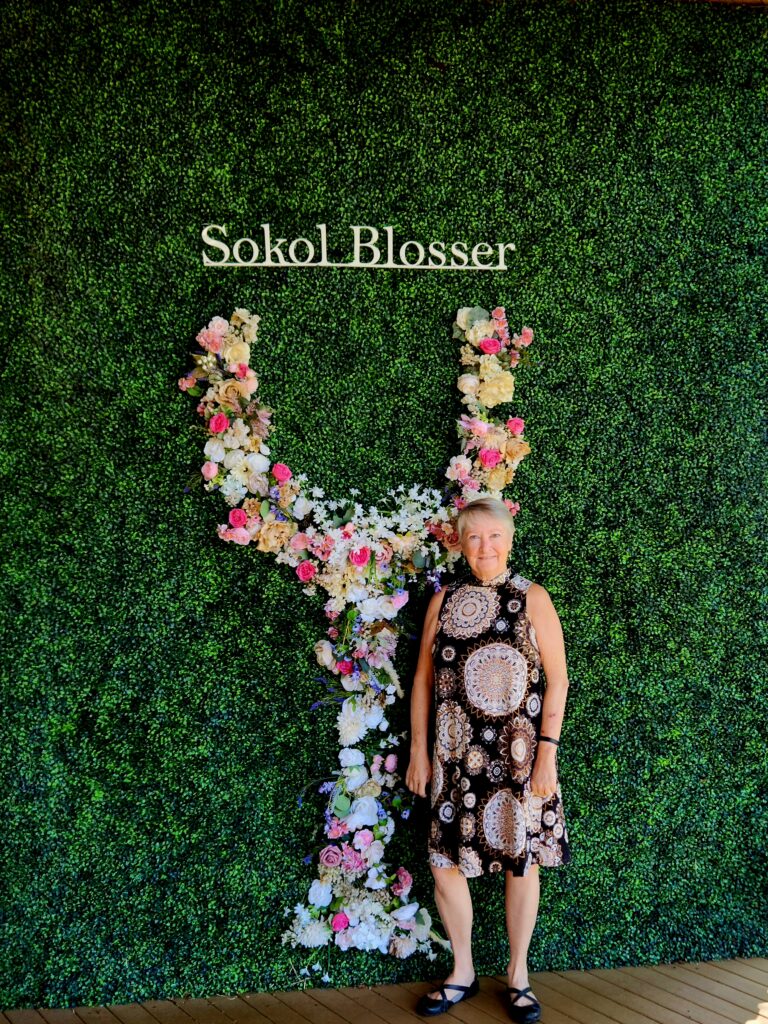
In 1971, the husband-and-wife team Susan Sokol Blosser and Bill Blosser planted what would become one of the Dundee Hills’ oldest and most beautiful vineyards. Today, Sokol Blosser is still family-owned and operated, and the third generation is in training. And family members don’t start at the top—twin grandsons were pouring tastings and serving cheese plates.
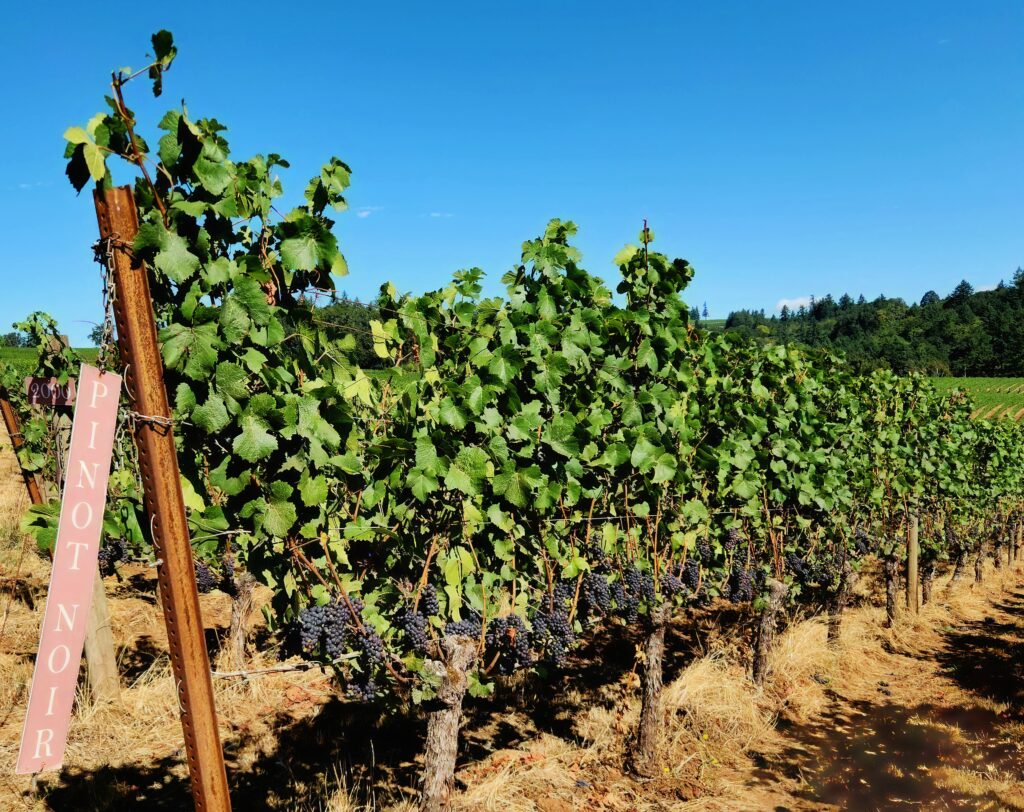
Sokol Blosser makes Pinot Noir, and lots of it. If you don’t really understand what a horizontal tasting is, this is the place to focus on terroir (location, land, and climate). Many of the Pinot Noirs are named for the vineyard blocks where the grapes were grown, like Orchard Block Estate Pinot Noir and Kalita Crimson Clover Yamhill-Carlton Pinot. The winery also produces Pinot Gris, Chardonnay, and a Blanc de Blanc Sparkling.
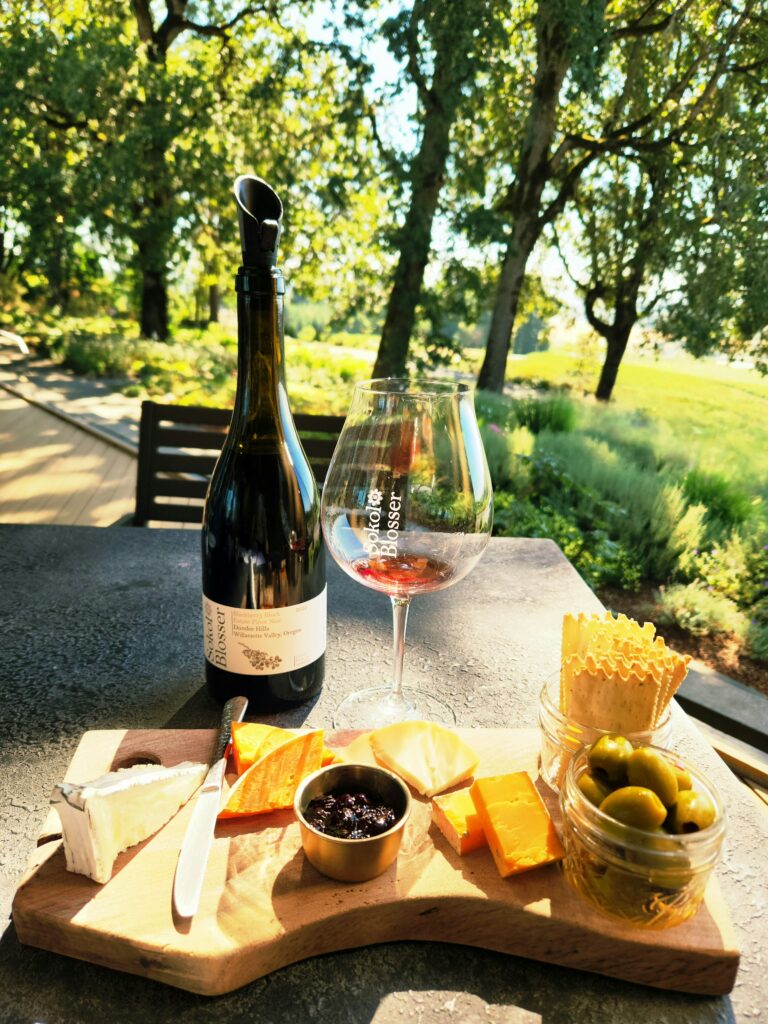
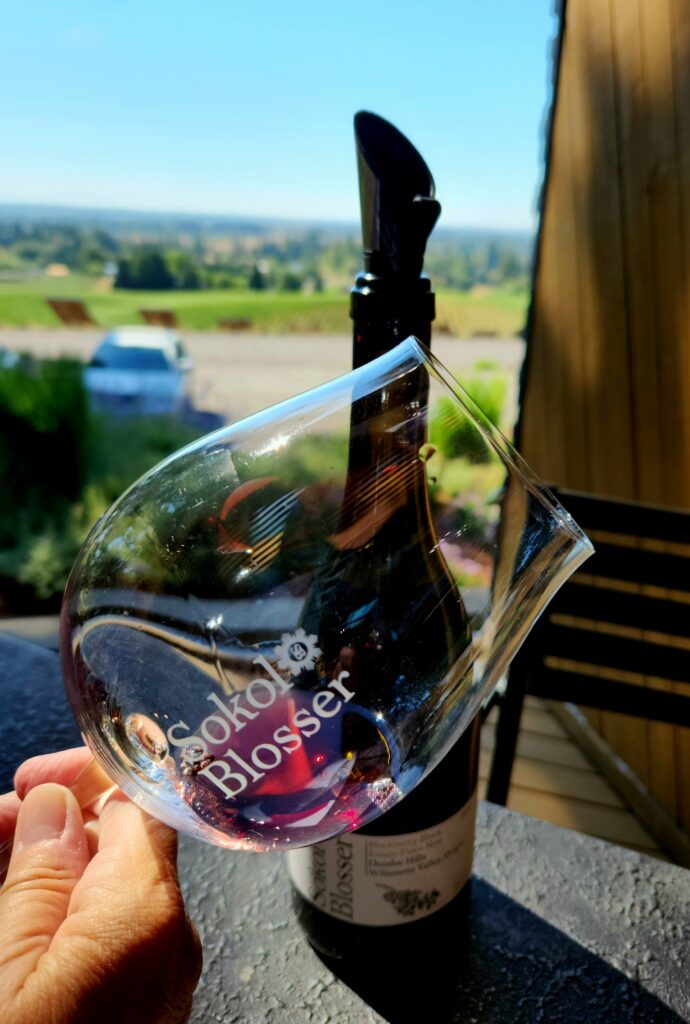
Tasting expert Elana guided our experience, from the first pour of a lovely Riesling crossbred grape that carried hints of peach and pineapple to the four Reserve Pinot Noirs, each from a different block. This was one of those rare tastings where nothing needed ranking. Every pour, from start to finish, was perfectly balanced alongside the cheese plate (filled with delicacies like Cypress Grove’s Midnight Moon and Bermuda Triangle cheeses, and Red Rock Cellars’ Aged Cheddar Blue Cheese).
The winery has lovely tasting spaces, but on nice days, it is hard to beat the porch. Sit out there and enjoy the day, the wines, and a small plate of seasonal treats that perfectly complement each wine. On weekends, the downstairs wine bar is open, pouring your favorites by the glass, and some hard-to-come-by vintages put in a brief appearance.
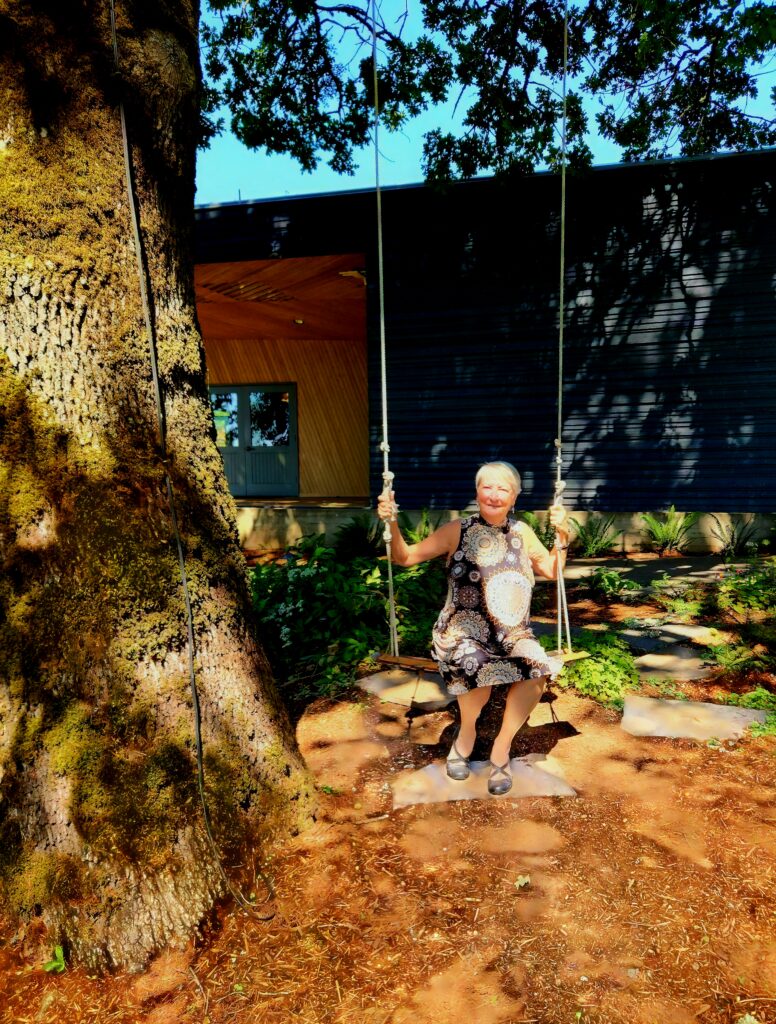
Pro Tip: Make time for the tree swing—it’s the simple pleasures you remember, after all.
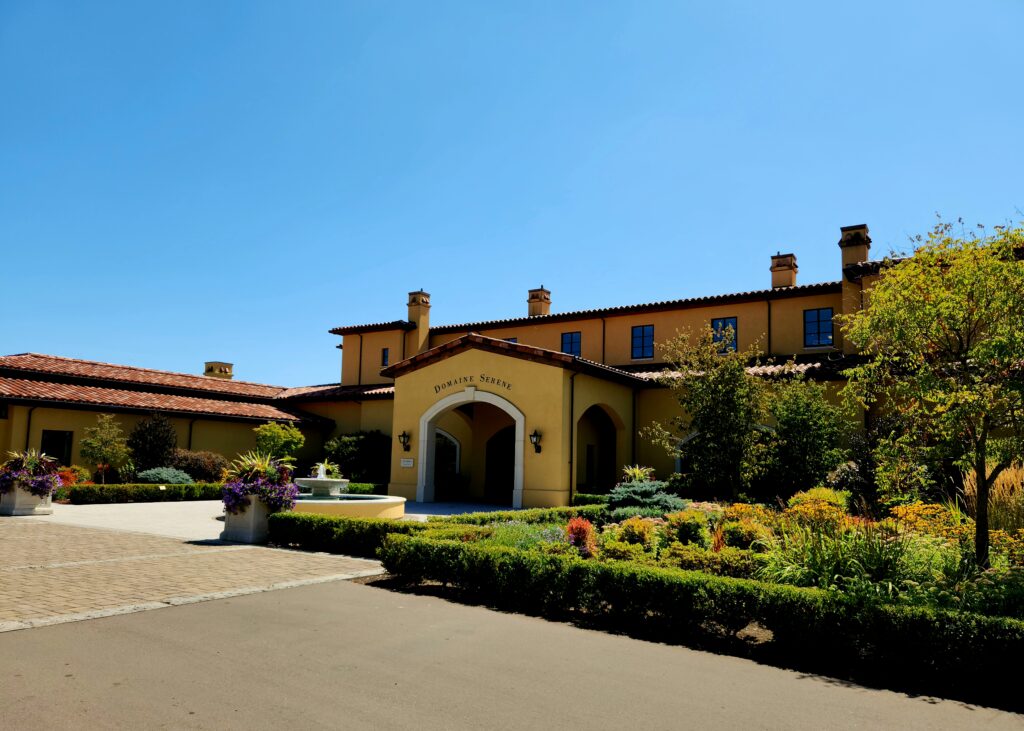
Domaine Serene Dayton
What would you name a winery that sprawls across a hilltop other than Domaine Serene? The views will make you forget any worries you carry. The experience began with smiles at the door when we were greeted and served a glass of ‘Evenstad Reserve’ Dundee Hills Brut.
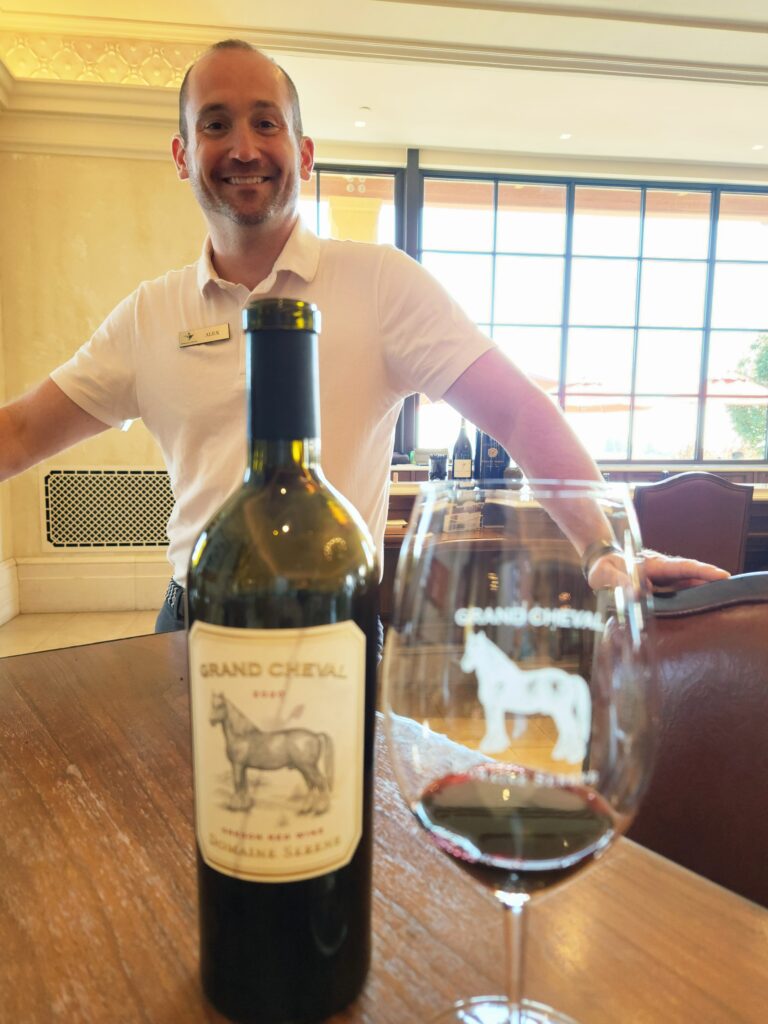
Tableside, Alex took over, pouring a variety of Domaine Serene’s best examples of Pinot Noir, Chardonnay, and the ‘Grand Cheval’, an Oregon Red blend of the two workhorses, Pinot Noir and Syrah. This wine is so beloved (by me as well) that it has its own sculpture in the garden, and received 93 points from International Wine Report. Alex is a gem, attentive, interesting, and quickly producing AVA maps when asked about the growing area, and pointing out other wineries that had been visited.
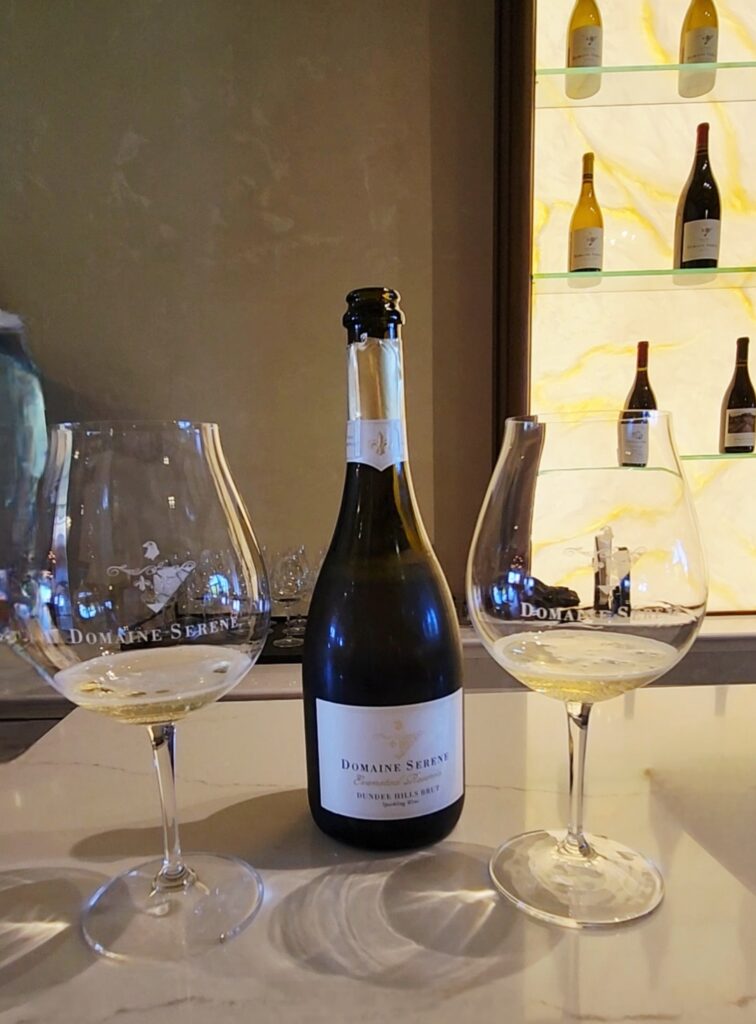
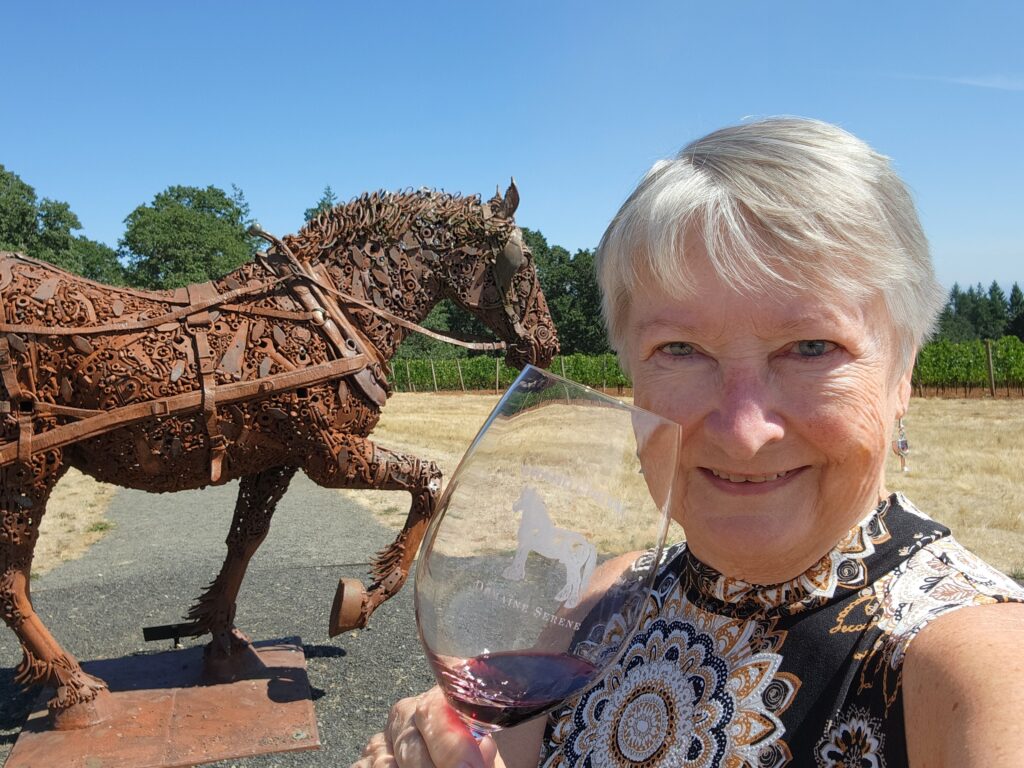
Domaine Serene makes wines in France, too, at Château de la Crée. We sampled their Chardonnay and Pinot Noir.
The winery also offers an impressive array of small bites to pair with wine selections, from house chips to duck confit to a large charcuterie board.
Stoller Family Estate Dayton
Stoller Family Estate sits on a wide sweep of land just outside Dayton, with vineyard views that seem to stretch forever, thanks in part to neighboring fields of grass grown for seed that create the illusion of endless green hills.
The tasting room is modern but relaxed, making it easy to settle in and stay awhile. It’s the kind of place where you can take your time, drink slowly, and soak in the landscape. Known for its Pinot Noir and Chardonnay, Stoller planted its vineyard thirty years ago, and focuses on sustainability. Ten years later, they opened one of the first LEED-certified wineries in the country.
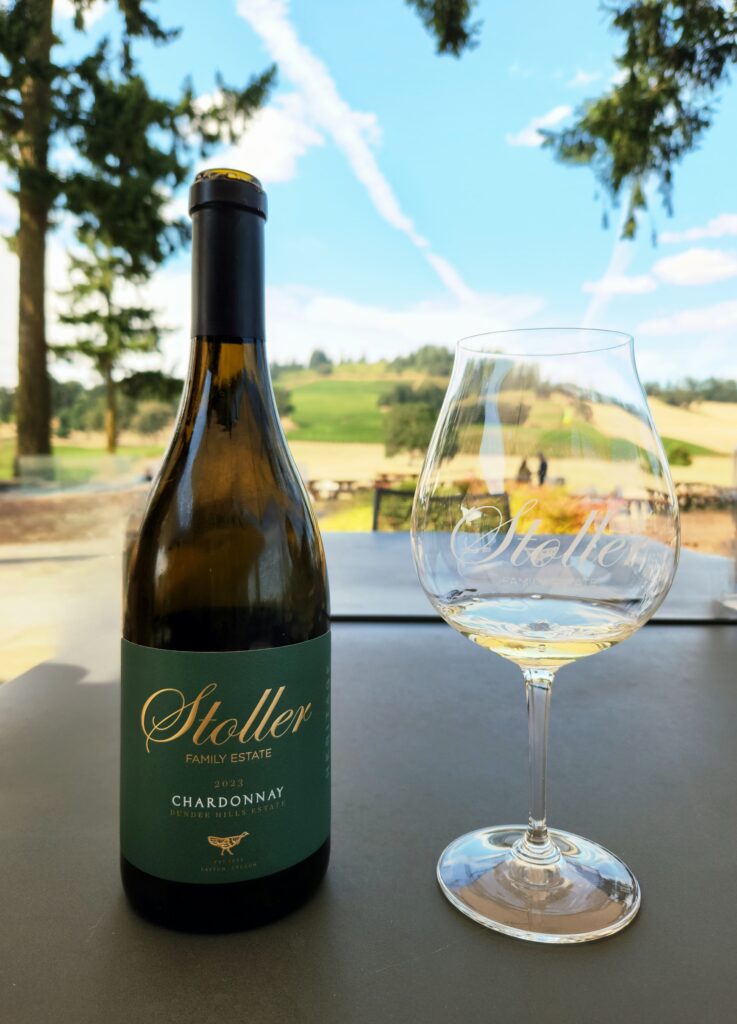
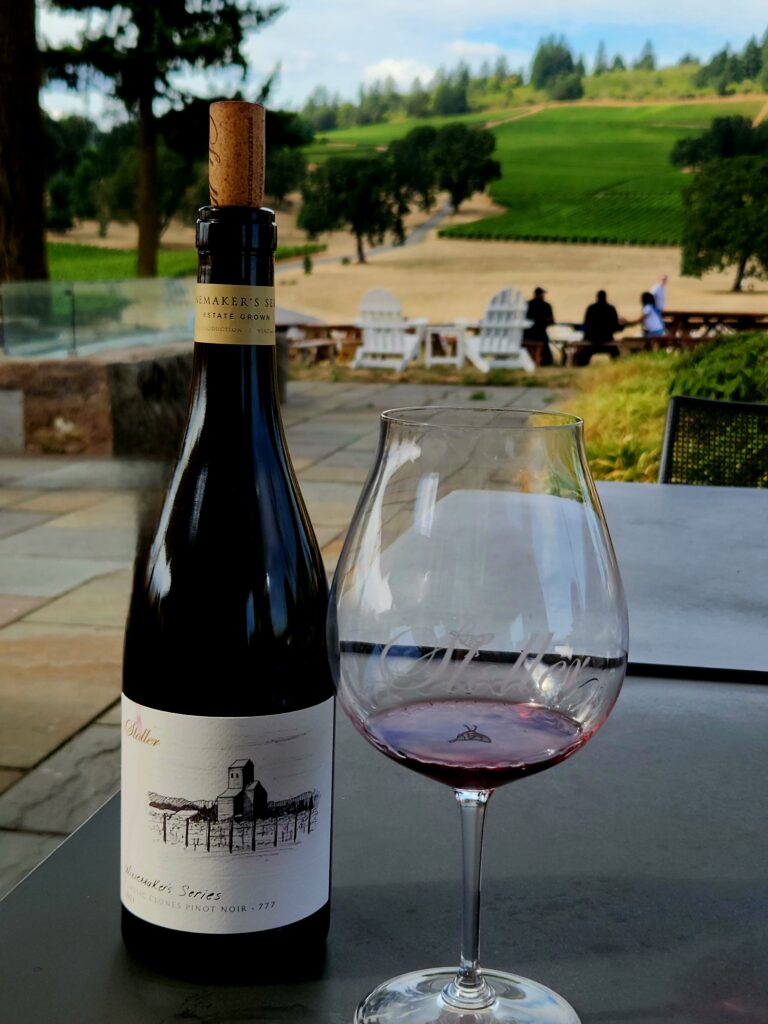
The most memorable sips of the visit were the Single Acre Syrah, a jammy, peppery juice paired with Black Caviar house-made potato chips, a Whole Cluster Pinot Noir, and two “family” Pinot Noirs. Bill Stoller named Helen’s Pinot Noir for his Aunt Helen, as it is reminiscent of her Cherry Pies. He named Nancy’s Pinot Noir for his sister.
Ayoub Wines Dundee
Ayoub Wines is a small, appointment-only winery focused entirely on the wine. Winemaker Mo Ayoub, a native of Lebanon, produces elegant Pinot Noir and Chardonnay in limited quantities, and tastings feel more like a conversation between friends than a formal experience. It’s a quieter stop, rewarding those who appreciate craftsmanship and detail in every glass.
“Pinot is not about power—it’s about beauty, nuance, and charm.“
~ Mo Ayoub
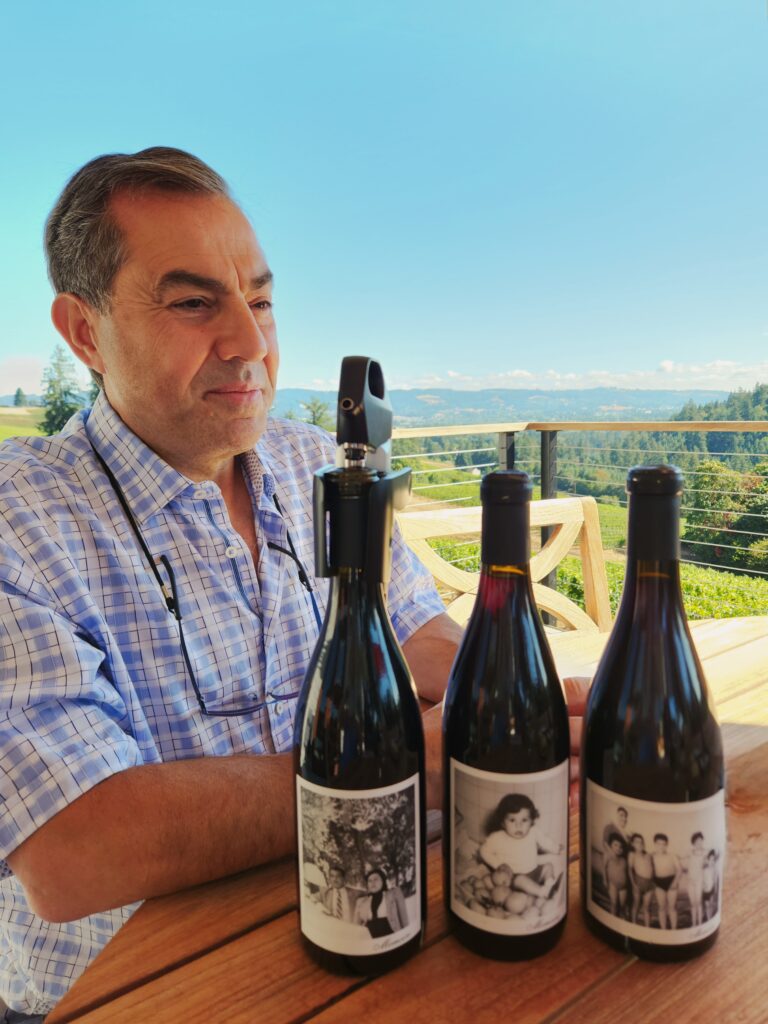
An engineer by trade and chef by training, Mohammed (Mo) Ayoub is a winemaker by heart. While commuting from Silicon Valley in 2001, he planted four acres of Pinot Noir in the Dundee Hills, harvested his first fruit in 2004, and released his first wines in 2006.
Wine Spectator later named Ayoub Wines one of its 2017 Editors’ Picks: Thirty Wineries to Discover, describing the wines as “silk in a bottle.” I thought I was being original describing my Pinot Noir as silky. Just call him “Mo the Pro!”
Ayoub still farms the original four acres in Dundee while additionally sourcing grapes from other vineyards around the valley. Most labels reflect those vineyard sites, including one from “??? Vineyard” whose name (and owner) remains intentionally undisclosed.
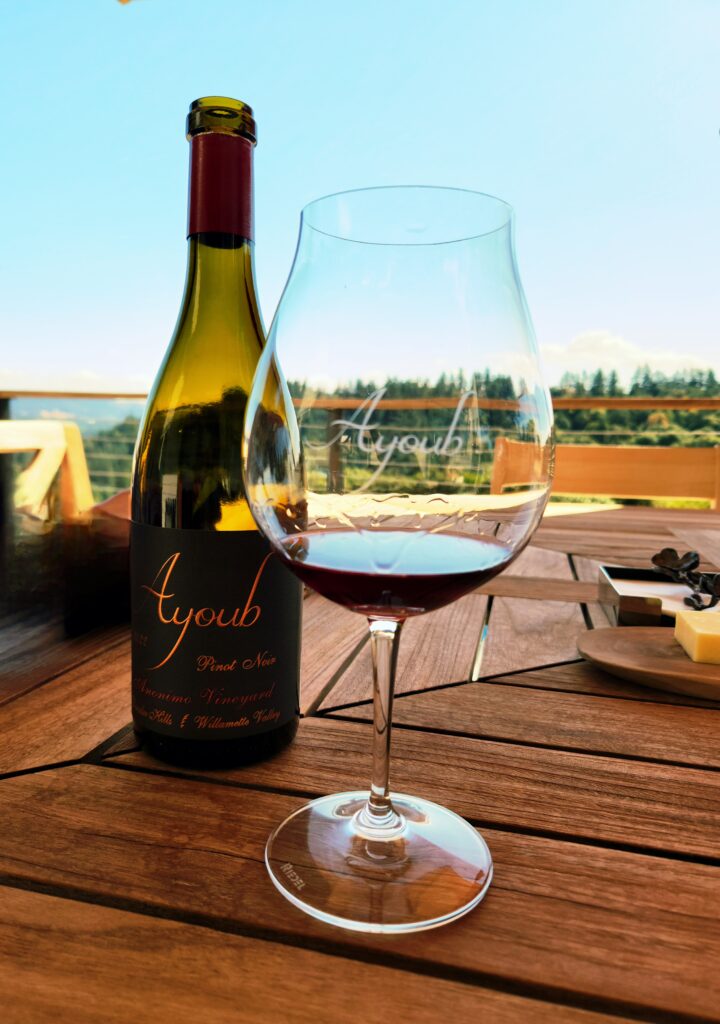
Memoirs Pinot Noir, a five-vineyard blend, pays tribute to Mo’s family, featuring a 1965 photo of the siblings near their home in Beirut. Truthfully, high scores are common at Ayoub Wines, including the bottle I kept returning to: a 93-point Pinot Noir from that now-famous “mystery vineyard” stretching between the Red Hills and Dundee Hills.
Another standout was the Cabernet Franc from Avant-Garde Vineyard, home to the valley’s first Cabernet Franc vines. Mo isn’t just a pro—he’s a pioneer.
Argyle Winery Dundee
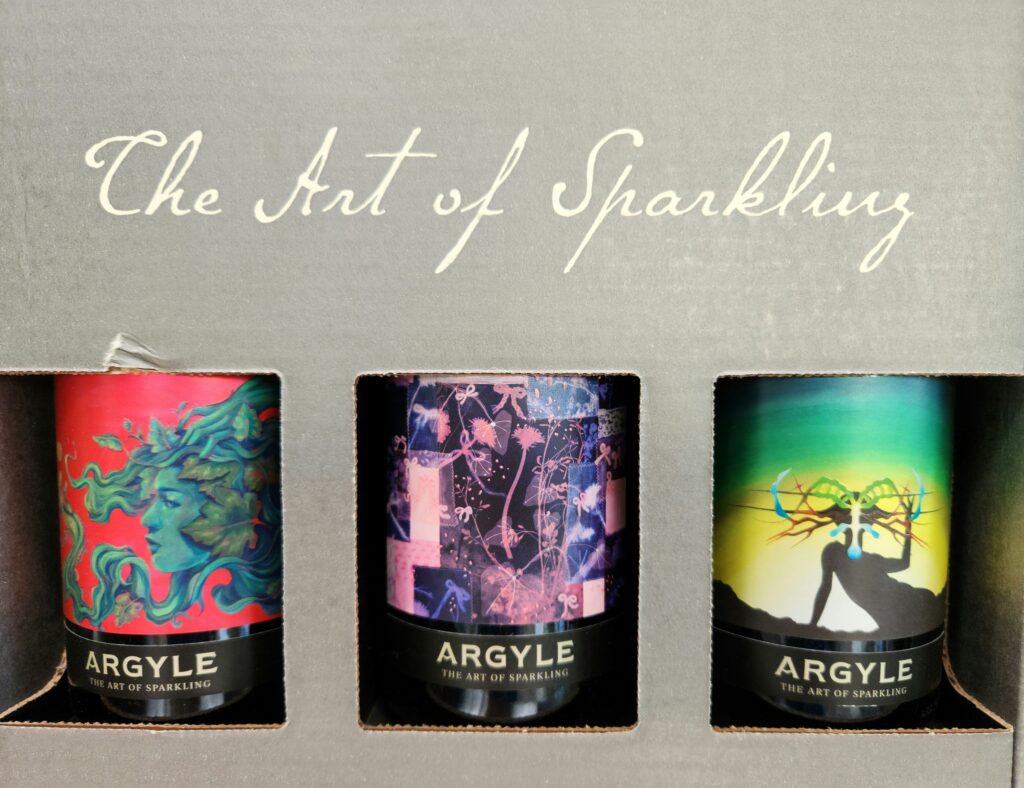
Since 1987, Argyle Winery has built its reputation on sparkling wines, and for good reason. Located in the heart of Dundee, the tasting house offers a polished but welcoming space to explore everything from crisp bubbles to still Pinot Noir and Chardonnay. The sparkling flights are a highlight, showcasing the winery’s depth and consistency. It’s a lively stop, often with a buzz of energy that matches the wines. The winery has a downtown tasting room, complete with a food truck parked right outside.
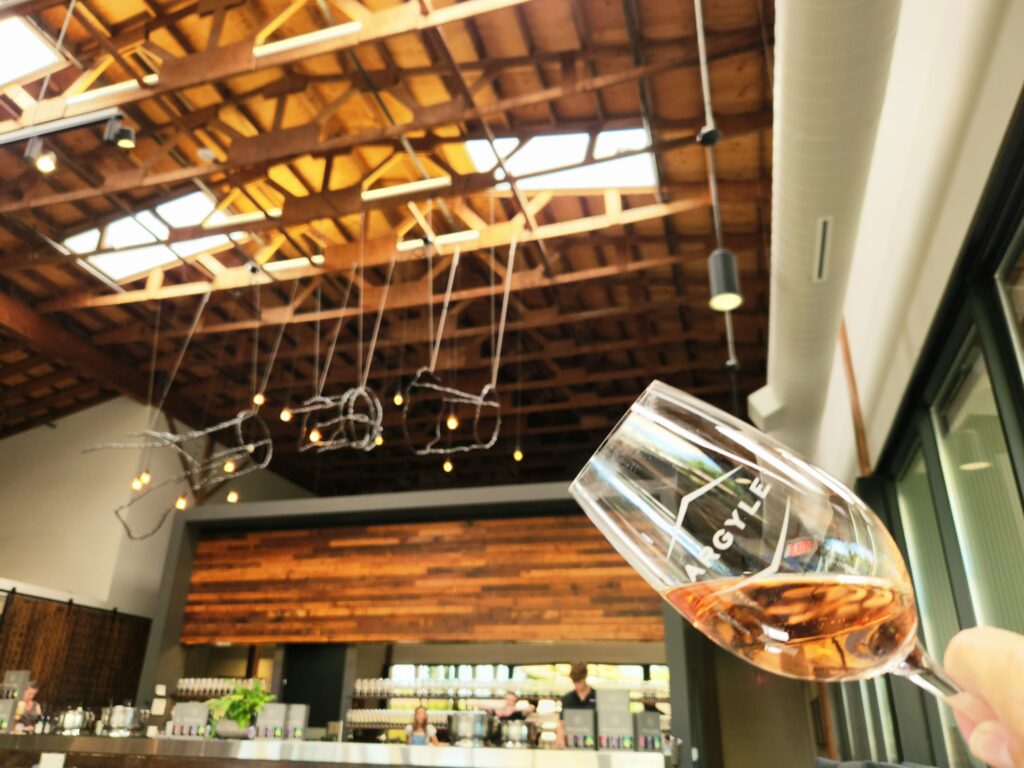
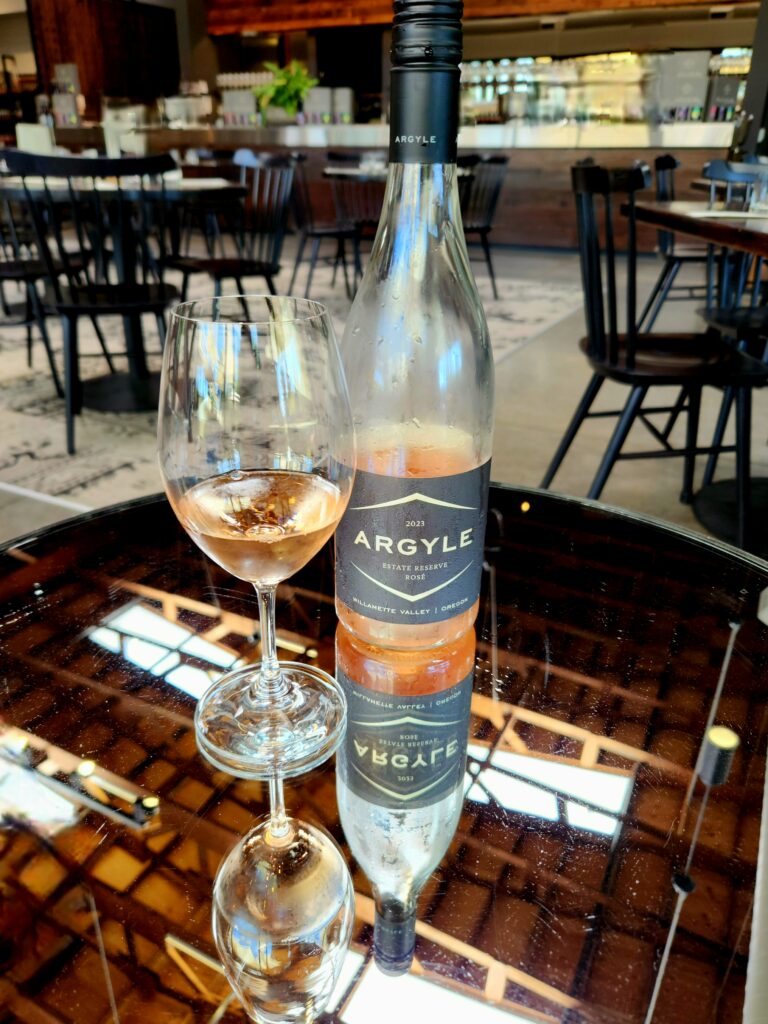
A welcome pour of their bubbly Spirit Hill Brut Rosé awaited me at Argyle’s door. Then a sip of Estate Reserve Rose left lovely strawberry hints lingering on my tongue, and both the Spirit Hill Vineyard Chardonnay and Pinot Noir were easy on the palate. The Spirithouse Pinot Noir was the wine that made me pause mid-sip and sigh.
Domaine Roy & fils Dundee
Domaine Roy & fils brings a touch of French influence to the Dundee Hills, both in style and approach. The wines—primarily Pinot Noir and Chardonnay—lean toward balance and structure, with a focus on vineyard expression, pulling grapes from seven vineyard locations. The setting is understated and calm, allowing the wines to take center stage. It’s a perfect stop for those who enjoy an Old World-style wine.
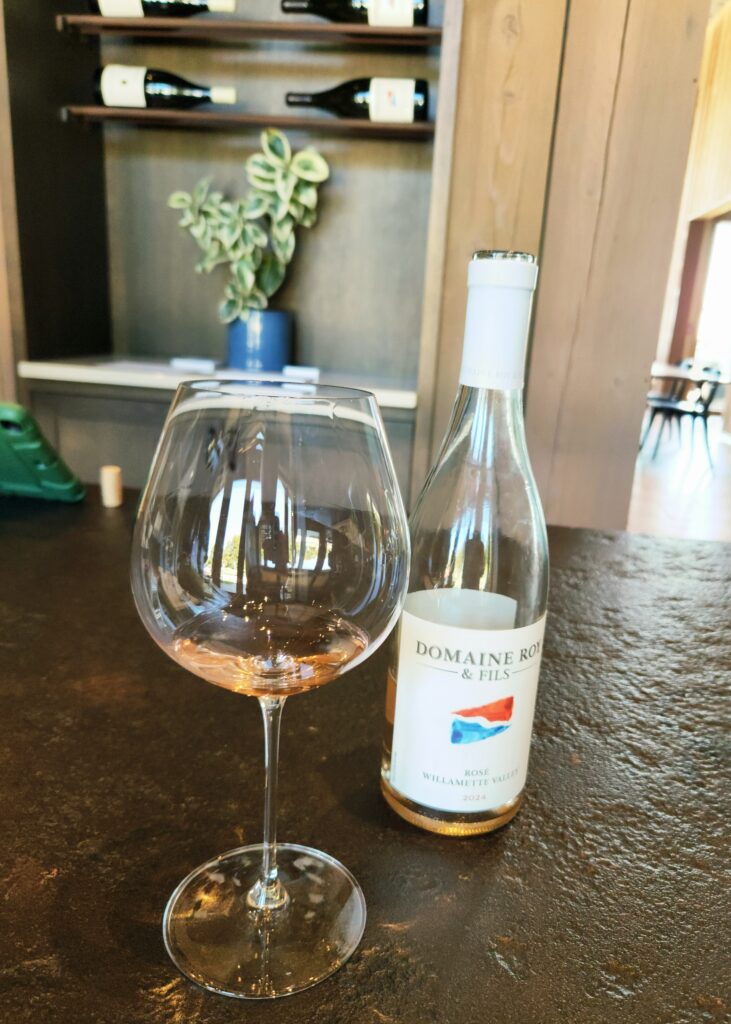
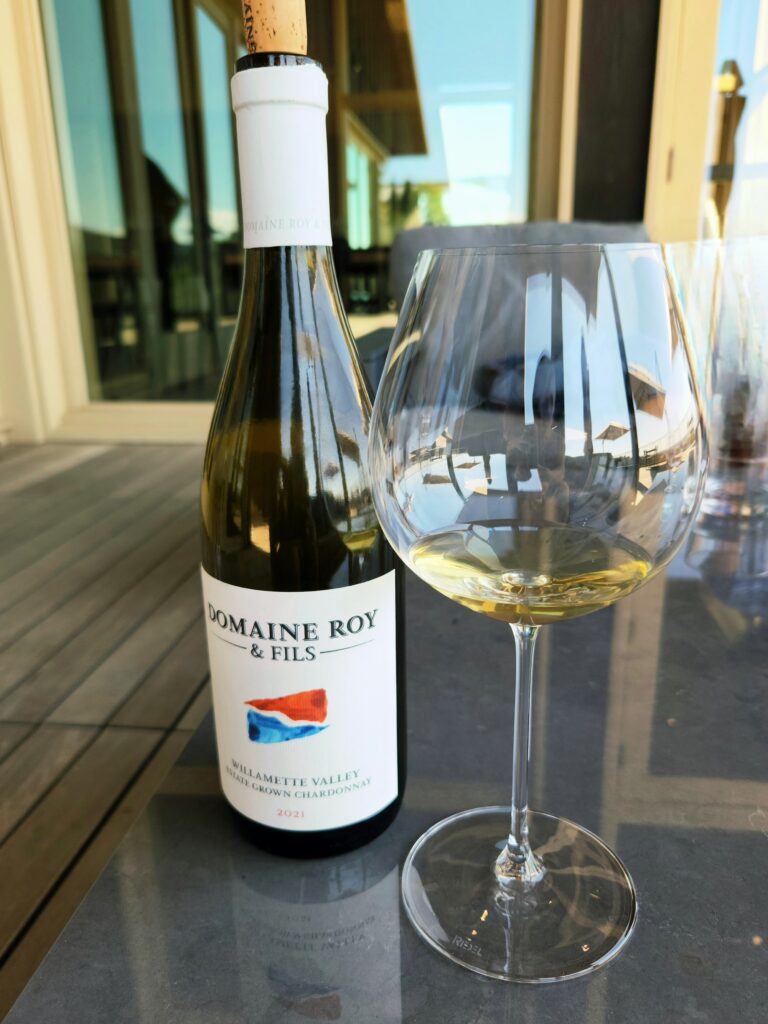
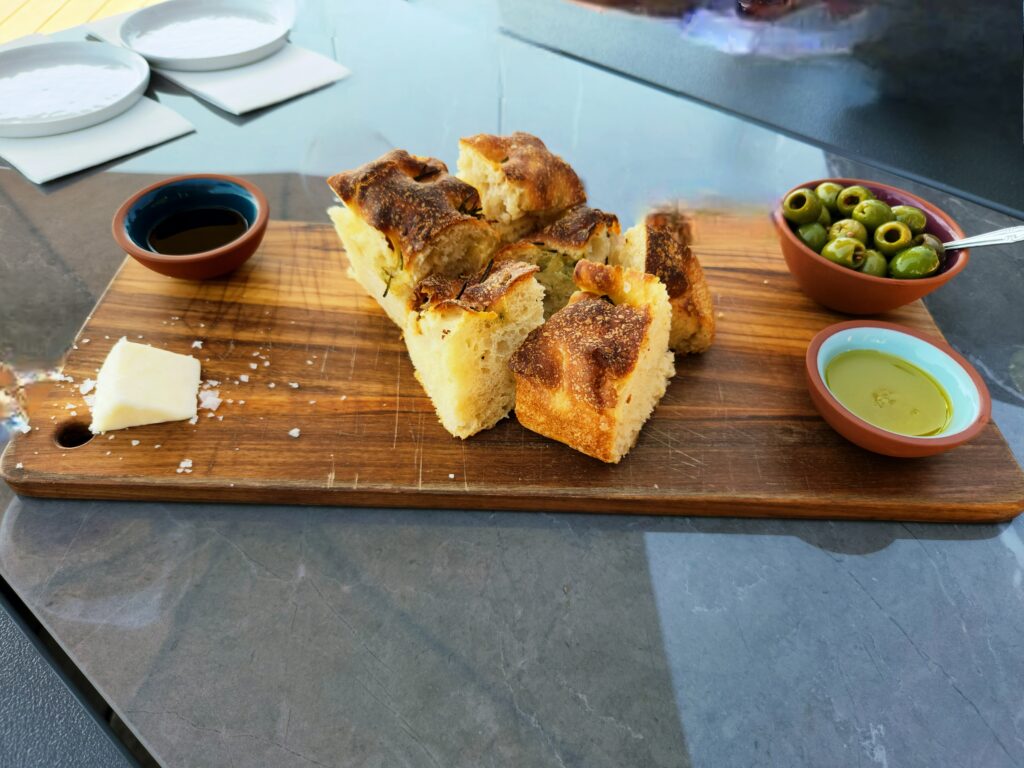
Our tasting servers, Ellie and Asher, kept the wines flowing as we enjoyed the breathtaking view from the patio overlooking the vineyard. Starting with their Willamette Valley Rose, we moved on to a crisp Chardonnay with a hint of oak, which quickly became one of my favorite pours of the visit (shocking for me, I know). Then we settled in with a focaccia board and an array of Pinot Noirs from three different vineyard locations. The Incline Pinot Noir from Yamhill-Carlton, with its extra aging, easily stole the show.
DRIVE YOU 2 DRINK
Everyone has a friend who drives them to drink (literally). I met that friend in Willamette Valley and her name is Amy, owner of Drive You 2 Drink. While visiting the Willamette Valley, Amy will pick you up (even at the Portland Airport), serve you champagne, then get on the road to wineries. Her choices or yours, but she has great taste and knows everybody! Trust me on this one! As proof, I offer the itinerary of our day of touring and drinking below:
Parrett Mountain Cellars Newberg
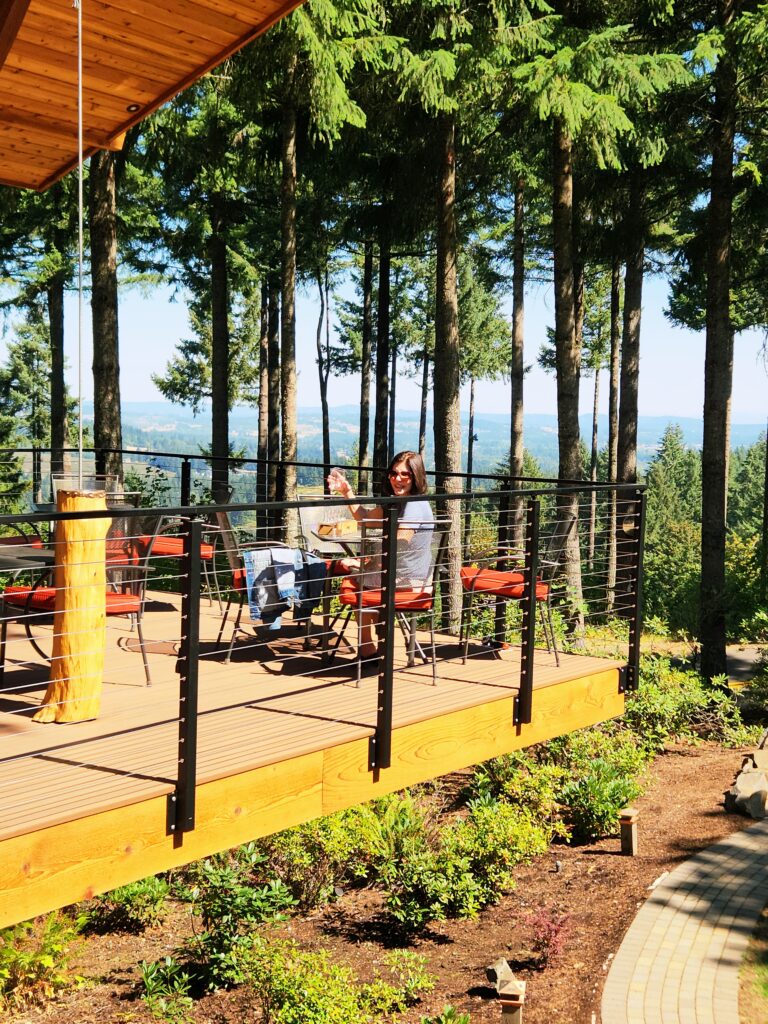
Parrett Mountain Cellars sits high above the Willamette Valley, with views that stretch across vineyards and farmland below. Owners and winemakers Dennis and Marlene Grant started this small winery over a decade ago. Known for its approachable atmosphere and estate-grown wines, Pinot Noir and Pinot Gris lead the lineup. There are a few unexpected offerings, all produced in limited quantities (like a Ruby Port-style dessert wine made from Zinfandel—be still my heart!) It’s the kind of place where the scenery competes with what’s in your glass.
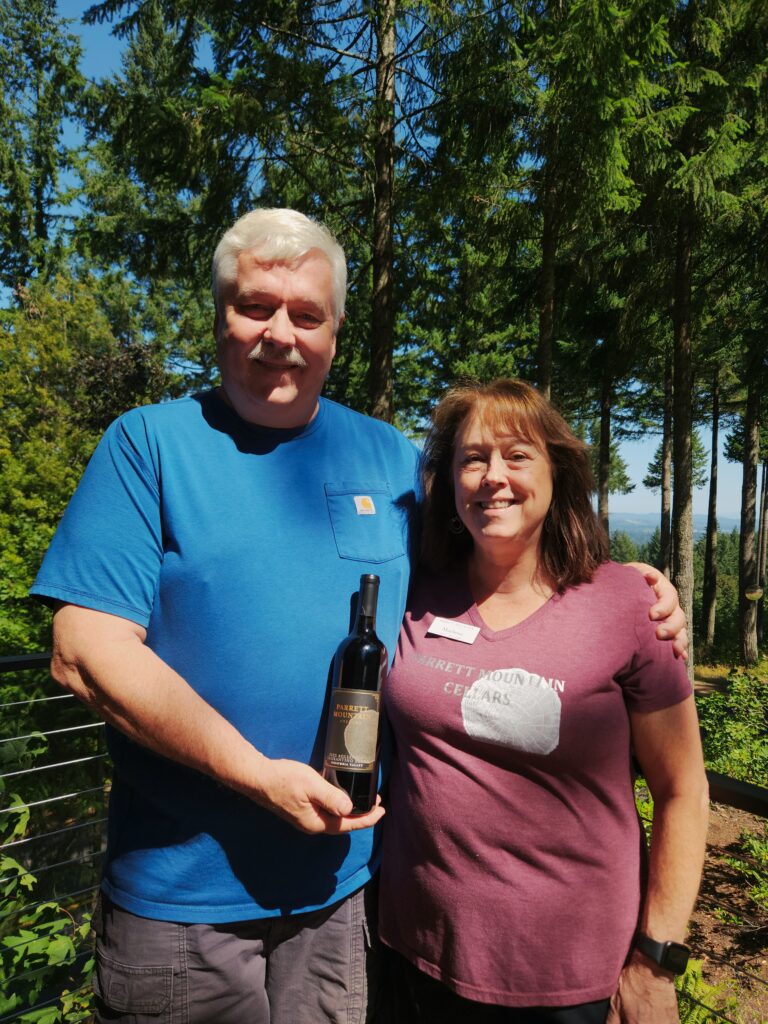
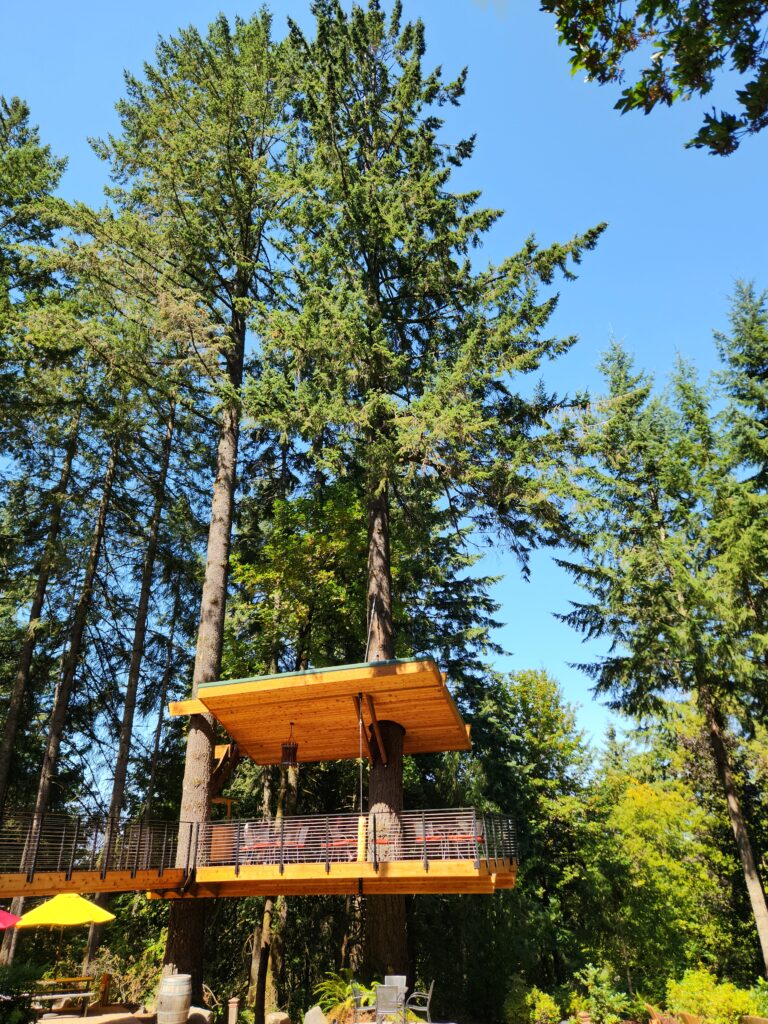
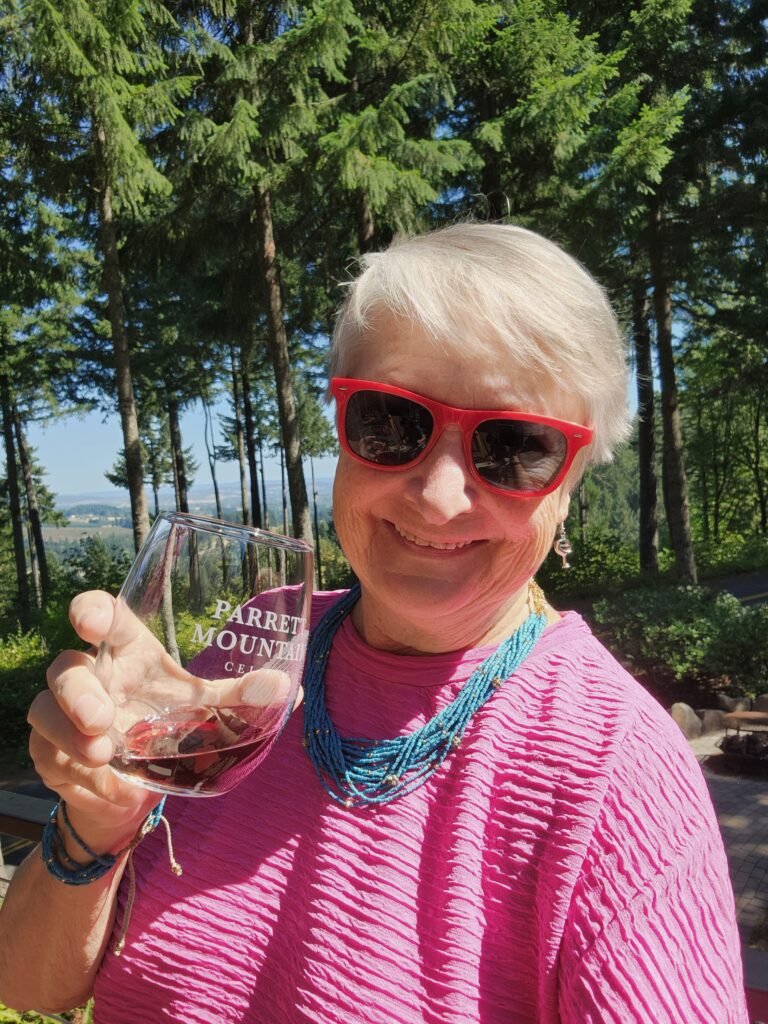
There is a cozy tasting room made from fir, cedar, and maple harvested on the property. A 28-foot-tall cedar is the focal point, along with a fireplace for those cool days, but in good weather, honestly, who wouldn’t want to sip wine in a treehouse with a view of Mount St. Helens? The food menu runs from Sea Salted Brûlée Popcorn to a Charcuterie Board, making it easy to find the perfect bite.
The tasting at Parrett Mountain featured wines not often offered at other wineries, making it a truly unique experience in the treetops. We started with a spiced-plum Pinot Noir from the Yamhill-Carlton area, but the rest were from the Columbia Valley in Washington and northern Oregon. We tried Malbec, Cab Franc, and Petite Sirah, all excellent wines. That port-style Zinfandel dessert wine was the one I couldn’t leave behind.
Tressler Vineyard Newberg
Tressler Vineyard is a quieter stop, rooted in the idea of small-lot, handcrafted wines. The focus here is on Pinot Noir, with fruit sourced from select vineyard sites around the Willamette Valley. Production is limited, and the approach leans toward letting the grapes speak for themselves. Tastings feel personal, with owner/winemaker Gregg sharing stories over a glass of wine.
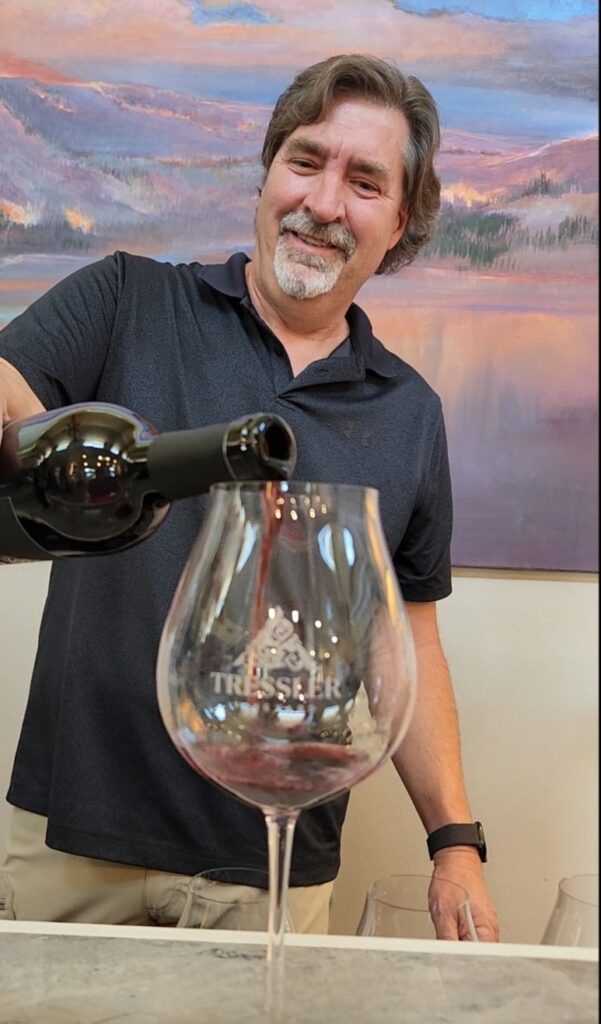
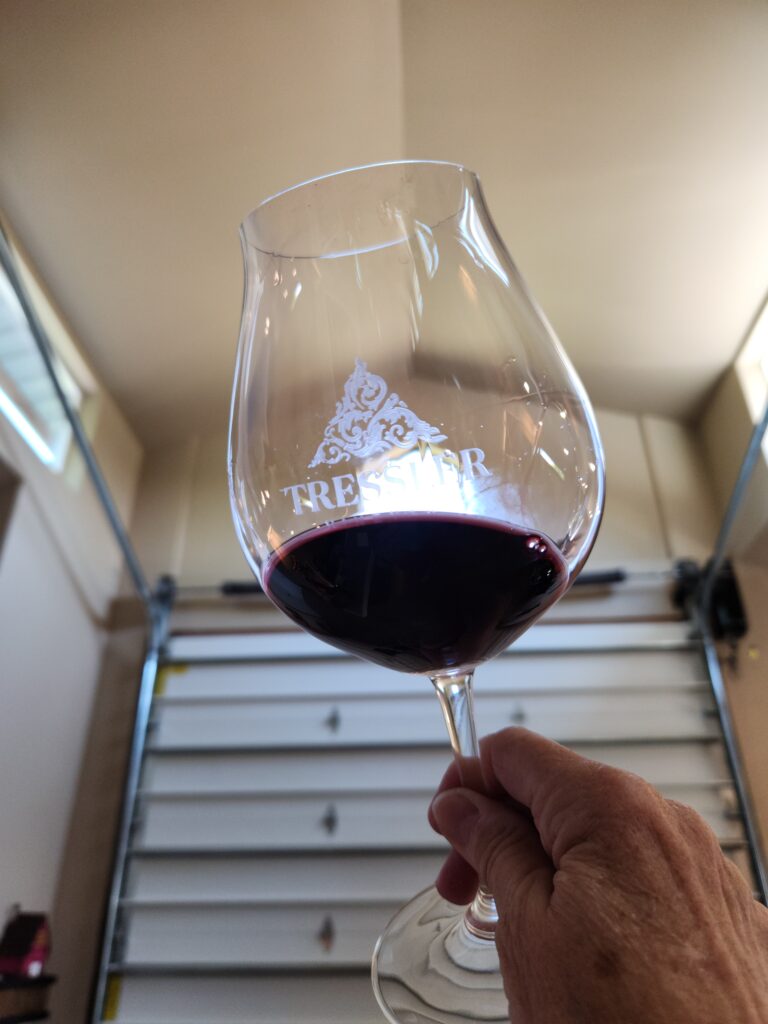
And the wines are unique, coming from Oregon’s newest viticultural area: the Laurelwood District, a sub-appellation of the Chehalem Mountain AVA.
In 2007, Gregg and his wife, Liz, with help from their lifelong friend, Juanita, family, and friends, planted their first Pinot Noir. Several years later, Tempranillo and Syrah were added, with big red wines in mind.
The Estate Tempranillo and the Cockburn Ranch Petite Sirah were nearly as memorable as the walk through the vineyard with Gregg.
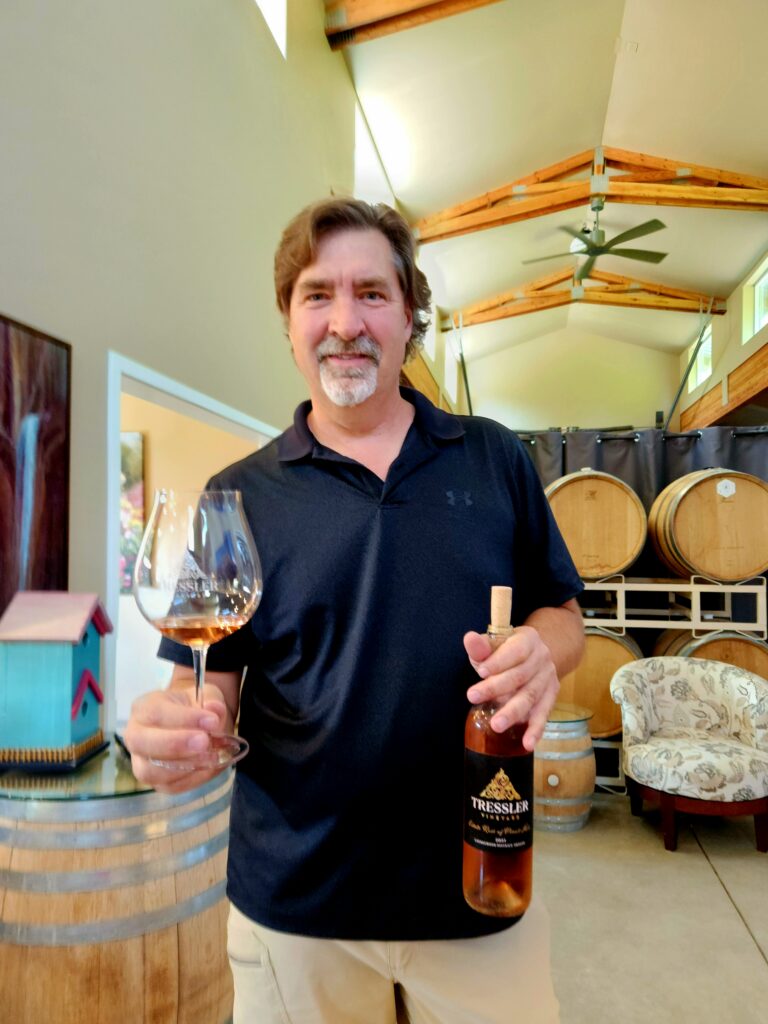
Meraviglioso Newberg Woman owned
Meraviglioso brings a slightly different energy to the valley, with a relaxed, welcoming setting filled with stunning views, overflowing flower gardens, and Italian-inspired wines. The name itself means “marvelous,” and the lineup reflects that spirit, often featuring varietals not commonly found in the region alongside more familiar options. It’s an easygoing stop, with a focus on enjoying the moment as much as the wine. Monthly concerts and sip-and-paint watercolor classes set Becky and Meraviglioso apart—all those gorgeous blossoms don’t go to waste.
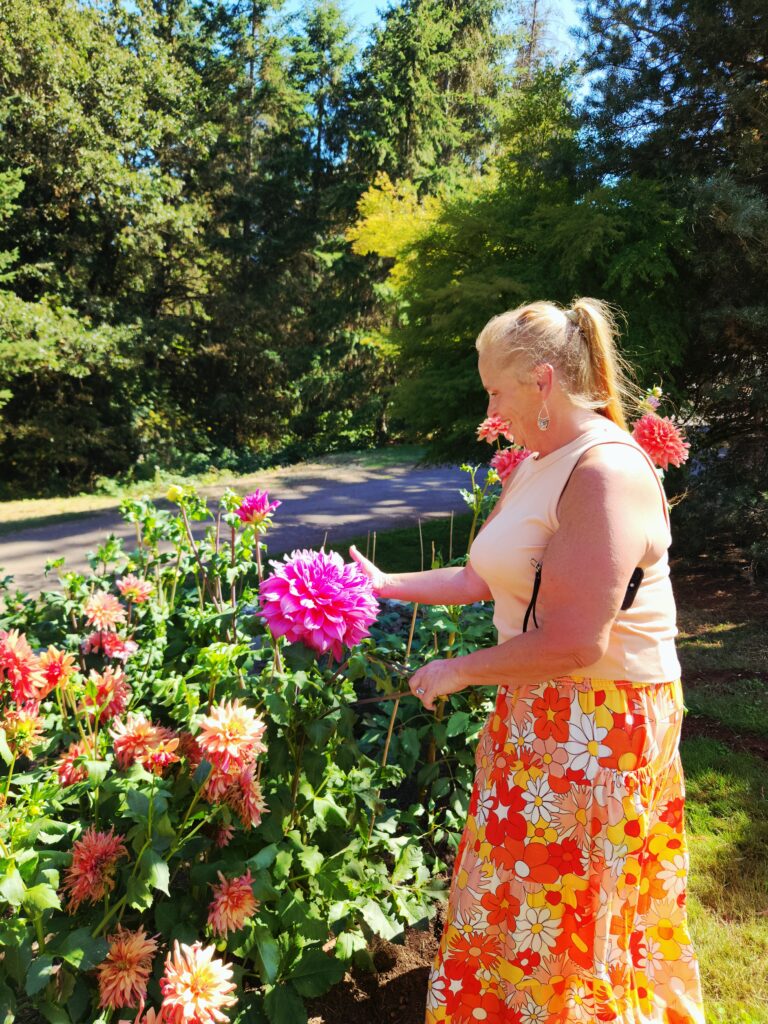
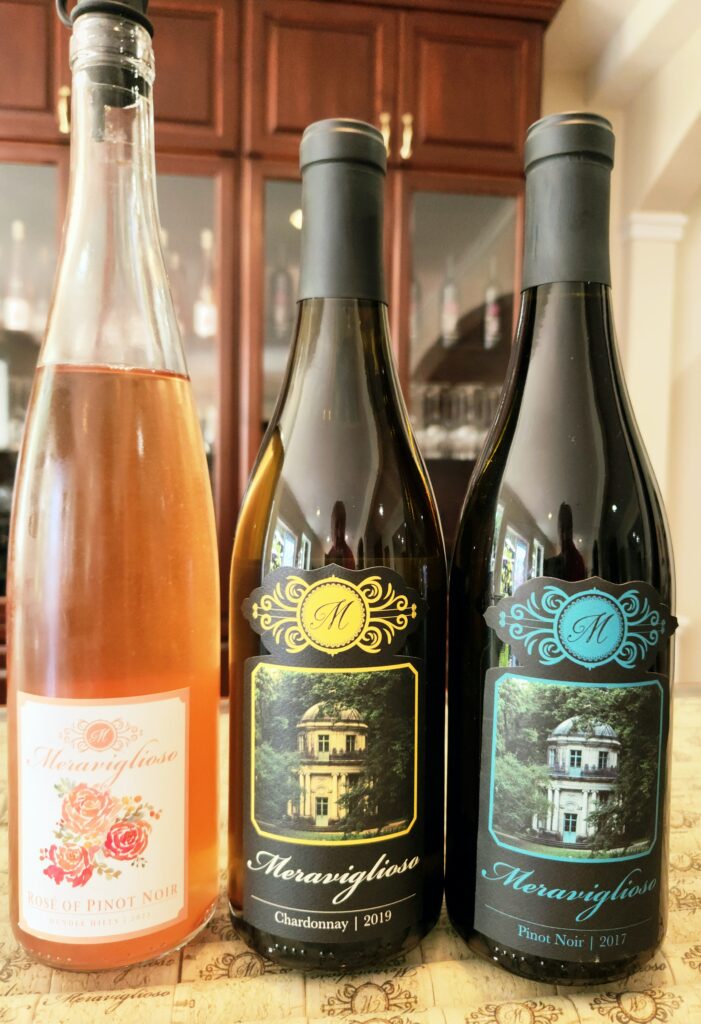
Our tastings included a Sangria made from a 2018 Pinot Noir, Rosé of Pinot Noir, Chardonnay, Ostentata Pinot Noir, and Sprezzatura, a Blanc de Noir Sparkling that Becky calls “effortless elegance.” The Marionberry Dessert Wine was a taste treat. The Ostentata Pinot Noir and the Sprezzatura were happiness in a glass.
Laurel Ridge Carlton
David Teppola was charmed by the idea of an Oregon farm life, and fell in love with French wines while a student abroad. The two interests merged inside David, and the idea of starting a vineyard emerged. In 1974, he purchased an old plum and pear orchard consisting of 240 acres, married Susan, and the pair planted a vineyard, even watering the acres by hand some years. All long before Willamette Valley wines were a “thing.” A decade later, they founded Laurel Ridge Winery.
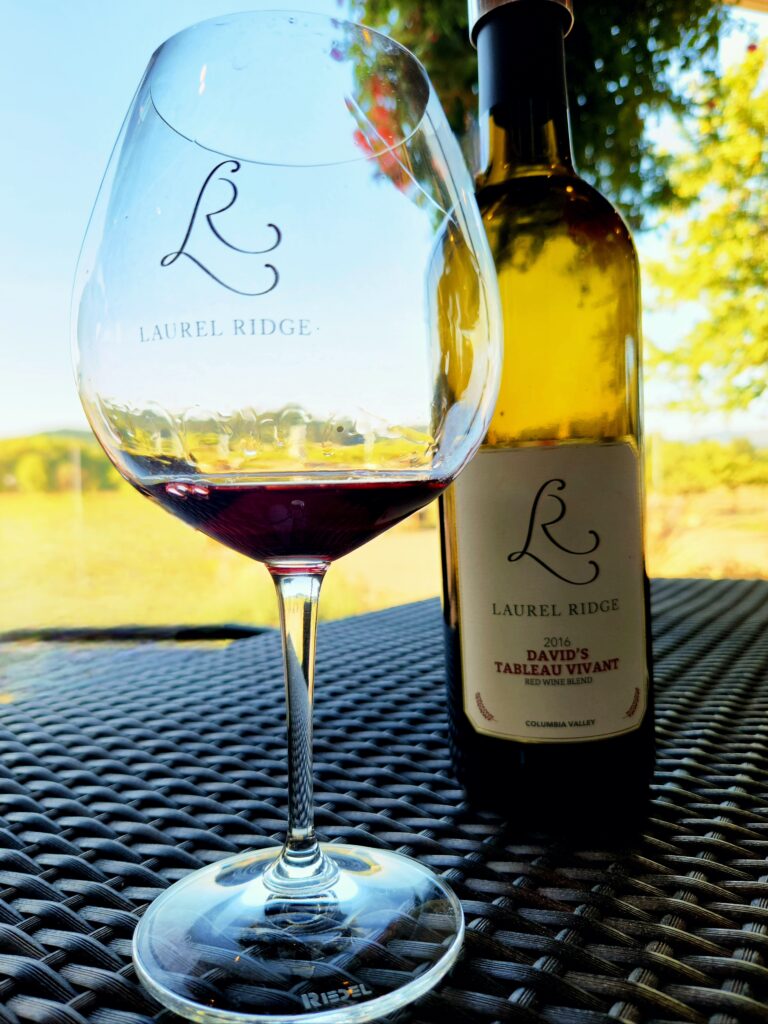
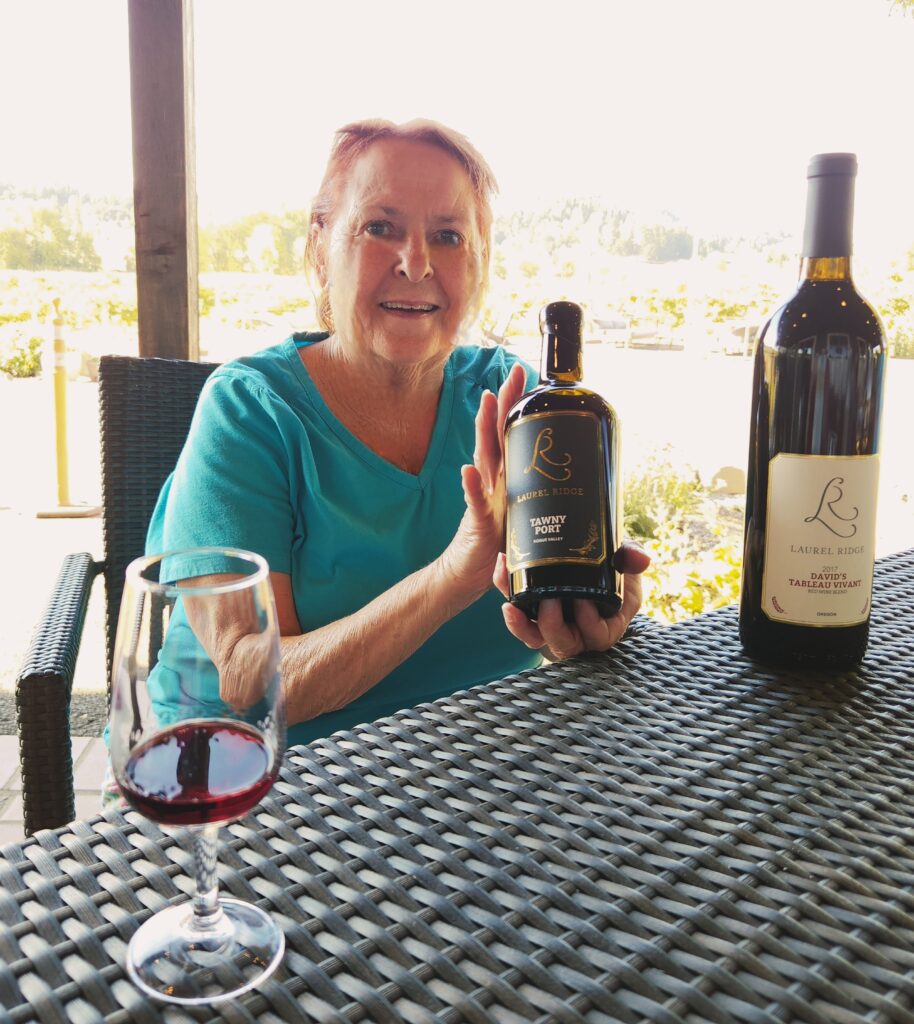
Laurel Ridge became part of the Willamette Valley wine scene, producing a range of exceptional wines that go beyond the region’s signature Pinot Noir and Sparkling wines. Alongside Pinot Gris and Chardonnay, you’ll find varietals like Riesling and a few surprises.
Then in 2006, tragedy struck Laurel Ridge. The vineyard lost most of its 50 acres of vines to root disease; then Susan lost David to cancer. Alone, the questions swirled around her: Sell? Close? Susan did neither. She survived, continued to guide her children, and kept the couple’s dream alive. Ten years later, their oldest child, daughter Kira, took on a more prominent role in day-to-day activities and began replanting the vineyard. Susan’s grandchildren have now joined the Laurel Ridge operation family.
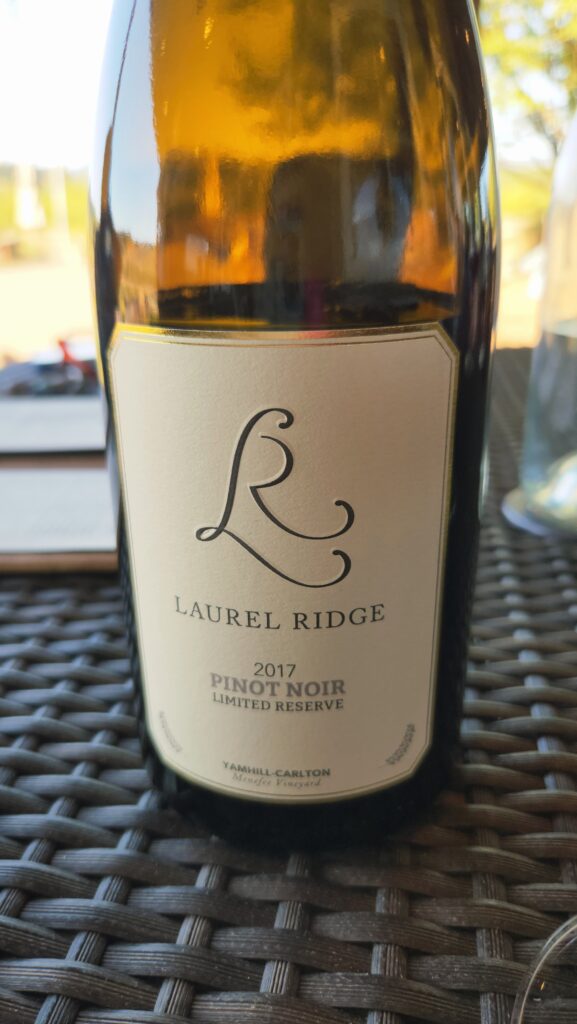
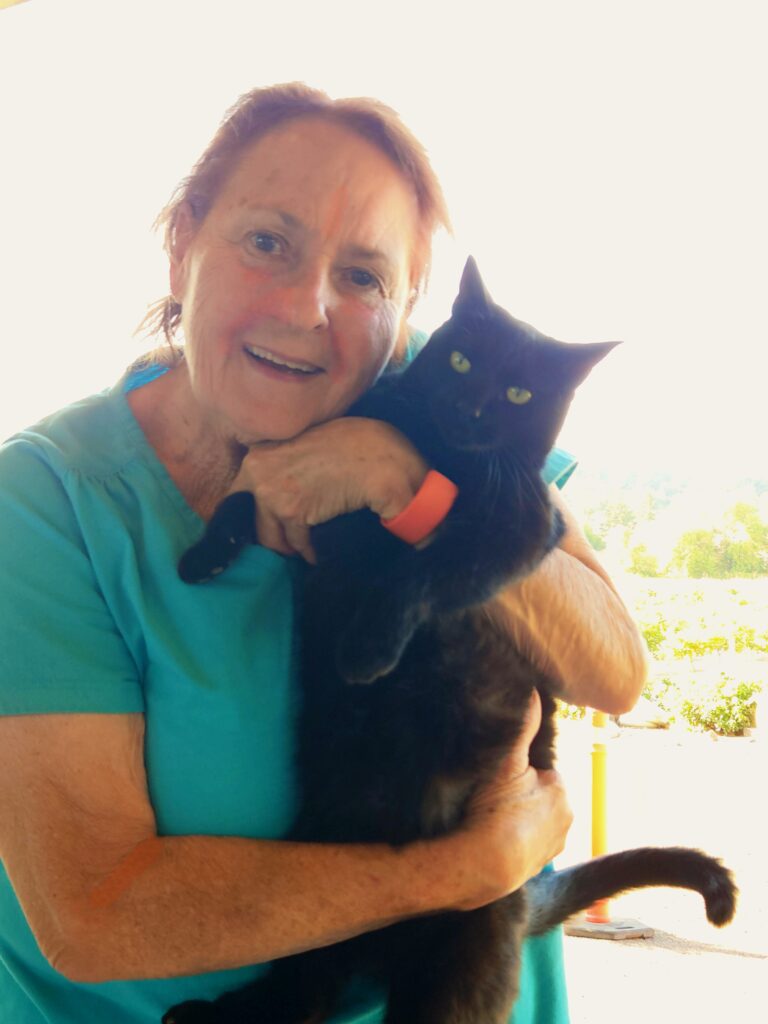
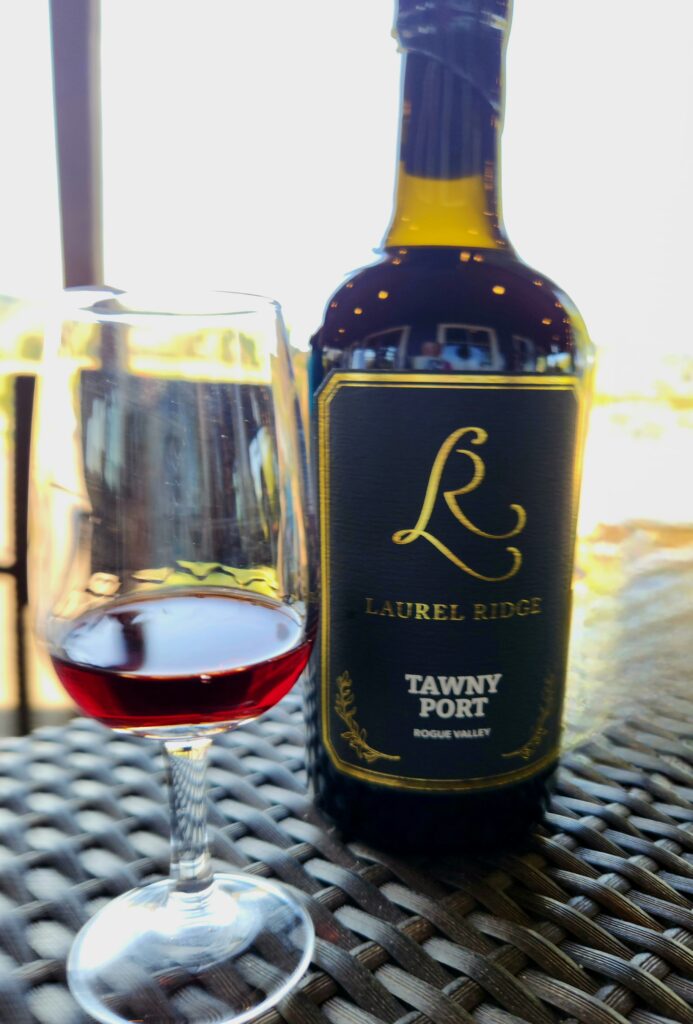
The tasting experience is straightforward and friendly, with an emphasis on variety and consistency. We enjoyed a full range of tastings, including David’s Tableau Vivant, and three port-style wines. Laurel Ridge’s Reserve Pinot Noir and a drool-worthy Ruby Port were memorable pours.
Kramer Vineyards Carlton/Gaston Family Owned/Women Operated
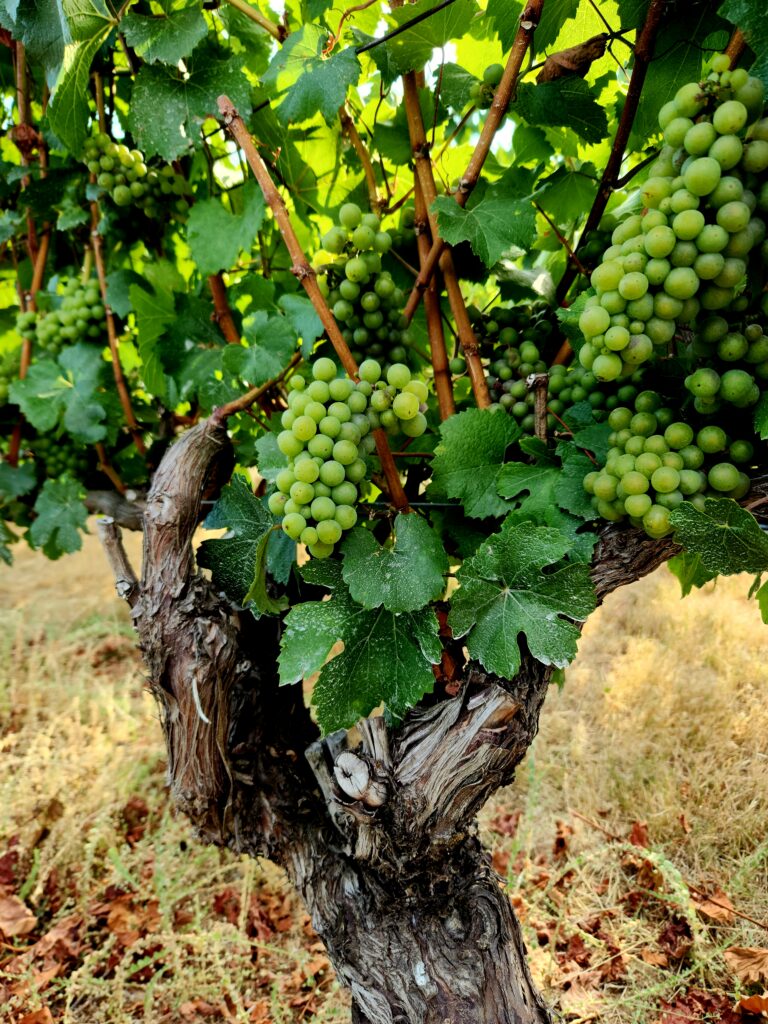
Kramer Vineyards has been quietly producing wine in the valley for two generations, since the early 1980s, making it one of the area’s more established producers. Best known for its sparkling wines and Pinot Noirs, Kramer also offers some rarities in the Valley, like Grüner Veltliner, Müller-Thurgau, and Carmine.
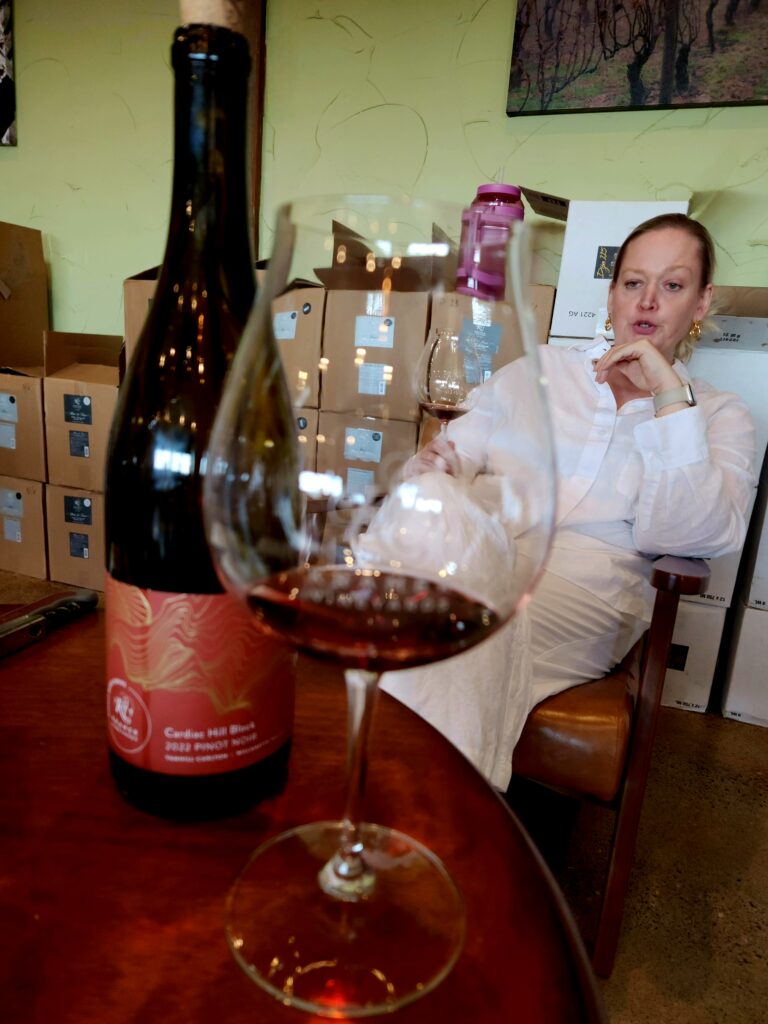
In 1971, Trudy and Keith Kramer produced their first home-made wine. They were hooked and made garage-site wine for a decade before beginning the search for land to fulfill their dream of a Willamette Valley vineyard. Along the way, Trudy received a ribbon at the Oregon State Fair. In 1984, they began planting on their land and released their first vintage in 1988.
Today, the couple takes a guiding role, while their daughters, Becky and Kim, serve as the general manager and winemaker.
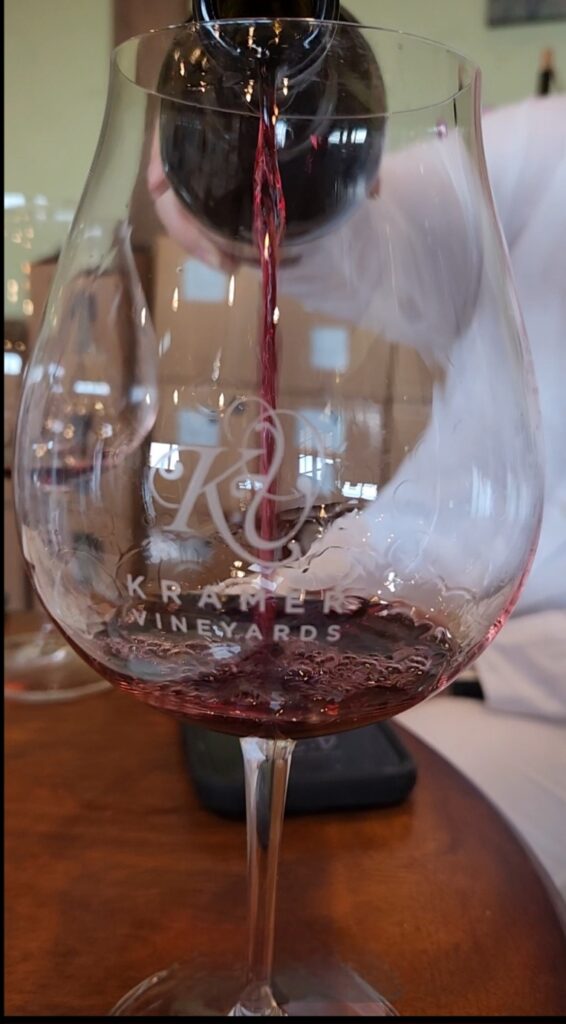
The setting is relaxed and unpretentious, with a focus on well-made wines and a welcoming atmosphere. Becky greeted us with a flute of Celebrate Pinot Gris before introducing sister (and winemaker) Kim, who took over the guided tasting. The Celebrate Grüner Veltliner was a surprise, the grape not seen often in the area. We tried a variety including a couple of flagship wines. All different, all delicious.
This was one of those stops where narrowing it down felt unfair. The Pinot Noir Blanc and Cardiac Hill Pinot Noir (designated with both my big black dot of approval and a smiley face) are the ones I’d return for.
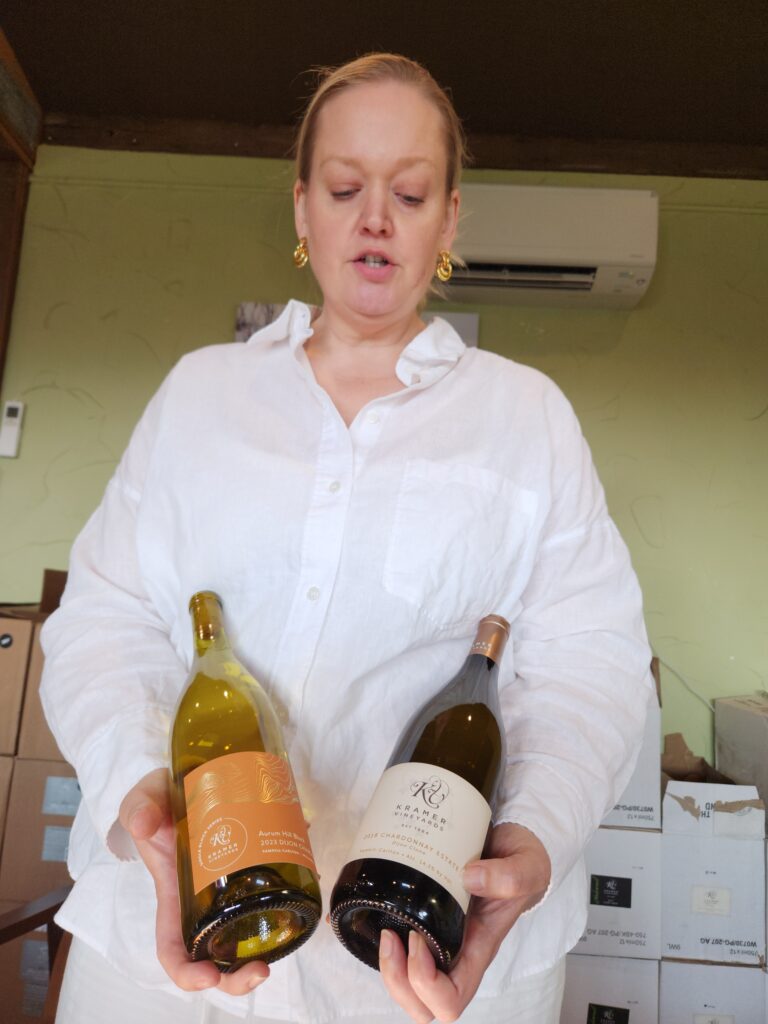
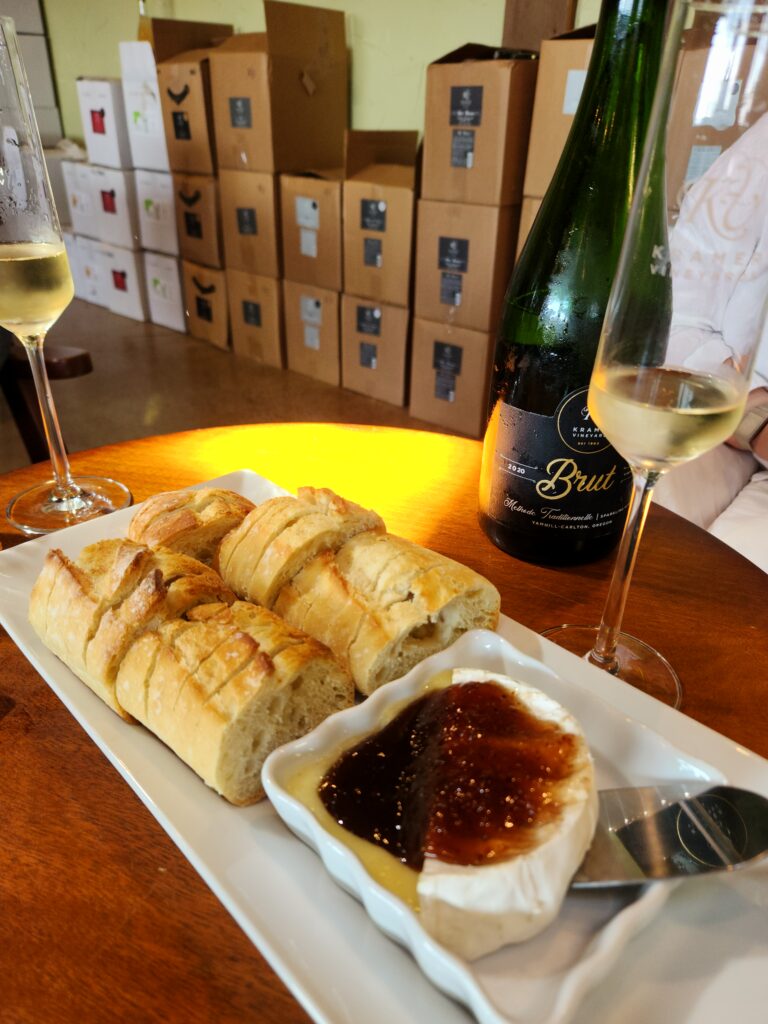
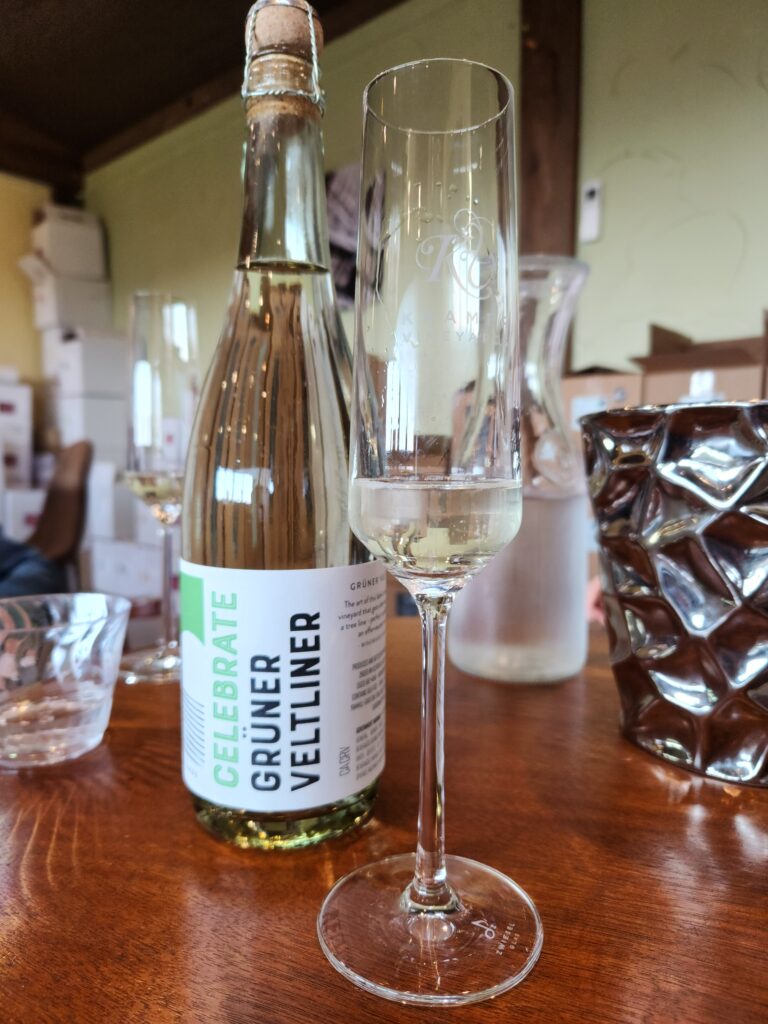
But then there was a divine 2015 Pinot Noir Heritage, resulting from cool nights and warm days that summer…proof that one afternoon is never enough in Oregon wine country. Paired with the kitchen’s Brie and Baguettes, topped with delicious roasted onion fig jam, who needs dinner?
Penner-Ash Wine Cellars Newberg
Penner-Ash Wine Cellars is known for its elegant approach to Pinot Noir, with fruit sourced from top vineyard sites across the region. The wines lean toward balance and structure, reflecting both place and craftsmanship. The horizontal pours of Pinot Noir introduce visitors to the sub-AVAs of the Willamette Valley, from the Dundee Hills to Yamhill-Carlton, to McMinnville.
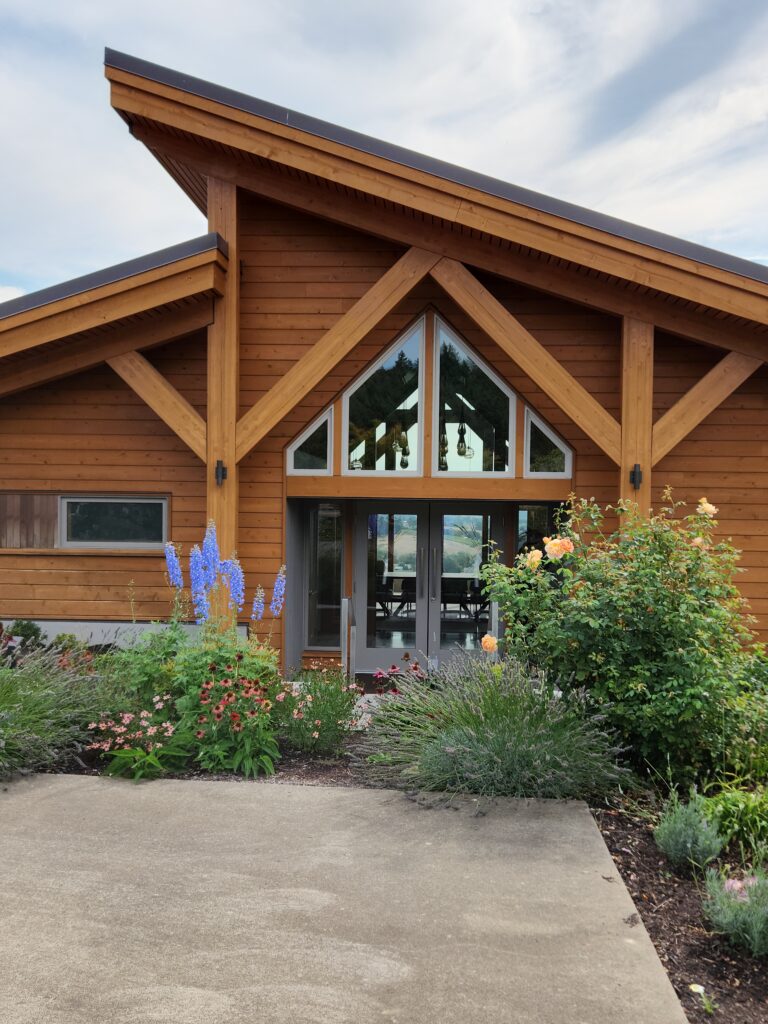
The winery’s first winemaker, Lynn Penner-Ash, spent a decade at Rex Hill before starting her label and putting her UC-Davis botany, viticulture, and enology studies to work beside her husband, building their certified sustainable winery as one of the first women winemakers in the Willamette Valley.
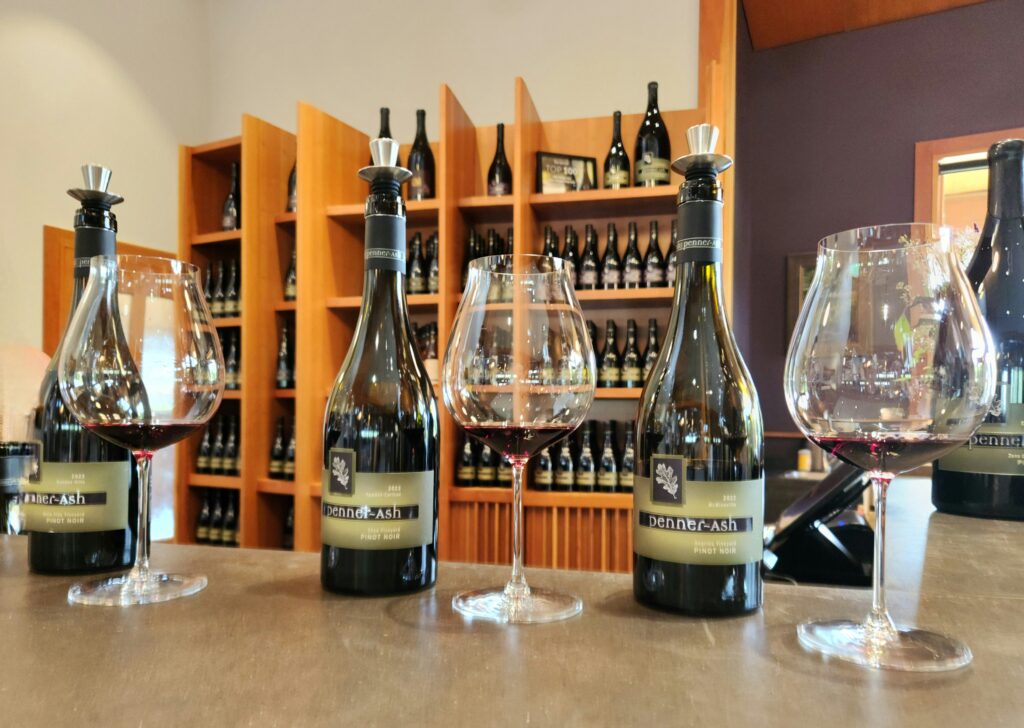
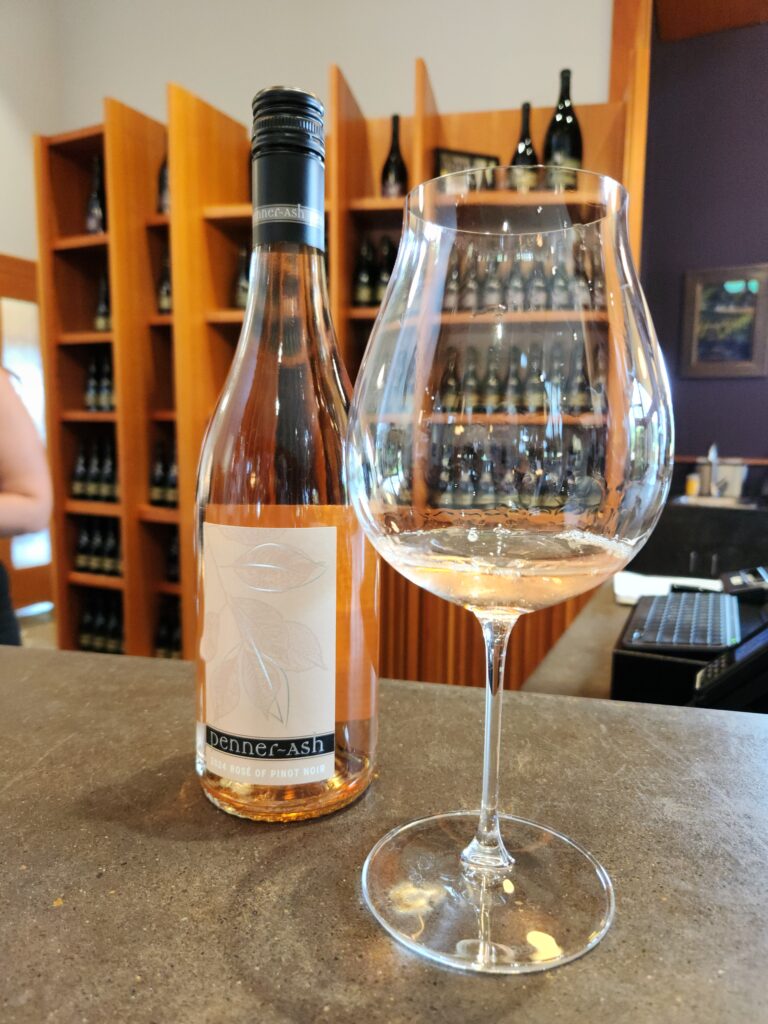
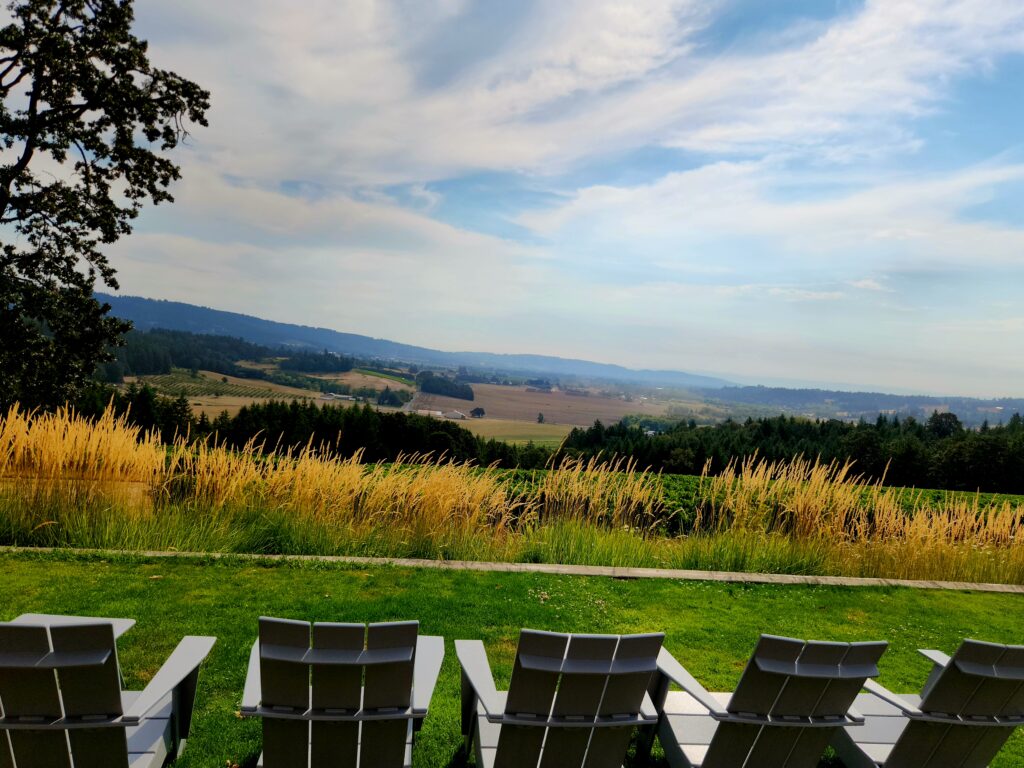
The tasting room offers sweeping valley views, paired with a polished yet comfortable experience. My first sip of the Viognier had my atte/ntion. The wine had an unexpected depth and crispness. It’s the kind of Viognier I’d happily pour any night of the week. The Rosé of Pinot Noir was equally intriguing.
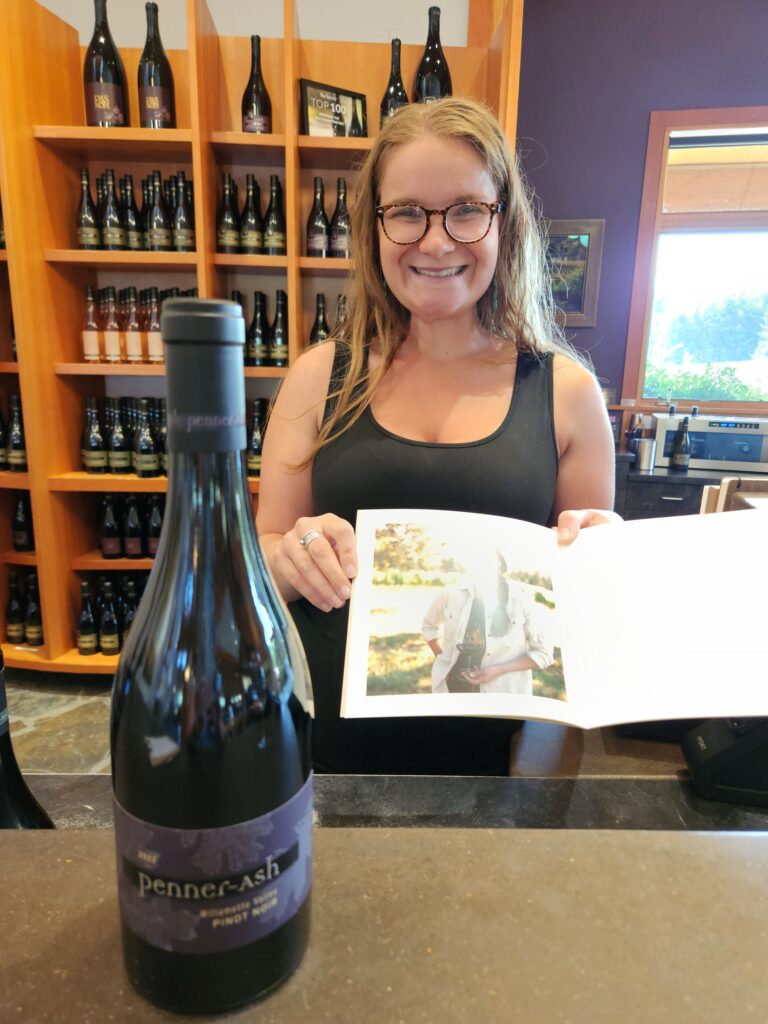
Pinot Noirs always hold a special spot on my list, and it was no different at Penner-Ash. Their Bella Vida from the Dundee Hills stole my heart before I learned it received 94 points from Wine Spectator and Decanter. Grown in Jory soil (red clay—and as a Virginia country girl, I know red clay!) and aged 10 months in 38% new French Oak, this wine lies on your tongue like a ripe blackberry.
Torii Mor Winery Dundee
One of the oldest vineyards in the Willamette Valley is the estate planted by Jim McDaniel in 1972. Over a decade later, Donald Olson purchased the property that is now Torii Mor Winery. Torii Mor bottled its first vintage in 1993.
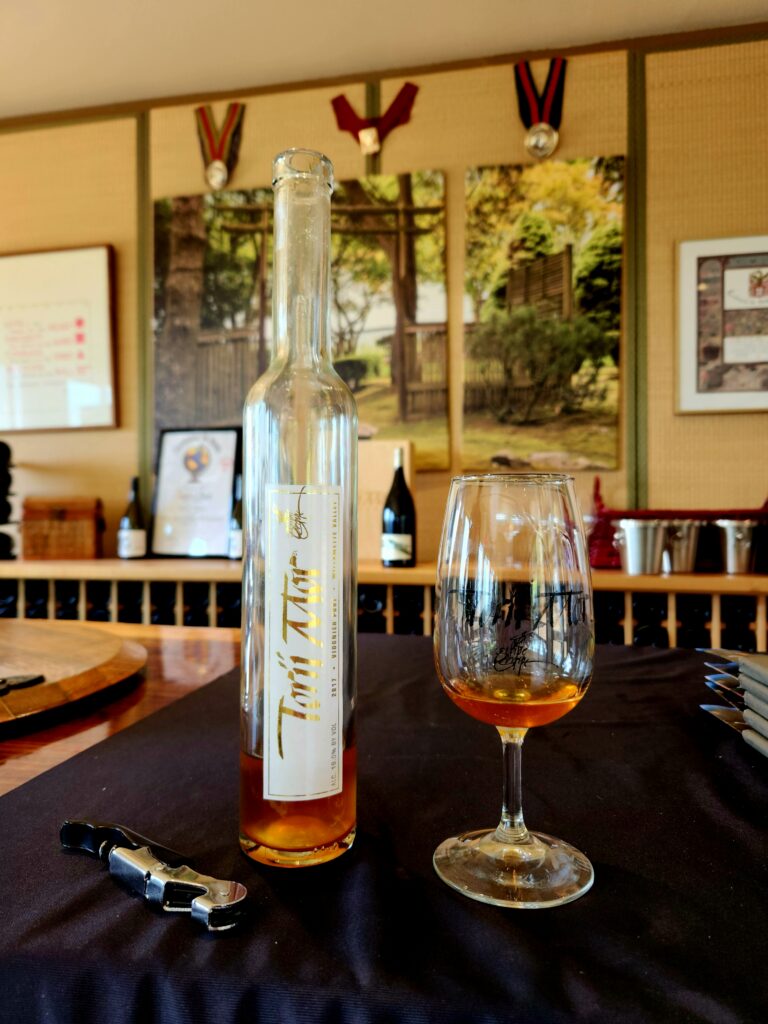
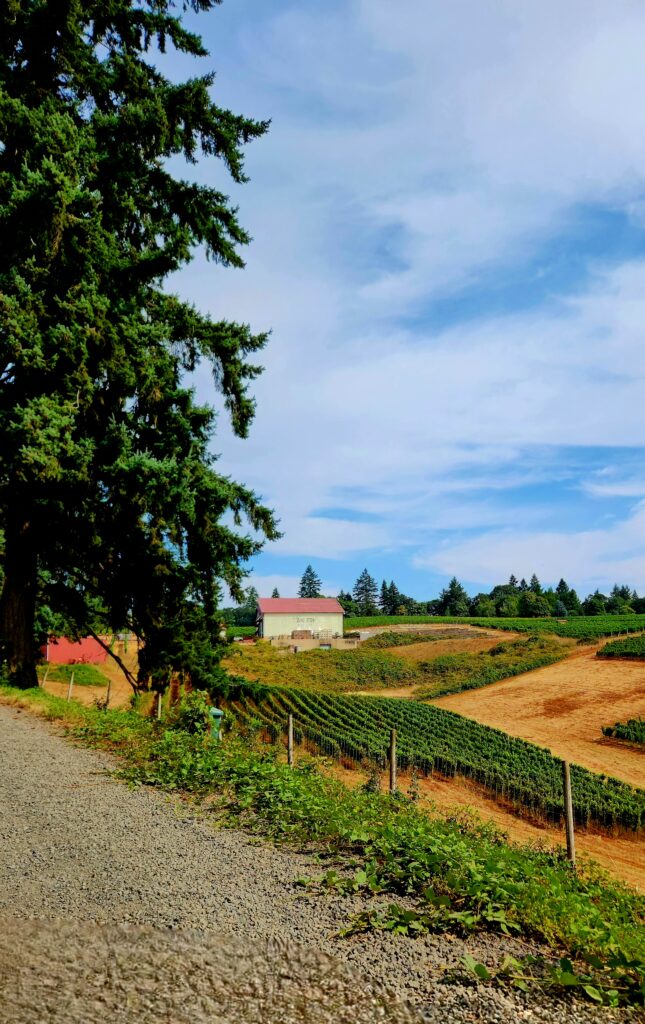
Torii Mor Winery focuses on small-lot Pinot Noir and Chardonnay, produced from vineyard sites throughout the Willamette Valley. The winery’s name reflects a touch of Japanese influence; Torii, from the Torii Gate to the property’s Japanese garden, and Mor, the Norwegian word for Mother Earth. When the words combine, they hint at the way Pinot Noir connects to the earth and expresses that terroir in its fruit. Enter the gateway to the earth: come inside the lovely Japanese-inspired tasting room and let the Burgundian wines flow.
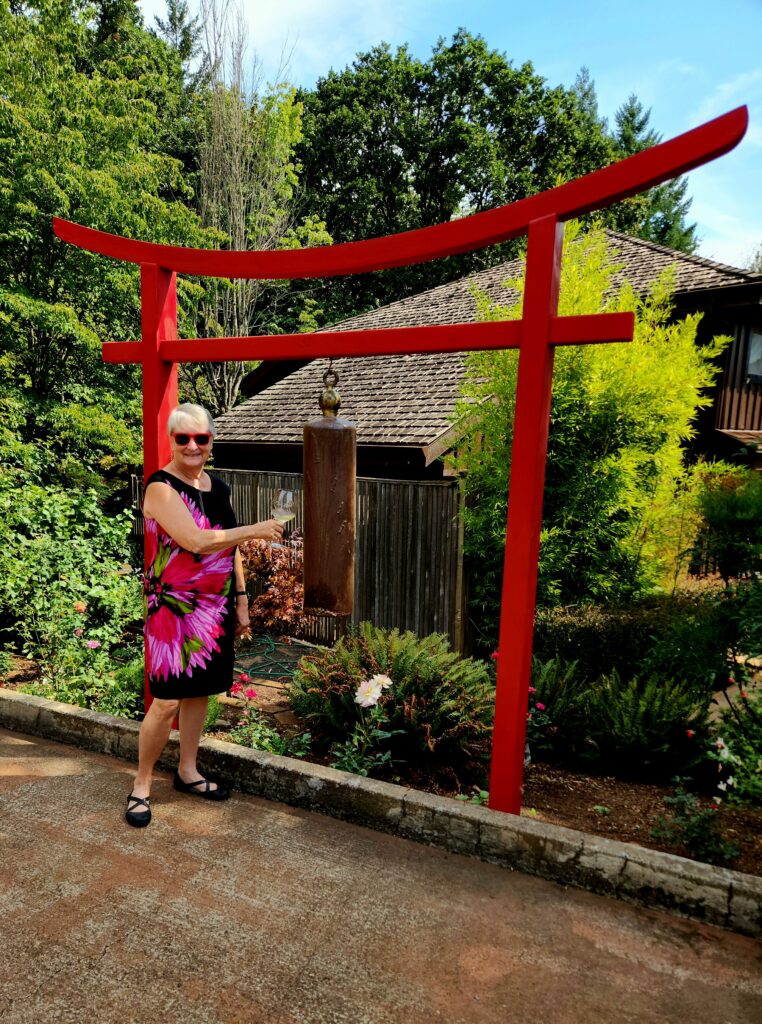
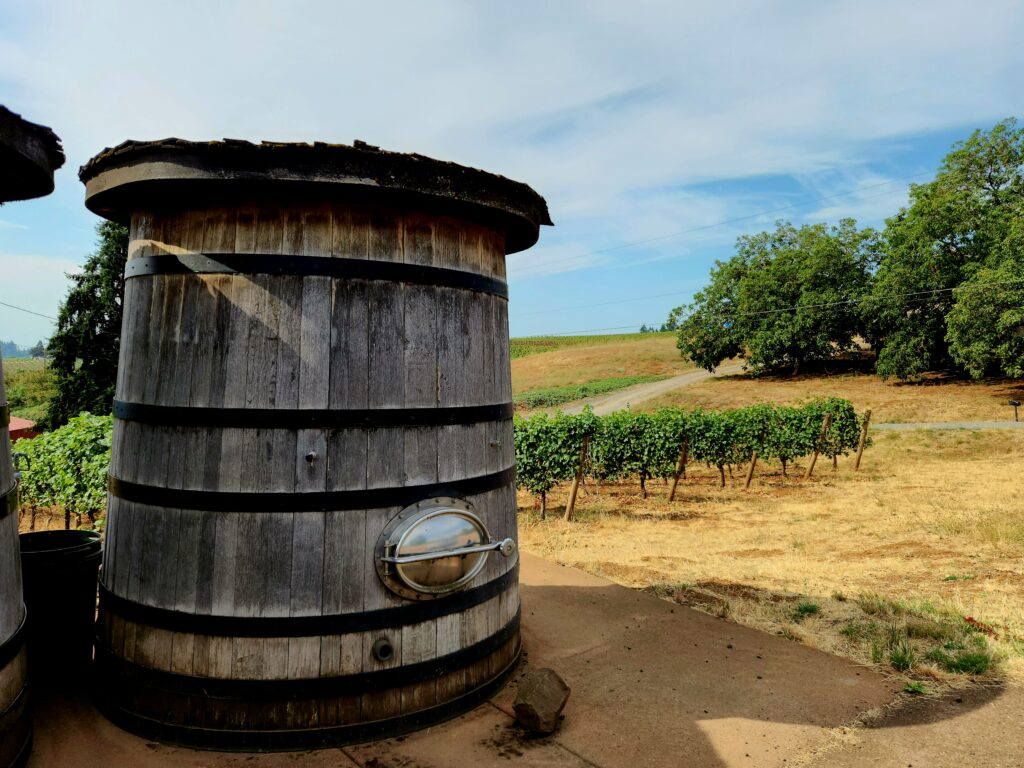
Tastings often highlight the subtle differences between vineyard sources, offering a deeper look at the region. Tasting room manager, Nicholas Trempcourt, delights in educating his clients in both the flavors and growing of wine grapes. With Pinot Noirs, whites, rosés, sparkling, and dessert wines, Nicholas has his work cut out for him. He is up to the task. And he handles a cell phone photo request like a pro. *smile*
My first glass held Pinot Blanc, a lovely, floral, fragrant white from the Dundee Hills that would be perfect with seafood. Next, Nicholas poured a Pinot Gris from 40-year-old vines in the Olson vineyard, strong enough to stand up to spicy foods, then moved on to Chardonnays, one with notable complexity from 15 months on the lees.
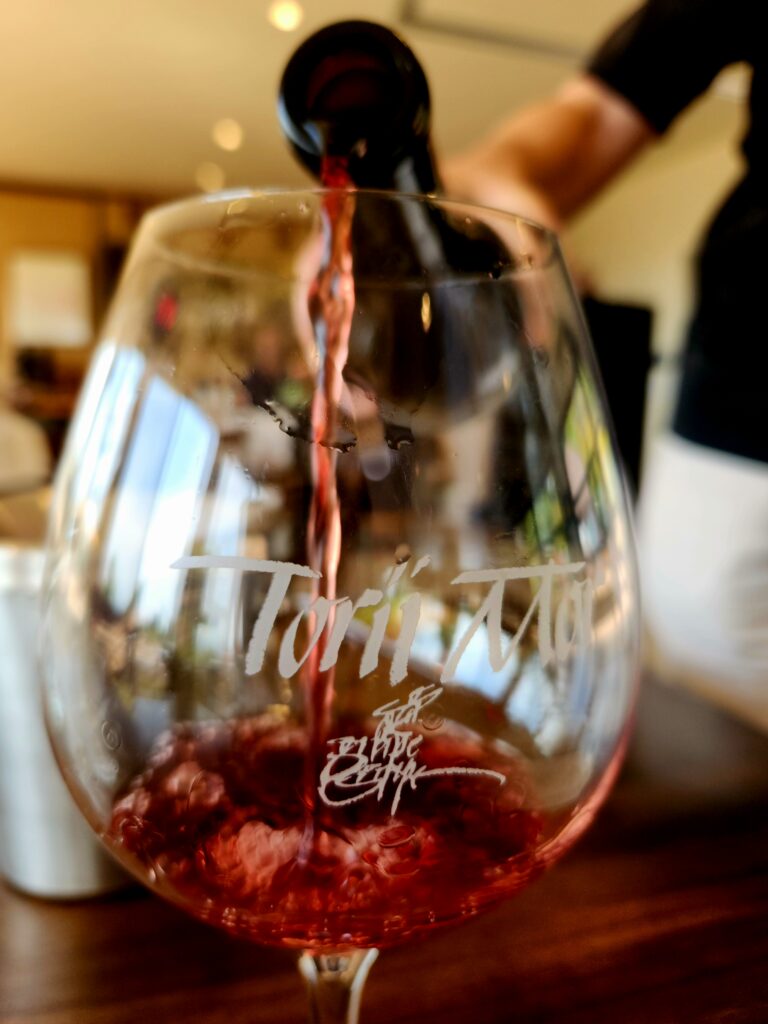
The next wines poured were 93- and 94-point Pinot Noirs, one from 70% 50-year-old vines in the estate’s vineyard. The old-vine Pinot was Nicholas’ favorite, and I agreed. The heady aroma alone made me salivate. The other two were from grapes grown in the Dundee Hills and Eola-Amity Hills appellations. The difference in terroir is evident, and easy to discern. We ended our tasting with a luscious White Port Dessert Wine, which immediately joined the old-vine Pinot Noir and old-vine Pinot Gris on my list of Torii Mor hits.
White Rose Estate Dundee
White Rose Estate is dedicated almost entirely to Pinot Noir, with a winemaking style that emphasizes whole-cluster fermentation and minimal intervention. The result is wines with structure, complexity, and a distinct sense of place. The estate setting is quiet and intentional, mirroring the focus found in the glass.
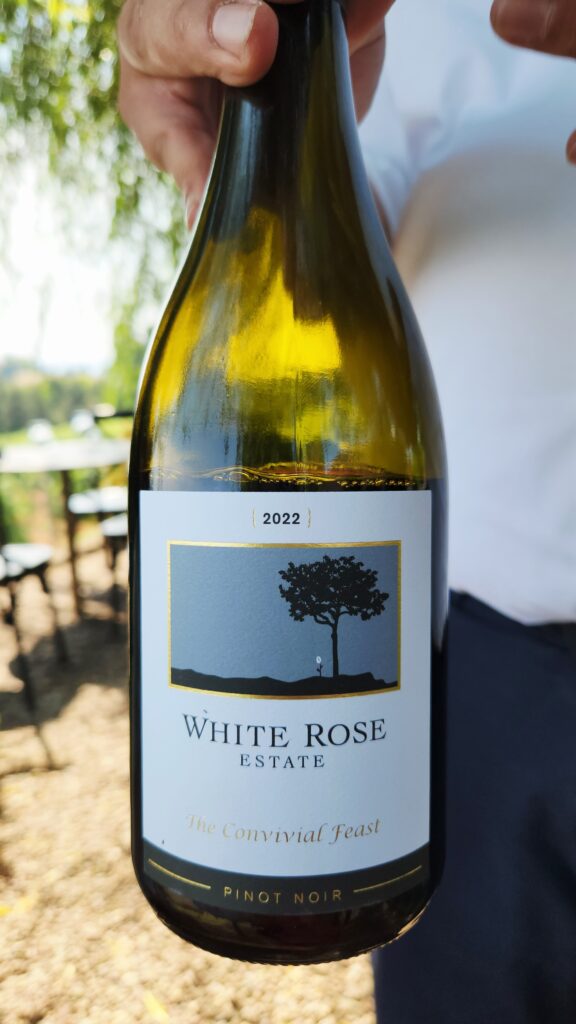
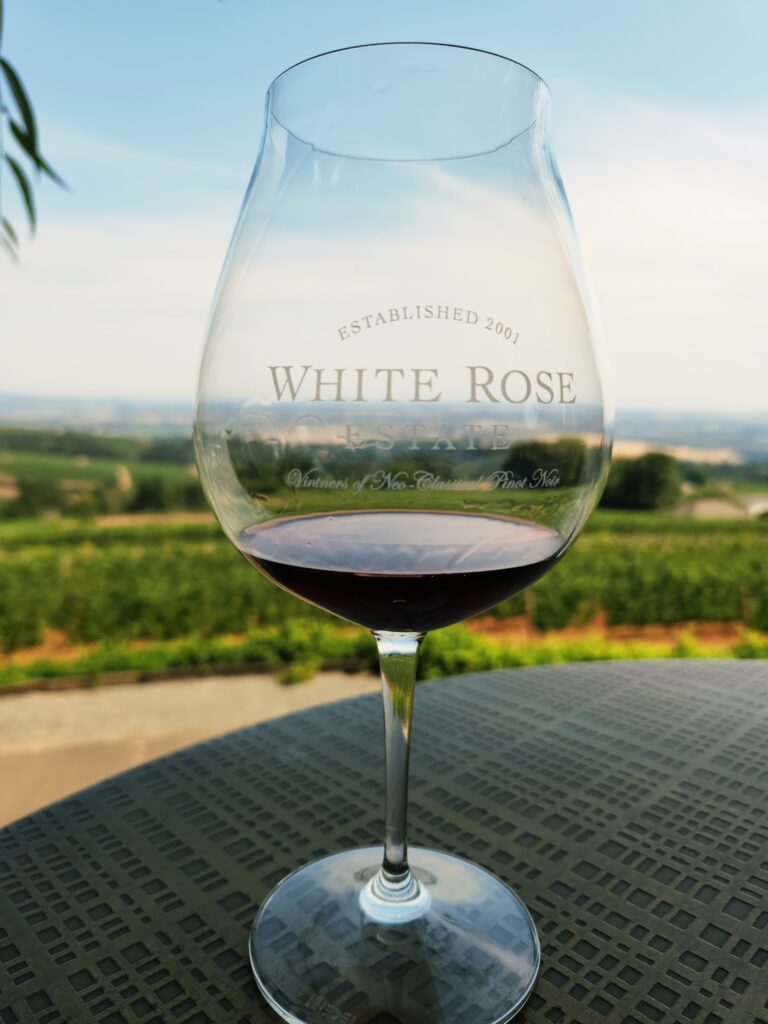
White Rose is celebrating its 25th year of making wine. In those two plus decades, the numbers for wines made by White Rose Estate say it all: thirty-five wines rated at 95 points or higher. One standout (so far), their Confluence of Nature, received an almost-unheard-of 99 points, the highest Pinot Noir score from Decanter Magazine’s Clive Pursehouse.
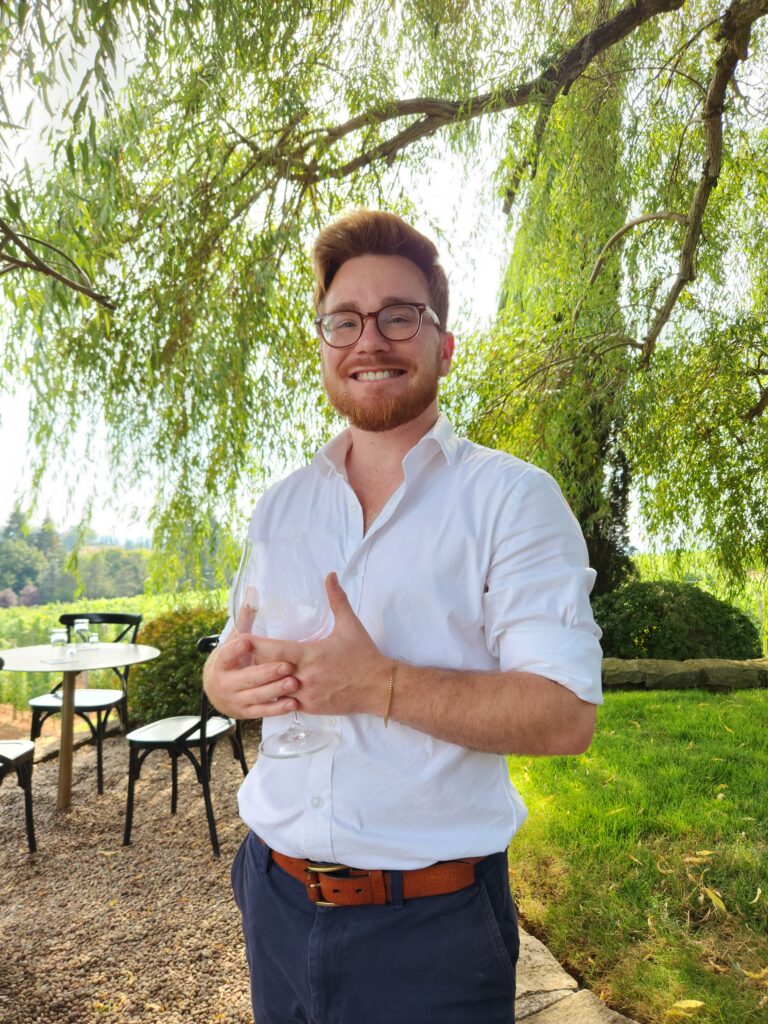
I always like the educational experience of tasting and making my cryptic notations, then seeing which wines tasted had received top accolades. Dagoberto (Dago to his friends) shared two of the award-winning wines: the Convivial Feast Pinot Noir (94 points and my typical smiley face notation), and the Neo-Classical Objective Pinot Noir (95 points and my black dot, a smiley face, and a star—along with my notation that, as it opened up, it was even better.)
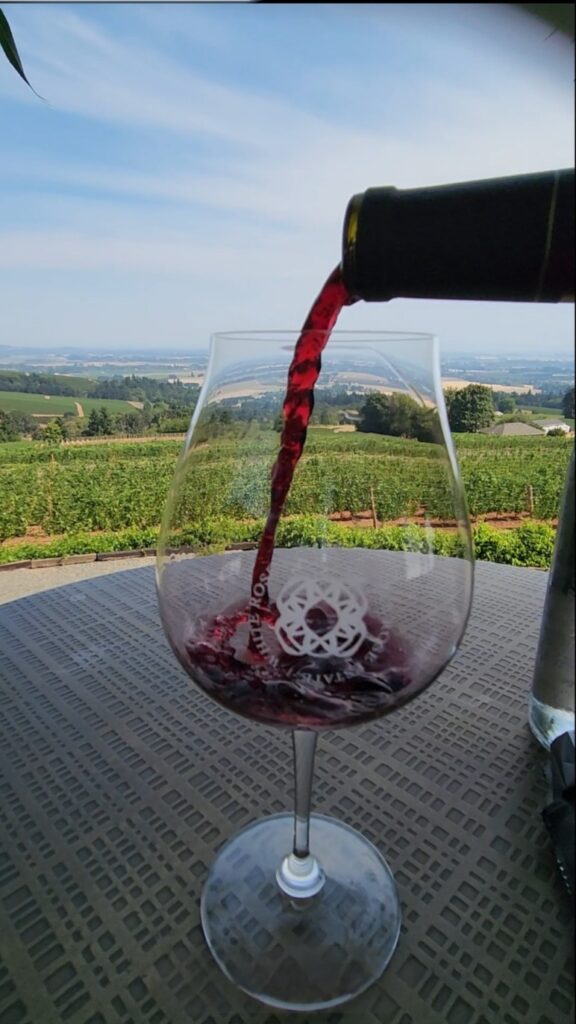
Another surprise that made the day even better was a winery worker with a distinct Southern drawl—Brett from Tennessee swapped spots seamlessly with Dago, making sure we wanted for nothing.
Two wines have not received any recommendations from the powers-that-be (yet). Still, I liked them enough on an August afternoon to issue my own form of approval. I marked the Convivialist Chardonnay with two bold stars and a double-smiley face (yes, I’m sure—the “Anything But Chardonnay” girl may finally be changing her tune); the Convivialist Syrah earned one star and a smiley face. I also had a light Rosé that smelled and tasted of fresh strawberries.
Durant Winery Dayton
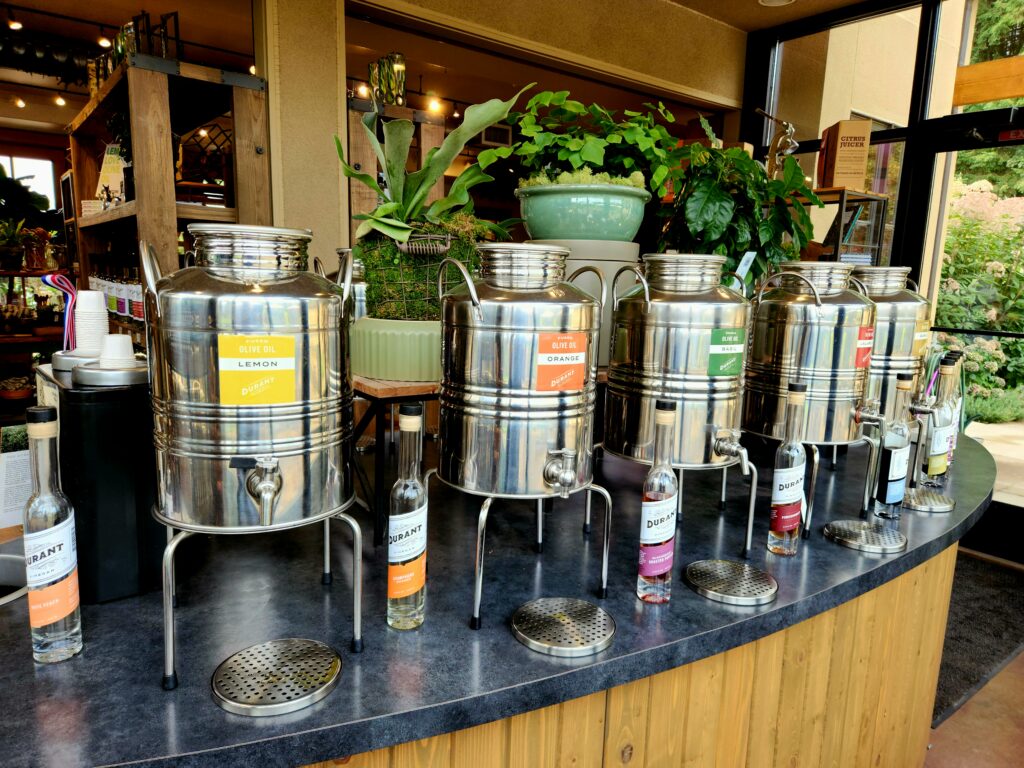
Durant Vineyards combines wine, olive oil, lavender, and sweeping views into one destination. Family-owned and operated, the property produces Pinot Noir, Chardonnay, and Pinot Gris, as well as estate-grown olive oil. The tasting experience is relaxed, with plenty of space to linger and take in the scenery, the gardens, and the garden shop. Besides tasting a variety of wines, you can also dip croutons in olive oil blends.
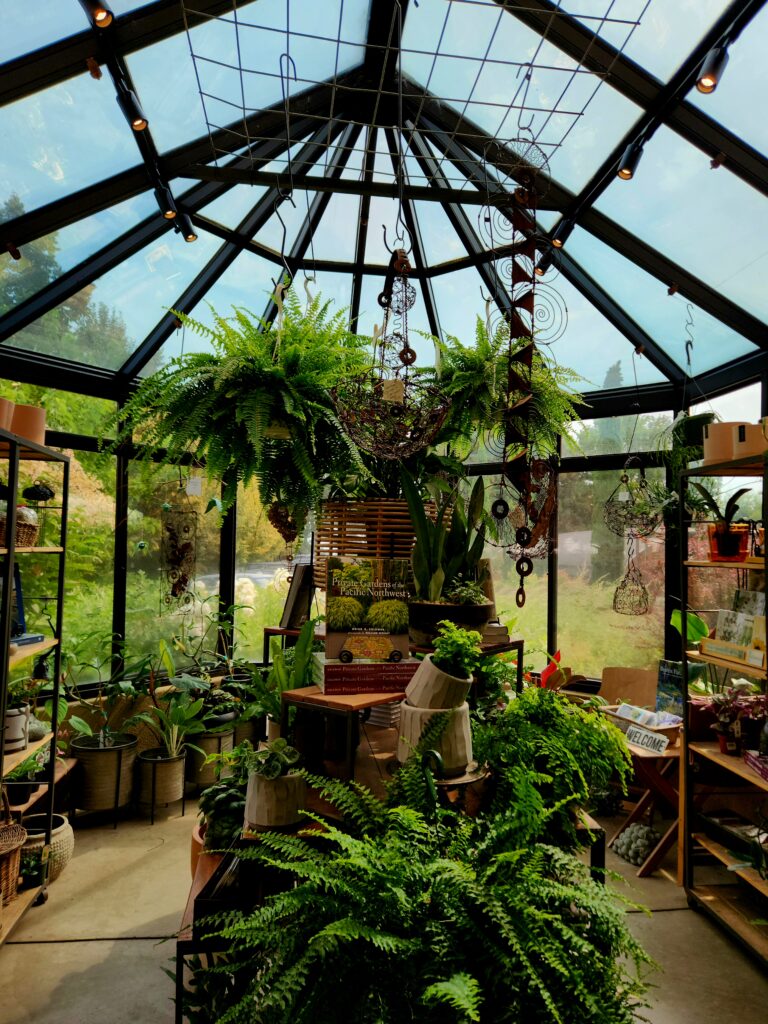
Our tastings started off with a Pinot Noir Rosé, next a pour from a frog-topped bottle of Lark Sauvignon Blanc tickled my taste buds (I’ve got to order one of those cute frogs.) The Lark, alongside Southside and Estate Chardonnays gave a perfect horizontal tasting.
The jammy Raven Pinot Noir put a smile on my face and was the perfect stopping point for a tour of the gardens and olive oil-pressing operation. Did you know there are six flavor profiles for EVOO (extra virgin olive oil)? There are countless flavor combinations, and their flavored vinegars create a new realm for salad-lovers (hint: the blackberry-roasted pepper is to die for!)
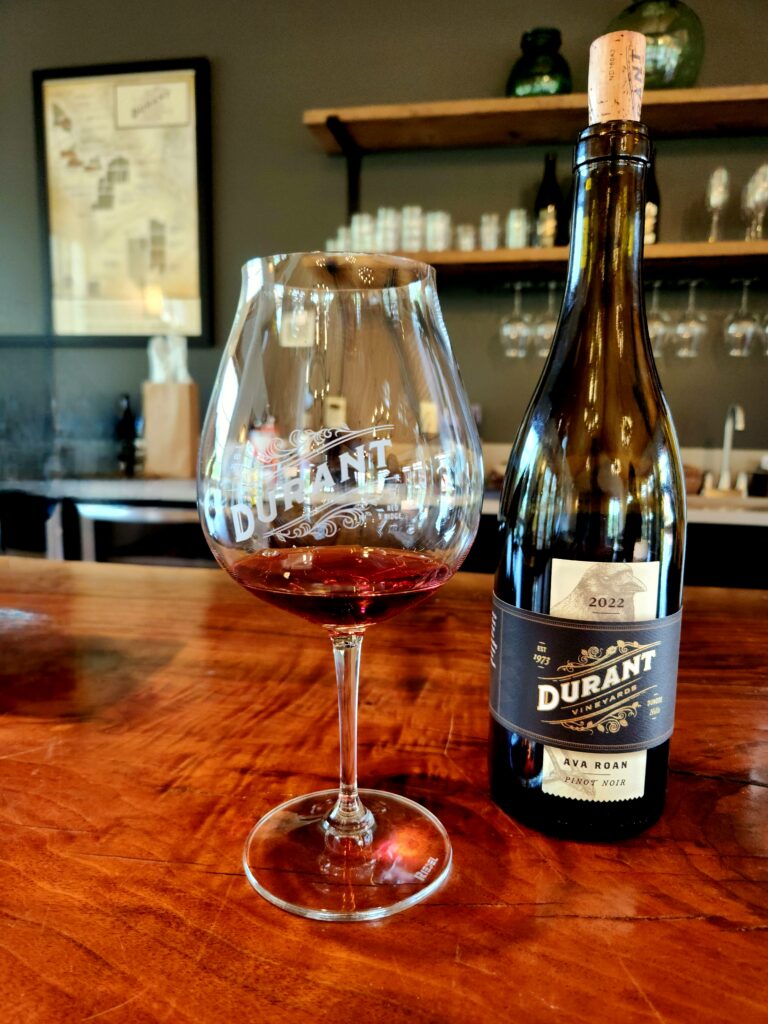
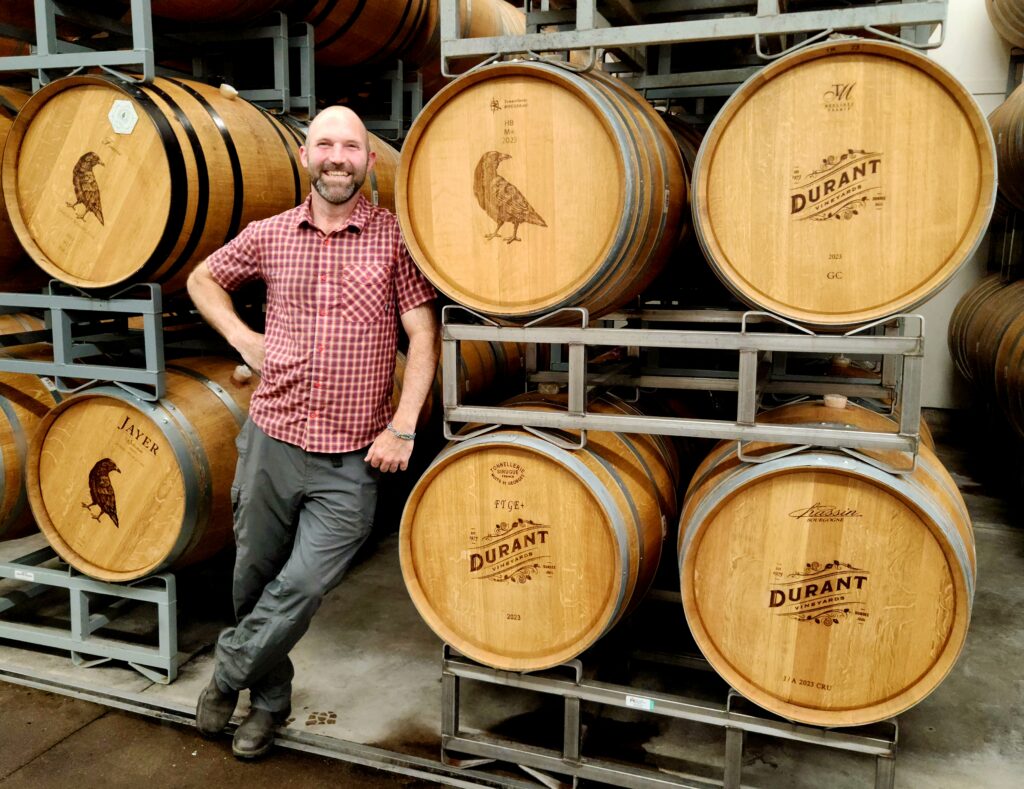
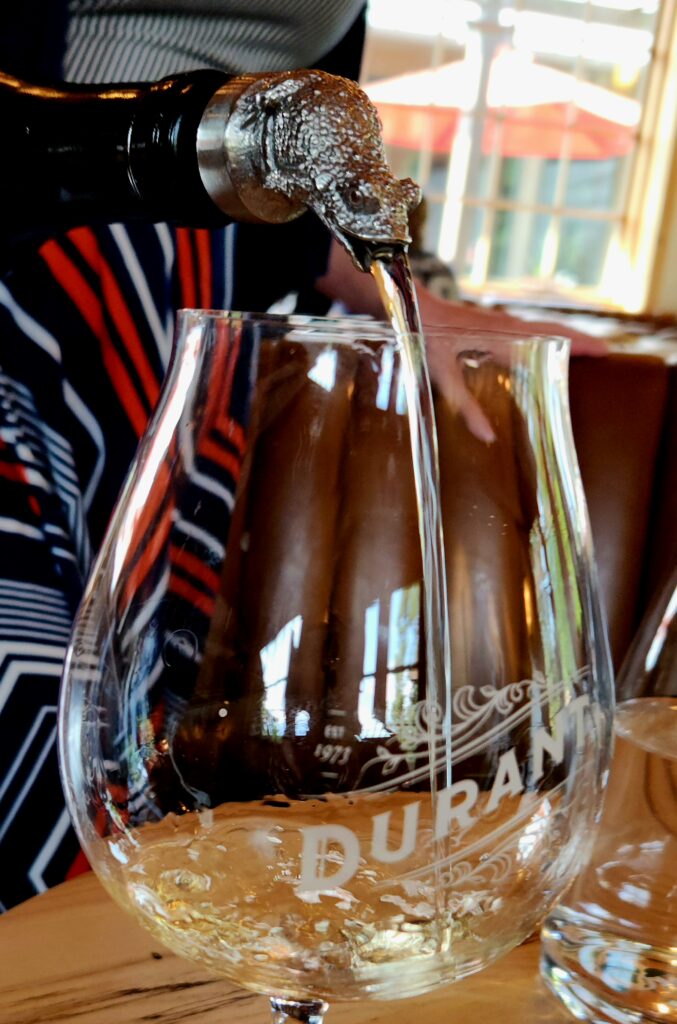
As the return flight was circling the airport, my last day in the Willamette Valley was coming to a close. One last stop was a trip through the Durant vineyards to visit the barrel room, with a glass of rich red Ava Roan Pinot Noir to savor along the way. It tasted like warm blueberry and plum galette dusted with spice, lingering all the way down.
My favorite pour? That Ava Roan Pinot Noir. It was awarded the 2025 Sunset International Wine Competition’s Gold Medal—who am I to argue with success?
R. Stuart & Co. – McMinnville & Roco Winery – Newberg
Bonus Wineries–#27 & #28 (if you’re counting)
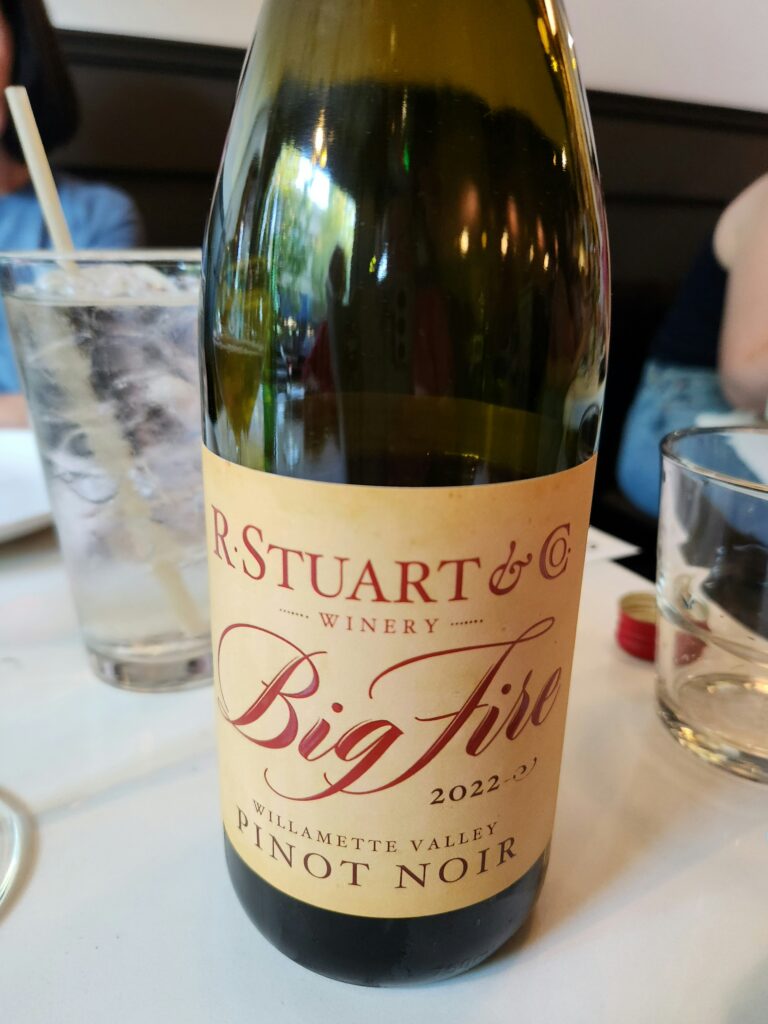
A dinner stop at Pizza Capo naturally meant wine, too. The red recommended by the owner was R. Stuart & Co.’s 2022 ‘Big Fire’ Pinot Noir. I know now that both their winery and tasting room are located in downtown McMinnville. R. Stuart produces wines in three different methods, each carrying a different label. The Big Fire we drank is from the label described as “fresh, lively, friendly, and intended for everyday drinking.” The women at my table concur. Pass the bottle, please!
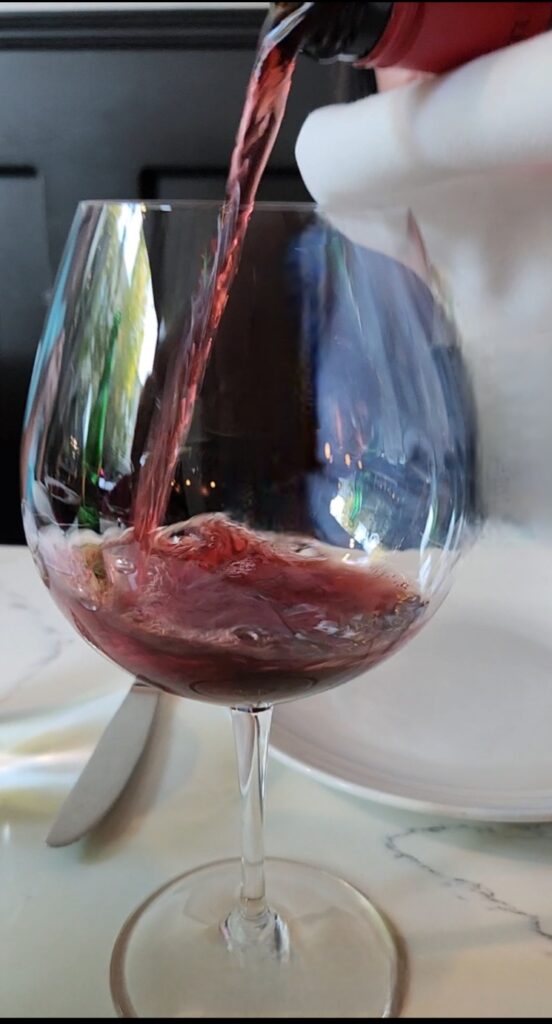
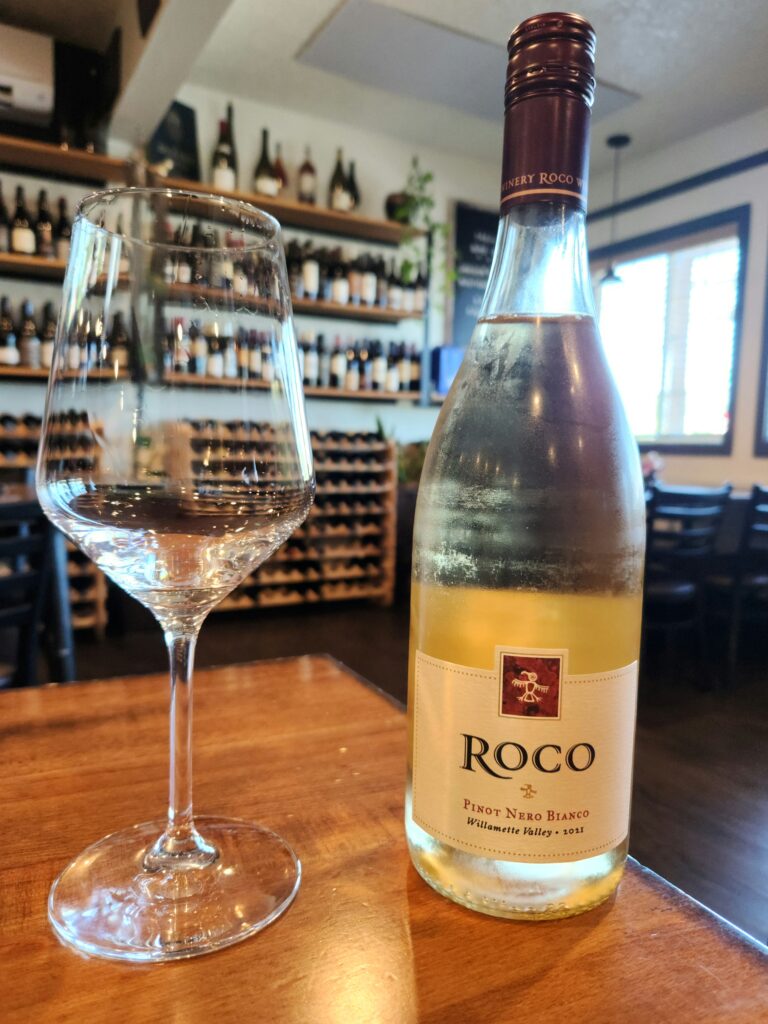
Roco Winery has a tasting room in Newberg, at the foot of the Dundee Hills. We discovered this tasty treat at Trellis, where it paired perfectly with oysters. Roco produces small production batches of Pinot Noir, Chardonnay, and Sparkling Wines.
Our Lady of Guadalupe Trappist Abbey Carlton
The local Abbey provides storage and shipping facilities for many small wine producers in the Willamette Valley. The monks handle everything for the wine makers, and they also bake an extraordinary fruitcake that you can order online. More about that appears in the food-related article: Spend 11 Awesome Days in the Willamette Valley.
When You Go
It really isn’t a question of “if”, but “when”, because you will want to visit the Willamette Valley and all these wineries (and more!) When you go, be sure to plan by mapping out your days and clicking the winery links to schedule a tasting. The tasting rooms are busy, even when you think you will be able to walk right in, like at 10 am in the middle of the week.
But before you go, you may want to try some of these wines. All the wineries visited will fill online orders—click the link to visit a winery’s page and place your order. Cheers!
Bonus Pro Tip: Eat breakfast, then have the small bites plate at each winery. That allows you to skip lunch while still standing after tastings at three wineries.
Lodging & Dining
Small towns throughout the area offer a variety of hotels, but I gravitate toward bed-and-breakfast inns. Staying in small, locally owned inns offers guests an opportunity to get to know the locals and ask for tips on where to go for food and drink. Plus, you are assured a delicious breakfast before starting a hard day of wine tasting.
I spill the wine on all my favorite spots in this article: Spend 11 Awesome Days in the Willamette Valley: Where You Should Eat, Sleep and Play.
Plan your Next Wine-venture
Explore the mountains of the other side of the United States–the wines are great, and you’ll love the views in The Blue Ridge Mountains of Virginia, the Yadkin Valley of North Carolina, and New York’s Finger Lakes.
If spooky towns are your thing, check out the 10 Best Haunted Towns (one is right in the Willamette Valley!)

Newberg and the Willamette Valley are top wine destinations in Oregon. Thanks for sharing more great information for our next trip!
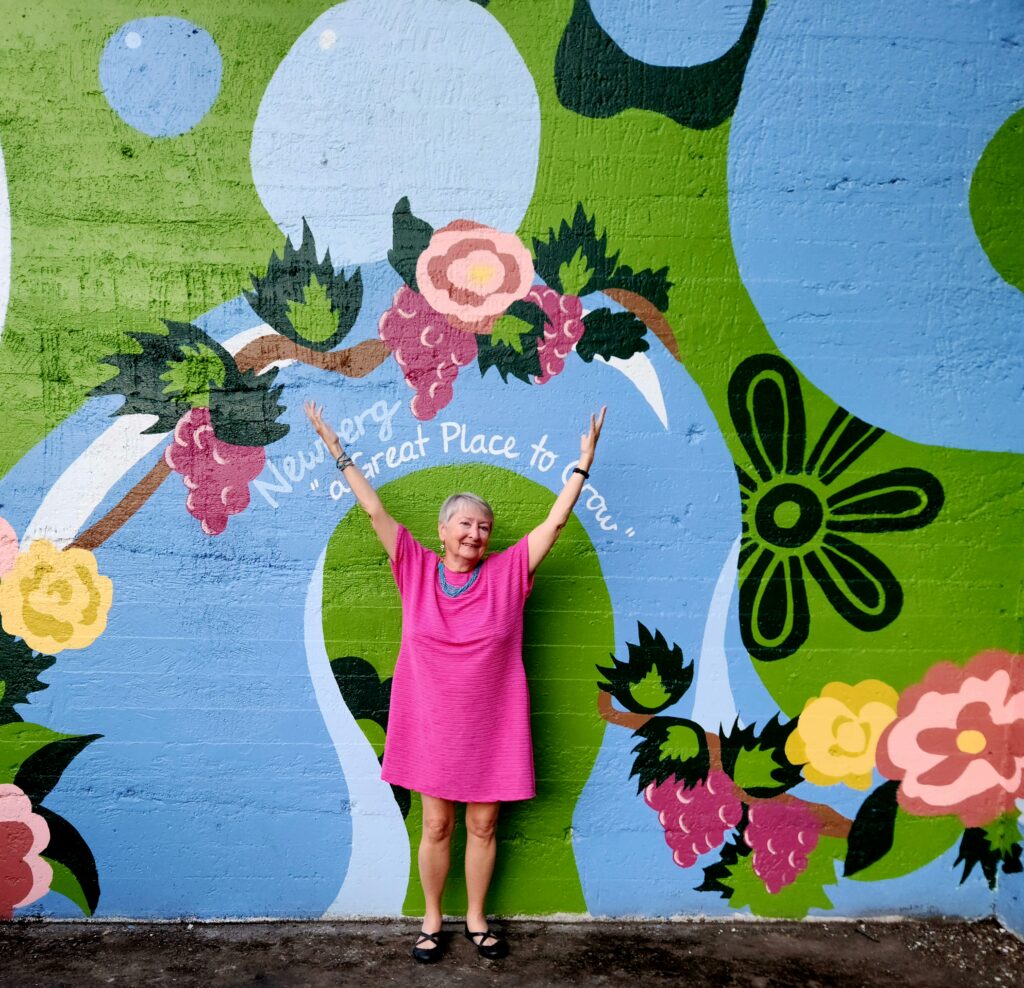
I love your pink dress…a perfect wine tasting outfit to show off the wines you are tasting!
Aaawww…thank you, Stacey! I only wore it two days, but it sure turned up in a lot of photos!
I LOVED Ayoub!
He is so knowledgeable and a fantastic winemaker!